Key takeaways
- Storage and lift pull against each other. Anything bolted to the moving top of a standing desk with drawer bookshelf counts against the lift rating, so the number to find first is the dynamic lifting capacity stated with its condition,…
Storage and lift pull against each other. Anything bolted to the moving top of a standing desk with drawer bookshelf counts against the lift rating, so the number to find first is the dynamic lifting capacity stated with its condition, not a headline holding figure quoted without one.
As an Amazon Associate we earn from qualifying purchases.
By KK Home Furnishings Editorial Team
How to Choose a Standing Desk With Drawer Bookshelf
Four checks, in this order: the dynamic lift rating and what it covers, the height range at both ends, the full corner footprint with drawers open, and which storage travels with the desktop. Only one of the three desks here states a lifting figure with an unambiguous condition attached to it.
Calculate the Moving Load, Not Just Your Monitors
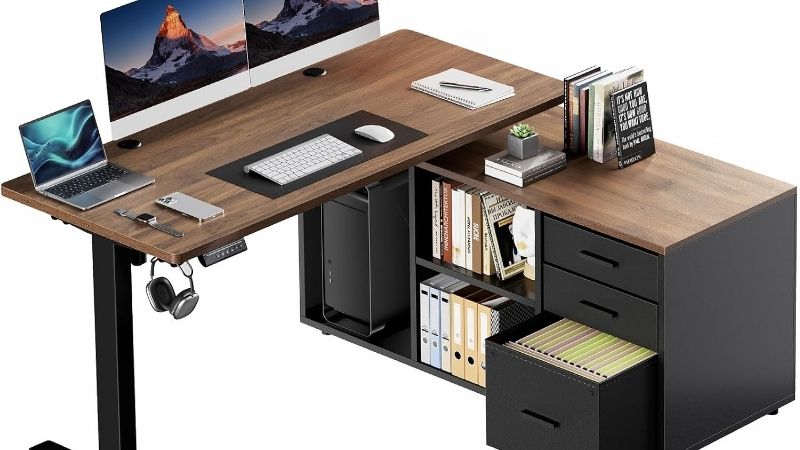
SEDETA states that the lifting system on its 69-inch Farmhouse model supports up to 200 pounds, travelling at 25 millimetres per second at under 30 decibels. That figure has to carry the desktop, the monitors and arms, a tower, a dock and any shelving fixed to the moving surface.
A bookshelf standing on the floor beside the desk is not part of that budget, while one bolted to the top is. If you want a reserve, a 15 percent buffer on 200 pounds leaves roughly 170 pounds of working payload, though that margin is a planning habit rather than a SEDETA instruction.
Check the Height Range Before the Storage Features
These three desks start at different heights: 28.7 inches on the 69-inch Farmhouse, 29.5 inches on the 56.7-inch model and 30 inches on the 63-inch file-cabinet version. Their top ends run to 46.8, 46.8 and 47 inches respectively, so the only meaningful difference between them sits at the bottom of the range.
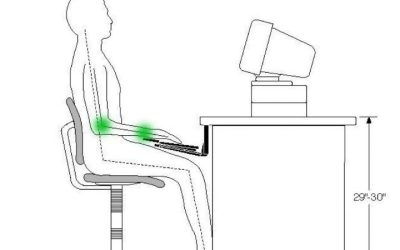
The low end matters more than the high end for most buyers, because a desk that will not drop below 30 inches is too tall for a shorter seated user even with the chair raised fully. Match the minimum against your own seated elbow height rather than against standing height or a published average.
Measure the Full L-Shaped Footprint
The 69-inch Farmhouse occupies 68.9 inches wide by 55 deep, and the 63-inch model is listed at 63 wide by 53 deep. Those are corner footprints, so they consume two walls rather than one and leave far less room for a door swing or a chair than the width figure alone would suggest.
Add drawer extension to the depth before deciding anything. A corner desk that fits the alcove on paper can still block a doorway once a file drawer is pulled out, and the bookshelf hutch on these models can be reversed left to right, so decide which side it goes on before assembly begins rather than during it.
Separate Storage Capacity From Lift Capacity
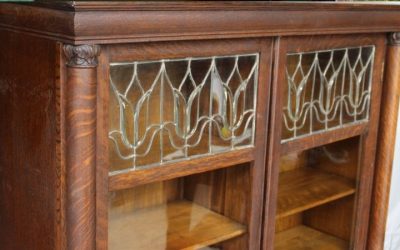
The 69-inch model carries four drawers, seven open shelves and two glass-door cabinets, while the 56.7-inch has three shelves and two cabinets alongside four AC outlets and two USB ports. A longer compartment count does not translate into a higher dynamic rating for the motor underneath, and often works against it.
The 56.7-inch page advertises holding up to 352 pounds without saying whether that applies while the desk is in motion, and the 63-inch page lists 352 pounds in one section and 400 in another. Neither can serve as a lift budget, and that budget is the only figure governing what the motor will raise in practice.
Top Picks
Three desks here publish usable specifications and the fourth row is a verification checklist rather than a product, because only one of the three states a lift figure with a clear condition attached to it. Footprint and minimum height separate them more sharply than storage count does.
| Product | Best For | Key Spec | Watch Out For |
|---|---|---|---|
| SEDETA 69-inch Farmhouse | Best Overall | Lifting system stated to 200 lb; 28.7-46.8 in; 4 drawers, 7 shelves, 2 cabinets | Premium tier; 68.9 x 55 in corner footprint plus a separate delivery charge |
| SEDETA 56.7-inch L-Shaped | Best Value | 29.5-46.8 in; 23.1 x 56.7 in; 3 shelves, 2 cabinets; 4 AC and 2 USB | Budget tier; the 352 lb holding figure is not defined as a dynamic lift rating |
| SEDETA 63-inch File Cabinet | Best for Drawer and File Storage | 30-47 in; 53 x 63 in; 3-drawer file cabinet; motor stated under 45 dB | Mid tier; the same page lists 352 lb and 400 lb, so neither anchors a decision |
| What to Verify on Any Unit | Best for Avoiding Spec Errors | Dynamic lift rating, height range, assembled footprint, which storage moves | A checklist rather than a fourth product |
SEDETA 69-inch Farmhouse: Best Overall
It takes the slot because it is the only desk here with a lifting figure stated as a lifting figure: up to 200 pounds, with travel at 25 millimetres per second and motor noise given as under 30 decibels. The height range runs from 28.7 inches to 46.8 inches, the lowest minimum of the three desks here.
Storage is the widest of the three, with four drawers, seven open shelves and two glass-door cabinets on a bookshelf the maker describes as detachable. It is premium tier within this sample, and the 68.9 by 55-inch footprint plus a separate posted delivery charge are the real costs.
SEDETA 56.7-inch L-Shaped: Best Value
At 23.1 by 56.7 inches with a 29.5 to 46.8-inch range, this is the compact option of the three, and the bookshelf hutch can be mounted on either the left or the right side. Three shelves, two cabinets, four AC outlets and two USB ports come built into the hutch rather than added later.
Its drawback sits in the headline figure: the page advertises holding up to 352 pounds without saying whether that applies while the desk is in motion. Treat it as a static claim until the maker defines it properly, and size your moving load against a rating that carries a stated condition instead.
SEDETA 63-inch File Cabinet: Best for Drawer and File Storage
This one swaps open shelving for a three-drawer file cabinet across a 53 by 63-inch corner, with a 30 to 47-inch height range and motor noise stated at under 45 decibels. For a home office that still files on paper, that is comfortably the more useful configuration of the three here.
The load claim cannot anchor anything here, because the same official page lists 352 pounds in one section and 400 pounds in another, leaving the figure unresolved rather than high. It is mid tier within this sample, and the colour variants carry different prices and stock levels on that one shared listing page.
What to Verify on Any Standing Desk With a Bookshelf
Four fields decide whether a desk suits this use at all, and a listing that omits any one of them is not comparable with one that publishes all four. Require a dynamic lift rating with its condition stated, the minimum and maximum heights, the assembled footprint, and whether the bookshelf travels with the top.
A phrase such as holds up to 352 pounds answers none of those, because a static shelf load and a motor’s lifting limit are separate measurements taken under different conditions. Ask the seller to confirm in writing which one is quoted before the return window becomes your only remedy.
Frequently Asked Questions
Each of these comes back to the same confusion between what a desk can hold still and what it can lift. The answers below use only figures these three models actually publish, since a holding number quoted by one brand is never interchangeable with a lifting number quoted by another one.
Is 200 Pounds Enough for a Standing Desk With Storage?
It depends entirely on what moves with the top. The 69-inch SEDETA states a 200-pound lifting limit, so add up the desktop load you plan to carry: two monitors and arms, a tower, a dock, a laptop, a monitor riser and anything stored on a hutch that is fixed to the moving surface.
Most desk setups come in well under that, but a corner desk with a loaded bookshelf attached is exactly the configuration that gets close to it. Weigh the heavy items rather than estimating them from memory, and keep books on a floor-standing unit if the running total starts approaching the stated rating.
Does the Bookshelf Move When the Desk Rises?
That is model-specific. SEDETA describes the bookshelf on the 69-inch Farmhouse as detachable, and on the 56.7-inch model it can be mounted on either side, so the configuration you settle on during assembly is what decides whether that weight ever becomes part of the lift at all.
Check this before calculating anything, because the same desk is two different load problems depending on how it is put together. If the shelf can be left off and stood on the floor beside the desk instead, the motor only ever carries the desktop, which widens your working margin considerably.
What Height Range Should I Check?
These three span roughly 28.7 to 47 inches between them, but the figure to match is seated elbow height rather than standing height alone. Sit in the chair you actually use, let the forearms rest level with the desktop, and measure from the floor up to the underside of the elbow.
Compare that against each desk’s minimum, then check the maximum against standing elbow height measured the same way. A keyboard tray can rescue a desk whose minimum sits slightly too high, but nothing rescues a maximum that stops short of where you need it, so the top of the range is the harder constraint.
How Much Do These Desks Cost?
All three sit between a budget tier and a premium tier within one brand’s own range, and the gap between the smallest and the largest is substantial. Delivery is charged separately on each of them at a different rate, which changes the comparison between them more than the sticker figures suggest.
Add the shipping line before ranking them, because a corner desk travels as a heavy multi-box consignment and the charge differs by model rather than being a flat rate. Current pricing reflects a seasonal sale rather than a settled list price, so the tier a given desk occupies may not hold once that promotion closes.
Final Thoughts
If the bookshelf need not rise with the desktop, the trade-off disappears: a plain sit-stand frame plus a floor-standing shelf gives the same storage without spending lift capacity or corner depth. Settle that first, because it decides which standing desk with drawer bookshelf belongs on a shortlist.