Key takeaways
- Everything on a dealer listing is the dealer’s own description. An antique oak bookcase with glass doors has no manufacturer spec sheet behind it, so age, timber, condition and even the dimensions come from the seller, and each one needs…
Everything on a dealer listing is the dealer’s own description. An antique oak bookcase with glass doors has no manufacturer spec sheet behind it, so age, timber, condition and even the dimensions come from the seller, and each one needs verifying separately before money moves.
As an Amazon Associate we earn from qualifying purchases.
By KK Home Furnishings Editorial Team
How to Choose an Antique Oak Bookcase With Glass Doors
Four things need checking independently: what the piece is made of, who made it and when, what condition it is genuinely in, and whether it will stand safely where you want it. None of the four live listings below carries evidence that goes beyond the seller’s own written account of the piece.
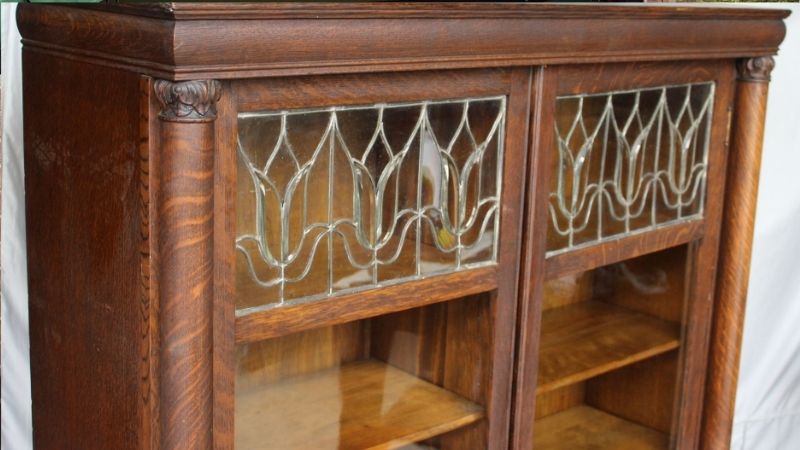
Verify Oak, Glass and Attribution Separately
One Mission-style listing at 34 1/4 by 12 1/4 by 54 1/4 inches is described as oak with leaded glass, dated to around 1900, and offered in the manner of Stickley. That last phrase is a style attribution rather than an authorship claim, and merging the two is how buyers overpay in this market.
A Globe Wernicke three-stack barrister at 36 3/4 by 11 by 46 1/2 inches carries a maker attribution from the dealer rather than from a mark verified by a third party. Ask what that attribution rests on: a surviving paper label, a stamped mark, a catalogue match, or simply the dealer’s own judgment of the piece.
Measure Depth Before Buying for Books or Display
Overall depth across these four listings runs from 11 to 16 inches, and that figure describes the outside of the carcass rather than the usable shelf. A barrister stack at 11 inches deep will take most hardbacks comfortably, but not oversized art books, deep ring binders or larger display pieces.
Ask the seller for the internal shelf depth and the clear height between shelves, measured inside the glass doors themselves. Antique shelving was built around the book sizes of its own period, and a glazed door that will not close over a modern spine is a common and expensive surprise.
Price Condition, Repairs and Provenance Together
The lowest-priced listing here, a Mission oak vitrine at 30 1/2 by 16 by 67 1/2 inches, discloses age-related splits in the timber. The highest, a carved three-door piece at 71 by 12 by 72 inches, is missing its keys and was originally built into a wall rather than made to stand on its own feet.
Neither disclosure is a reason to walk away, but both are reasons the prices differ, and condition language is not standardised between dealers at all. Good from one seller and good from another describe different things, so request close photographs of the joints, the feet and the glazing bars themselves.
Anchor Tall Bookcases Even When They Are Antique
CPSC continues to recommend anchoring bookcases and heavy furniture securely to the wall [CPSC, 2026]. Age does not exempt a piece from that, and most antique casework predates any tip-over standard by decades, which leaves the decision entirely with whoever owns and installs the piece today.
The 72-inch three-door example carries a further disclosure that it was built in originally and needs wall fixing or blocking to stand level. Treat that as a structural condition of ownership rather than an installation preference, and budget for both the hardware and the labour to fit it properly.
Top Picks
There is no overall winner among these, because every core fact here comes from the seller and none of it is independently documented in a form a buyer can check. Each listing is a single surviving object, so the right one is whichever matches your dimensions, your tolerance for repair and your evidence threshold.
| Product | Best For | Key Spec | Watch Out For |
|---|---|---|---|
| Mission Oak Arts and Crafts, circa 1900 | Best for Compact Arts and Crafts Style | 34.25 x 12.25 x 54.25 in; oak with leaded glass, seller-described | Mid tier here; in the manner of Stickley is a style note, not authorship |
| Globe Wernicke Three-Stack Barrister | Best for the Barrister Format | 36.75 x 11 x 46.5 in; modular stacking sections with glazed fronts | Mid tier; 11-inch depth is shallow and the attribution is seller-supplied |
| Mission Oak Leaded Glass Vitrine | Best Value in This Sample | 30.5 x 16 x 67.5 in; the deepest carcass of the four at 16 inches | Lower-priced tier; the seller discloses age-related splits in the timber |
| Carved Oak Three-Door Bookcase | Best for Wide Library Storage | 71 x 12 x 72 in; three glazed doors across one carcass | Highest-priced tier; built in originally, keys missing, needs wall blocking |
Mission Oak Arts and Crafts, Circa 1900
At 34 1/4 by 12 1/4 by 54 1/4 inches this is the most apartment-friendly of the four, low enough to sit beneath a window and narrow enough for an alcove. The seller describes oak construction with leaded glass and dates the piece to around the turn of the century, which is an estimate drawn from style rather than a documented date.
The phrase to handle carefully is in the manner of Stickley. It places the case within a workshop tradition without claiming Stickley built it, and paying a Stickley premium on that wording is a costly error. It sits in the mid tier here, below the carved three-door piece and above the vitrine.
Globe Wernicke Three-Stack Barrister Bookcase
Barrister cases stack in separate sections with lift-up glazed fronts, and this one measures 36 3/4 wide by 11 deep by 46 1/2 inches high across its three tiers. The modular format is the practical advantage, since the sections lift apart and can be carried individually rather than as one heavy carcass up a staircase.
Depth is the constraint at 11 inches, and the Globe Wernicke attribution comes from the dealer rather than from documentation you can check. Ask whether all three sections carry matching maker’s marks, since stacks assembled from different cases over the years are common and entirely normal in this market.
Mission Oak Leaded Glass Vitrine
The deepest piece here at 16 inches, and the second tallest at 67 1/2, this vitrine takes display objects that a shallower case simply cannot hold. It is the lower-priced tier of the four here, and that extra depth is the main reason to consider it ahead of the shallower barrister stack.
The seller discloses age-related splits in the timber, which is honest and entirely normal in a piece of this age but still needs assessing in person or in close photographs. Ask whether the splits sit in a structural member or in a flat panel, because those are very different repairs to commission from a restorer.
Carved Oak Three-Door Bookcase
At 71 inches wide and 72 high this is a library-wall piece rather than a room accent, with three glazed doors across a 12-inch-deep carcass. It is the highest-priced listing in this sample by a wide margin, and that figure reflects its scale and carved detail rather than any documented provenance behind it.
Two disclosures matter here. The keys are missing, so the locks would need a locksmith or replacement escutcheons, and the seller states it was originally a built-in that needs wall fixing or blocking to stand level. Measure the doorway and the stair turn before committing to a piece this size.
Frequently Asked Questions
These answers describe four live listings rather than the antique market, which behaves differently week to week because every piece in it is unique. Where a figure appears below it comes from one named listing, and it should not be read as a norm for the category or used to judge a different dealer’s price.
How Much Does an Antique Oak Bookcase With Glass Doors Cost?
This four-listing snapshot runs from a lower-priced tier through to a high-priced tier, with the widest piece costing several times what the narrowest does. Those are four current examples drawn from one marketplace on one day, rather than a price range describing the category as a whole.
Scale, carving, glazing type and documented provenance all move the figure far more than age on its own ever does. Shipping is the cost most buyers underestimate here: a 72-inch carcass usually travels by specialist furniture freight rather than by parcel carrier, and that is always quoted separately.
How Deep Are Antique Glass-Door Bookcases?
In this sample overall depth ranges from 11 to 16 inches, which is shallower than most modern shelving and usually shallower than buyers expect. Barrister sections tend toward the lower end of that span, while enclosed vitrines built for display objects rather than books sit at the deeper end.
Request the internal shelf depth rather than relying on the overall figure, since door thickness, rebates and a back panel between them can take an inch or more out of it. Measure the tallest books you intend to shelve as well, because fixed antique shelves cannot be repositioned the way modern adjustable ones can.
Should an Antique Bookcase Be Anchored?
Yes. CPSC recommends anchoring bookcases and heavy furniture securely to the wall [CPSC, 2026], and an antique case is more likely to need it rather than less, because it predates any mandatory stability standard and frequently stands on worn or uneven period feet over an uneven floor.
One listing here goes further, with a seller disclosure that the 72-inch piece needs wall fixing or blocking simply to stand level in the room. Use fixings suited to your wall construction rather than whatever came in the box, and have the work done by someone who will not split the original timber doing it.
Does In the Manner of Stickley Mean It Is a Stickley?
No. It signals that a piece follows the style and construction vocabulary associated with Stickley without asserting that the workshop made it. The listing using that phrase separately describes the case as circa 1900 oak with leaded glass, which is a description of material and date rather than of authorship.
Upgrading that wording into confirmed authorship is the single most expensive mistake in this corner of the market. If authorship matters to you, ask for the shop mark, the decal or a catalogue reference, and treat the absence of all three as the answer to the question rather than as a gap waiting to be filled.
Final Thoughts
If a dealer cannot supply interior measurements, close photographs of the joints and a clear account of what the attribution rests on, there is no premium left to justify. An antique oak bookcase with glass doors is worth antique money only when the evidence arrives alongside the furniture.