
Key takeaways
- Shoppers often treat firm and supportive as the same thing, but the real work happens in the coil layer underneath. A genuine supportive hybrid mattress pairs a zoned or reinforced coil unit with comfort foam so your spine stays aligned…
Shoppers often treat firm and supportive as the same thing, but the real work happens in the coil layer underneath. A genuine supportive hybrid mattress pairs a zoned or reinforced coil unit with comfort foam so your spine stays aligned whether you sleep on your back, side, or stomach.
As an Amazon Associate we earn from qualifying purchases.
By KK Home Furnishings Editorial Team
How to Choose a Supportive Hybrid Mattress
Support in a hybrid comes from the coil system, not the top layer you feel first. These four criteria sort real support architecture from marketing, starting with how the coils are built and zoned, then how feel, height, and warranty terms change the way a bed holds you up over years of nightly use.
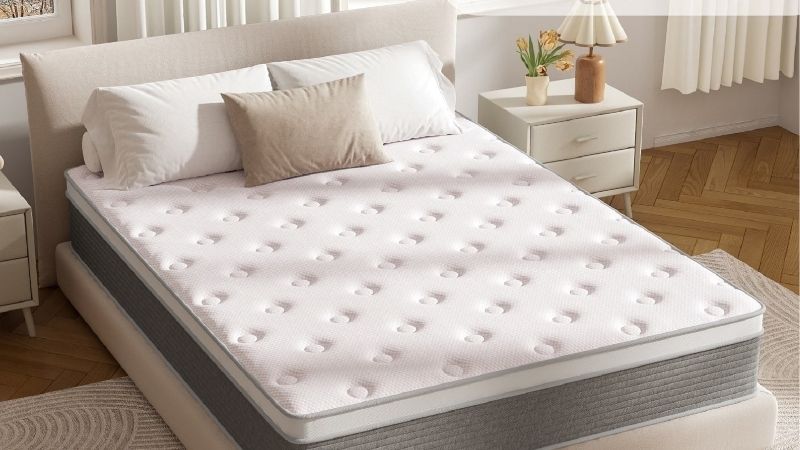
Coil System and Zoning
The coil unit is the load-bearing core, and zoning is how makers stiffen it under the hips and soften it at the shoulders. WinkBed uses a three-zone coil, DreamCloud a tri-zone lumbar design, and Brooklyn an eight-inch Ascension X coil unit, each one a different way to keep the heavy midsection from sagging over time.
Match the zoning to where you carry weight: heavier hips benefit most from a firmer lumbar zone, while side sleepers want enough give at the shoulder. Lie on your usual side for a few minutes during the trial window, since a supportive bed should keep the spine level rather than letting the hips sink into a hammock.
Coil gauge and edge support decide how the core ages over the years. A thinner comfort layer over a tall coil unit tends to hold its shape longer than a deep foam top, which softens first. Warranties cover sagging past a set depth, often around an inch, so keep the law tag and photograph any surface dip early.
Comfort Feel and Firmness
Firmness and support are separate: a plush top can sit over a strong coil, and a rock-hard surface can still sag. Firmness scales are not comparable between brands, so WinkBed’s Luxury Firm, Bear’s feel, and a DreamCloud medium-firm are each set on the maker’s own scale; a seven at one brand is not a seven at another.
Pick feel by sleep position, not by the number. Back and stomach sleepers usually prefer a firmer surface that keeps the hips up, while side sleepers often want a touch more cushion at the shoulder. If you share the bed with a heavier partner, test the firmer option, since added load pushes you deeper into any soft layer.
Comfort foam is also where new-mattress smell comes from. Fresh foam can give off a noticeable odor for the first few days, and how strong it is depends on the material and room ventilation. Foam sold in the US is commonly CertiPUR-US tested for emissions and content, which is worth confirming on the spec sheet before buying.
Height, Edge Support and Fit
These hybrids run tall, from 13.25 to 14 inches here, which changes more than looks. A 14-inch bed raises the whole sleep surface and needs deep-pocket fitted sheets, typically rated to at least 15 inches. Measure from the floor to the top once it sits on your base so you can still get in and out comfortably.
Edge support matters if you perch on the side to dress or share a smaller bed. Reinforced perimeter coils keep the edge from collapsing, giving usable sleeping width right to the border. On a Queen that is a real gain for two people, so map 30 to 36 inches of walkway around the frame before you decide to size up.
Total bed height is the base plus the mattress, and a tall hybrid on a tall platform can end up higher than planned. If you use an adjustable base, confirm the model is flex-rated; most tall hybrids here bend fine, but a stiff coil edge can limit articulation, a detail the warranty section of the spec sheet will usually note.
Certification, Trial and Warranty
Trial windows and warranties are where a support claim gets tested over time. The models here pair long sleep trials with multi-year coverage, and most tie that coverage to a maximum sagging depth you can measure. Read the threshold, because body impressions shallower than it are treated as normal wear, not a defect.
Foam certification is a buying criterion, not a footnote. CertiPUR-US covers foam emissions and content; it does not rate firmness or support, so treat it as a safety check rather than a performance score. Confirm the certificate on the current listing, since makers refresh foam formulas and rename models between seasons without much notice.
Plan the return logistics before buying. A boxed hybrid is heavy and awkward to send back, and some brands charge a pickup or restocking fee once the trial closes. Budget one mattress protector into the first-year cost, since many warranties are voided by stains and a protector is far cheaper than losing coverage entirely.
Top Picks
Each pick leads with a verified coil or zoning spec, the real engine of a supportive hybrid mattress, plus the trade-off worth knowing before you order. Every option sits in the premium tier, so the choice comes down to how the support is built and which sleeper it suits, not which listing happens to be cheapest.
| Product | Best For | Key Spec | Watch Out For |
|---|---|---|---|
| WinkBed Luxury Firm | Best overall support | 3-zone coil unit; 13.5 in | Luxury Firm runs firmer than a typical “medium” |
| Brooklyn Signature Hybrid | Best value | 8-in Ascension X coil unit; 13.25 in | 950-lb figure is line-level, not a per-model spec |
| Bear Elite Hybrid | Best for hot sleepers | 14 in; zoned support core | Tall build needs deep-pocket sheets |
| DreamCloud Luxe Hybrid | Best for lumbar support | 14 in; tri-zone lumbar coils | Priciest here; confirm the current price |
WinkBed Luxury Firm: Best Overall Support
WinkBed’s Luxury Firm takes the top slot because its support comes from a verified three-zone coil unit under a 13.5-inch build, not a firm foam feel alone. It suits back and stomach sleepers and heavier bodies that want the hips held up. It sits in the premium tier, so check the current price before you order.
The standout is that zoned coil: a firmer center keeps the midsection from dipping while the surface still feels cushioned. It ships compressed in a box and expands over a few days, and the brand suggests letting new foam air out. Confirm your base supports a tall hybrid and that your sheets reach 15 inches deep.
The honest downside is feel: Luxury Firm reads firmer than many expect from a medium, and firmness labels do not translate between brands. Longevity rides on the coil and edge rather than the top foam; the warranty ties coverage to a stated sagging depth, so keep the tag and photograph the surface early to document any dip.
Brooklyn Bedding Signature Hybrid: Best Value
Brooklyn’s Signature Hybrid is the value pick, built on an eight-inch Ascension X coil unit inside a 13.25-inch profile and sold in three firmness options. It fits shoppers who want genuine coil support without the top of the range. It still sits in the premium tier overall, so verify today’s price at checkout before deciding.
Its advantage is flexibility: choosing the firmer option gives back sleepers and heavier bodies a stiffer core, while the medium suits combination sleepers. Like the others it arrives boxed and rolled, needing a day or two to expand fully. Pair it with a base that meets the brand’s slat-gap rule to keep the warranty valid.
The catch is a spec that is easy to misread: the often-quoted 950-pound figure is stated across the Signature line, not as a single-model rating, so treat it as a line-level claim rather than a Key Spec for one bed. As with any hybrid, a washable protector guards both the surface and your warranty from the first night.
Bear Elite Hybrid: Best for Hot Sleepers
The Bear Elite Hybrid is the pick for sleepers who run warm, built at 14 inches with a zoned support core under cooling-focused comfort layers. It suits back and side sleepers who want support plus a cooler surface. It falls in the premium tier, so treat any sale display as a snapshot and confirm the live price.
Its strength is pairing zoned coils with a surface aimed at heat management, so support does not cost you a hot night. At 14 inches it is one of the taller options here, which raises total bed height and calls for deep-pocket sheets. Measure your frame-plus-mattress height so climbing in and out stays comfortable afterward.
The trade-off is that tall build: it needs 15-inch-plus fitted sheets and can sit high on an already-tall platform. Cooling depends on room temperature and bedding, not the mattress alone, so judge it on the verified coil and height rather than a degrees-cooler promise, and check the sagging threshold just like the rest.
DreamCloud Luxe Hybrid: Best for Lumbar Support
The DreamCloud Luxe Hybrid targets the lower back with a tri-zone lumbar coil design in a 14-inch build. It suits people who want extra reinforcement under the hips and lumbar region. It is the priciest option here and sits firmly in the premium tier, so confirm the current price rather than relying on any listed figure.
Its advantage is the lumbar zoning: stiffer coils through the middle resist the hip dip softer beds allow, which many back sleepers prefer. It arrives boxed and expands over a few days. Because it stands 14 inches tall, confirm sheet depth and that your base, and any adjustable frame, are rated for a thick hybrid.
The downside is cost; it anchors the top of this group’s range, so the lumbar design has to justify the premium for your sleep style. We avoid framing any mattress as a cure for back pain: a firmer, zoned surface may suit some back sleepers, but anyone with a medical condition should ask a doctor before relying on it.
Frequently Asked Questions
A few questions come up repeatedly when people shop for support rather than softness. The answers below open with the short version, then add the condition that can change it, whether room, body, base, or budget, so you can match a supportive hybrid mattress to your own setup instead of a generic recommendation.
Is a firm mattress the same as a supportive one?
No, they are different things. Firmness is the surface feel, while support is how well the bed keeps your spine aligned, and that comes mainly from the coil system. A soft-feeling hybrid with a strong zoned core can be more supportive than a hard foam bed that sags in the middle after a year of nightly use.
What changes the answer is your weight and position. Heavier bodies compress soft layers more, so they often need a firmer feel to reach the same support, while lighter side sleepers may find a very firm bed leaves pressure points. Focus on whether the hips stay level, not on how hard the top feels at first touch.
If you already own a sagging bed, a firmer topper changes surface feel but will not lift a collapsed core. Once the dip passes the warranty threshold, the fix is a claim or a new mattress, not a topper, a distinction worth keeping clear before spending on an add-on that treats the wrong problem entirely.
Does a supportive hybrid need a box spring?
Usually not a traditional spring box. Most modern hybrids need a flat, firm, evenly spaced base, whether a platform, a foundation, or slats within the maker’s gap limit. A bouncy coil box spring can actually reduce support and, with several brands, void the warranty if it is used against the written instructions.
The deciding factor is slat spacing. Many foam and hybrid makers ask for slats no more than roughly three inches apart with a center support leg on Queen and larger, but the exact figure is set by each brand, so check the warranty for the bed you buy rather than assuming one rule fits every model on the market.
If your frame has wide slats, a bunkie board or plywood sheet closes the gap for far less than a new base. Confirm the requirement before ordering, since a base that breaks it is one of the most common, and most avoidable, reasons a support warranty gets denied when you finally need to file a claim.
How thick should a supportive hybrid mattress be?
There is no single right number; the hybrids here run 13.25 to 14 inches, and thickness mainly affects feel, height, and sheet fit rather than support itself. A taller bed is not automatically more supportive, since the coil design and zoning matter far more than the total inches of material stacked on top.
Height becomes practical once you add it up. Mattress plus foundation plus frame sets how high you climb in and out, which matters for shorter users and anyone with mobility issues. Taller beds also demand deep-pocket sheets, so a 14-inch model typically needs fitted sheets rated to 15 inches or more to stay on.
If you use an adjustable base, confirm the bed is flex-rated, since a very stiff coil edge can limit how far a thick hybrid bends in use. When unsure, choose thickness by the height you want to sit at and the base you already own, then let the coil system, not the inch count, decide the real support.
How long should a hybrid mattress last?
Many sleep guides cite roughly seven to ten years, but the real signal is measurable sagging, new morning stiffness, or a body impression deeper than the brand’s warranty threshold. A quality hybrid with a strong coil core often holds its shape longer than an all-foam bed in the same price range does.
Lifespan depends on use and support. Heavier loads, a missing center leg, or wide slats all shorten it by stressing the coil unit unevenly over time. Rotating the bed head-to-foot where the maker allows, and keeping the required base underneath, spread the wear and help the mattress reach the longer end of that range.
Protect your coverage from the first day. Most warranties tie claims to a stated impression depth and are voided by stains, so a washable protector pays for itself quickly. Photograph the surface when new; if a dip later crosses the threshold, that record is the difference between an approved claim and a replacement you buy yourself.
Final Thoughts
The right supportive hybrid mattress is the one whose coil system matches where your body needs holding up, lumbar zoning for a back sleeper or a firmer core for a heavier build. Before ordering, measure your base slat gap against the brand’s limit, since that single number decides whether the support and warranty survive year one.
