
The best desk decor ideas for work earn their space, because every object on a desk competes with the room you actually work in. Before buying anything, clear what you do not use. Then add pieces that deliver function — or personality — per inch of desktop, starting with items that go up and off the surface.
As an Amazon Associate we earn from qualifying purchases.
By KK Home Furnishings Editorial Team
Functional Desk Decor Ideas
The decor that pays for its space does a job. Each idea here adds order or ergonomics while using little desktop, often by going vertical or lifting items off the surface. The table lists the rough size, cost tier and effort so you can match a piece to your desk before buying it for the workspace.
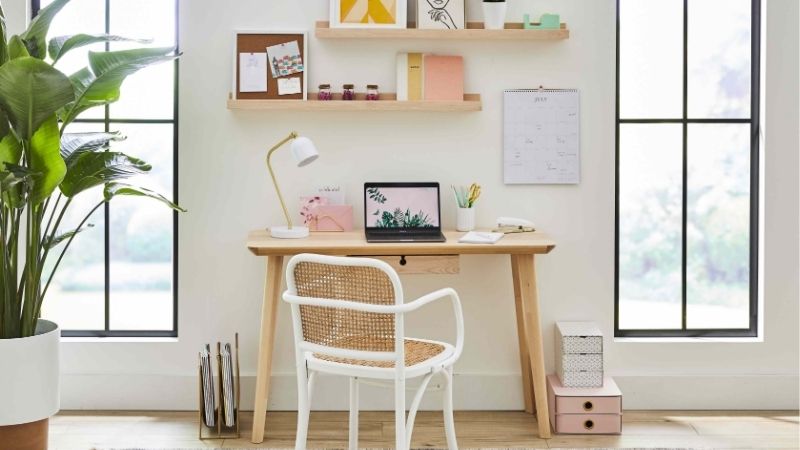
| Idea | Space or Size Needed | Cost Tier | Effort and Time |
|---|---|---|---|
| Pegboard above the desk | Wall; ~1.5 in deep | Budget | Under an hour; drilling |
| Monitor stand with drawer | ~18×10 in; lifts screen | Budget–mid | Minutes, no tools |
| Portable desktop organizer | ~13×8 in footprint | Budget | Minutes, no tools |
| Desk pad to define the zone | ~18×26 in; flat | Budget | None |
| One framed photo or print | Small corner or wall | Budget | Minutes |
| A single small plant | ~4–6 in pot | Budget | Minutes |
| Cable tray under the desk | Under-desk; no top space | Budget | Under an hour |
| A task lamp, not clutter | Small base or clamp | Budget–mid | Minutes |
Hang a Pegboard Above the Desk
A pegboard moves clutter off the desktop and onto the wall. IKEA SKÅDIS is about 14¼ inches wide and only 1½ inches deep but 22 inches tall, holding pens, notes and small tools vertically, so it frees horizontal surface while keeping everyday items in reach. It reads budget tier; confirm the current price.
It suits a desk against a wall where the vertical space is wasted. Mount it into studs or with proper anchors, and keep the load light. One caveat: moving items to the wall frees surface but does not by itself make you more productive — it helps only if you clear the desktop it replaces.
Lift the Screen With a Monitor Stand
A monitor stand earns its footprint twice: it raises the screen to eye level and stores items beneath. IKEA ELLOVEN is about 18½ inches wide, 10¼ deep and 4 tall with a drawer, reclaiming the space under the monitor for the clutter that usually spreads across the desk. It reads budget-to-mid tier overall.
It suits anyone working long hours, since raising the screen helps posture while the drawer hides small items. Check the stand’s width against your monitor base and the overall desk depth, since at 10 inches deep it needs room behind the keyboard without pushing the screen too far back.
Corral Small Items in One Organizer
One well-chosen organizer beats a scatter of trays. IKEA VATTENKAR is about 13 inches wide, 8¼ deep and 17 tall, a portable caddy that gathers pens, notebooks and chargers into a single footprint you can lift aside when the desk is needed for something else. It reads budget tier; confirm the current price.
It suits a shared or multi-use desk, since one movable organizer keeps the surface clearable. The space it saves is real only if it replaces the loose clutter rather than adding to it, so fill it from what is already on the desk. Keep it to the items you reach for daily and store the rest elsewhere.
Define the Zone With a Desk Pad
A desk pad adds order and a little personality for almost no cost in space, since it lies flat. IKEA SUSIG is a cork pad about 17¾ by 25½ inches that defines the working zone, protects the surface and gives the eye a calm base under the keyboard and mouse. It reads budget tier and needs no setup at all.
It suits any desk, framing the work area and cutting visual clutter by giving everything a defined place to sit. Because it is flat, it costs no usable height and little depth. Match the size to your desk so it does not overhang the edge, and choose a material you can wipe clean for a surface used all day.
Personal Desk Decor Without Clutter
Personality has a place too, as long as it does not crowd the work. These ideas add character with a light footprint, the trick being one considered piece rather than many small ones. Decide what to keep off the desk first, then let each chosen item earn the surface it occupies for the long term.
Choose One Framed Photo or Print
One framed photo says more than a crowded shelf of them. A single small frame on a corner, or a print on the wall above the desk, adds warmth without spreading across the surface you work on. The restraint is the point: one considered piece reads as intentional where a cluster reads as clutter.
Keep it small and to one side, or move it to the wall entirely to save the desktop. If you want to rotate photos, a single frame you swap beats several competing for space. The goal is personality that does not encroach on the keyboard, the notepad and the clear zone you actually use for work.
Add a Single Small Plant
A small plant brings life to a desk on a tiny footprint. A pot only four to six inches across fits a corner, and a low-maintenance species suits a workspace that may miss a watering. It adds a spot of green without the sprawl of a larger planter, which a work surface rarely has room to spare.
Match the plant to the light the desk gets, since a dark corner suits different species than a sunny window. Keep it to one small pot, not a row, so it stays decor rather than clutter. Choose something that tolerates the odd missed watering, because a struggling plant undoes the calm it adds.
Route Cables Under the Desk
Tidy cables are decor you feel more than see. A cable tray or clips fixed under the desk lift cords off the floor and the surface, clearing the visual noise that makes a desk look cluttered even when it is tidy. It uses zero desktop space, which is the most space-efficient improvement on this whole list.
It suits any desk with a monitor, charger and lamp fighting for the same corner. Group the cables, fix the tray underneath, and leave enough slack to move the monitor. Clearing cords off the surface often does more for how a desk looks and works than any single decorative object you could add on top.
Pick a Task Lamp, Not Clutter
A task lamp is decor that works for its space. A clamp or small-base lamp lights the work without taking the footprint a floor lamp would, and the right one adds a clean line to the desk. Choose a clamp mount to save the surface entirely, lighting the keyboard and notepad from the edge rather than the top.
Match the light to the task and the room, warmer for comfort or cooler for focus, and position it to avoid screen glare. A clamp lamp frees the desktop a based one would claim, which fits the theme of this list: the best desk decor ideas for work add function or calm without eating the surface you need.
Frequently Asked Questions
Desk shoppers ask the same few things: how to decorate without losing work space, whether decor helps focus, what suits a small desk, and where to start. The answers below use the footprints above and one principle — clear the desk first, then let each piece earn its place on it.
How Do I Decorate a Desk Without Losing Work Space?
Start by removing, not adding. Clear everything you do not use daily, then choose decor that goes vertical or lies flat — a pegboard, a wall print, a desk pad — so it costs little surface. The space you free by decluttering is usually more than any organizer gives back, so that is the first move to make.
For the items that stay, give each one a home off the main zone: a monitor stand lifts the screen and hides clutter beneath, a single organizer corrals small things. Keep the keyboard, mouse and notepad area clear, and let decor live at the edges or on the wall rather than in the working center.
Does Desk Decor Actually Help You Work?
A tidy, calm desk can help focus, but decor itself does not automatically make you more productive. Moving clutter to a pegboard or a drawer helps only if it actually clears the surface and your sightline. The gain comes from order and ergonomics more than from the objects themselves.
A small amount of personality — a photo, a plant — can make a workspace more pleasant to sit at, which matters over long hours. Keep it light, though, since a crowded desk adds visual noise that works against focus. The useful decor is the piece that does a job or calms the space, not one that fills it up.
What Decor Suits a Small Desk?
Prioritize vertical and flat. On a small desk, a wall pegboard, a desk pad and a monitor stand add function and order without claiming the scarce surface. Skip anything with a wide base or a deep footprint, and keep personal items to a single small piece, since a small desk shows clutter fastest of all.
Measure before buying, since a stand or organizer an inch too deep pushes the keyboard into you. Check each piece’s footprint against the clear space you have, and favor items that lift off the surface. The smaller the desk, the more each object has to earn its spot to be worth adding at all.
Where Should I Start?
Declutter first, always. Before buying any desk decor ideas for work, clear what you do not use and see how much surface returns. Often the desk needs editing more than decorating, and the clear space changes what, if anything, you then want to add back for function or for a little personality.
Then add in order of usefulness: cable management and a monitor stand for function, a pad to define the zone, and finally one personal touch. Buy to the space you measured, not to a look, so each piece fits the desk and the work rather than crowding the surface you cleared to begin with.
Final Thoughts
The best desk decor ideas for work start with subtraction: clear what you do not use, then add only pieces that earn their inch of desktop — a pegboard, a monitor stand, a flat pad, one personal touch. Measure each footprint before buying, and recall that clearing the surface, not buying more, is what makes a desk work.
