A desk chair floor protector for carpet fails if it is matched to the wrong pile — a mat for thin commercial carpet slides and digs on a plush one. Since these mats share a 46-by-60-inch size, pile rating, not size, is the real decision. This guide compares mats by the carpet pile each is actually built for.
As an Amazon Associate we earn from qualifying purchases.
By KK Home Furnishings Editorial Team
How to Choose a Chair Floor Protector for Carpet
A carpet chair mat is chosen by pile, not looks or size. The mat has to grip and roll on your carpet’s thickness, and a hard-floor mat is the wrong tool entirely. Four things decide the buy: carpet pile compatibility, the hard-floor-versus-carpet distinction, size and caster travel, and grip and durability.
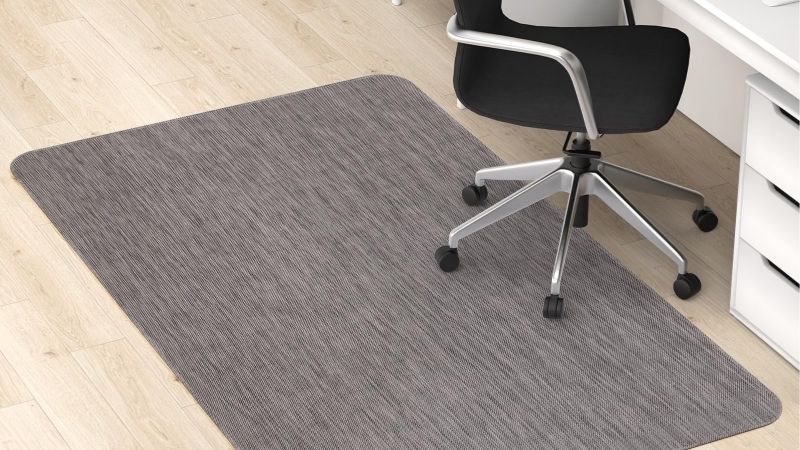
Match the Mat to Your Carpet Pile
Pile height is the decisive spec. A Realspace Low-Pile mat is rated for carpet with a pile of about ¼ to ⅜ inch, while a Realspace Commercial mat and others are for pile up to about ¼ inch — thin, dense commercial carpet. Measure your carpet’s pile and match it to the mat’s rating, since a mat for thin carpet fails on plush.
Measure the pile by pressing a ruler to the backing and reading the fiber height. Low-pile and commercial carpet suit most chair mats; thick, plush or shag carpet often exceeds what a standard mat is rated for, so check the maximum. A mat under-rated for your pile sinks and flexes, letting the chair roll poorly and the mat shift.
Getting the pile wrong is the usual reason a carpet mat disappoints. Too thin a rating on thick carpet and the mat buckles and will not hold the chair; the chair sinks and drags instead of rolling. Match the rating to your measured pile with a little margin, since the pile, not the brand or price, decides whether a carpet mat works.
Carpet Mats Are Not Hard-Floor Mats
A carpet mat and a hard-floor mat are different products, not interchangeable. Carpet mats have gripper cleats or spikes on the underside that bite into the pile to stay put; hard-floor mats have a flat, smooth backing. Put a carpet mat on a hard floor and the cleats scratch it; put a hard-floor mat on carpet and it slides.
Confirm you are buying a carpet mat for a carpeted room, which the ones here are. If your setup mixes a hard floor and carpet, you need the matching mat for each or carpet-rated casters instead. Read the listing for the intended floor type, since the look is similar but the backing — cleated or flat — makes them suit opposite floors.
This is the mistake that ruins both the mat and the floor: cleats gouge hardwood, and a flat mat on carpet crawls and dings the chair base. Match the mat to the actual floor, and if you move the chair between surfaces, use the right mat or caster for each rather than forcing one mat to serve both, which serves neither well.
Size and Caster Travel Zone
The mats here share a 46-by-60-inch size, so size is a near-tie — enough for a desk and the chair’s roll zone for most setups. The figure to check is whether that footprint covers your caster travel: the area the chair base swings and rolls across. Measure the zone you actually use, not just the desk width, against the mat.
Match the mat to how far you roll and whether it has a lip to tuck under the desk. For a wide desk or a chair you roll far back, confirm 46 by 60 inches reaches the full travel, since a mat the chair rolls off at the edge lets a caster dig into the carpet. For a compact corner, this size is usually generous enough.
A mat sized to your travel zone protects the carpet where wear actually happens, under and around the chair. If the chair rolls off the edge, the exposed carpet crushes and the mat edge can curl, becoming a trip point. Choose a size that covers the roll zone with margin, since the edges are where a chair mat wears and lifts first.
Grip and Durability
On carpet, grip comes from the underside cleats, and durability from the mat material and thickness. A thicker, firmer mat rated for your pile stays flat and rolls smoothly; a thin, under-rated one flexes, cracks at stress points and shifts. Check the material and that the cleats suit your pile, since both set how the mat holds up.
Match the thickness and material to your use and chair. A heavier user or a chair used all day needs a firmer, well-rated mat that will not crack or dimple at the caster paths. A lighter setup tolerates a thinner mat. Look for a stated carpet-pile rating and material, which signal durability better than a generic protector claim.
Carpet mats fail at the edges and the high-traffic caster paths, curling, cracking or wearing thin over time. Keep the mat flat, let it relax out of its roll before use, and avoid dragging heavy furniture across it. Favor a mat whose material and pile rating match your setup, since the right-rated mat outlasts a cheaper mismatched one.
Top Picks
Three carpet chair mats cover the common pile ranges, plus a row on measuring your own pile — since that, not the matched 46-by-60-inch size, is the real decision. Each is a carpet mat, not a hard-floor one, so match it to your carpet. Each leans on manufacturer-stated specs and a tier, not a fixed price.
| Product | Best For | Key Spec | Watch Out For |
|---|---|---|---|
| Realspace Low-Pile OD47648 | Best for low-pile carpet | 46×60 in; ¼–⅜ in pile | Too much pile for plush carpet |
| Realspace Commercial OD64429 | Best for thin commercial carpet | 46×60 in; ≤¼ in pile | Not for plush or thick pile |
| Dimex C532003J | Best for low-to-medium pile | 46×60 in | Confirm your pile fits |
| Any carpet mat | Measure your pile first | Pile rating decides the fit | Not for hard floors |
Realspace Low-Pile OD47648: Best for Low-Pile Carpet
For standard low-pile carpet, the Realspace OD47648 is rated for a pile of about ¼ to ⅜ inch at a 46-by-60-inch size. It reads budget-to-mid tier; prices move, so confirm the current price and, more importantly, measure your carpet’s pile against that ¼-to-⅜-inch range before buying, since the rating is the real fit test.
This range covers much residential low-pile carpet, so it suits a typical home office. The 46-by-60-inch footprint handles a desk and normal caster travel. If your carpet is plusher than ⅜ inch, this mat will not grip or roll well, so measure first and step to a mat rated for more pile, or reconsider a different solution.
As a carpet mat, it has underside cleats for the pile, so keep it off hard floors it would scratch. It wears at the edges and caster paths over time, so let it relax flat before use and keep the chair on it. Favor it when your measured pile matches, since a correctly rated mat rolls smoothly and lasts far longer.
Realspace Commercial OD64429: Best for Thin Commercial Carpet
For thin, dense commercial-style carpet, the Realspace OD64429 is rated for pile up to about ¼ inch at the same 46-by-60-inch size. It reads mid tier; verify the current price, and confirm your carpet is genuinely low, commercial-grade pile — at or under ¼ inch — since this mat is built for thin carpet, not plush residential pile.
It suits offices and homes with thin, hard-wearing carpet where a firm mat rolls best. On thicker residential pile it will not sit right, so this is the pick only if your carpet is genuinely low. The 46-by-60-inch footprint covers a desk and caster travel, so size is not the issue — the pile match is what matters.
Being a carpet mat with cleats, it belongs on carpet, not a hard floor. A firm commercial mat holds up well under daily use when matched to the right thin pile, but on too-thick carpet it rocks and wears unevenly. Confirm the pile first, and favor it where commercial-grade carpet makes its firm, low-pile rating the right fit.
Dimex C532003J: Best for Low-to-Medium Pile
The Dimex C532003J is a 46-by-60-inch carpet mat suited to low-to-medium pile, giving an option between strictly commercial and plush. It reads budget-to-mid tier; confirm the current price and the exact pile rating for your carpet, since medium pile is where fit gets marginal and the stated range is what you check against.
It suits a home office with everyday carpet that is a little thicker than commercial grade. The 46-by-60-inch size covers the usual desk-and-roll zone. Because medium pile pushes the limit of many mats, measure carefully and confirm this one is rated for your thickness, since a mat near the top of its range grips less securely.
As with any carpet mat, it is for carpet, not hard floors, and it wears at the edges and caster tracks. Let it flatten before use and keep the chair on it. Favor it when your pile sits in the low-to-medium band it is built for, since matching the pile, not the size or price, is what makes a carpet mat perform.
Measure Your Carpet Pile First
Because these mats share a size, the decision comes down to your carpet’s pile, so measure it before buying. Press a ruler to the carpet backing and read the fiber height: under ¼ inch is commercial or low pile, ¼ to ⅜ is standard low pile, and thicker is plush or shag that most standard mats are not rated for.
Match that figure to a mat’s stated pile range with a little margin, choosing a mat rated for at least your pile. If your carpet is plusher than the mats here cover, look for a high-pile-rated mat or consider carpet-rated casters instead. The pile measurement, not the mat’s size or looks, is the number that decides the fit.
Finally, confirm it is a carpet mat, not a hard-floor one, and that it reaches your caster travel zone. These three checks — pile, floor type and coverage — prevent the common mismatches that make a chair mat slide, dig or fail. A few minutes measuring saves a return on a mat sent for the wrong carpet entirely.
Frequently Asked Questions
Carpet-mat shoppers ask the same things: how to measure pile, whether a hard-floor mat works on carpet, what size to get, and why a mat slides or will not roll. The answers below treat carpet pile as the real decision and keep carpet mats separate from hard-floor ones throughout the comparison.
How Do I Measure My Carpet Pile?
Press a ruler straight down to the carpet backing and read the height of the fibers. Under about ¼ inch is thin, commercial or low pile; ¼ to ⅜ inch is standard low pile; thicker than that is plush, and shag is thicker still. That measurement is what you match to a mat’s stated pile rating before buying anything.
Measure in a spot that is not crushed by furniture for a true reading, and check more than one area if the carpet varies. Then choose a mat rated for at least your pile, with a little margin. The pile figure is the single most useful number here, since a mat matched to it grips and rolls while a mismatched one fails.
If your carpet is plusher than the common mats cover — much over ⅜ inch — a standard chair mat may not work, and you would look for a high-pile mat or carpet-rated casters. Knowing your pile first tells you which category you are even shopping in, so measure before comparing mats rather than guessing from how the carpet feels.
Can I Use a Hard-Floor Mat on Carpet?
No. A hard-floor mat has a flat, smooth backing meant to sit on a hard surface; on carpet it slides and the chair pushes it around. A carpet mat has gripper cleats underneath that bite into the pile to stay put. They are different products for opposite floors, so a hard-floor mat on carpet is simply the wrong tool.
The reverse is also true: a carpet mat’s cleats scratch a hard floor, so do not swap them. If your room is carpeted, buy a carpet mat rated for your pile; if it is hard floor, buy a hard-floor mat. For a mixed setup, use the matching mat for each surface or switch to carpet-rated casters rather than one mat for both.
Check the listing for the intended floor type, since the two look alike but the backing differs. Using the right mat for the floor protects both the floor and the chair and keeps the mat in place. Forcing one mat onto the wrong surface damages the floor or lets the mat crawl, so match the mat to the floor every time.
What Size Chair Mat Do I Need?
Enough to cover your caster travel zone — the area the chair rolls and swivels across — not just the desk width. A common 46-by-60-inch mat suits most desks and normal travel, which is why these share that size. Measure how far you roll back and to the sides, and confirm the mat covers it with a little margin.
If you roll far back from a wide desk, confirm the length reaches your full travel, since a caster that rolls off the edge digs into the carpet and curls the mat. For a compact corner, 46 by 60 inches is usually generous. Size to the roll zone so the carpet is protected where wear happens, under and around the chair.
With these mats matched on size, the size question is really just confirming coverage, while the pile rating is the real choice. A bigger mat protects more carpet but costs more and takes more room; the standard size covers most home offices. Match it to your travel, then decide on pile, which is where the real fit is won.
Why Does My Chair Mat Slide or Not Roll?
Usually a pile mismatch. A mat rated for thinner carpet than you have sinks into the pile, so it shifts and the chair sinks and drags instead of rolling. A hard-floor mat on carpet slides for the same reason — no cleats. Check your pile against the mat’s rating first, since that is the most common cause of both problems.
Other causes are a mat still curled from its packaging, which needs time to relax flat, or a mat too small so a caster rolls off the edge. Let a new mat lie flat before use, and confirm it covers your travel zone. Work through pile match, flatness and coverage before assuming the mat or the chair casters are faulty.
If the pile is right, the mat is flat, and it covers the zone but the chair still rolls poorly, check the casters themselves — carpet-rated casters roll better on thicker pile than hard-floor ones. Match both the mat and the casters to the carpet, since the smoothest roll comes from the whole setup suiting the pile, not one part.
Final Thoughts
The right desk chair floor protector for carpet is the one rated for your carpet’s measured pile — the real decision, since these mats share a size — and built as a carpet mat, not a hard-floor one. Measure the pile before buying, confirm the mat covers your caster travel zone, and match the casters to the pile too.
More from Amazon
Programs that pair well with the guide above. Offers and eligibility are set by Amazon and may change.
Collect the home and kitchen items you want in one registry that guests can shop from.
Create a wedding registrySet up recurring deliveries of everyday items on eligible products. Terms and savings are set by Amazon.
Explore Subscribe & SaveFree shipping on eligible items, Prime Video and more. Eligible new members can start with a free trial.
Start a Prime free trialAudiobooks and podcasts to listen to on the go. Eligible new members can start with a free trial.
Try Audible freeAs an Amazon Associate we earn from qualifying purchases.