A bedside table that looks right can still sit too low or crowd the walkway, so side tables for bedroom use are chosen by height against the mattress and floor footprint first. The picks below are compared on height, footprint and storage, with a checklist for any unit, so the one you pick suits the bed and the room.
As an Amazon Associate we earn from qualifying purchases.
By KK Home Furnishings Editorial Team
How to Choose Side Tables for Bedroom Use
Choosing side tables for bedroom use works best when you start from the two numbers that decide fit: the height against your mattress and the floor footprint in a tight room. The four criteria below move from bedside height, to footprint, to the trade-off between hidden drawers and open shelves that suit small rooms.
Match Table Height To Your Mattress Surface
The first number is height measured against your mattress top, not a generic figure. These picks span 20.5 inches on the IKEA KNARREVIK to 26 inches on the Target Porto, so the right one depends on how tall your bed sits once the mattress and any topper are in place rather than on the table alone.
Measure from the floor to the top of your mattress, then aim for a table within a couple of inches of that height so a lamp, a glass of water and a phone sit within easy reach. A table far below the mattress means reaching down awkwardly, while one well above it looms over the pillow and feels wrong.
Bed heights vary widely with the frame, mattress thickness and any topper, so there is no single correct table height. A platform bed sits lower and pairs with a shorter table, while a thick mattress on a tall frame wants a higher one, which is why matching the measured surface beats picking a table by looks alone.
Measure Floor Footprint Before Choosing Storage
Footprint decides whether the table fits a tight bedroom, so measure it before being tempted by extra storage. These picks range from a compact 158 square inches on the SONGMICS to 416 on the Porto, a spread wide enough to decide between a slim tower and a substantial bedside cabinet with a drawer.
Map the gap between the bed and the wall or door, leaving room to open a drawer and to walk past. A narrow table like the SONGMICS slots into a tight channel beside the bed, while a wider unit like the Porto needs a bedroom with real floor to spare on that side without blocking the route to the door.
More storage only helps if the footprint fits, since a bulky cabinet that crowds the walkway makes the room harder to live in. Let the measured gap decide the size, and in a small bedroom favor height over width, using a taller, slimmer table to keep surface area without claiming much of the floor.
Drawers Hide Clutter But Increase Bulk
Enclosed drawers keep the bedside tidy, but they add depth and bulk to the table. The Target Porto pairs a drawer with a shelf, and the larger cabinets in this category hide chargers and clutter, which suits a bedroom you want to keep visually calm, though the drawer box makes the piece deeper front to back.
Match the storage to what you keep by the bed: medication, cables and a book hide neatly in a drawer, while a table used only for a lamp and a glass needs none. A drawer also needs clearance to open fully, so check the bed does not block it and the pull has room to clear the edge of the mattress.
The trade-off is that drawers add weight, depth and cost, and cheaper drawer boxes can loosen or stick over time. For a tidy bedroom a drawer earns its bulk, but in a tight space the extra depth can be the difference between a table that fits cleanly and one that pushes out into the walkway.
Open Shelves Work Better In Tight Rooms
Open shelves trade concealment for a lighter footprint, which is why they suit small bedrooms. The SONGMICS tall table stacks three open tiers rated to 44 pounds each in a slim 13.4-by-11.8-inch footprint, and the KNARREVIK’s open shelf keeps the piece compact where a drawer cabinet simply would not fit.
Open storage suits a room where you want books and a basket within reach and floor space is scarce, since a tall, narrow shelf tower holds a surprising amount without claiming much floor. It also keeps everything visible, which some prefer and others find cluttered, so match it to how tidy you keep the bedside.
The downside is that nothing is hidden, so cables and clutter stay on show, and only the SONGMICS here publishes a shelf load. Where a maker does not state a capacity, keep loads modest and spread out, since a thin open shelf overloaded at the front is where budget furniture first starts to sag over time.
Top Picks
These picks cover a compact all-rounder, a value open-storage tower and a wider bedside cabinet, plus a checklist for any unit, with footprints and prices verified as of October 2026. Three are named because much of this category’s easy-to-verify data sits at one retailer, so the fourth slot is a buying check rather than a padded pick.
| Product | Best For | Key Spec | Watch Out For |
|---|---|---|---|
| IKEA KNARREVIK | Best Overall (Small Bedrooms) | 16.5 x 13.25 x 20.5 in; ~$14.99 | Open shelf only |
| SONGMICS Tall Side Table | Best Value (Open Storage) | 13.4 x 11.8 x 22.8 in; 44 lb/shelf; ~$33.99 | No hidden storage |
| Target Porto | Wider Bedside Surface | 26 x 16 x 26 in; drawer + shelf; ~$175 | Largest footprint here |
| Any bedside table | Verify Before Buying | Height vs mattress; footprint; load | Unlisted load or anti-tip |
IKEA KNARREVIK – Best Overall For Small Bedrooms
The IKEA KNARREVIK is the compact all-rounder, measuring 16.5 by 13.25 by 20.5 inches with an open lower shelf, listed at about $14.99 at IKEA as of October 2026. Its roughly 219-square-inch footprint and low 20.5-inch height suit a small bedroom and a lower platform bed where a tall cabinet would overwhelm the space.
That small size and budget price make it the easiest to place beside a bed without crowding the room, and the open shelf holds a book or a basket under the surface. At 20.5 inches it pairs well with a lower mattress top, so measure your bed before assuming it reaches the right bedside height for you.
The limit is storage: it offers an open shelf rather than a drawer, so nothing is hidden, and its load is only partly published by the maker. Keep it to a lamp, a phone and a book rather than heavy items, and as with any budget table, spread weight evenly rather than loading one edge of the open shelf.
SONGMICS Tall Side Table – Best Value For Open Storage
The SONGMICS tall side table is the value pick for open storage, stacking three tiers rated to 44 pounds each in a slim 13.4-by-11.8-by-22.8-inch frame, listed around $33.99 on a sale snapshot as of October 2026. Its 158-square-inch footprint is the smallest here, built to use height rather than floor space.
That tall, narrow shape suits a tight bedroom where floor space is scarce but you still want storage for books, a basket and a lamp. The published 44-pound shelf rating is a genuine advantage over tables that list no capacity, giving a clear limit to load each tier to rather than guessing from how the shelf looks.
The trade-off is that everything stays on show, so it suits a bedside you keep tidy rather than one that collects clutter. As an open tower it is also more top-heavy than a low cabinet, so load the lower tiers more heavily and keep it against the wall for stability rather than standing it fully out in the open.
Target Porto – Best For A Wider Bedside Surface
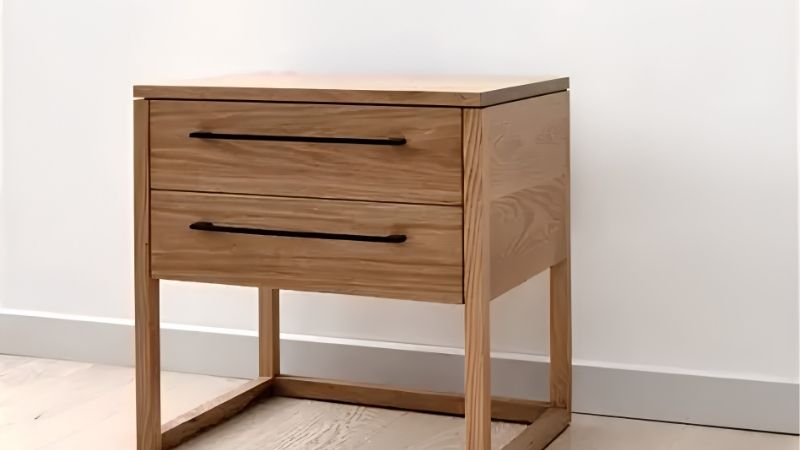
The Target Porto nightstand is the pick for a roomier bedside, measuring 26 by 16 by 26 inches with a drawer and a shelf, listed around $175 at Target as of October 2026. Its 26-inch height suits a taller bed, and the wide top gives space for a lamp, a book and a glass without crowding the surface.
The combination of a drawer and an open shelf hides chargers and clutter while keeping a book within reach, which suits a bedroom you want to keep calm. At 416 square inches it has the largest footprint here, so it wants a bedroom with real floor to spare on that side of the bed rather than a tight gap.
The caveats are size and unlisted load: it is the bulkiest of these and its weight capacity is not published, so keep heavy items off it and check the drawer opens clear of the bed. Confirm the 26-inch height suits your mattress top, since a tall nightstand beside a low bed can feel out of proportion.
What To Verify On Any Bedroom Side Table
Because much of this category’s clearly published data sits at one retailer, the smartest fourth step is a checklist rather than another similar pick. On any bedside table, verify three numbers first: the height against your mattress top, the floor footprint against your gap, and the published load if the maker states one.
Beyond those, check whether the maker states a weight capacity, since many bedside tables leave it out, and whether a tall or narrow unit includes anti-tip hardware for a child’s room. Read the assembled dimensions rather than the box size, and confirm a drawer, if fitted, opens fully without the bed in the way.
Treating the fourth slot as a buying check keeps the comparison honest when a single retailer dominates the easy data, since a wider spread of sources would describe the real market better. Apply the same three measurements to any table you find elsewhere, and you can judge it on the same terms as these picks.
Frequently Asked Questions
Shoppers comparing bedside tables tend to ask the same practical questions, and most come back to height and size rather than style. These answers keep the numbers tied to the picks above while being clear that the right height follows your own bed, not a single figure printed on a sizing chart.
How Tall Should A Bedroom Side Table Be?
The right height is close to your mattress top, which is why it varies so much between homes. These picks run from 20.5 to 26 inches precisely because beds sit at different heights, so measure from the floor to the top of your mattress and aim within a couple of inches of that figure rather than a fixed number.
The reason there is no universal height is that frame, mattress thickness and any topper all change how tall the bed sits. A table a little below the mattress keeps a lamp and a phone within easy reach, while one well above the surface looms over the pillow and feels awkward to use from the bed.
Measure your bed before buying, then pick the table that lands near that height for comfort. A low platform bed pairs with a shorter table like the KNARREVIK, while a thick mattress on a tall frame suits the 26-inch Porto, so match the measured surface rather than the look of the piece on its own.
How Wide Should A Nightstand Be?
Wide enough for what you keep by the bed and no wider than the gap allows, which is a footprint question before a width one. These picks span a slim 13.4-inch tower to a 26-inch cabinet, so the right width depends on the floor you have beside the bed and on what actually has to sit on top of it.
Match the width to the surface you need: a lamp, a phone and a glass fit a slim top, while a reading pile or a larger lamp wants a wider one. In a tight room, a narrow but tall table keeps surface area without claiming floor, which is often a better trade than a wide cabinet that blocks the walkway.
Measure the gap between the bed and the wall or door before choosing, leaving room to walk past and to open any drawer fully. A nightstand that fits the wall can still crowd the route around the bed, so let the measured footprint, not the width alone, decide how large a table the room can take.
Is A Side Table The Same As A Nightstand?
In a bedroom the terms are used interchangeably, since both describe a small table beside the bed. The difference is one of emphasis rather than a strict rule: a nightstand usually implies bedside storage like a drawer, while a side table can be any occasional table pressed into bedside duty for a lamp and a book.
What matters for the bedroom is function, not the label: the piece needs the right height against your mattress and a footprint that fits the gap, whether it is sold as a nightstand or a side table. A living-room side table can work beside a bed if its height and size happen to suit the room.
So choose by the numbers rather than by the name on the listing. If you want hidden storage, look for a drawer regardless of what it happens to be called, and if you only need a surface for a lamp, an open side table does the job, provided its height and footprint match the bed and the room.
Do Bedroom Side Tables Need Drawers?
Not necessarily; it depends on what you keep by the bed each night. A drawer hides medication, cables and a book, as on the Porto, while an open table like the KNARREVIK or the SONGMICS tower suits a bedside that only holds a lamp and a glass and benefits from a smaller footprint in a tight room.
The case for a drawer is tidiness, since it keeps clutter out of sight in a bedroom you want to feel calm and uncluttered. The case against is bulk and cost, because a drawer box adds depth and weight and needs clearance to open fully, which a tight gap beside the bed may not comfortably allow for.
Decide by the room and your habits: choose a drawer if you keep small items bedside and have the floor for a deeper table, and open shelves if space is tight or you prefer everything in reach. In a small bedroom, the slimmer open option often serves better than a bulkier drawer cabinet would.
Final Thoughts
The best side tables for bedroom use are the ones whose height matches your mattress top and whose footprint fits the gap beside the bed, chosen before storage style: the compact IKEA KNARREVIK for a small room, the slim SONGMICS tower for open storage, or the wider Target Porto for a roomier bedside, with the same checks on any table.