Key takeaways
- A chair mat rug gives you the soft look of an area rug with a surface built to let an office chair roll, which an ordinary rug does not reliably provide. This guide compares four current rug-style mats on rolling…
A chair mat rug gives you the soft look of an area rug with a surface built to let an office chair roll, which an ordinary rug does not reliably provide. This guide compares four current rug-style mats on rolling area, hard-floor or carpet compatibility and core construction, so your chair glides without bunching.
As an Amazon Associate we earn from qualifying purchases.
By KK Home Furnishings Editorial Team
How to Choose a Chair Mat Rug
A chair mat rug is judged on how it rolls and where it works, not just how it looks. Floor compatibility, rolling area, core stability and thickness all matter. These four span 12 to 20 square feet of surface and differ sharply on hard floors versus carpet, so match the mat to your floor first.
Match the Mat to Hard Floor or Carpet
Floor compatibility is the first filter, because not every mat suits every floor. The Branch and Anji Mountain mats list broad scopes covering wood, tile and some carpet, while the Garvee and DANRONG selected versions are specified for hardwood, tile and laminate, so they target hard floors rather than carpet.
Check your floor before anything else. On a hard floor almost any of these works, but on carpet you need a mat the maker actually permits for the pile you have, since a hard-floor-only design can shift or fail to roll properly over carpet. Matching the mat to the floor avoids the most common disappointment.
Because a hard-floor mat and a carpet-compatible mat are not interchangeable, do not use a hardwood-only model over carpet. The Branch and Anji mats publish carpet compatibility within limits, so they suit mixed situations, while the DANRONG and Garvee picks are better kept to the hard floors they are specified for.
Measure Your Actual Rolling Zone
Size the mat to the area your chair actually travels. These four range from 12 square feet on the Branch, through 15 on the Anji and about 17.72 on the Garvee, to 20 on the DANRONG, so the largest offers roughly two-thirds more surface than the smallest for a chair that roams.
Measure your desk width and how far the chair rolls back and to each side, then choose a mat that covers that zone with room to spare. A mat that is too small forces the casters off the edge, where they catch the floor or bunch the rug, undoing the smooth roll you wanted.
Bigger is not automatically better, though. A compact desk with little chair travel does not need 20 square feet, and an oversized mat wastes floor and money while being harder to keep flat. Size it to your real movement, since floor compatibility and fit matter more than sheer surface area.
Look for a Rigid or Stable Core and Non-Slip Backing
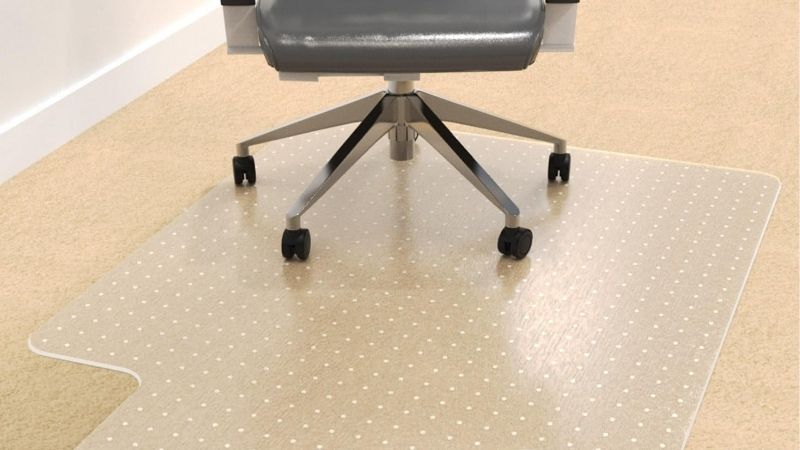
A chair mat rug rolls well because of its construction, not its soft looks. The Branch and Anji mats pair a jacquard polyester surface with a phthalate-free PVC core and non-slip backing, while the Garvee uses woven PVC with a rubber-like grip and the DANRONG a printed fabric over a non-slip rubber base.
That combination, a stable or low-friction surface over a grippy backing, is what lets casters roll without dragging or sliding the whole mat. It is the mechanical difference from a decorative rug, so look for a published core and backing rather than assuming any rug-look product underneath behaves like a purpose-built mat.
Durability over time depends on that core and backing staying put. A mat that creeps or curls at the edges catches casters and wears unevenly, so a firm core and genuine non-slip backing matter for the long run. Avoid treating a soft rug feel as evidence that a mat will roll well under daily use.
Check Thickness and Carpet-Pile Limits Where Published
Thickness and pile limits decide whether a mat suits your exact floor, and you should use published figures. The Branch mat is 0.25 inch, and the Anji Alta offers a 0.25-inch version for hard surfaces and commercial carpet plus thicker variants for other needs, so choose the thickness the maker specifies.
On carpet, the pile the mat permits is what counts: a mat rated for low or commercial pile will not roll well over thick plush carpet. Where thickness is published, match it to your floor; where it is not, as for the Garvee and DANRONG here, do not assume a figure, and keep them to hard floors.
A thicker mat is not automatically better, since fit to the floor and pile matters more than raw thickness. Choose the variant rated for your surface, and avoid over-thick mats on hard floors where a slim profile rolls more smoothly, since the right thickness for the floor beats the biggest number every time.
Top Picks
These four cover the realistic span of chair mat rug buyers, from a compact multi-floor mat to a large hard-floor zone. Each lists its size, floor scope and construction; pricing runs across budget to mid tiers, so confirm the current price and in-stock size before ordering, since variants sell out and return.
| Product | Best For | Key Spec | Watch Out For |
|---|---|---|---|
| Branch Woven Chair Mat | Best Overall | 36 x 48 x 0.25″; multi-floor scope | smallest rolling area here |
| Anji Mountain Alta | Carpet flexibility | 40 x 54″; 1/4″ selected variant | choose the correct thickness for your floor |
| DANRONG 48 x 60 | Large hard-floor rolling zone | 20 sq ft | not specified for carpet |
| Garvee 44 x 58 | Woven PVC hard-floor setup | about 17.72 sq ft | selected 44 x 58 variant currently out of stock |
Branch Woven Chair Mat — Best Overall
The Branch mat leads for versatility and build. It measures 36 by 48 inches at 0.25 inch thick, pairs a jacquard polyester surface with a phthalate-free PVC core and non-slip backing, and lists a floor scope covering wood, tile and low-pile carpet. It sits in the mid tier.
That broad floor scope makes it a safe choice if you have mixed flooring or are unsure, and the woven surface looks like a rug while rolling like a mat. The non-slip backing keeps it planted, so the chair rolls over it rather than pushing it around, which is exactly the point of a purpose-built mat.
The trade-off is size: at 12 square feet it has the smallest rolling area here, so a chair that roams widely may reach the edge. Measure your travel first, and keep it to the low-pile carpet or hard floors it is rated for, since even a well-built mat struggles over thick plush carpet.
Anji Mountain Alta — Best for Carpet Flexibility
The Anji Alta is the pick when carpet is involved. The selected variant measures 40 by 54 inches at 0.25 inch, pairs a jacquard polyester surface with a phthalate-free PVC core, and lists a floor scope covering hard surfaces and commercial carpets, with other thickness variants available. It sits in the mid tier.
Its commercial-carpet rating and choice of thicknesses give the most flexibility for office or home floors that include carpet, and the handmade woven look suits a styled room. At 15 square feet it offers more rolling room than the Branch, covering a wider chair-travel zone on a compatible surface.
The caveat is choosing the right variant: the 0.25-inch version suits hard surfaces and commercial carpet, while thicker options target other needs, so pick the thickness the maker specifies for your floor. Matching the variant to your actual pile matters, since the wrong thickness will roll poorly or creep over time.
DANRONG 48 x 60 — Best for a Large Hard-Floor Rolling Zone
The DANRONG mat is the pick when you want maximum rolling area on a hard floor. It measures 48 by 60 inches for a full 20 square feet, uses a printed fabric surface over a non-slip rubber base, and is specified for hardwood, tile and laminate. It sits in the budget-to-mid tier.
At 20 square feet it gives the most room to roll and recline, suiting a wide desk or a chair that moves a lot across a hard floor. The printed fabric brings pattern and a rug-like look, while the rubber base keeps it from sliding, making it a large, decorative hard-floor option.
The key limit is that it is not specified for carpet, so keep it to hard floors; using a hard-floor mat over carpet risks poor rolling and shifting. Its thickness and pile limits are not published, so do not assume carpet use, and treat any care claim conservatively unless the listing states it.
Garvee 44 x 58 — Best for a Woven PVC Hard-Floor Setup
The Garvee mat offers a woven PVC surface for hard floors. It measures 44 by 58 inches for about 17.72 square feet, uses woven PVC with a rubber-like non-slip backing in a flat-pile construction, and is specified for hardwood, tile and laminate. It sits in the budget tier.
The woven PVC surface is durable and easy to clean on a hard floor, and the flat-pile build rolls smoothly without the drag of a soft rug. At nearly 18 square feet it covers a generous rolling zone, making it a practical, value-minded choice for a hard-floor home office or study.
The main watch-out is stock: the selected 44 by 58 variant has shown out of stock, so confirm availability or an alternate size before counting on it. Like the DANRONG, it is a hard-floor design, so keep it off carpet, and verify the current size and price since variants come and go.
Frequently Asked Questions
Chair mat rugs raise questions mostly about whether a normal rug will do and what size to buy. The answers below use the published specs of these four mats and avoid treating any rug as a chair mat, so you can match one to your floor and chair travel before ordering.
Can I use a normal rug under an office chair?
You can, but it may not roll well or stay put. An ordinary area rug looks similar to a chair mat rug, yet it usually lacks the stable core and grippy backing these purpose-built mats publish, so casters can drag, bunch the pile or push the rug around.
The difference is mechanical: a chair mat rug pairs a low-friction or stable surface with a non-slip backing so the chair rolls over it rather than shifting it. A decorative rug is built for appearance and comfort underfoot, not for repeated caster loads, which is why results vary and edges can curl or wear.
If chair mobility matters, a purpose-built mat is the reliable choice. An ordinary rug may be enough only when you rarely move the chair, since then rolling performance is unimportant. For an active desk setup, match a real chair mat rug to your floor rather than hoping a standard rug behaves the same way.
What size chair mat do I need?
Size it to your actual rolling zone, which these mats cover across 12 to 20 square feet. Measure the desk width and how far your chair rolls back and sideways, then choose a mat that contains that travel with a margin so the casters never run off the edge.
A mat that is too small sends casters onto the bare floor or over the edge, where they catch or bunch the mat, while an oversized one wastes space and is harder to keep flat. The goal is coverage of your real movement, not the largest mat available, so map the chair’s range first.
For a compact desk with little travel, a 12 to 15-square-foot mat is plenty; a wide desk or a roamy chair benefits from the larger options. Match the size to how you actually use the chair, and confirm the specific size is in stock, since variants of these mats sell out and return.
Can a chair mat rug work on carpet?
Only where the maker permits the pile you have. The Branch and Anji mats publish carpet compatibility within limits, so they can suit low or commercial pile, while the Garvee and DANRONG selected versions are specified for hard floors and are not meant for carpet.
Carpet changes how a mat behaves, because a soft or thick pile under the mat lets it flex and the chair sink, so a mat must be rated for the pile to roll properly. Using a hard-floor-only mat over carpet risks poor rolling and a mat that shifts, which is why the maker’s rating matters.
Check your carpet’s pile against the mat’s published scope before buying, and pick a thickness the maker specifies for that pile. If your mat is hard-floor only, keep it on hard floors; forcing it onto carpet undoes the smooth rolling and stability the mat was designed to provide on its intended surface.
Does a thicker chair mat always roll better?
No. Rolling performance depends on fit to your floor and the mat’s core and backing, not on thickness alone. A slim mat on a hard floor can roll more smoothly than a thick one, while on carpet the right pile rating matters more than how thick the mat is.
Thickness is really about matching the surface: a thin mat suits hard floors, and a thicker one may be specified for certain carpet piles. Choosing a thicker mat than your floor needs can actually make rolling worse and the mat harder to keep flat, so match the variant to your surface instead.
Where thickness and pile limits are published, as on the Branch and Anji mats, follow them; where they are not, keep the mat to the hard floors it is specified for. The right thickness for your floor, paired with a stable core and non-slip backing, matters far more than the largest number.
Final Thoughts
The best chair mat rug is the one whose floor compatibility, size and core suit your setup, not the one that just looks like a rug. Match the mat to hard floor or carpet, size it to your rolling zone, and look for a stable core with a non-slip backing. On that basis the Branch mat leads, with the Anji, DANRONG and Garvee close behind.