Key takeaways
- Good wooden dining chairs should fit the table before they try to impress the room. Pottery Barn Bradford is the strongest verified starting point here, but its broad footprint will not suit every table. Compare seat height, width, load limits,…
Good wooden dining chairs should fit the table before they try to impress the room. Pottery Barn Bradford is the strongest verified starting point here, but its broad footprint will not suit every table. Compare seat height, width, load limits, construction, and care before choosing a style.
As an Amazon Associate we earn from qualifying purchases.
By KK Home Furnishings Editorial Team
How to Choose Wooden Dining Chairs
The useful way to compare wooden dining chairs is to separate visual style from measurable fit. A chair can look slim yet occupy more floor depth, or look substantial while sliding neatly under a table. The four checks below keep attention on dimensions, construction, and stated limits.
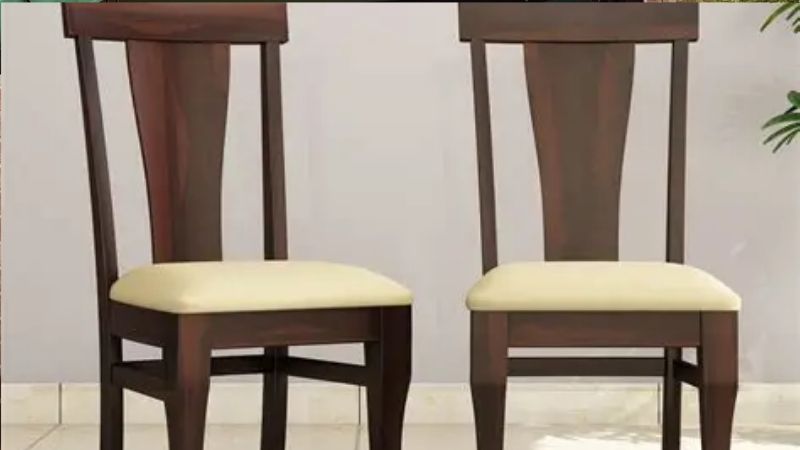
Match Seat Height to the Table and Apron
The four chairs here place their seats from 17.75 to 19 inches high, a narrow range that still matters when a table has a deep apron. Measure from the floor to the underside of that apron rather than relying on the tabletop alone, then confirm that knees and thighs have usable clearance at every seat.
Pottery Barn lists the Bradford at 18.5 inches, Article lists the Gusfa at 18.5 inches, Nathan James lists Linus at 19 inches, and IKEA lists RÖNNINGE at 17.75 inches. Those figures make fit easier to compare without assuming that every dining table has the same geometry or apron depth.
A higher seat can feel better beside a taller table, while a lower seat can create more knee clearance under a thick apron. Upholstery also changes how the chair feels in use, so treat the published seat height as the starting dimension and confirm your table clearance before ordering a full set.
Use Overall Width to Plan Real Seating Capacity
Chair width sets the minimum physical footprint at the table, but it does not account for elbows, curved backs, or the room needed to pull a chair out. In this group, published overall widths run from 18.125 inches on RÖNNINGE to 21.5 inches on Gusfa, a meaningful difference across several seats.
Linus is 19.5 inches wide and Bradford is 21 inches wide, placing them between those two ends. On a tight table, a difference of a few inches per chair can decide whether a planned seat count works. On a larger table, extra width may be worth it for a broader seat or heavier frame.
Measure the usable edge between table legs or supports rather than the full tabletop length. Pedestals, trestles, and corner legs can steal knee room even when the top looks generous. Then check chair depth and the path behind each seat so people can sit down without blocking a walkway.
Read the Wood Description More Carefully Than the Finish Name
A natural or walnut color does not tell you how a frame is built. Bradford uses kiln-dried solid rubberwood with mortise-and-tenon joinery and corner blocks. Gusfa mixes solid wood with veneered components, while RÖNNINGE uses solid birch in the side frame and cross rail with veneered seat and back parts.
Linus uses a solid wood frame with upholstered seat and back components. That mix is not automatically weaker or stronger than an all-wood seat, because joint design, hardware, section size, and testing matter too. Use the material list to understand where solid wood is actually carrying the structure.
Wood furniture also needs stable care conditions. Article advises keeping wood away from heat sources because temperature changes can dry wood and shift joints, while Nathan James tells owners to limit direct heat and moisture contact. Finish-specific care matters as much as the species name on the listing.
Treat Load Ratings and Test Standards as Separate Evidence
Published weight limits help screen chairs for intended users, but a load number is not a lifetime guarantee. Bradford carries a 400 lb capacity, Gusfa is tested to 300 lb, Linus lists a 250 lb limit, and RÖNNINGE is tested for 243 lb. Each figure applies to that named model, not to wooden chairs in general.
Testing language adds another layer. Pottery Barn describes Bradford as Contract Grade and references selected ANSI/BIFMA protocols. Article also marks Gusfa as Contract Grade, while IKEA says RÖNNINGE meets EN 16139 Level 1 and ANSI/BIFMA X5.4 requirements for public-use seating.
Use those statements to understand the maker’s verification scope, then still inspect fasteners and joints during ownership. IKEA calls for screw retightening after about two weeks and when needed, while Nathan James recommends periodic hardware checks. Maintenance is part of keeping a jointed chair stable.
Top Picks
These four wooden dining chairs cover four different priorities without pretending one shape fits every table. Bradford leads on published load capacity and joinery detail, Gusfa adds stackability, Linus brings heavily tested upholstery, and RÖNNINGE is the narrowest overall chair in this comparison.
| Product | Best For | Key Spec | Watch Out For |
|---|---|---|---|
| Pottery Barn Bradford Dining Chair | Best Overall | 400 lb capacity; 18.5 in seat height; 21 in overall width | Seat cushion is sold separately; chair weighs 24.25 lb |
| Article Gusfa Stackable Dining Chair | Best For Stackable Storage | 300 lb tested; 18.5 in seat height; 21.5 in overall width | Sold and shipped in pairs; solid and veneered wood construction |
| Nathan James Linus Dining Chair | Best For Tested Upholstery | 250 lb limit; fabric tested over 100,000 double rubs; 19 in seat height | Upholstered surfaces need spot care; assembly required |
| IKEA RÖNNINGE Chair | Best For Narrower Table Spacing | 243 lb tested; 17.75 in seat height; 18.125 in overall width | Seat is narrower; floor protectors are sold separately |
Pottery Barn Bradford – Best Overall
Bradford is the strongest all-round starting point here, but its 21-inch width and 24.25 lb weight make it less compact than lighter picks. Its 400 lb published capacity is the highest of the group, and Pottery Barn lists kiln-dried solid rubberwood, mortise-and-tenon joinery, corner blocks, and Contract Grade testing.
The chair measures 21 inches wide, 21 inches deep, and 37.5 inches high, with an 18.5-inch seat height. That footprint is not compact, but it gives you a clear planning target for table spacing. The 24.25 lb chair weight also makes it less convenient to move repeatedly than lighter picks.
Bradford sits in the premium tier for this shortlist, and the matching dining-chair cushion is sold separately. That is the main ownership cost to plan beyond the chair itself. Choose it when verified structure and a higher stated load matter more than stackability, low weight, or the narrowest footprint.
Article Gusfa – Best For Stackable Storage
Gusfa stacks two high, but its 21.5-inch overall width makes it the widest chair in this group. Article gives it a 300 lb tested rating and an 18.5-inch seat height. That combination makes storage more flexible without pretending the chair itself is compact at the table or easy to squeeze between close table legs.
Article uses a mix of solid and veneered wood, with oak, plywood, oak veneer, and plastic feet listed for the smoked-oak version. The chair measures 32.5 inches high and 20.5 inches deep, weighs 17.5 lb, arrives without assembly, and is marked Contract Grade for residential and commercial use.
Gusfa falls in the mid tier here, and chairs are sold and shipped in pairs even though the displayed price is per chair. That pack structure matters when you need an odd number of seats. It suits homes that occasionally clear the dining area and want a tested chair that can be stacked in a small pair.
Nathan James Linus – Best For Tested Upholstery
Linus has the strongest upholstery evidence here, but its fabric surfaces need more stain care than a bare wood seat. Nathan James publishes more than 100,000 double rubs and a 250 lb limit. The frame is solid wood, the seat height is 19 inches, and the chair uses a thick foam seat with a reinforced fabric back.
Its overall footprint is 19.5 inches wide, 21 inches deep, and 33.1 inches high, with a 16.5-inch seat depth. That makes it narrower than Bradford and Gusfa but slightly taller at the seat. Floor protectors are included, which removes one small accessory purchase on hard flooring.
Linus sits in the budget-to-mid tier of this comparison and Nathan James currently includes free shipping and free 100-day returns on the product page. The tradeoff is more fabric care than an all-wood seat requires. Pick it when upholstery durability is a clearer priority than wipe-clean simplicity.
IKEA RÖNNINGE – Best For Narrower Table Spacing
RÖNNINGE is the narrowest overall chair here at 18.125 inches, but its seat is also 16.125 inches wide. IKEA lists a 17.75-inch seat height, 19.25-inch overall depth, and a 243 lb tested rating, with public-use testing under named seating standards that cover safety, durability, and stability.
The side frame and cross rail are solid birch, while the seat and backrest use layer-glued wood veneer with birch veneer. The chair is 31.125 inches high and weighs about 14.6 lb in its package. Its rounded seat and back keep the visual profile lighter than the larger, taller Bradford.
RÖNNINGE sits in the budget-to-mid tier, but IKEA notes that TRIXIG stick-on floor protectors are sold separately. The seat is also 16.125 inches wide, so the compact footprint is a real tradeoff. It is the practical pick when verified narrowness matters more than a broad seating surface.
Frequently Asked Questions
Before buying wooden dining chairs in sets, confirm the table clearance, actual chair width, care instructions, and the maker’s stated load or test language for the exact model. Those checks prevent common mismatches that photos cannot show, especially with thick aprons and tight room layouts.
Are Solid Wood Dining Chairs Better Than Veneered Chairs?
No. Solid wood can provide strong structural members and repairable surfaces, but a well-made chair may combine solid wood, plywood, veneer, steel hardware, and upholstery for specific jobs. Gusfa and RÖNNINGE both use mixed constructions while still carrying published testing or public-use claims.
The important question is where each material is used. RÖNNINGE puts solid birch in its side frame and cross rail while using veneer in the seat and back. Gusfa combines solid wood with veneer and plywood. Those layouts are more informative than a finish name such as oak, walnut, or natural.
Look for explicit frame materials, joint details, tested limits, and care guidance. Bradford goes further by naming mortise-and-tenon joinery and corner blocks, while Linus provides a solid wood frame and a separate abrasion result for its fabric. Evidence should follow the part doing the work.
What Seat Height Works With a Dining Table?
Around 17.75 to 19 inches is the verified seat-height range among these four picks, but the right height depends on your own tabletop and apron clearance. Measure the underside of the table where knees actually go, then compare that number with the chair’s published seat height and seat thickness.
Bradford and Gusfa are both 18.5 inches high at the seat, Linus is 19 inches, and RÖNNINGE is 17.75 inches. A difference of a little over an inch can matter under a thick apron or when users want more legroom, so do not treat standard dining height as one fixed number for every table.
Also account for upholstery compression and the shape of the front seat edge. A padded chair can feel different from a wood seat even when the listed height is similar. If the table has drawers or a heavy apron, clearance under those features matters more than the tabletop height alone.
How Many Wooden Dining Chairs Can Fit Around a Table?
There is no reliable seat count without measuring the actual chairs and the usable table edge. Start with each chair’s overall width, then leave practical room for elbows and movement. In this set, widths range from 18.125 inches for RÖNNINGE to 21.5 inches for Gusfa, before any movement allowance.
A table base can reduce usable seating even when the top is long enough on paper. Corner legs may block the outer seats, while trestles can interfere with knees near the ends. Mark chair centers on the floor or tabletop edge before ordering multiple units, especially around compact tables.
Also check the space behind the chair at full use. A chair that technically fits under the table may still block a doorway or circulation path when someone sits down. Depths in this shortlist run from 19.25 to 21 inches, so room planning should use the whole footprint, not width alone.
How Should Wooden Dining Chairs Be Maintained?
Wipe spills promptly, use the cleaner allowed for the specific finish, and inspect joints or hardware when the maker tells you to. IKEA recommends mild soapy cleaning for RÖNNINGE and periodic screw tightening, while Pottery Barn advises a soft damp cloth and avoiding harsh chemicals on Bradford.
Nathan James similarly advises against abrasive cleaners, bleach, ammonia products, and strong solvents, and it recommends periodic hardware checks. Article advises damp-cloth spot cleaning for Gusfa and warns that heat can dry wood and allow joints to shift, so placement near radiators deserves attention.
Do not transfer one brand’s cleaning method to another finish automatically. Upholstered Linus also needs stain care that an all-wood seat does not. Following the exact care sheet protects the finish and keeps maintenance realistic, particularly when several chairs will see daily meals and repeated movement.
Final Thoughts
The best wooden dining chairs are the ones that match your table geometry and give you enough verified information to buy a full set confidently. Bradford leads on published capacity and joinery detail, Gusfa adds stackability, Linus emphasizes tested upholstery, and RÖNNINGE saves the most width.