A sliding door wardrobe is most useful when door swing is the problem, not when the cabinet itself is too deep. Start with the wall width, cabinet depth, ceiling clearance, and interior layout, then treat anchoring as a separate safety check instead of assuming sliding doors make a tall unit stable.
As an Amazon Associate we earn from qualifying purchases.
By KK Home Furnishings Editorial Team
How to Choose a Sliding Door Wardrobe
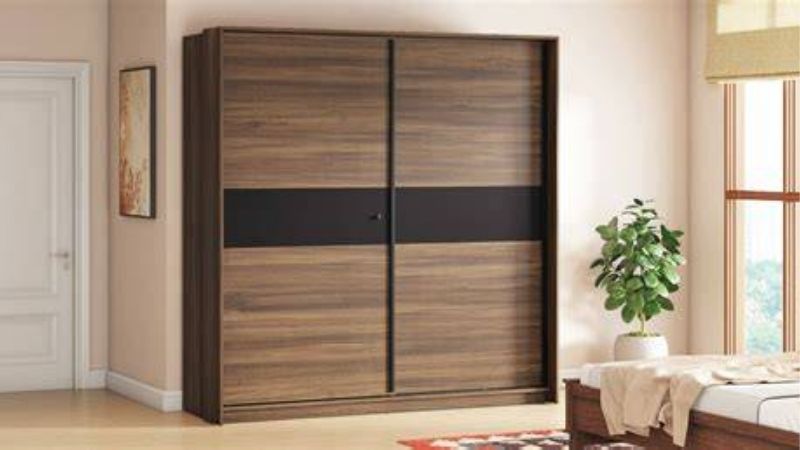
The four models here span 35.75 to 78.75 inches in width and 20.5 to 26 inches in depth, so the best fit changes quickly with room shape. Sliding panels remove outward door swing, but the cabinet still occupies floor depth, and some systems also need extra ceiling clearance for assembly or rail installation.
Measure Wall Width, Depth, and Ceiling Clearance Separately
Width tells you whether the case fits between walls, windows, and outlets, while depth tells you how far the cabinet projects into the room. The Pridemore is 35.75 inches wide and 22.5 inches deep, while the East Urban Home model is 37 inches wide and only 20.5 inches deep in the finished room.
The wider options need much more wall. The IKEA PAX / HASVIK is 78.75 inches wide and 26 inches deep, while the Meble Aria 2D is sold in 47-inch and 59-inch widths with a 26-inch depth. Measure baseboards and trim too, because the cabinet may not sit fully against the wall after assembly.
Ceiling height can become the hidden limit. IKEA lists a minimum ceiling height of 80.75 inches for its 79.25-inch PAX / HASVIK combination. For any sliding door wardrobe, confirm the assembly method before ordering if the room has a low ceiling, soffit, sloped roofline, or thick carpet.
Compare the Interior Layout, Not Just the Door Count
Two sliding doors can hide very different interiors. The East Urban Home unit lists five shelves and one rod in a 37-inch-wide cabinet, while the Pridemore includes one shelf and one rod. IKEA includes two shelves and two clothes rails in the specific PAX / HASVIK combination used here.
A derived storage-density check shows the East Urban Home model has about 1.95 published shelf-or-rod elements per foot of cabinet width. The Pridemore is about 0.67 and the IKEA combination about 0.61. This is only a planning signal because shelf size and hanging space are not standardized.
Meble describes the Aria 2D with generous hanging space and adjustable shelving, but its current product page does not publish a shelf count. That gap matters if folded clothing is the priority. Do not let a smooth sliding front hide an interior that needs extra organizers before it works for your wardrobe.
Check the Sliding Track and Access Pattern
Sliding doors save the floor area that a hinged door would occupy while open, but they also cover part of the cabinet at any one time. That tradeoff is easiest to live with when daily items are grouped by section, so shirts, shoes, or folded clothes can be reached without moving panels back and forth repeatedly.
Hardware details matter more than marketing phrases such as smooth glide. The Pridemore uses aluminum dual tracks, bottom ball-bearing guides, and top metal guides. IKEA states that its soft-closing mechanism is integrated into the rails, which slows the panels as they reach the end of travel.
For a sliding door wardrobe in a shared bedroom, think about how two people access it during the morning rush. A wide cabinet can hold more, yet overlapping panels can make one zone temporarily inaccessible. Put the most frequently used items in different sections if two people often dress at the same time.
Treat Anchoring and Tip Safety as a Separate Decision
Tall storage furniture deserves an anchoring plan even when the door mechanism itself does not swing outward. IKEA explicitly warns that PAX / HASVIK must be securely anchored. Wayfair lists a tipover restraint device as included with the Pridemore, giving that model a clearer safety setup than listings that stay silent.
CPSC guidance for 16 CFR part 1261 covers qualifying freestanding clothing storage units and incorporates ASTM F2057-23 [CPSC, 2026]. Its current definition refers to drawers and or hinged doors, so a sliding-door-only cabinet can fall outside that narrow wording. Regulatory scope is not proof of tip safety.
For the East Urban Home model, Wayfair says the wardrobe can be fixed to the wall, but the listing does not state that an anti-tip restraint is included. Meble does not publish an anti-tip kit on the Aria page we reviewed. Treat wall anchoring as mandatory whenever the manufacturer instructions call for it.
Top Picks
No single model is an outright overall winner on verified data because the products differ in width, interior detail, warranty, and published anchoring information. The labels below therefore match a measurable use case rather than forcing a universal ranking, and every buyer should verify the exact current variant before ordering.
| Product | Best For | Key Spec | Watch Out For |
|---|---|---|---|
| Winston Porter Pridemore WNPO9161 | Best For Compact Wall Width | 35.75W x 22.5D x 72H in; 34.5 in rod | Only 1 shelf is included |
| East Urban Home Gerling W009928589 | Best For Shelf-Heavy Narrow Storage | 37W x 20.5D x 71.7H in; 5 shelves | Anti-tip restraint inclusion is not listed |
| Meble Furniture Aria 2D, 59 in | Best For Mid-Width Bedrooms | 59W x 26D x 80H in; 1-year warranty | Shelf count is not published on product page |
| IKEA PAX / HASVIK 695.606.78 | Best For Long Warranty | 78.75W x 26D x 79.25H in; 10-year limited warranty | Must be securely anchored |
Winston Porter Pridemore – Best For Compact Wall Width
The Pridemore is the narrowest pick here at 35.75 inches wide, but its 22.5-inch depth still needs a real floor check. Wayfair lists a 34.5-inch clothing rod, one fixed shelf, and a 110-pound overall product weight, so this model suits a narrow wall better than a shallow hallway.
The solid pine cabinet uses two sliding doors on aluminum dual tracks with bottom ball-bearing guides. The rod is rated for 40 pounds and the shelf for 50 pounds. Optional shelves are sold separately, with room for up to three more, so folded-storage capacity can grow without replacing the case.
The listing includes a tipover restraint device and a one-year limited warranty, which improves the ownership picture. Full assembly is required and Wayfair recommends two people, with a screwdriver and hammer not included. This sliding door wardrobe sits in a mid-to-premium tier, with extra shelves as a possible added cost.
East Urban Home Gerling – Best For Shelf-Heavy Narrow Storage
The main caveat is safety documentation: the listing says the cabinet can be fixed to the wall but does not state that a restraint is included. In return, its 37-inch width and 20.5-inch depth create the shallowest case in this group, while five shelves and one rod favor folded clothes over long hanging.
Wayfair lists the cabinet at 71.7 inches high and 155.69 pounds, with two sliding doors and manufactured-wood construction. The product description also gives a 0.63-inch board thickness. Those are useful planning facts, but they do not establish durability beyond the conditions covered by the listing.
The current listing offers delivery and optional professional assembly, while the cabinet itself requires assembly. Its five-shelf layout makes this sliding door wardrobe practical for sweaters, jeans, bags, and boxes in a narrow room. It is a budget-tier pick in this comparison, but wall-fixing hardware should be verified before checkout.
Meble Furniture Aria 2D – Best For Mid-Width Bedrooms
Treat wall anchoring as a purchase-time check because Meble does not list an anti-tip kit on the current Aria 2D product page. The 59-inch version is 80 inches high and 26 inches deep, placing it between the compact Wayfair models and the much wider IKEA option for available wall width.
Meble describes adjustable shelving and generous hanging space, while its assembly manual shows the 59-inch cabinet layout and a manufacturer-stated assembly time of one hour. The page also lists a one-year warranty and free shipping. Those details support planning, but the exact shelf count is not published there.
The Aria comes in 47-inch and 59-inch widths with the same listed 80-inch height and 26-inch depth. That choice can help buyers fit the same design language to different walls. It sits in the premium tier here, and its real tradeoff is depth: the sliding doors save swing space, not cabinet projection.
IKEA PAX / HASVIK – Best For Long Warranty
IKEA makes the safety condition explicit: this combination must be securely anchored, so it should not be treated as freestanding furniture. The selected PAX / HASVIK measures 78.75 inches wide, 26 inches deep, and 79.25 inches high, with a minimum ceiling height of 80.75 inches.
The specific combination includes two 39.375-inch wall-mounted storage frames, two shelves, two clothes rails, and a pair of HASVIK sliding doors. IKEA states that each clothes rail holds about 40 shirts on hangers, and the rail system includes soft closing. Interior accessories beyond the listed parts cost extra.
A 10-year limited warranty is the longest published warranty in this group, making warranty length the clearest reason to choose it. Two people are needed for assembly, and wall fasteners must suit the wall material. This sliding door wardrobe is a mid-tier system here with strong modular expansion potential.
Frequently Asked Questions
A sliding wardrobe can solve door-swing conflicts, but the purchase still depends on room geometry, interior organization, and safe installation. These questions address the measurements buyers often miss after checking only cabinet width, especially when a bed, rug, baseboard, outlet, or low ceiling changes the usable space.
How much space should I leave in front of a sliding wardrobe?
Leave enough clear floor for standing, bending, and removing clothing, even though the doors do not swing outward. A sliding system can sit closer to a bed than a hinged cabinet, but a path that is technically open may still feel cramped once drawers, laundry baskets, or a person occupy the same zone.
Measure from the wardrobe front, not from the wall, because cabinet depth and baseboards shift the actual face into the room. Tape the full cabinet depth on the floor, place the nearest furniture where it will really sit, and make sure a person can use the wardrobe without blocking the bedroom door.
If the room is narrow, compare the East Urban Home depth of 20.5 inches with the 26-inch IKEA and Aria cases. That difference can matter more than door type. A sliding door wardrobe saves opening arc, but it cannot compensate for a cabinet that projects too far into the only walking route.
Are sliding wardrobe doors better for small bedrooms?
Yes, when outward door swing is the limiting problem. Sliding panels stay within the cabinet footprint while opening, which can help beside a bed or dresser. They are not automatically better when wall width, cabinet depth, or access to the full interior is the main constraint, so measure those separately.
Small bedrooms often benefit from a narrower case first. The Pridemore is 35.75 inches wide and the East Urban Home model is 37 inches wide, while the PAX combination is 78.75 inches wide. A large sliding system may avoid door swing yet still overwhelm the available wall and storage balance.
Also consider how the panels overlap. You usually access one section at a time, unlike a hinged wardrobe that can expose the whole front when every door is open. Organize daily clothing by accessible zones, and keep rarely used items behind the panel that requires the most sliding to reach.
Do sliding wardrobes need to be anchored to the wall?
Yes, whenever the manufacturer requires anchoring, and tall storage furniture should never be assumed stable just because it uses sliding doors. IKEA explicitly requires anchoring for the PAX / HASVIK, while Wayfair lists a tipover restraint device with the Pridemore and wall-fixing capability for the East Urban Home model.
CPSC clothing-storage rules apply to products that meet the federal definition under 16 CFR part 1261 [CPSC, 2026]. That definition is narrower than the everyday word wardrobe, so compliance scope can vary with construction. Follow the exact model instructions and do not use regulatory coverage as a substitute for anchoring.
For a listing that does not state whether a restraint is included, ask the seller or manufacturer for the current manual and hardware list before delivery. If the unit must attach to a wall, match the fastener to the wall construction. Drywall, masonry, and wood framing do not use one universal anchor.
What should I check before assembling a sliding wardrobe?
Check the room height, package route, final wall width, floor level, and the exact anchoring instructions before opening every box. A sliding door wardrobe can require more assembly clearance than its finished height suggests, and a tall panel may be difficult to turn in a hallway, stairwell, or low-ceiling bedroom.
Lay out rails and door hardware carefully because track alignment affects how the panels move. The Pridemore uses upper guides, lower ball-bearing guides, and aluminum dual tracks, while IKEA integrates soft closing into its rail system. Keep small fittings separated by step so similar pieces are not mixed.
Do not overload shelves or rods beyond a published limit. The Pridemore lists 50 pounds for its shelf and 40 pounds for its clothing rod, while the other picks do not publish matching load ratings on the pages reviewed. Where a number is absent, do not invent one from cabinet size or material.
Final Thoughts
Before ordering a sliding door wardrobe, mark the cabinet width and depth on the floor, then check the ceiling and the wall where any restraint will attach. Also sketch where hanging clothes and folded items will go. That quick room-and-storage mockup exposes fit problems that a polished product photo cannot show.