Key takeaways
- Recliner prices swing widely, and the cheapest chair is rarely the smartest buy once seat size, weight rating and the space behind the backrest come into play. This guide to affordable recliners compares four current models on the numbers that…
Recliner prices swing widely, and the cheapest chair is rarely the smartest buy once seat size, weight rating and the space behind the backrest come into play. This guide to affordable recliners compares four current models on the numbers that decide fit, not just the sticker price.
As an Amazon Associate we earn from qualifying purchases.
By KK Home Furnishings Editorial Team
How to Choose an Affordable Recliner
Affordability only means something after a chair fits the person and the room, so the criteria below weigh price against seat size, capacity and clearance. These affordable recliners were each checked at a real retailer in October 2026, and furniture prices move, so treat every figure here as a snapshot rather than a fixed rate.
Compare actual purchase price, not MSRP
The number that matters is today’s checkout price, not a crossed-out manufacturer figure. Among these picks the Flash Furniture Harmony sits around $349 at Lowe’s and the Lazzara Phoebe near $334 at Home Depot as of October 2026, a gap of only about $15 between two otherwise comparable manual recliners.
Sale pricing is the catch to watch. The genuine-leather Cristoforo was near $599 on a promotion the day it was researched, not a standing rate, so a chair that reads like a deal this week can reset higher next week. When two cheap recliners land within $30 of each other, let seat fit and capacity break the tie, not a temporary discount.
Furniture tends to see its deepest cuts around Presidents’ Day and Memorial Day, two of the larger U.S. furniture sale windows, so timing can matter as much as the model. Budget frames also lean on particleboard and cam-lock joints that can loosen over years of reclining, which is the quieter cost behind a low headline number.
Check seat width and depth
Seat dimensions decide comfort far more than price does. The Flash Furniture Cash lists a 22.75-inch-wide by 21.75-inch-deep seat, while the Harmony’s seat is closer to 21 inches wide, so the Cash gives a noticeably roomier perch for the same 300-lb rating and a similar manual mechanism.
Match the seat to the body rather than the label. A broad user is better served by the wider Cash seat, whereas a shorter sitter can find a deep cushion forces a slouch because the backrest sits out of reach. Measure your own chair at home, then compare that figure against each listing before ordering.
Over time a too-deep seat pushes you forward onto the front edge, wearing the foam unevenly and flattening it sooner on budget builds. Cheaper recliners usually use lower-density foam, so a seat that already feels slightly off on day one tends to compress faster across the first year of daily use.
Match weight capacity to the user
All four of these affordable recliners carry a 300-lb rating, but that figure is a manufacturer-stated static capacity, not a comfort guarantee. A static number describes a load sitting still, so the real usable margin is lower once you factor in the force of dropping into the chair and reclining repeatedly.
Treat the rating as a ceiling, not a target. A listed 300 lb does not mean the chair suits every 300-lb user, because seat width and frame geometry matter just as much as the headline number. Someone near the limit is better off leaving margin and choosing the wider-seated Cash over a narrower budget model.
The point that usually fails first on inexpensive recliners is the reclining mechanism and its mounting points, not the stated capacity. Steel scissor frames and plastic glide components wear with cycles, so a chair run near its rating every day will show looseness in the handle and footrest well before the upholstery gives out.
Measure wall and fully-reclined clearance
A recliner needs room behind it, and the amount varies by design. The Flash Furniture Cash lists about 11 inches of recline clearance, while the Harmony is rated for roughly 8 inches from the wall, so the two are not interchangeable in a tight layout despite looking similar on a product page.
Measure from the wall to the back of the chair before you buy, then add the stated clearance. Swivel-and-rocker models like the Cash also need side room to pivot, so a corner that fits a fixed-base recliner may bind a gliding one. Wall-hugger designs exist specifically for small rooms and recline forward instead of back.
Forcing a recliner too close to the wall is a slow source of damage: the backrest scuffs paint and the footrest bottoms out before full extension, stressing the mechanism at the end of its travel. Unlike tall dressers, recliners do not need anchoring, but they do need their published clearance to work as designed.
Top Picks
Each of these affordable recliners earns its slot for a different reason, from the roomiest seat to the lowest standing price to real hide upholstery. Specs are manufacturer-stated and prices were current at the listed retailers in October 2026; confirm both before buying, since promotions and stock on budget seating change week to week.
| Product | Best For | Key Spec | Watch Out For |
|---|---|---|---|
| Flash Furniture Cash Swivel Glider | Best Overall | 300-lb static cap; seat 22.75 x 21.75 in; 11 in recline clearance | Rating is static; needs side room to swivel |
| Flash Furniture Harmony LeatherSoft | Best Budget | ~$349 at Lowe’s (Oct 2026); 300 lb; 21 in seat; 8 in clearance | LeatherSoft is a faux blend, not hide |
| Lazzara Phoebe Corduroy | Best With Cup Holders | ~$334 at Home Depot (Oct 2026); 300 lb; dual cup holders | Corduroy traps dust; manual mechanism |
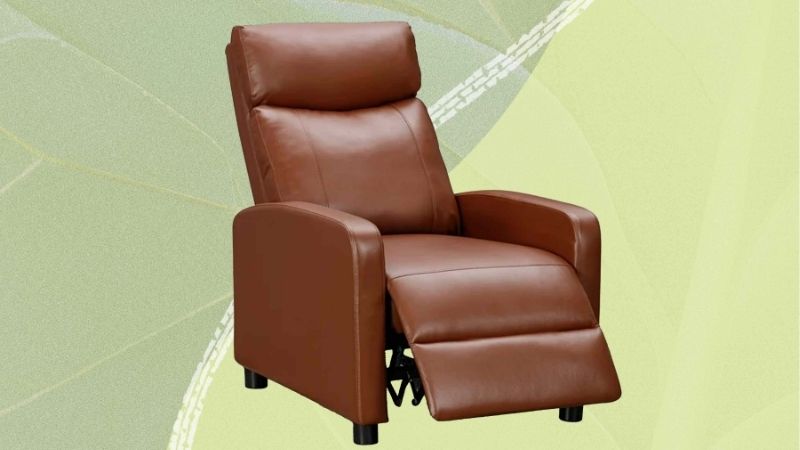
| Jayden Creation Cristoforo | Best Genuine Leather Value | Reclines to 150 degrees; 300 lb; 34 in wide; real leather | ~$599 figure was a sale, not a set price |
Flash Furniture Cash — Best Overall
The Cash swivel glider is the most balanced affordable recliner here for an average living room. Its 22.75-by-21.75-inch seat is the widest of the group, it carries the same 300-lb rating, and it combines a swivel base with a rocker and manual recline, so one chair covers lounging, nursing and TV watching without a motor.
The swivel-rocker action is the standout, letting the chair turn toward a window or a conversation without moving its base. That flexibility suits open-plan rooms where a fixed recliner would face the wrong way. It still needs its listed 11 inches behind the backrest, plus a little side room, so measure the corner before committing.
The trade-off is that the capacity is a static figure and the glider base adds moving parts that eventually develop play. On value seating the swivel ring and recline handle are the usual first complaints after heavy daily use, so budget for the chair being a few-year piece rather than a decade-long heirloom.
Flash Furniture Harmony — Best Budget
The Harmony LeatherSoft is the pick when the lowest stable price is the priority, landing around $349 at Lowe’s as of October 2026. It keeps the 300-lb rating and a wipeable LeatherSoft surface, and its tighter 8-inch wall clearance makes it the easier fit of the two Flash models in a small room.
Its compact footprint is the practical advantage, since the roughly 21-inch seat and modest recline swing suit apartments and bedrooms where a broad lounger would crowd the walkway. The manual mechanism means no cord or outlet to plan around, which also keeps placement flexible against an interior wall.
LeatherSoft is a bonded faux-leather blend, not hide, so it looks like leather at a fraction of the cost but can crack earlier at the seat creases with heavy use. That is the honest compromise at this price, and it is why the genuine-leather Cristoforo exists a tier up for buyers who want real material.
Lazzara Phoebe — Best With Cup Holders
The Phoebe is the choice for a dedicated media seat, pairing a 300-lb manual recliner with dual cup holders at roughly $334 at Home Depot as of October 2026. The built-in holders keep drinks off the arm fabric, a small detail that matters more in a corduroy chair than in a wipeable one.
It works best as a single occupant’s TV or gaming chair rather than shared seating, because the holders sit in the arms and define the usable width. The corduroy surface is soft and warm underfoot of a cold room, and the manual pull mechanism means there is no electronics to fail down the line.
Corduroy is the weak point to plan around: the ribbed pile traps dust and pet hair and is harder to wipe clean than faux leather, so households with shedding animals will spend more time maintaining it. Like the others it needs its clearance behind the backrest, so keep it off the wall when reclined.
Cristoforo — Best Genuine Leather Value
The Jayden Creation Cristoforo is the upgrade pick for buyers who specifically want real hide, with genuine leather, a 34-inch width and a deep 150-degree recline, seen near $599 on sale at Home Depot. It is the priciest here, but it is the only one using actual leather rather than a bonded or faux surface.
Genuine leather is the reason to stretch the budget, since it patinas rather than peels and tends to age better than LeatherSoft over years of contact with skin and clothing. The wide seat and long 150-degree recline also make it the most lounge-oriented chair of the four for a taller or broader user.
The number to question is the price itself: the figure seen was a promotion, not a fixed rate, so it can climb once the sale ends. Real leather also needs occasional conditioning to avoid drying and cracking, a recurring upkeep cost the fabric models do not carry, so weigh the material against that maintenance.
Frequently Asked Questions
These answers cover the questions buyers ask most about affordable recliners, from a sensible spending floor to how much room a reclined chair really needs. Figures are starting points drawn from current listings; the right choice still depends on your body dimensions, your room and the exact model you are comparing.
How much should a decent recliner cost?
A functional new manual recliner commonly starts around $330 to $350, which is where the Phoebe and Harmony sit as of October 2026, and genuine-leather models begin closer to $600. Those figures reflect these four examples rather than a measured market average, so treat them as a reference band, not a rule.
Price climbs with material, mechanism and size: real hide, power recline and a wider seat each add cost, while faux leather, manual pulls and compact frames keep it low. A chair that seems unusually cheap for its size often saves money on foam density and joinery, which shows up later as sagging or looseness.
If the budget is tight, prioritize seat fit and capacity over brand and finish, then buy during a furniture sale window if timing allows. Spending a little more on a wider, better-supported seat usually returns more daily comfort than the same money spent on a fancier cover over a cheaper frame.
Are cheap recliners durable?
Inexpensive recliners can last several years of normal use, but the reclining mechanism and foam are where corners get cut, not the stated weight rating. The 300-lb figure these share is a static capacity, so the real-world lifespan depends more on how often and how hard the chair is reclined each day.
Lower-density foam and bonded faux-leather surfaces are the usual early fail points, with seat cushions flattening and LeatherSoft creasing before the frame gives out. A chair used by one adult for evening TV will outlast the same model shared by a busy family, so set expectations by household traffic, not the price alone.
To stretch the life of a budget recliner, give it the clearance it is rated for, avoid dropping your full weight into it, and recline gently rather than slamming the footrest out. Many of these ship with limited warranties on the frame and mechanism, so register the chair and keep the receipt in case parts fail early.
How much room does a recliner need behind it?
Clearance is model-specific, not a universal number: the Flash Furniture Cash lists about 11 inches of recline clearance while the Harmony needs roughly 8 inches, so always read the figure for the exact chair rather than assuming. Swivel and rocker bases also need a few inches of side room to move freely.
The reason the figures differ is geometry, since a chair that reclines further back or rocks requires more swing than a compact wall-hugger. Wall-hugger designs are built specifically for small rooms and glide forward as they recline, so they can sit within an inch or two of the wall where a standard model cannot.
To plan a tight space, measure from the wall to the chair’s back, add the published clearance, and leave a walkway so the extended footrest does not block a path. Crowding a recliner against the wall scuffs paint and strains the mechanism at full travel, which is a common, avoidable source of early wear.
Is a 300-lb recliner enough?
For most single users a 300-lb rating is adequate, since all four picks here share that figure, but it is a manufacturer-stated static capacity rather than a dynamic one. That means it describes a still load, so the usable margin shrinks once you account for the impact of sitting down and the stress of reclining.
A listed 300 lb does not confirm a comfortable fit for every 300-lb user, because seat width and frame shape matter alongside the number. A broad user near the limit is better served by the wider-seated Cash with some margin to spare than by a narrower budget model rated to the same figure.
If a heavier-duty chair is needed, look specifically for a higher static rating from the maker and a correspondingly wider seat, and treat capacity and seat width as a pair. Running any recliner near its ceiling every day accelerates wear on the mechanism, so leaving headroom is as much about longevity as safety.
Final Thoughts
Affordable recliners reward buyers who read past the price tag: the Cash offers the roomiest seat, the Harmony the lowest stable price, the Phoebe a media corner, and the Cristoforo real leather. Match seat size and the shared 300-lb rating to the user, confirm your room’s clearance, then verify prices before buying rather than trusting a sale figure.