
Key takeaways
- Before laundry day, you may wonder: can you wash a heated mattress pad? Many newer pads are washable after their removable controllers are disconnected, but not every model follows the same instructions. Check the sewn-in label and manual first, and…
Before laundry day, you may wonder: can you wash a heated mattress pad? Many newer pads are washable after their removable controllers are disconnected, but not every model follows the same instructions. Check the sewn-in label and manual first, and never wash a damaged pad or reconnect one while it is damp.
As an Amazon Associate we earn from qualifying purchases.
By KK Home Furnishings Editorial Team
Can You Wash a Heated Mattress Pad Safely?
Yes, if the care label specifically allows washing and the pad is in good condition. Many heated mattress pads can go through a gentle machine cycle or careful hand wash, but the permitted water temperature and drying method vary. Unplugging and removing detachable electrical controls is essential, not optional.
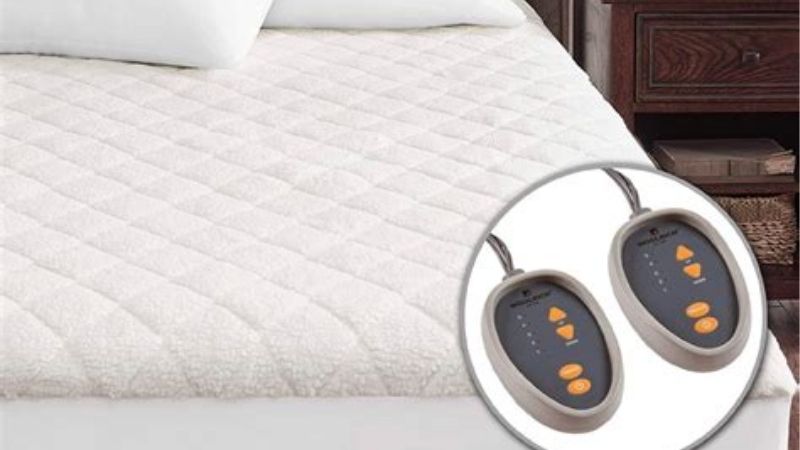
The instructions below distinguish what is generally safe from what must be checked on your exact model. They draw on published heated-bedding manuals, including Sunbeam and Biddeford guidance, rather than detailed research. For an unidentified or damaged product, the safest answer is to postpone washing and using it until the maker confirms what to do.
| Label or Pad Condition | Wash Decision | What to Do First | Important Limit |
|---|---|---|---|
| Machine washable | Yes, if intact | Unplug and detach controls | Use the cycle and water temperature printed for that model |
| Hand wash only | Yes, by hand | Remove detachable electrical parts | Do not twist, wring, or scrub the wiring channels |
| Removable cover only | Cover only | Separate the washable cover | Do not immerse the nonwashable heating unit |
| Missing care instructions | Not yet | Locate the exact manual or ask the maker | Do not assume another brand’s directions apply |
| Frayed, scorched, malfunctioning, or recalled | No | Disconnect and stop using | Washing cannot repair a damaged electrical product |
Check the Label, Not Just the Product Description
Find the fabric care tag along the pad edge and read the instruction booklet or model-specific support page. “Machine washable” on a store listing does not settle whether the pad requires cold water, a short gentle cycle, line drying, or a brief low-heat tumble. The model and revision on the sewn label are more useful than the brand name alone.
If the label is unreadable, find the model number on the pad or its controller and request the matching manual. Do not substitute instructions for an ordinary mattress protector, a medical heating pad, or a similarly named electric blanket. Those products can have different removable parts and different restrictions on water exposure.
Inspect the Pad and Disconnect Every Controller
Before water comes near the pad, switch it off and unplug the power cord from the wall. Then detach every removable controller and connecting lead according to the manual. A queen or king model may have separate controllers, so check both sides. The controllers and electrical power cords must stay dry; the washable textile and its fixed connector are not the same as a waterproof electronic unit.
Look for exposed heating wires, scorch marks, damaged fabric over the wiring, loose connectors, unusual odor, or signs that the pad has overheated. Stop using a pad with any of these problems rather than attempting to clean away the damage. A failed cord or hidden conductor is an electrical safety issue, not a stain-removal problem.
Why One Brand May Recommend Cold Water and Another Warm
Sunbeam instructs owners of compatible heated bedding to wash in cold water on a gentle cycle or by hand, then finish drying fully before reconnection. A published Biddeford heated mattress pad manual instead permits a short warm-water soak and carefully timed agitation. Those directions are examples of why generic “wash on gentle” advice is incomplete.
Neither brand example overrides your own care tag. The pad’s materials, electrical connector design, and dryer allowance determine the safe method. UL 964 covers electrically heated bedding, including mattress pads, but being within that standard’s scope does not establish that a particular unit is machine washable or certify an unidentified model [UL Standards & Engagement, 2020].
How to Wash a Heated Mattress Pad Without Damaging It
Once the model-specific label permits laundering, follow this sequence. If one step conflicts with the instructions supplied with your pad, use the manufacturer’s directions instead. The main hazards are washing a live or damaged electrical assembly, stressing the internal wiring through harsh agitation, and reconnecting the bedding before its connectors and inner layers are dry.
Step 1: Unplug at the Wall Before Unfastening the Pad
Turn the controls off and remove the wall plug before separating the controller from the mattress pad. Follow the connector-release method in the manual rather than pulling on a wire. If there are two control units, disconnect both. Place the controller boxes and their removable cords somewhere dry, away from the washer and sink.
After disconnecting the power, remove the pad from the bed without dragging the electrical lead across furniture or sharply folding the wired fabric. Keep the mattress and ordinary bedding separate so you can inspect the heated pad alone. A damp bed sheet should never be mistaken for proof that the electrical pad itself has dried.
Step 2: Look Closely for Damage and Recall Information
Unfold the pad on a dry surface and inspect both sides, especially the seams and the point where the connector enters the fabric. Do not wash or reuse it if the wiring is exposed, a connector is distorted, or there are darkened or melted spots. The U.S. Consumer Product Safety Commission has documented fire and burn hazards in recalled electric heated bedding; check the exact model number when in doubt [CPSC, 2023].
If a pad has tripped a breaker, sparked, smelled hot, or stopped working unexpectedly, laundering is not a repair attempt. Disconnect it and consult the manufacturer for replacement or service instructions. The same caution applies to recalled products: a successful wash cycle would not reverse a defective design or controller.
Step 3: Set the Washer Exactly as the Manual Specifies
For a machine-washable Sunbeam heated mattress pad, the published guidance calls for cold water, mild soap, and a gentle cycle. Sunbeam also describes a brief presoak and short washing period in its detailed care instructions. Use these specifics only if they match your product documentation; do not assume the normal cycle on your washer is equivalent.
Make sure the pad has room to move in the drum without being jammed against the door or center agitator. Avoid bleach, dry-cleaning solvent, and aggressive stain treatments. If your manual requires a different temperature or wash duration, treat it as a model-specific instruction. A commercial laundromat machine is not automatically suitable simply because the pad fits inside.
Step 4: Hand Wash Only When That Method Is Approved
If the care instructions allow hand washing, use a clean basin large enough to support the pad without twisting it tightly. Wet the fabric using the specified water temperature and a small amount of mild detergent. Move the material gently instead of scrubbing the wiring channels, pulling on the connector, or repeatedly bending a section at a sharp angle.
Drain and rinse as described in the manual while keeping detachable controllers out of the water. Do not wring the pad like a towel; electrical bedding can contain insulated heating elements that do not tolerate rough handling. If the pad is too large to lift when wet, ask for assistance rather than dragging it by a cord or connector.
Step 5: Rinse Carefully and Restore the Pad’s Shape
Remove detergent with the rinse method allowed by the manufacturer. A machine spin cycle may be permitted for some models, but that is not permission to twist or run the fabric through a wringer. After washing, lift the pad evenly and smooth it back toward its original shape so its fitted skirt and heating zones are not stretched unevenly.
Do not use a hot iron to flatten creases or a heated press to speed drying. Sunbeam’s care guidance specifically rules out ironing, bleaching, dry cleaning, and wringing. If the fitted edge shrinks enough that the pad must be stretched tightly to fit the mattress, stop and ask the maker whether it remains safe to use.
Step 6: Use a Dryer Only if the Label Allows It
Some heated mattress pads may be tumble-dried briefly on low heat, but others are better finished in the air. Sunbeam describes a short low-temperature dryer period followed by line drying, while a Biddeford manual specifies a different short limit. These are not interchangeable dryer settings, and neither supports high heat or an unrestricted full drying cycle.
Avoid commercial dryers when your manual prohibits them; their heat can be unsuitable for electrical bedding. Drape the pad over a suitable drying rack or shower rod with enough support to prevent sharp folds. Do not clip through wired areas or squeeze the material with heavy fasteners. Allow the fabric, seams, and connection points to dry naturally.
Step 7: Reconnect Only When Every Part Is Completely Dry
Do not reconnect the controller to test whether the pad has dried. Inspect the connector opening, edge seams, thick quilted areas, and underside for remaining moisture. There is no universal safe number of drying hours because pad thickness, airflow, and humidity differ. If you are unsure whether the internal layers are dry, continue air drying.
Once fully dry, refit the pad without tight folds, position the cords as specified in the manual, and reconnect the proper controller. Check that plugs seat normally and that the pad operates without unusual odor, flickering, or unexpected heat. If it behaves abnormally after washing, turn it off, unplug it, and contact the manufacturer rather than trying to open its electrical components.
Frequently Asked Questions
Can a Front-Loading Washer Clean a Heated Mattress Pad?
Yes, when the exact pad is labeled machine washable and the washer has enough room for it to move freely. Front-loading machines often avoid a central agitator, but that alone does not make an unsuitable model safe. Choose the fabric-care setting and water temperature specified in your pad’s own instructions.
A heavy king-size pad may be hard to rinse properly in a small drum. If you cannot load it without compression or snagging its connector, do not force it in. Ask the manufacturer whether a different machine size or hand washing is allowed; oversized commercial washers may also fall under prohibited laundromat equipment.
Should a New Heated Mattress Pad Be Washed Before Its First Use?
Sometimes. Sunbeam recommends washing its heated bedding before initial use, but that recommendation is not a universal rule for every product. Read the new pad’s care instructions first, particularly if it has a detachable controller, specialized fabric treatment, or a separate washable cover.
If the product must be washed first, detach the controls and follow the specified cleaning and complete-drying process before connecting power. If the manual is silent, there is no need to invent a first-wash requirement. A clean fitted sheet can separate your body from the pad during ordinary use, subject to the bedding arrangement allowed by the maker.
What if the Care Label Has Been Removed or Is Unreadable?
Do not guess a wash setting. Identify the model number from the remaining product marking, controller, original order record, or packaging, then find the matching manual through the manufacturer. A support representative may be able to confirm whether the pad is machine washable, hand washable, or intended only for surface cleaning.
Until you have that answer, keep the electrical bedding unplugged and avoid immersing it. Even a gentle cycle can be unsuitable if the removable and nonremovable parts differ from those in another model. If you cannot identify the pad or inspect the wiring reliably, replacement may be the safer choice than experimental washing.
What If the Pad No Longer Heats After Washing?
First, do not test it while there is any chance of moisture inside. Once completely dry, check only the external connections and reset steps that the specific manual describes. A loose controller plug can prevent operation, but an electrical fault can also follow damaged wiring or an overheated control unit.
If the manufacturer-approved checks do not restore normal operation, unplug the pad and contact customer service. Do not cut open the fabric, solder a wire, bypass a controller, or try to dry the internal assembly by switching it on. Electrical heating bedding should not be treated as a repairable household textile.
Final Thoughts
So, can you wash a heated mattress pad? Often yes, provided the exact model allows it, its wiring is intact, and every detachable electrical control stays out of the wash. Follow the manual for water temperature and dryer use, then wait until the entire pad is dry before reconnecting it. If the label is missing or damage is visible, stop and seek model-specific guidance.
