Key takeaways
- what is a pop up sleeper sofa has a concealed rolling or sliding platform that comes out from beneath the seat and rises to approximately the same height as the cushions, forming a larger sleeping surface. Unlike a traditional fold-out…
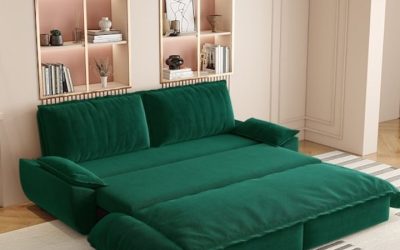
what is a pop up sleeper sofa has a concealed rolling or sliding platform that comes out from beneath the seat and rises to approximately the same height as the cushions, forming a larger sleeping surface. Unlike a traditional fold-out bed, it often uses seat and trundle cushions rather than a separate folded mattress. Details vary by model.
As an Amazon Associate we earn from qualifying purchases.
By KK Home Furnishings Editorial Team
How a Pop-Up Sleeper Sofa Actually Works
The key feature is the motion of the hidden extension, not simply the word “sleeper” on the label. U.S. manufacturers describe a trundle that rolls forward and lifts until its cushion aligns with the existing seat. Understanding where the sleeping surface comes from helps buyers tell a genuine pop-up platform apart from a conventional pull-out frame, a fold-flat futon, or a Set featured imageofa with only a pop-up headrest.
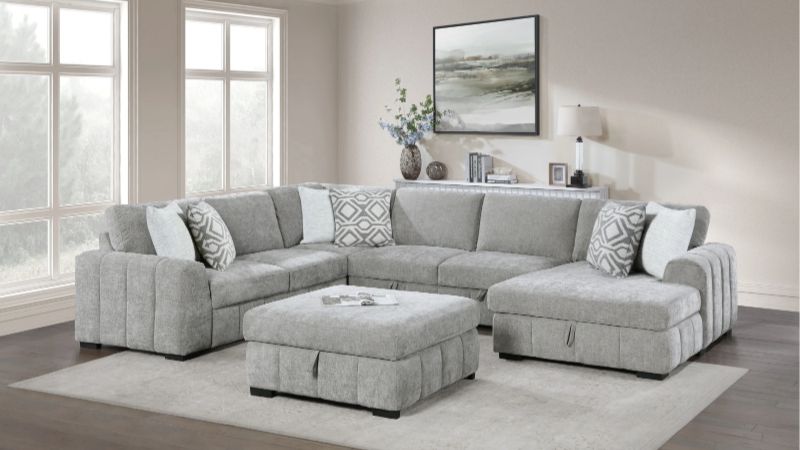
| Conversion Type | What Moves | What You Sleep On | Practical Distinction |
|---|---|---|---|
| Pop-up platform / trundle | A lower seat extension rolls or slides forward, then lifts | Sofa seat and matching raised trundle cushion, sometimes alongside a chaise | Check for a cushion seam and a secure raised lock |
| Traditional pull-out sleeper | A folded frame and separate mattress unfold from inside the sofa | A dedicated foldable mattress over a supporting frame | Check mattress thickness and support frame |
| Fold-down or click-clack | The sofa back lowers toward a flat position | Seat and back cushions arranged as a sleeping surface | Check rear clearance and hinge operation |
| Pop-up headrest only | An adjustable headrest lifts, but no bed platform emerges | No added sleeping surface from that feature alone | Do not mistake a reclining headrest for a sleeper bed |
Step 1: Roll or Slide the Hidden Trundle Forward
On a typical pop-up platform, the extension is stored below the main sofa seat. Room & Board describes its Pop-up Platform system as a trundle that rolls out before it rises [Room & Board, October 2026]. The manufacturer’s Oxford sofa also specifies a front rail that rolls out. You should expect a clear pathway in front of the sofa rather than an entire mattress unfolding from the back.
Find the approved handle, strap, or rail on the model you own and follow its instructions; the exact handhold is not universal. Remove anything blocking the front edge, including a coffee table positioned in the travel path. If a unit does not roll freely, stop rather than forcing it past a snag. Some designs may have a transport catch or locking arrangement that needs to be released first.
Step 2: Lift the Extension to Match the Seat Height
Once extended, the lower platform is raised until the sleeping cushion reaches seat level. Room & Board describes a counterbalanced lift on its Oxford Pop-up Platform sleeper; West Elm says the Harris sectional’s trundle lifts using an elastic strap [Room & Board; West Elm, October 2026]. These are specific manufacturer mechanisms, not interchangeable instructions for every pop-up model.
The raised section should be supported in the position the maker designed, with no loose edge that drops when pressure is applied. Watch for a spring-assisted motion and keep fingers, children, and pets clear of exposed moving joints. The correct action is guided lifting and secure engagement, not standing on the extension to push it into place. If the mechanism resists or fails to hold, consult the seller or repair guidance.
Step 3: Make the Cushion Platform Into a Sleeping Surface
After lifting, the raised trundle cushion and sofa seat form one extended upholstered surface. Room & Board says its pop-up arrangement places the seat and trundle cushions side by side; the trundle can also function as an oversized chaise [Room & Board, October 2026]. A model with a separate storage chaise may extend the sleeping surface farther across the sofa, although the cushion joins remain relevant.
This construction means “queen-sized” does not automatically imply a conventional, removable queen mattress. West Elm calls the Harris sectional sleeping area queen-sized while listing the actual surface as 79 by 65 inches, with a 5-inch cushion thickness [West Elm, October 2026]. Measure the real top surface before purchasing a fitted sheet or topper. For some configurations, a flat sheet is easier to position around the upholstered sections.
Six Situations Where the Pop-Up Mechanism Makes a Difference
The mechanism changes everyday decisions about conversion, support, clearance, cleaning and service. Rather than ranking unrelated sofas, the following cases explain the trade-offs of this particular design. Manufacturer-published details from the Room & Board Oxford and West Elm Harris illustrate how different pop-up implementations can work; they are not proof of performance for every sofa using the same label.
1. You Want a Lounge Platform Without Unfolding a Separate Mattress
Pop-up platforms often appeal to people who want to convert a regular seating area into a wider place to lounge. The Oxford product description specifically allows use as a sofa, two twin sleeping zones, a queen platform, or an oversized chaise lounge [Room & Board, October 2026]. That versatility comes from moving the trundle cushion rather than unpacking an independent mattress from a folding metal frame.
If the primary task is stretching out to watch television, examine the fully raised platform and the seat-to-trundle seam. A surface that feels fine for lounging with your back against cushions might feel different when lying sideways through the night. Ask whether the sections align in height and firmness, and whether a gap or exposed hard edge is noticeable at the join. No published mechanism name alone establishes sleep comfort.
2. You Need an Actual Guest-Sleeping Platform
The key sleep question is whether the two cushioning sections create a sufficiently level, usable area for the expected guest. Room & Board lists its Oxford standalone pop-up sleeper as 91 inches wide and 37 inches deep closed, with an open depth of 67 inches and an 80-by-60-inch mattress-size reference [Room & Board, October 2026]. Those figures belong to that Oxford configuration, not a standard dimension for all pop-up sleepers.
That model also uses high-resilience foam and fiber cushioning, rather than a conventional folded spring mattress. Someone seeking a removable mattress for regular overnight use may prefer a different mechanism, but should compare the actual cushioning, support and return policy instead of assuming all fold-out beds are superior. Have the intended guest lie on the fully opened surface if a showroom demonstration is possible.
3. Your Living Room Has a Coffee Table Close to the Sofa
Because the trundle travels forward, the space in front of a pop-up sofa has to work in both seating and sleeping modes. Oxford’s standalone model grows from 37 inches in overall depth to 67 inches when open [Room & Board, October 2026]. That measured example shows why relying on the closed-sofa catalog dimensions is a mistake: a table can fit beautifully in the daytime yet block the opening rail at night.
Mark the full opened footprint on the floor with removable tape and open nearby cabinets or doors before making a purchase. Leave room for the action needed to grip and raise the platform. There is no universal clearance number that applies to every manufacturer; a sectional chaise may already occupy much of the area into which the sleeping platform expands. Check both the specified opened dimensions and the path of the lifting motion.
4. You Like a Sectional With Hidden Bedding Storage
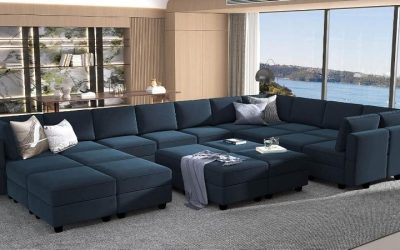
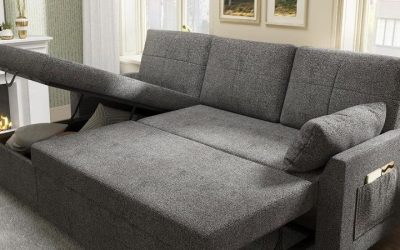
Some pop-up sleeper sectionals combine the trundle under the sofa seat with a storage compartment under the chaise. West Elm states that its Harris 87-inch sectional has a gas-lift chaise revealing storage, while its separately operated trundle lifts to make the sleeping area [West Elm, October 2026]. The two mechanisms serve different purposes: one stores bedding, and the other creates extra horizontal sleeping space.
For that Harris example, West Elm specifies an overall 87-by-65-inch footprint and a 79-by-65-inch sleeping surface [West Elm, October 2026]. Do not assume that another sectional with storage is necessarily a pop-up bed: a lift-up chaise lid by itself only opens a compartment. Ask the retailer to show both functions operating, and verify whether access to the storage space changes once the bed is fully deployed.
5. You Are Concerned About Seams, Cushions and Cleaning
A pop-up sofa frequently asks upholstered seat cushions to serve as bedding too. Room & Board explicitly describes its Oxford storage-chaise version as a three-cushion queen sleep surface with a visible chaise-cushion seam [Room & Board, October 2026]. A seam is not automatically a defect, but it matters if someone sleeps directly over the junction. Pay attention to differences in cushion height, how the pieces meet, and whether the covers are designed to be removed.
A removable topper might improve the perceived continuity of the surface, but it must be compatible with the mechanism and stored separately unless the manufacturer permits otherwise. West Elm specifically warns not to fold the Harris cushion into the sofa with sheets or blankets still on it because that can damage the frame [West Elm, October 2026]. Follow the care label for the fabric you actually buy; never assume all upholstered cushions are machine washable.
6. You Want Something Easy to Service Over Time
A pop-up platform adds more than a cushion: the sofa can contain tracks or rollers, a lift assembly, moving brackets and fastening points. Those parts can wear or become misaligned with use, although no trustworthy source establishes a universal failure rate or replacement interval. The practical question is whether the exact manufacturer can identify and support the mechanism when it no longer rolls or locks as designed.
Ask for written operating instructions, the warranty covering the platform rather than upholstery alone, and a way to obtain replacement lift hardware. For bulky sectionals, also verify that the separate pieces can be disconnected for delivery or later moving. An appealing demonstration is not enough if service requires dismantling furniture with unsupported components. Stop using a platform that unexpectedly drops or will not lock in its intended position.
Frequently Asked Questions About Pop-Up Sleeper Sofas
Terminology varies among retailers, so these questions focus on details a buyer can verify from the exact model. A pop-up platform is defined by its liftable extension, not by a specific fabric, mattress size, chaise direction or price bracket. If a listing uses “pop-up” ambiguously, look for a video or operating diagram of the bed being opened rather than relying on the headline.
Does a Pop-Up Sleeper Sofa Have a Separate Mattress?
Usually not in the same way a traditional fold-out sleeper does. Room & Board says its Pop-up Platform mattress area uses the sofa seat and raised trundle cushion side by side, with resilient foam-and-fiber cushioning [Room & Board, October 2026]. That integrated construction explains why a pop-up can provide a broad sleeping area without stowing a separate folded mattress under the main seat.
However, a retailer may call that combined surface a “mattress size” in its specifications. Oxford, for example, lists an 80-by-60-inch mattress size while describing its cushion-based construction [Room & Board, October 2026]. Read both fields together. Do not order a replacement foldable mattress or assume standard pocket depths will fit unless the brand explicitly lists a compatible mattress accessory.
Can a Pop-Up Sleeper Sofa Be Used Every Night?
It can be used for sleeping only within the conditions established by its manufacturer, and nightly suitability depends on the sleeper’s comfort, platform stability and the maker’s stated usage guidance. A pop-up sofa is not categorically an occasional-use product, nor is its mechanism a guarantee of nightly comfort. Cushion seams, foam construction and how the person sleeps may matter more than the conversion speed.
For everyday sleep, check whether the sofa’s seating foam remains comfortable when used as a mattress, whether the surface stays level, and whether its care requirements are practical. A store demonstration over a few minutes cannot predict long-term comfort or durability. Ask about load limits, exclusions in the sleeper-mechanism warranty and whether the maker permits third-party toppers before committing to a primary bed.
Is a Pop-Up Sleeper Sofa the Same as a Pull-Out Couch?
Both convert seating into a place to sleep, but the common mechanical designs are different. On a pop-up platform, a hidden trundle rolls forward and lifts beside the sofa seat. On a classic pull-out, a frame holding a separate folded mattress comes out of the sofa. Room & Board explicitly separates its Pop-up Platform and Pull-out categories in its sleeper comparison guide [Room & Board, October 2026].
Some stores use “pull-out” loosely for any sofa that extends forward, so a product title is not definitive evidence. Check the operation: does a cushion rise level with the seat, or does a mattress on a metal frame unfold? A sofa with a pop-up headrest is not necessarily a sleeper at all. The bed mechanism shown in the instructions matters more than casual naming on a marketplace listing.
How Do You Close a Pop-Up Sofa Bed Safely?
Follow the model-specific closing sequence rather than guessing from a similar sofa. In general, remove bedding and any objects on the extension, keep hands clear of joints, and lower the supported raised section using its intended control. Only then roll or slide the trundle back beneath the seat in the direction permitted by the manufacturer. The force needed and locking system differ among mechanisms.
West Elm cautions Harris owners not to stow the cushion with sheets or blankets on it because of frame damage [West Elm, October 2026]. If a frame will not lower or a latch will not hold, stop and consult the model manual or customer service; do not dismantle a loaded spring-assisted lift. Keep children and pets away during conversion and confirm that everything is fully stowed before using the sofa as normal seating.
Final Thoughts
So, what is a pop up sleeper sofa? It is a couch with a concealed extension that rolls or slides forward and rises beside its seat cushions. The defining feature is a raised trundle, not a folded mattress or an adjustable headrest. Before buying, confirm the opening method, levelness of the sleep surface, opened footprint, and manufacturer instructions for care and service.