
Key takeaways
- The best shoulder workouts with dumbbells begin with a few movements you can perform deliberately, not a demand to use the same pair for every...
What's inside
- Set up the seated press
- Practise the lateral raise separately
- Organize a session around the two setups
- Use specific questions to improve the next session
- Check the bench and room as a complete arrangement
- Choose useful settings before a larger range
- Product listings to compare
- Additional product links
- Related reading
The best shoulder workouts with dumbbells begin with a few movements you can perform deliberately, not a demand to use the same pair for every exercise. A seated overhead press and a lateral raise provide different tasks to discuss with an instructor. Treat them as separate practice blocks, with an appropriate load for each and enough rest to prepare the next setup.
This guide provides practical selection and use considerations. It does not report hands-on product testing.
Set up the seated press
Use an appropriate bench with a backrest, keeping your head, shoulders and buttocks supported and feet firmly on the floor. Brace your trunk. Bring the dumbbells to shoulder level with palms forward, thumbs around the handles and wrists straight. Press upward without arching the lower back, then lower the weights in control while maintaining contact with the support.
ACE’s seated-overhead-press guide includes spotting guidance. Learn the setup and assistance arrangements with a qualified instructor before attempting a demanding press. Do not improvise a heavy lift alone because the written movement looks straightforward. If the support, starting position or return is unclear, resolve that before adding repeated work.
Practise the lateral raise separately
Stand in a stable position with the dumbbells at your sides and a slight elbow bend. Keep your torso braced and wrists aligned. Raise the arms outward slowly, with upper arms and elbows leading slightly. As you approach shoulder level, rotate the arms slightly outward so the front edges of the weights tip a little upward. Lower under control without swinging the body.
Use a load appropriate to this movement rather than transferring the press weight automatically. The raise should not require a backward lean or a sudden shoulder shrug. Ask for instruction about an uncertain arm path. Stop for pain or a movement you cannot control; buying a different dumbbell does not diagnose the reason.
Organize a session around the two setups
Warm up appropriately and review the movements before lifting. Write a short plan with separate press and raise entries, the selected equipment and a rest period between them. Choose the amount of work through guidance suited to your experience. This outline is a way to organize practice, not a universal repetition target or a treatment for a shoulder condition.
During rest, note whether the previous block remained controlled. You may finish the session or ask for help rather than continuing to satisfy a number. Do not turn the transition into another exercise by carrying weights around while searching for a bench setting or a playback control.
Use specific questions to improve the next session
For the press, a useful question might concern keeping contact with the backrest or getting the dumbbells into the starting position. For the raise, it might concern the relationship between the elbow and wrist. Record what happened without deciding that a symptom proves a particular injury or weakness.
Keep exercise questions distinct from equipment questions. An instructor can assess technique and an appropriate workload. The manufacturer can explain a bench’s intended configurations or a dumbbell’s locking mechanism. A product review cannot replace either type of information simply because its author reports using similar equipment.
Check the bench and room as a complete arrangement
Follow the bench’s setup, capacity and placement instructions. Include the user, the weights and any required assistance in the working area. Check overhead obstructions from the actual exercise position, not just the room’s highest ceiling point. Do not move to an improvised support merely to avoid a low beam.
Keep weights on appropriate supports and leave space to pick up and return them correctly. A side table or decorative shelf is not automatically suitable. Position notes where they can be read after the equipment is down. The room should not require twisting toward a screen while holding a loaded position.
Choose useful settings before a larger range
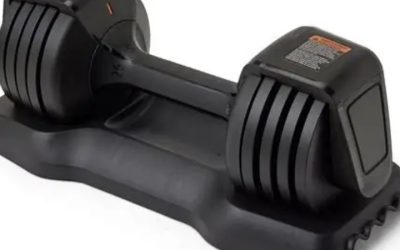
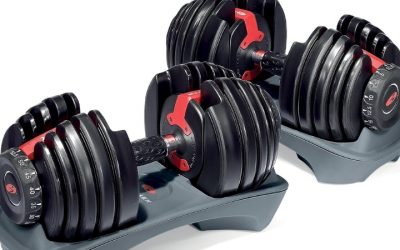
Read the available load increments and the quantity supplied in a dumbbell offer. For adjustable models, verify the permitted uses and the complete setting procedure. A high maximum is not a reason to accept missing lower settings that your current practice requires.
Build the workout through understood movements and appropriate progression. More exercises, uninterrupted sets or heavier purchases are not automatic improvements. A clear press block, a separately prepared raise and a useful review can provide a practical starting structure for a shoulder routine developed with suitable guidance.
Product listings to compare
As an Amazon Associate we earn from qualifying purchases at no extra cost to you. Product prices and availability are accurate as of the date shown and are subject to change. Compare the selected variant and its current description with the requirements above.
As an Amazon Associate we earn from qualifying purchases at no extra cost to you. Product prices and availability are accurate as of the date shown and are subject to change.




Additional product links
- Start 30-Day Prime Free Trial →
- See Today’s Amazon Deals
- ▸ Try Amazon Prime — free 30-day trial
- ▸ Start an Audible Premium Plus free trial
- ▸ Read free with Kindle Unlimited
Related reading
- Best shoulder workouts with dumbbells
- Chris Parker
- Best Ab Workouts with Dumbbells: 6 Support Picks Compared
- Best Budget Adjustable Dumbbell: 6 Picks and Trade-Offs
- Best Abs Exercise with Dumbbells: 6 Picks by Coating Type
- Best Abs Workout with Dumbbells: 6 Picks for Fast Circuits
- Best at Home Dumbbells: 6 Picks for Sharing a Household
- Hot yoga mat best
- Best dumbbells exercises
- Best workout dumbbells
- Best back exercises using dumbbells
- Best exercise upright bike
- Best exercise stationary bike
- Best Dumbbells Home Gyms Use: 6 Picks Ranked by Delivery




Write Your Review
No reviews yet. Be the first to share your experience!