Key takeaways
- Clean oil residue from the kettle and surrounding surfaces after each use.
- Empty unpopped kernels from the floor tray before they become greasy and stale.
- Use a removable crumb tray or perforated deck when possible.
- Check whether the glass panels lift out; fixed panels make corners harder to reach.
- Confirm that replacement kettles, heating elements, fuses, and door hardware are available.
The best commercial popcorn machines for home theaters are usually a 6-ounce kettle cart or cabinet model: it produces enough popcorn for a family or small movie night without taking up the floor space, power, or cleaning time of a full concession machine.
Choose a 4-ounce countertop machine for a small room or occasional use, a 6-ounce cart-based machine for the best all-around balance, and an 8-ounce or larger commercial unit only when you regularly serve a crowd. The kettle size matters, but so do cabinet dimensions, heat retention, access to the kettle, and whether you can move the machine through your doorway.

VEVOR Commercial Popcorn Machine, 8 Oz Kettle, 850 W Countertop Popcorn Maker for 48 Cups per Batch, Theater Style Popper with 3-Switch Control Steel Frame Tempered Glass Doors 2 Scoops 2 Spoons, Red
Included for 'Best Commercial Popcorn Machines for Home Theaters' because the listing specifies 8 Oz Kettle and 850 W Countertop Popcorn Maker for 48 Cups per Batch, details this guide uses to compare options.
View on Amazon
Nostalgia Popcorn Maker Machine - Professional Cart With 8 Oz Kettle Makes Up to 32 Cups - Vintage Popcorn Machine Movie Theater Style - Black
Included for 'Best Commercial Popcorn Machines for Home Theaters' because the listing specifies Professional Cart With 8 Oz Kettle Makes Up to 32 Cups and Vintage Popcorn Machine Movie Theater Style, details this guide uses to compare options.
View on Amazon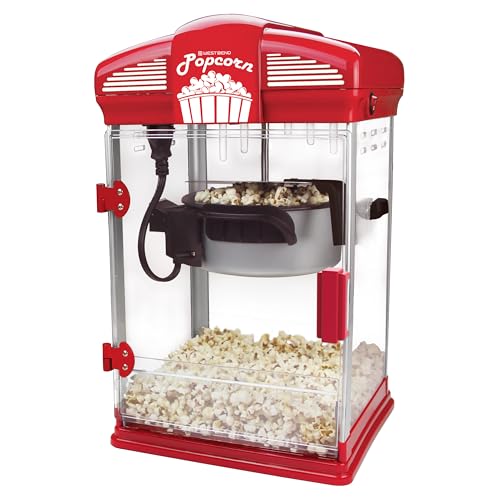
West Bend Stir Crazy Movie Theater Popcorn Popper, Gourmet Popcorn Maker Machine with Nonstick Popcorn Kettle, Measuring Tool and Popcorn Scoop for Popcorn Machine, 4-Qt., Red
Included for 'Best Commercial Popcorn Machines for Home Theaters' because the listing specifies Gourmet Popcorn Maker Machine with Nonstick Popcorn Kettle and Measuring Tool and Popcorn Scoop for Popcorn Machine, details this guide uses to compare options.
View on Amazon
ROVSUN Commercial Popcorn Machine with 10 Ounce Kettle Makes Up to 4 Gallons, Theater Style Popper Countertop Popcorn Maker w/Stainless Steel Scoop, Oil Spoon & 3 Popcorn Cups, ETL Certified, Black
Included for 'Best Commercial Popcorn Machines for Home Theaters' because the listing specifies Oil Spoon & 3 Popcorn Cups and ETL Certified, details this guide uses to compare options.
View on AmazonQuick comparison of commercial popcorn machine sizes
| Machine type | Typical kettle | Approximate output | Typical cabinet footprint | Best use | Usual market range |
|---|---|---|---|---|---|
| Compact countertop | 4 oz | About 80–100 servings per hour | 18–22 in. wide by 16–20 in. deep; 20–25 in. high | Apartment theaters, occasional family use | $250–$500 |
| Mid-size countertop | 6 oz | About 100–140 servings per hour | 20–24 in. wide by 18–22 in. deep; 24–30 in. high | Most dedicated home theaters | $400–$800 |
| Cart-based commercial | 6–8 oz | About 120–180 servings per hour | 24–30 in. wide by 20–26 in. deep; 55–70 in. high | Frequent entertaining and concession areas | $700–$1,500 |
| Large commercial | 8–12 oz | About 160–250 servings per hour | 28–36 in. wide by 24–30 in. deep; 60–75 in. high | Large parties, clubs, and dedicated bars | $1,200–$2,500+ |
“Servings per hour” is an estimate rather than a guarantee. It depends on the serving size, cycle time, oil temperature, popping corn, and whether the operator keeps the kettle running continuously. A 6-ounce kettle is often enough for roughly 10–15 people during a two-hour film when popcorn is a snack rather than the entire meal.
Best choice by home-theater situation
| Your situation | Recommended configuration | Why it fits |
|---|---|---|
| Small apartment or 10 × 12 ft media room | 4-ounce countertop machine | Lower footprint, easier storage, and sufficient output for two to six people |
| Family room with regular movie nights | 6-ounce countertop or cart model | Good capacity without the heat, weight, and cleaning burden of a large kettle |
| Kids, pets, or heavy foot traffic | Cart-based unit with locking casters and enclosed lower storage | More stable than a machine perched on a narrow counter and easier to position away from spills |
| Renter who may move soon | Countertop machine under about 55 lb | No cart assembly and less difficulty with stairs, elevators, and narrow doorways |
| Large parties or a theater bar | 8-ounce or larger cart model | Faster recovery between batches and enough reserve capacity for continuous serving |
Countertop versus cart-based installation
Countertop machines
A countertop machine is the practical winner when the theater already has a snack bar, pantry shelf, or sturdy sideboard. Allow at least 3 inches of clearance on each side and behind the cabinet for ventilation and access. Leave 12–18 inches above the kettle area if the top opens upward, and keep the front edge away from a walkway so the hot kettle door cannot be bumped.
Check the supporting furniture before buying. A machine weighing 35–60 pounds becomes substantially heavier after adding oil, corn, and serving supplies. Use a surface rated for at least 100 pounds, with a depth of around 22–24 inches for most mid-size units. A 30-inch-high counter places the serving opening at a comfortable height for adults, while a 36-inch bar may require children to reach upward.
Cart-based machines
A cart looks more authentic and usually provides better storage for kernels, oil, bags, and scoops. It also puts the serving opening near standing counter height, commonly around 36–42 inches. That is convenient for adults but not ideal if young children can reach the hot glass cabinet or kettle door.
Measure the complete assembled width, not just the machine cabinet. Decorative wheels, handles, and side rails can add several inches. For moving between rooms, a cart approximately 26 inches wide may pass through a standard 28–32-inch interior doorway, but tight turns in hallways can still be difficult. Confirm the packaged dimensions before ordering; some carts require assembly and arrive in boxes weighing 60–100 pounds.
Locking casters are important on hardwood or smooth tile. They prevent the machine from rolling when someone pulls open the kettle door. A cart with a metal frame and powder-coated panels generally tolerates repeated moving better than a lightweight decorative cabinet, although it may cost more and weigh more.
What kettle capacity really changes
The kettle size determines the amount of corn and oil processed in one cycle. A 4-ounce kettle creates smaller batches and usually recovers quickly, making it suitable for small groups. A 6-ounce kettle is the most versatile size for a home theater because it can refill a serving bowl without requiring a large storage cabinet. An 8-ounce kettle is useful when ten or more guests may serve themselves at once, but each batch uses more oil and creates more unpopped-kernel debris.
Do not choose a larger kettle solely because the machine advertises a higher hourly output. If your theater has only four seats, a large unit may spend most of its time holding warm popcorn. Freshness declines when popped corn remains in the cabinet for long periods, even with a heated deck.
Heat retention and freshness
Look for a heated stainless-steel or aluminum floor, a thermostatically controlled warming system, and tempered glass or acrylic panels that reduce drafts. The warming deck should keep finished popcorn above room temperature without continuing to cook it aggressively. Adjustable heat is preferable: a low setting can hold a small batch, while a higher setting can help during a party.
Insulation around the kettle and a well-fitting hinged door improve heat retention, but they also increase cleaning requirements if grease condenses inside the cabinet. Avoid placing the machine directly under a cold air-conditioning vent. Rapid temperature changes can make the glass fog and may lengthen the next popping cycle.
Cleaning access is a buying criterion, not a detail
The kettle is the part that needs the most attention. Choose a model with a hinged or removable kettle that exposes the interior without requiring you to reach around electrical components. A kettle that tilts forward for draining is easier to wipe than a fixed kettle mounted deep inside the cabinet.
- Clean oil residue from the kettle and surrounding surfaces after each use.
- Empty unpopped kernels from the floor tray before they become greasy and stale.
- Use a removable crumb tray or perforated deck when possible.
- Check whether the glass panels lift out; fixed panels make corners harder to reach.
- Confirm that replacement kettles, heating elements, fuses, and door hardware are available.
Never immerse the kettle or electrical cabinet unless the manufacturer specifically permits it. A machine with excellent output but poor access can take longer to maintain than a smaller model, especially when oil collects behind the kettle hinges.
Commercial brands and model families worth comparing
Gold Medal Products, Paragon, and Great Northern Popcorn are established names commonly associated with commercial-style popcorn equipment. Their ranges include countertop and cart-based machines in several kettle sizes. Compare the exact model specifications rather than assuming every machine from a brand has the same construction, voltage, output, or cleaning access.
For a premium concession-style installation, commercial units from Gold Medal or Paragon are often considered when replacement parts, heavier cabinets, and frequent operation matter more than initial cost. Great Northern Popcorn offers many home-oriented cart and countertop configurations that can suit occasional movie nights. In every case, verify the listed kettle capacity, cabinet dimensions, electrical requirements, and warranty before purchase.
A practical buying formula
For most homes, select the smallest kettle that can serve your largest usual gathering in two or three batches. Then add the space needed to operate it: approximately 3 inches on the sides, 3 inches behind, and enough overhead clearance to open the kettle safely. If the machine will live on a bar, choose a countertop model. If it will be rolled out only for parties, choose a cart with locking casters and storage.
The best overall specification for a dedicated home theater is usually a 6-ounce kettle, a cabinet around 20–24 inches wide, a removable or tilting kettle, a heated deck with adjustable control, and a support surface or cart rated well above the machine’s loaded weight. That combination provides useful serving speed without making the appliance unnecessarily difficult to clean, move, or store.