Our Top Picks
The best CPAP cleaner depends on what you value most: a water-based routine is the safest default for most machines, UV is convenient when you want a dry, chemical-free cycle, and ozone is compact and effective at reaching enclosed tubing but requires stricter ventilation and compatibility checks.
Best CPAP cleaners by situation
| Your situation | Best fit | Why | Main compromise |
|---|---|---|---|
| Lowest-risk everyday care | Water-based washing | Matches the cleaning approach commonly specified in CPAP manuals; inexpensive and easy to inspect | Requires regular hand washing and drying |
| Busy schedule or shared bathroom | UV-C cabinet | Dry cycle with little setup; useful for removable masks, water chambers, and accessories | UV light does not reliably reach shaded interior surfaces or the full length of tubing |
| Frequent travel or very limited counter space | Compact ozone device | Often lighter and smaller than a UV cabinet; gas can circulate through enclosed tubing | Requires a post-cycle waiting period, ventilation, and careful seal and filter replacement |
| Children, pets, asthma, or sensitivity to odors | Water-based washing or UV | Neither relies on ozone gas | UV still needs correct loading and does not replace physical washing |
| Philips DreamStation 1 or another device with manufacturer restrictions | Follow the PAP maker’s approved cleaning instructions | Some manufacturers have warned about ozone-related material degradation and warranty concerns | May mean more frequent manual cleaning |
How the three cleaning methods compare
Water-based cleaning: the practical default
Water-based cleaning means washing the mask cushion, tubing, and water chamber with warm water and a mild, unscented soap, then rinsing thoroughly and air-drying. It is not a countertop appliance, but it remains the reference method in many CPAP user manuals because it removes skin oil, dust, and residue rather than merely exposing them to a sanitizing process.
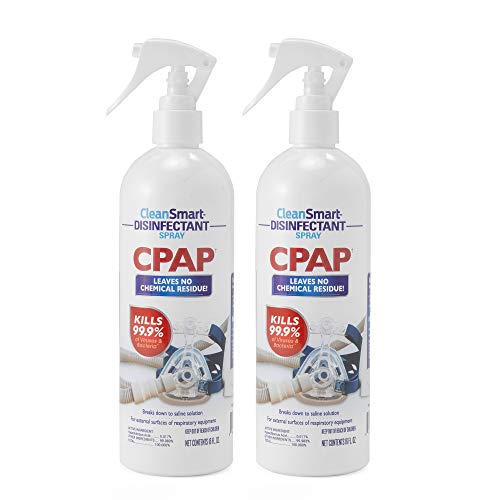
CleanSmart CPAP Disinfectant Spray for Face Mask and Hose, 16 oz (2 pack)
Included for 'Best CPAP Cleaners for Easier Machine Care' because the listing specifies 16 oz (2 pack), details this guide uses to compare options.
View on Amazon
CPAP Mask & Hose Soap (Pack of 3 Bottles x 250mL) Green Tea Mint Scent
Picked as a relevant option in this category; details come from the product listing.
View on Amazon
resplabs CPAP Mask Wipes, 110 Count Unscented - Safe for All CPAP Masks, Cushions, and Supplies - Daily Use Cleaning Wipes
Included for 'Best CPAP Cleaners for Easier Machine Care' because the listing specifies 110 Count Unscented and Safe for All CPAP Masks, details this guide uses to compare options.
View on AmazonExpect about 5–10 minutes of active work and several hours of drying time. A weekly deeper wash commonly takes 10–15 minutes, while the mask cushion usually benefits from more frequent cleaning. Never use bleach, alcohol, essential oils, antibacterial hand gel, or strongly scented household cleaners unless the CPAP manufacturer specifically permits them. These substances can irritate skin, damage silicone, or leave vapors in the air path.
The cost is low: mild soap is usually under $10, a replacement mask cushion often costs roughly $30–$100, and standard tubing commonly costs about $10–$40. The trade-off is consistency. If a wet tube is reattached too soon, moisture can collect in the hose or machine.
UV-C cleaners: convenient, but dependent on loading
UV-C cleaners use ultraviolet light inside a closed cabinet or chamber. Products such as the Liviliti Paptizer are designed around this approach. Typical cycles take approximately 5–30 minutes, depending on the selected program, followed by any cooling or drying time specified by the manufacturer.
UV works best on exposed surfaces placed within the light’s direct line of sight. A folded mask, overlapping tubing, or a water chamber with hidden areas can create shadows. UV also does not remove oils, mineral scale, or visible dirt, so washing remains necessary. A UV cabinet should be treated as an additional sanitizing step, not a substitute for cleaning.
Check the chamber’s usable dimensions before buying. A compact unit may fit a mask and water chamber but not a long hose without tight bending. As a practical rule, allow at least 2 inches of clearance around the appliance for ventilation and enough open space to lift the lid fully. UV cabinets often weigh about 3–8 pounds and need a stable, dry surface near an outlet.
Replacement costs are generally moderate. UV-C bulbs or LED modules may last several thousand operating hours, but a replacement module can cost roughly $30–$150, and a door seal or tray may cost about $15–$50. Do not open the lid during operation, bypass safety interlocks, or look directly at an exposed UV-C source.
Ozone cleaners: good circulation, greater safety responsibility
Ozone cleaners use activated oxygen to circulate gas through the mask, hose, and other enclosed components. Devices such as SoClean and VirtuClean are examples of ozone-based CPAP cleaning systems. A typical active cycle takes about 5–15 minutes, but the equipment usually requires an additional waiting period—often several hours—for residual ozone to dissipate before the parts are used.
Ozone’s advantage is circulation: unlike UV light, it can travel through the inside of tubing. Its disadvantages are more significant. Ozone can leave a noticeable smell, irritate the lungs, and accelerate deterioration of silicone, foam, adhesives, and other materials. Never run an ozone cleaner while wearing the mask, never breathe from the equipment immediately after a cycle, and do not use it in an occupied room unless the manufacturer’s instructions specifically address safe operation.
Compatibility is especially important. Verify the exact CPAP model, humidifier, heated tubing, mask, and any inline accessories. Some manufacturers have warned that ozone exposure can damage components or affect warranty coverage. Philips Respironics, for example, has issued communications concerning ozone and certain PAP devices. If your machine maker prohibits ozone, that instruction should outweigh convenience.
Ozone devices typically weigh about 1–4 pounds and are attractive for travel. Recurring costs may include an ozone filter, check valve, connector, or tubing adapter. Budget roughly $15–$60 per replacement part and about $30–$120 for a recurring filter or accessory set, depending on the system and replacement interval. A cleaner that seems inexpensive can cost more over time if it requires proprietary connectors.
Cycle time is not the same as ready-to-use time
| Method | Typical active cycle | Practical total time | What still needs attention |
|---|---|---|---|
| Water and mild soap | 5–15 minutes | Several hours to air-dry | Rinse completely; inspect for residue and allow parts to dry fully |
| UV-C cabinet | 5–30 minutes | About 10–40 minutes, depending on model | Wash dirt first; arrange parts so surfaces are not shaded |
| Ozone | 5–15 minutes | Often several hours including the dissipation period | Ventilate as directed; wait before use and replace filters on schedule |
Compatibility checks before buying
- Read the CPAP manual first. Look for restrictions on ozone, UV exposure, heated tubing, humidifier chambers, and washable filters.
- Confirm connector sizes. Some ozone systems require a machine-specific adapter; an apparently universal connector may not fit a heated hose.
- Check what the cleaner can hold. Measure your mask, water chamber, and hose. A 10-inch-wide cabinet may not accommodate bulky full-face equipment without awkward folding.
- Separate washable and non-washable parts. Do not put the CPAP machine, power supply, or electronic humidifier base into a cleaner or sink.
- Plan for replacement parts. Look for an available filter, seal, tray, lamp, or adapter before committing to a proprietary system.
- Keep the original manual. Cleaning-device instructions cannot override the PAP manufacturer’s maintenance schedule or safety warnings.
What to budget over two years
A water-based routine may cost approximately $40–$150 over two years, excluding mask and tubing replacements that you would need anyway. A UV-C cleaner commonly costs about $150–$400 initially, plus approximately $30–$150 for a lamp, LED module, seal, or tray if replacement is needed. Ozone systems often cost about $100–$300 initially, with an additional $30–$120 for filters, connectors, and other consumables.
Those ranges are more useful than comparing purchase prices alone. A low-cost ozone unit with unavailable filters is a poor long-term value, while an expensive UV cabinet may be unnecessary if you are willing to wash parts weekly. Also consider counter space: a cabinet can occupy an area similar to a small bread maker, whereas a compact ozone generator may fit in a drawer between cycles.
Bottom line
Choose water-based cleaning if you want the most broadly compatible, lowest-cost approach. Choose a UV-C cabinet when dry, convenient operation matters and you can load parts without creating shadows. Choose ozone only when your exact CPAP equipment allows it and you are prepared to manage ventilation, residual odor, waiting time, and replacement filters. The best CPAP cleaners are the ones that fit your machine’s instructions and a routine you can follow consistently—not simply the device with the shortest advertised cycle.