
Key takeaways
- The best jump rope routine for learning at home is a repeatable practice with a clear start, a basic jumping block and planned rest. Begin with an...
What's inside
The best jump rope routine for learning at home is a repeatable practice with a clear start, a basic jumping block and planned rest. Begin with an ordinary bounce rather than combining advanced footwork immediately. Choose the amount of practice for your experience and circumstances; a general routine should not require you to finish a fixed challenge after your movement loses control.
This guide provides practical selection and use considerations. It does not report hands-on product testing.
Prepare the place and the rope
Use an appropriate surface and footwear, and inspect the rope according to its instructions. Adjust its length with the maker’s sizing procedure before beginning. Clear the full arc around and above you, including lights, fans and furniture. Keep household traffic outside the practice area. A compact storage space does not establish that the same spot is suitable for jumping.
Warm up in a way suited to your activity and experience. If jumping is unfamiliar, or a health condition affects exercise, obtain appropriate guidance before starting. Do not use the routine to test whether pain will disappear with more effort. Stop if symptoms or the surroundings make continuing inappropriate.
Learn the basic bounce
Hold the handles lightly, with elbows near your sides and shoulders relaxed. Keep the trunk upright and knees softly bent. Turn the rope mainly through the wrists, then make a low jump as it passes beneath your feet. Aim for a controlled rhythm rather than a high leap or a large arm swing.
These are basic movement cues described in the American Council on Exercise’s jump-rope guidance. Practise a manageable sequence, stop, and reset the rope when needed. A catch is a reason to restart deliberately, not to rush into the next attempt. If the timing remains unclear, get instruction instead of changing several equipment settings at once.
Use a three-part practice block
- Prepare: confirm the rope is clear and recall one cue you want to practise.
- Jump: use the basic bounce for an amount of work appropriate to your current plan.
- Rest and review: stop the rope, recover and decide whether another block is appropriate.
Keep the work and rest decisions flexible enough to preserve control. A timer can record a block, but it should not force continued jumping when the rope, surface or movement needs attention. Note actual practice rather than counting an interrupted attempt as though it were continuous.
Give each block one question
For one block, pay attention to whether your hands drift far from your sides. In another, notice whether you are jumping higher as the sequence continues. These observations help you describe a difficulty to an instructor. They are not a diagnosis, and they do not prove that every timing problem has the same cause.
Review observations while resting. Avoid staring sideways at a screen during the movement to chase a demonstration. Watch the complete example beforehand, and position playback controls where they can be used after the rope stops. Keep the practice focused on the task rather than on keeping up with a rapidly changing video.
Leave advanced variations for a separate decision
Crossovers, faster sequences and other foot patterns introduce new coordination demands. Learn a variation deliberately with suitable instruction rather than adding it automatically because basic practice looks simple. A routine can remain useful while the ordinary bounce is becoming more familiar.
Likewise, do not change to a heavier rope merely to make a short session harder. Equipment choice, skill and workload are separate decisions. If you add a variation, understand its setup and purpose, and retain pauses in which to assess whether it belongs in the current practice.
Finish with a record you can use
Stop the rope, finish with an appropriate cooldown and record what you practised. Note the setting, surface and any specific question. Keep the record brief enough to consult next time. The next session can begin by revisiting one unresolved cue rather than replacing the entire routine with a new challenge.
Inspect and store the rope as directed, keeping small adjustment parts secure. If a cord or fitting is damaged, resolve it before the next practice. The useful routine is a sequence you understand and can adapt appropriately, not a promise that a certain number of jumps will produce a fixed fitness or weight-loss result.
Product listings to compare
As an Amazon Associate we earn from qualifying purchases at no extra cost to you. Product prices and availability are accurate as of the date shown and are subject to change. Compare the selected variant and its current description with the requirements above.
As an Amazon Associate we earn from qualifying purchases at no extra cost to you. Product prices and availability are accurate as of the date shown and are subject to change.

Option #1


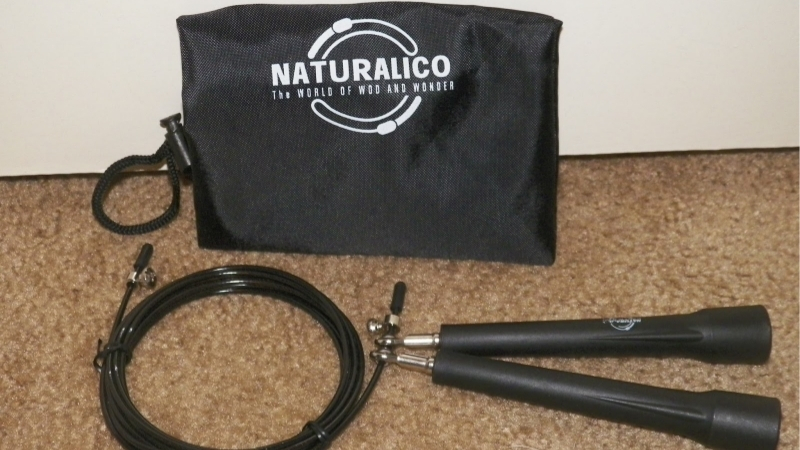
Additional product links
- Start 30-Day Prime Free Trial →
- See Today’s Amazon Deals
- ▸ Try Amazon Prime — free 30-day trial
- ▸ Start an Audible Premium Plus free trial
- ▸ Read free with Kindle Unlimited
Related reading
- Best jump rope routine
- Chris Parker
- Best Shoes for Jump Rope: 5 Picks for Concrete and Timber
- Best Shoe for Jump Rope: Forefoot Cushioning and Drop Guide
- Best Full Body Workout Equipment: 6 Machines vs Free Weights
- Best Gym Equipment for Full Body Workout: 5 Key Choices
- Best Workout Gym Equipment: 6 Heavy-Duty Picks for Home Use
- Best gym bench for home
- Best weight benches home gym
- Best at home full body workout equipment
- Best resistance bands workout
- Best exercise jump rope
- Best Jump Rope Workout Gear for HIIT, Boxing and Cardio
- Best Boxer Jump Rope: 6 Picks for Footwork and Conditioning
- Jump Rope Best Picks: 6 Ropes for Speed and Small Rooms
- Best Boxing Jump Rope: 6 Picks for 3-Minute Round Drills


Write Your Review
No reviews yet. Be the first to share your experience!