Key takeaways
- Measure the recline arc, not the chair: Add roughly 14 to 20 inches behind the backrest and 18 to 24 inches in front for an extended footrest. Chalk that rectangle on your floor before you buy. If it swallows a doorway or drawer, keep looking.
- Prioritize retractable footrests: A footrest that slides fully under the seat pan keeps the chair’s resting footprint honest. Fixed or hinged rests that jut out permanently steal walking space around the clock, not just during breaks.
- Watch the armrest span: Wide fixed armrests are comfortable but block the chair from rolling under a desk, which is how small rooms reclaim floor area. Adjustable or lower-profile arms let the chair disappear when you are not in it.
- Let the chair replace furniture: If a heated, massaging model means you skip buying a separate armchair, the extra bulk pays for itself. Judge these chairs against the loveseat they eliminate, not against a task chair.
- Check base diameter and caster quality: A five-star base on a heavy-duty chair can span 28 inches or more. Smooth casters matter twice as much in tight rooms because you will be repositioning constantly on rugs, thresholds, and cable runs.
What's inside
A recliner that doubles as a desk chair sounds like the answer to a cramped floor plan, right up until it arrives and you discover the footrest sweeps into your bookshelf and the backrest needs eighteen inches of clearance you simply do not have. In studios, converted closets, and bedroom corners doing double duty as offices, the failure point is almost never comfort. It is geometry. Most buyers measure the seat and forget to measure the arc the chair travels through when it opens.
This guide approaches reclining office chairs the way a small-space planner would: by footprint at rest, footprint deployed, and whether the chair earns its square footage by replacing something else in the room. I have flagged which models tuck flat against a wall, which ones demand a clearance zone, and which are genuinely too much chair for a compact room no matter how good the specs read.
As an Amazon Associate we earn from qualifying purchases.


How to Choose a/an Office Chair Recliners (2026)
- Measure the recline arc, not the chair: Add roughly 14 to 20 inches behind the backrest and 18 to 24 inches in front for an extended footrest. Chalk that rectangle on your floor before you buy. If it swallows a doorway or drawer, keep looking.
- Prioritize retractable footrests: A footrest that slides fully under the seat pan keeps the chair’s resting footprint honest. Fixed or hinged rests that jut out permanently steal walking space around the clock, not just during breaks.
- Watch the armrest span: Wide fixed armrests are comfortable but block the chair from rolling under a desk, which is how small rooms reclaim floor area. Adjustable or lower-profile arms let the chair disappear when you are not in it.
- Let the chair replace furniture: If a heated, massaging model means you skip buying a separate armchair, the extra bulk pays for itself. Judge these chairs against the loveseat they eliminate, not against a task chair.
- Check base diameter and caster quality: A five-star base on a heavy-duty chair can span 28 inches or more. Smooth casters matter twice as much in tight rooms because you will be repositioning constantly on rugs, thresholds, and cable runs.
The Best Office Chair Recliners (2026)s Reviewed
Ergonomic Office Chair with Lumbar Support (Brown Leather)
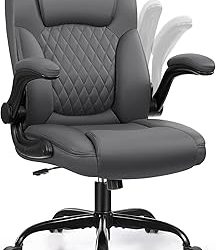
The most space-sensible pick here, since it skips the footrest entirely and relies on a modest recline plus contoured lumbar shaping. In a room where every inch is accounted for, this brown leather executive chair rolls fully under a desk and reads as furniture rather than equipment.
COMHOMA Big and Tall Gaming Chair with Pocket Spring Support
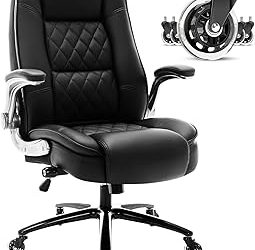
The pocket-spring seat is a genuine upgrade over stacked foam and holds its shape through long sessions, but the outward fixed armrests are the catch: they will not tuck under most desks. Choose this one only if the chair lives in the open, not squeezed into a nook.
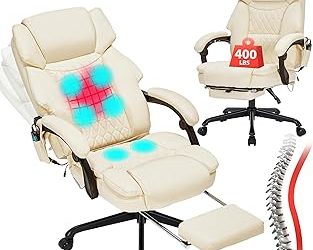
Massage & Heated Office Chair with Foot Rest (Beige)
The beige finish is the quiet advantage in a small room, reflecting light instead of absorbing it the way black PU does. Heat plus massage makes it a credible substitute for a reading chair, which is the strongest argument for giving it the space it needs.
GYI 160 Reclining Office Chair with Footrest (White)
The cross-legged seat design is unusual and genuinely useful if you shift positions often, and the wide white profile keeps a tight corner from feeling closed in. Budget for the full recline arc, though, because at 160 degrees this one wants clearance behind it.
Heated Recliner Office Chair with Massager and Adjustable Arms
Height-adjustable arms are the detail small-space buyers should notice, since dropping them lets the chair slide under a desk and vanish. The 155-degree recline and six-point vibration cover nap and recovery duty without a second piece of furniture.
Frequently Asked Questions
How much clearance does a reclining office chair actually need?
Plan on 40 to 48 inches of total front-to-back space for a fully deployed chair with a footrest. Tape it out on the floor first, including the swing of the backrest against any wall trim or baseboard heating.
Can I put one of these on a rug in a small room?
Yes, but use a low-pile rug and confirm the casters are rated for soft surfaces. High-pile rugs make heavy-duty bases nearly impossible to reposition, which is a daily annoyance in a room where you move the chair often.
Is a big and tall model overkill if I have a small space?
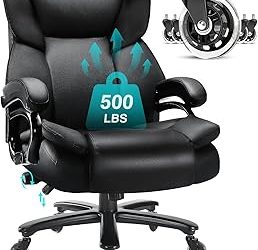
Not necessarily. Higher weight ratings usually mean better base construction and denser foam, which extends lifespan. Just accept the larger base diameter as the tradeoff and verify it clears your desk pedestal.
Do heat and massage features hold up over time?
The heating pads generally outlast the vibration motors, which are the first component to fade on budget models. Treat them as a pleasant bonus rather than the reason you buy, and prioritize seat and lumbar construction instead.
Final Thoughts
For genuinely tight rooms, the brown leather ergonomic chair with lumbar support is the disciplined choice, tucking away completely when the day ends. If you have room to let a chair replace an armchair, the beige massage and heated model earns its footprint with real recovery comfort, and the Heated Recliner with adjustable arms splits the difference nicely by dropping its arms to slide back under the desk.