Key takeaways
- Measure the recline arc, not the chair: Tape out the seat-back travel plus footrest extension on your floor before ordering. A chair with a 30-inch footprint can occupy nearly 60 inches of depth fully reclined.
- Footrest retraction style: Slide-under footrests disappear completely; hinged flip-down designs leave a lip that catches shins and rugs. In a narrow room, retraction quality beats footrest padding.
- Base diameter versus rug size: A 28-inch five-star base overhangs most 4×6 rugs, which makes casters bind at the edge. Match the base to your floor covering or plan on a hard chair mat.
- Back height and sightlines: High-back executive shells visually block a room and can cut off window light in a small office. Mesh backs read as air rather than mass, which keeps a compact space from feeling walled in.
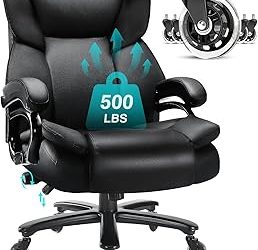
- Weight capacity and assembled mass: Big-and-tall frames rated 400 pounds or higher often weigh 60 to 80 pounds themselves. That’s fine if the chair stays put, but it’s a real problem in rooms that get rearranged.
What's inside
A reclining office chair asks something of your floor plan that a standard task chair doesn’t: room to tip back. In a spare bedroom or a desk tucked into a living room corner, that footprint matters more than seat width or headrest height. I measure this constantly for clients working out of 400-square-foot apartments, and the number that surprises people is the recline arc — a chair that lays back to 170 degrees needs roughly 18 to 22 inches of clearance behind it, plus another foot or so ahead if the footrest extends. Buy without checking that, and you own a chair that only half works.
This guide covers six reclinable office chairs worth considering in 2026, with an eye toward how they behave in tight rooms. I’ve flagged which models fold their footrests flush, which ones need a wall buffer, and which trade recline depth for a smaller resting footprint. Heavy-duty picks rated to 400 and 450 pounds are included, along with a slim mesh option for desks that share space with a bed or sofa.
As an Amazon Associate we earn from qualifying purchases.


How to Choose a/an Reclinable Office Chair (2026)
- Measure the recline arc, not the chair: Tape out the seat-back travel plus footrest extension on your floor before ordering. A chair with a 30-inch footprint can occupy nearly 60 inches of depth fully reclined.
- Footrest retraction style: Slide-under footrests disappear completely; hinged flip-down designs leave a lip that catches shins and rugs. In a narrow room, retraction quality beats footrest padding.
- Base diameter versus rug size: A 28-inch five-star base overhangs most 4×6 rugs, which makes casters bind at the edge. Match the base to your floor covering or plan on a hard chair mat.
- Back height and sightlines: High-back executive shells visually block a room and can cut off window light in a small office. Mesh backs read as air rather than mass, which keeps a compact space from feeling walled in.
- Weight capacity and assembled mass: Big-and-tall frames rated 400 pounds or higher often weigh 60 to 80 pounds themselves. That’s fine if the chair stays put, but it’s a real problem in rooms that get rearranged.
The Best Reclinable Office Chair (2026)s Reviewed
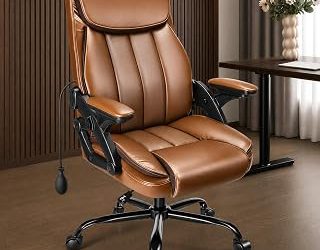
Dual Motor Executive Office Chair, Big & Tall 450lbs
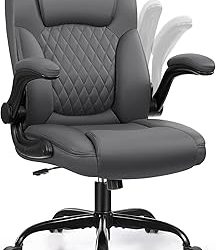
The electric recline is the differentiator here: dual motors move the back and footrest independently, so you can find a shallow lean that keeps the chair inside its footprint instead of committing to full zero-gravity. One-touch reset brings everything upright fast, which is exactly what you want when a chair sits three feet from a doorway.
Massage Office Chair with Foot Rest, 400lbs
Six vibration points and seat heat make this the comfort-first pick, and the cream upholstery keeps a small room from going dark and heavy the way black leatherette does. Budget a full wall’s worth of clearance behind it — this one reclines deep and doesn’t hold back.
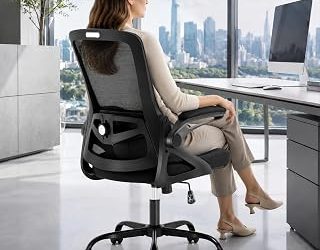
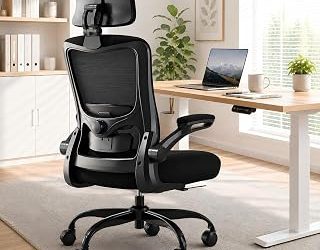
Marsail Ergonomic Mesh Office Chair
The best choice for genuinely tight quarters. A breathable mesh back and modest frame keep the visual weight low, while 3D flip-up armrests tuck the chair under a desk or console when you need the floor back. Recline is moderate rather than dramatic, which is the correct trade in a shared room.
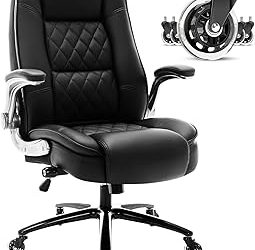
COMHOMA Big and Tall Office Chair with Deluxe Embossed Leather
Pocket-spring seating and a 150-degree recline give you most of the lounge experience with a shorter arc than the 170-degree models, so it needs less rear clearance. Adjustable armrests help it slide closer to a desk edge, gaining you a few useful inches.
GTPLAYER Big and Tall Office Chair with Pocket Spring Cushion
Soft velvet and lumbar support tuned for lower-back relief make this the most residential-looking option, which matters when the chair lives in a bedroom or den. The retractable footrest stows cleanly under the seat, one of the tidier implementations at this price.
Frequently Asked Questions
How much clearance does a reclining office chair actually need?
Plan on 18 to 22 inches behind the backrest for a 165-to-170-degree recline, and 12 to 16 inches ahead for an extended footrest. Chairs capped near 150 degrees typically need about a third less rear space.
Can a reclining chair sit against a wall?
Only if the recline is shallow or the mechanism pivots forward as it tips. Most big-and-tall models will scuff drywall within a week — leave a gap or add a baseboard guard.
Is a mesh back worth giving up the plush recline?
In small rooms, often yes. Mesh reads as transparent, runs cooler in a space without dedicated ventilation, and the lighter frame is far easier to move when the room does double duty.
Do heavy-duty frames damage floors?
Standard casters concentrate 60-plus pounds of chair weight on five small points, which dents soft wood and vinyl. Swap in rubber-wheeled casters or use a hard mat, especially in rentals.
Final Thoughts
For most compact home offices, the Marsail mesh chair is the smart default — it reclines enough to matter without eating the room. If you want a true lounge position and have the wall space for it, the Dual Motor Executive chair gives you the most precise control over how far you commit, while the GTPLAYER big-and-tall model is the pick when the chair has to look like furniture rather than equipment.