Key takeaways
- Buying black bar stools is easy to get half right: the color is simple to match, but counter height and bar height look alike online and are several inches apart. This roundup compares four verified black stools across both height…
Buying black bar stools is easy to get half right: the color is simple to match, but counter height and bar height look alike online and are several inches apart. This roundup compares four verified black stools across both height classes, so you end up with the right seat height rather than just the right finish.
As an Amazon Associate we earn from qualifying purchases.
By KK Home Furnishings Editorial Team
How to Choose Black Bar Stools
Black is the easy part; height is where purchases go wrong, because a stool sold as a bar stool can be a counter-height seat. So confirm the published seat height and its class, measure your own surface before trusting any label, keep the finish separate from the frame material, and weigh how firmly each spec is sourced.
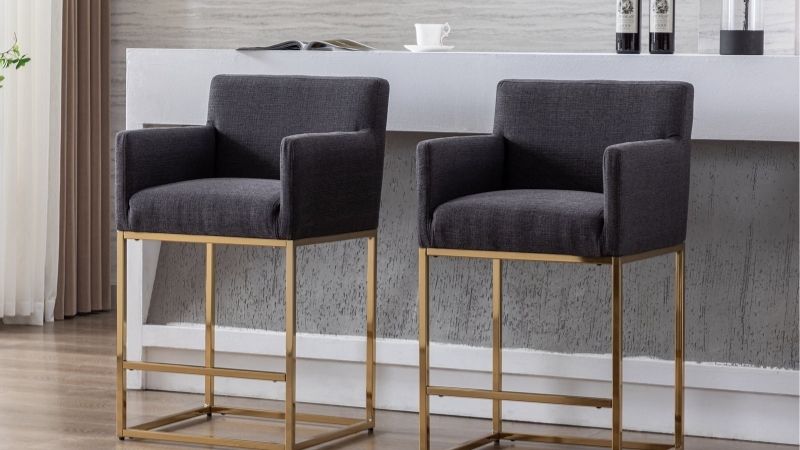
Confirm the Seat Height Class, Not Just the Color
These four span two different height classes despite all being black. The Boraam Jones seats at 29.5 inches, the IKEA DALFRED adjusts up to 29.125, and the Winsome Satori sits at 28.9, which are bar-height seats, while the IKEA ROSENTORP seats at 24.75 inches, which is a counter-height stool rather than a bar one.
That difference is around four to five inches, enough to make a stool unusable at the wrong surface. A counter-height seat at a 40-inch bar leaves you reaching up, while a bar-height seat at a 36-inch counter crowds your knees, so read the published seat height rather than relying on the words bar stool in a title.
Within the bar-height group, the heights are effectively tied. The Jones, DALFRED and Satori sit within about two percent of each other, so none is meaningfully taller, and the choice among them rests on back support, adjustability and build. Use height to sort the class first, then compare the stools inside that class.
Measure Your Counter or Bar First
Measure from the floor to the underside of your surface, not the top, since that is what sets knee room. A common reference is 9 to 13 inches of clearance between the seat and that underside, so a 36-inch counter paired with the 24.75-inch ROSENTORP leaves about 11.25 inches before accounting for any apron.
Apply the same arithmetic to a bar. Subtract the seat height from your measured underside, and if the result falls below about nine inches, the stool will feel cramped, while much above thirteen leaves you perched too low. Doing this once, with a tape measure, prevents the most common and most expensive stool mistake.
Account for the apron and any overhang. A thick frame under the counter reduces the usable gap even when the surface height looks standard, and a shallow overhang limits how far a stool can tuck in. Both are easy to miss from a photograph and both change which seat height actually works in your kitchen.
Keep the Black Finish Separate From the Frame
A black finish tells you nothing about what the stool is made from. The Winsome Satori is listed as solid wood in black, the DALFRED is a solid-birch-framed stool in black, and the Boraam Jones is a black bar-height model whose build detail comes from a retailer, so the same color covers different constructions here.
Verify the wood, metal or engineered components separately from the color, because durability, weight and repair all follow the material rather than the finish. A black stain over solid wood can be touched up, while a painted engineered component chips differently, so read the construction before assuming two black stools match.
Black also behaves differently in a kitchen. Dark finishes hide stains better than pale ones but show dust, crumbs and fingerprints more clearly, especially on a seat that gets daily use, so plan on regular wiping. That is a practical consideration for every stool here regardless of what sits beneath the black surface.
Use Source Quality as a Gate
The specs here do not all rest on equal footing. Three of these stools publish their seat height, finish and materials on manufacturer pages, while the Boraam Jones’s figures, including its 29.5-inch seat, 26.25 by 23.5 by 46-inch size and 300-pound capacity, come through a retailer listing rather than a brand spec sheet.
Treat a seller-sourced capacity with particular care, since load is a structural claim. A 300-pound figure from retail copy has not been confirmed by the maker in the same way a manufacturer-tested figure has, so verify it on the brand’s page before relying on it, and keep comfortably within any stated number.
That also shapes which stool should lead. A model whose core specs rest on retailer copy is reason enough to hedge rather than make it the headline recommendation, however appealing the design. Prices and finishes shift with sales too, so check the current listing and tier for the exact black variant before you order.
Top Picks
Each stool below fills a clear role, with the black finish, seat height and any tested load drawn from the makers’ listings, current as of October 2026. Prices vary by finish and sale, so treat each as a tier and check the current figure. Note that one pick is counter height, not bar height.
| Product | Best For | Key Spec | Watch Out For |
|---|---|---|---|
| Winsome Satori Black 29 | Best Simple Bar-Height Pick | 28.9 in seat; black solid wood | Backless and fixed height |
| IKEA DALFRED Black | Best Adjustable Black Stool | 24.75-29.125 in; 220 lb tested | Small seat; max only just reaches bar range |
| Boraam Jones Black | Best for a High Back | 29.5 in seat; 46 in overall | Core specs rest on a retailer listing |
| IKEA ROSENTORP Black | Best for Counter-Height Use | 24.75 in seat; black finish | Not a bar-height stool |
Winsome Satori Black 29: Best Simple Bar-Height Pick
The Winsome Satori 20089 in black is the straightforward bar-height choice. The black 29-inch variant seats at 28.9 inches in a solid wood construction with a black finish, placing it squarely in the 28-to-30-inch band that suits a typical 40-to-42-inch bar, and it sits in the budget tier among these black stools.
It suits a bar where a clean, wipeable solid-wood seat matters more than cushioning, and the saddle-style shape tucks away neatly when not in use. Measure your underside clearance against the 28.9-inch seat, aiming for 9 to 13 inches, and check the bar run allows spacing between stools before buying a full set.
The catches are the backless form and the fixed height. Without a back it suits shorter sits rather than long meals, and a fixed seat offers no correction if your bar proves lower or higher than standard, so measure carefully first. No manufacturer load figure was captured for it, so keep use within sensible limits.
IKEA DALFRED Black: Best Adjustable Black Stool
The IKEA DALFRED in black is the pick when the surface height is uncertain. It adjusts from 24.75 to 29.125 inches, covering much of both the counter and bar seat-height bands, carries a manufacturer-tested load of 220 pounds, and sits in the budget tier, making it the most flexible black stool in this group.
It suits a kitchen with a nonstandard surface or a household that may move the stools between a counter and a bar, since one purchase covers both. The 220-pound tested figure is the firmest load data here. Set the height so the seat leaves 9 to 13 inches under your measured underside, then secure the fittings.
The catches are seat size and range. It is backless with a small round seat, better for perching than long meals, and its 29.125-inch maximum only just reaches typical bar height, so a taller bar could leave clearance tight at the top of the range. Confirm your measurement before relying on the upper setting.
Boraam Jones Black: Best for a High Back
The Boraam Jones in black is the pick for back support. Its listing states a 29.5-inch bar-height seat with an overall size of 26.25 inches wide by 23.5 deep by 46 tall and a 300-pound capacity, making it the tallest-backed option here and the only one in this group offering a substantial backrest for longer sitting.
It suits a bar where people sit through whole meals and want support behind them, and at 46 inches overall it reads as a substantial piece of furniture rather than a perch. Measure the 26.25-inch width against your bar run with spacing, and confirm the 29.5-inch seat leaves adequate clearance under your counter.
The catch is sourcing: its seat height, dimensions and 300-pound capacity all come through a retailer listing rather than a manufacturer spec sheet, so those figures are provisional and it should not anchor the shortlist. Verify them on the brand’s own page, especially the capacity, before planning around any of them.
IKEA ROSENTORP Black: Best for Counter-Height Use
The IKEA ROSENTORP in black is the counter-height option, included deliberately because the category blurs the two classes. It seats at 24.75 inches with a black finish on a wooden stool, which suits a standard kitchen counter rather than a raised bar, and it sits in the budget tier alongside the other IKEA pick here.
It suits a 36-inch counter, where subtracting its 24.75-inch seat leaves about 11.25 inches of clearance before any apron is accounted for, comfortably inside the 9-to-13-inch reference band. Measure your own underside to confirm, since an apron or a slightly different counter height shifts that figure in practice.
The important catch is that this is not a bar-height stool. At 24.75 inches it is roughly four to five inches below the other picks here, so at a 40-inch bar it would leave you reaching up uncomfortably. Use it only where the surface is genuinely counter height, and do not treat the black finish as making it interchangeable.
Frequently Asked Questions
Buyers comparing black stools ask the same core questions, mostly about height classes, clearance, finish and adjustability. Each answer below leads with the direct reply, then adds the condition that changes it, so you can apply it to your own counter or bar rather than a single standard that may not match your kitchen.
Are black bar stools the same height as counter stools?
No, and the gap is significant. This shortlist includes a counter-height example at about 24.75 inches and bar-height examples at roughly 28.9 to 29.5 inches, so the two classes differ by around four to five inches, which is more than enough to make a stool uncomfortable or unusable at the wrong surface.
Counter height suits a standard kitchen counter near 36 inches, while bar height suits a raised bar around 40 to 42 inches, so the surface determines the class rather than the product category name. A listing can describe both as bar stools, which is why reading the published seat height matters more than the title.
Check the number before the color. Confirm the stated seat height, compare it to your measured underside, and only then compare finishes, since getting the class wrong cannot be fixed by anything except returning the stool. An adjustable model reduces that risk where the surface height is unusual or not yet decided.
What seat height should I use at a 40-inch bar?
Start around 28 to 30 inches, which covers three of the picks here, then verify against your own underside measurement. Aim for roughly 9 to 13 inches of clearance between the seat and the underside of the bar, so a 40-inch surface typically pairs well with a seat in the high twenties of inches.
Measure the underside rather than the counter top, because an apron or a thick frame reduces the usable gap. Subtract the seat height from that underside figure, and if the result falls below about nine inches, the stool will feel cramped even though the nominal heights looked compatible on the product pages.
If your bar is taller or shorter than 40 inches, adjust the target. An unusually high surface may leave a fixed 29-inch stool short on clearance, while a lower one suits a counter-height seat better. An adjustable stool covers a range instead of a single point, which is useful when the surface is nonstandard.
Does a black finish tell me what the frame is made from?
No. Color is a finish and variant attribute, not a material one, so a black stool can be solid wood, engineered wood, metal or a mix, and the shade looks similar across all of them. Verify the wood, metal or engineered components separately from the color before drawing any conclusion about durability or weight.
The construction is what determines how the stool ages. A black stain over solid wood shows grain and can often be touched up, while paint over an engineered component chips to reveal a lighter core, and a metal frame behaves differently again. Read the material breakdown for the exact variant you are buying.
Black does change daily upkeep, though. Dark finishes hide liquid stains better than pale ones but show dust, crumbs and fingerprints more plainly on a seat and footrest that get constant use, so expect to wipe them more often. That applies to every black stool here whatever the frame beneath the finish is made of.
Is an adjustable black stool safer for unknown counter heights?
It reduces the fit risk, which is its main advantage. The IKEA DALFRED adjusts from 24.75 to 29.125 inches, so it can serve a counter at the low end or a bar near the top, which helps when you are buying before measuring or when a surface sits between the usual counter and bar heights.
The caveat is that the range has to actually cover what you need. Its maximum only just reaches typical bar height, so a taller bar could leave the clearance tight even at the top setting, which is why measuring the underside still matters. Adjustability narrows the risk rather than removing the need to measure.
Use it within its stated conditions. The published 220-pound tested load assumes correct assembly, and an adjustment mechanism should be set and secured as the instructions describe, with fittings checked periodically. An adjustable stool is a sensible hedge against an unknown height, not a licence to skip the measurement.
Final Thoughts
Choosing black bar stools means treating color as the easy part and seat height as the real decision: confirm whether a stool is counter height or bar height, measure your underside for 9 to 13 inches of clearance, and check the frame separately. The Satori, DALFRED, high-backed Jones and counter-height ROSENTORP each suit a different surface.