Buying breakfast bar stools starts with one number that is easy to overlook: the seat height, which has to match your counter, not the overall stool height. This roundup compares four verified counter-height stools, all seated between about 24.375 and 26 inches, so you fit them to the bar first and then weigh build, back and load.
As an Amazon Associate we earn from qualifying purchases.
By KK Home Furnishings Editorial Team
How to Choose Breakfast Bar Stools
A bar stool that looks right but sits at the wrong height is useless at a breakfast bar, so seat height leads every other choice. These four are all counter-height stools within a narrow band, which keeps the comparison fair; from there, check the footrest and backrest, read the weight tests correctly, and match the seat material to daily use.
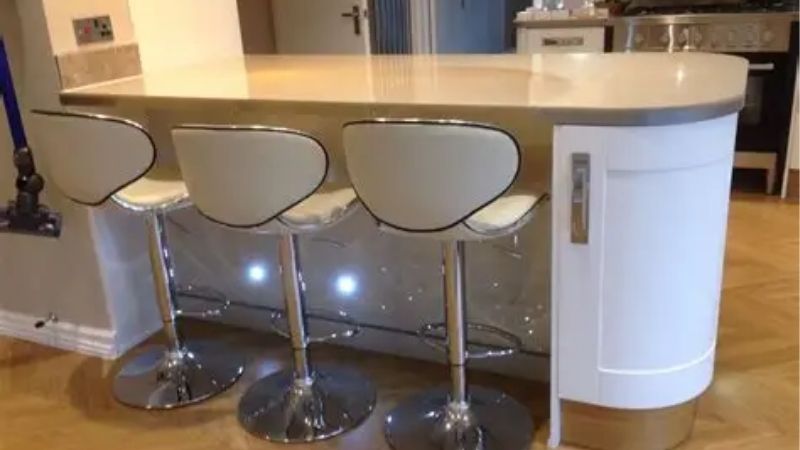
Start With Seat Height, Not Overall Height
Seat height, the floor-to-seat measurement, is what has to match your counter, not the overall height of the stool. These four sit between 24.375 inches on the IKEA SKOGSTA and 26 inches on the West Elm Range, with the ROSENTORP at 24.75 and the Svelti at 25.5, so all four are counter-height stools, not bar-height ones.
Match the seat height to the surface. A standard kitchen counter or breakfast bar around 36 inches pairs with a counter-height stool in roughly the 24-to-26-inch seat range, which is where all four here sit, while a taller 42-inch bar needs a 29-to-30-inch bar stool instead. Measure your counter height before anything else to confirm the fit.
Do not rank these on seat height, because they are effectively tied. The whole group spans only 1.625 inches, and each adjacent pair differs by under about three percent, so none is meaningfully taller or better for being an inch higher. Pick the counter-height stool that clears your knees, then decide on build and back instead of height.
Check the Footrest and Backrest
A footrest and backrest decide how comfortable a stool is for a long breakfast, not just how it looks. All four here have a backrest, which supports the lower back far better than a backless stool, and each has a footrest or rail, which matters because feet dangle on a counter-height seat without one to rest on comfortably.
Match the back and footrest to who uses the stool and for how long. A full backrest suits lingering over coffee or helping kids with homework at the bar, while a lower rail keeps the stool tuckable; the footrest height should let feet rest without stretching. Sit on a similar stool if you can, since comfort is hard to judge from a photo.
Think about tuck-in clearance too. A backrest adds height and can stop a stool sliding fully under an overhang, so measure the counter’s overhang depth and the stool’s depth together. The SKOGSTA, for instance, has a seat depth of only 14.625 inches, which tucks neatly but offers a shallower perch, so balance tuckability against seat room.
Compare Published Weight Tests Correctly
Weight tests tell you about sturdiness, but only compare them when the protocols match, and here they do not. The Article Svelti lists a weight tested to 300 pounds, while the IKEA ROSENTORP and SKOGSTA list 243 pounds under their own testing to ANSI/BIFMA and EN standards, so the figures come from different protocols and are not comparable.
Read each number as evidence about its own stool, not a head-to-head ranking. A 300-pound figure and a 243-pound figure both indicate a sturdy stool, but the gap does not mean one is a precise percentage stronger, because the tests differ. The IKEA stools cite specific furniture standards, which is useful context for how the figure arose.
Where a maker does not publish a load figure, judge by the build. The West Elm Range is described as Contract Grade, aimed at commercial durability, but an exact load number was not retrieved, so treat that as a quality signal not a measured limit. Use published tests to shortlist, and keep within whichever figure your chosen stool states.
Match Wood, Upholstery or Molded Seats to Daily Use
The seat material sets the feel and the upkeep. The Svelti uses a molded plastic seat on powder-coated metal, the SKOGSTA is solid acacia, the ROSENTORP pairs a solid-wood frame with a fiberboard seat and back, and the West Elm Range has a padded, upholstered seat and back, so each cleans and wears differently at a busy bar.
Match the seat to how messy the bar gets. A molded or wood seat like the Svelti’s or SKOGSTA’s wipes clean instantly, which suits kids, spills and heavy use; a padded upholstered seat like the Range’s is more comfortable for long sitting but shows marks and needs more careful cleaning. Decide whether easy cleanup or cushioned comfort matters more.
Note what is wood and what is not. The ROSENTORP has a solid-wood frame but a fiberboard seat and back, so it is not an all-solid-wood stool, while the SKOGSTA is solid acacia throughout. For a busy kitchen, a wipeable molded or sealed wood seat usually outlasts upholstery, which absorbs the spills a breakfast bar inevitably sees.
Top Picks
Each pick below fills a clear role, with seat height, build and any load test drawn from the makers’ listings, current as of October 2026. Prices move and one is on clearance, so confirm before buying. The table pairs the standout figure with the main catch for each stool, and all four are counter-height, not bar-height.
| Product | Best For | Key Spec | Watch Out For |
|---|---|---|---|
| Article Svelti | Best Overall | 25.5 in seat; tested 300 lb; indoor/outdoor | Molded seat, not padded upholstery |
| IKEA ROSENTORP | Best Solid-Wood Everyday Pick | 24.75 in; 243 lb test | Fiberboard seat/back, not all solid wood |
| IKEA SKOGSTA | Best Solid-Acacia Pick | 24.375 in; solid acacia; 243 lb | Seat depth only 14.625 in |
| West Elm Range | Best Upholstered Pick | 26 in counter; padded seat/back | Clearance price can disappear |
Article Svelti: Best Overall
The Article Svelti is the overall pick for a sturdy, wipe-clean stool that works almost anywhere. It seats at 25.5 inches on an 18-by-20-by-42-inch frame of powder-coated metal with a molded plastic seat, carries a weight tested to 300 pounds, and lists around $99 at Article as of October 2026 in the mid tier, rated for indoor or outdoor use.
It suits a busy kitchen or a covered patio bar, since the UV-resistant molded seat shrugs off spills and sun and the 25.5-inch seat suits a standard counter. The 300-pound tested figure points to a robust frame. Measure your counter overhang against the 20-inch depth so the stool tucks in, and confirm the seat height clears your knees.
The catch is comfort: the molded plastic seat is easy to clean but firmer than a padded one, so for long sitting it is less cushioned than the upholstered Range. Its 300-pound figure comes from Article’s own test, so do not read it as a fixed margin over the IKEA stools’ 243-pound figure, which uses a different protocol entirely.
IKEA ROSENTORP: Best Solid-Wood Everyday Pick
The IKEA ROSENTORP is the pick for an everyday wood-framed stool at the lowest price. It seats at 24.75 inches on a solid-wood frame with a fiberboard seat and back, is tested to 243 pounds and developed to furniture standards, and lists around $85 at IKEA as of October 2026, the cheapest counter-height option in this group of four.
It suits a family kitchen that wants a backrest and a solid frame without a high spend, and the 24.75-inch seat fits a standard counter. The backrest supports longer sitting at the bar. Measure your overhang against the stool depth so it tucks under, and keep within the 243-pound tested figure, which is IKEA’s own test result.
The catch is that the seat and back are fiberboard, not solid wood, so it is not an all-solid-wood stool despite the solid frame, and fiberboard can chip at edges over years of hard use. Keep it dry and wipe spills promptly, and for a busy bar it serves well at the price; just set expectations on the seat material.
IKEA SKOGSTA: Best Solid-Acacia Pick
The IKEA SKOGSTA is the pick for solid wood throughout. It seats at 24.375 inches on a 16.125-by-18.125-by-35.875-inch frame of solid acacia with a clear acrylic lacquer, is tested to 243 pounds to ANSI/BIFMA X5.4 and EN 16139 Level 1, and lists around $95 at IKEA as of October 2026 in the budget-to-mid range.
It suits a buyer who wants genuine solid wood and documented furniture-standard testing, with the acacia giving warmth and durability a fiberboard seat cannot. The standards cited are a real quality signal. Confirm the seat height suits your counter, and note the shallow 14.625-inch seat depth, which tucks neatly but gives a smaller perch.
The catch is that shallow seat depth: at 14.625 inches it is less roomy than a deeper stool, so a larger sitter may find it compact for long sitting. Solid acacia also benefits from the occasional wipe and care to keep the finish. For everyday use it is sturdy and tuckable, so weigh the compact seat against the all-solid-wood build.
West Elm Range: Best Upholstered Pick
The West Elm Range is the pick when cushioned comfort matters most. The counter version seats at 26 inches with a padded, upholstered seat and back on an iron base, built with engineered wood over metal and foam to a Contract Grade spec, and lists around $109.97 on clearance at West Elm as of October 2026, the highest price here.
It suits a kitchen where people linger at the bar and want a cushioned seat and back rather than hard wood or plastic, and the Contract Grade build aims at commercial-level durability. The padded seat is the most comfortable here for long sitting. Measure the 26-inch seat against your counter, since it is the tallest seat in this group.
Two catches apply. The upholstered seat is comfortable but shows marks and needs more careful cleaning than a wipeable wood or molded seat in a messy kitchen, and the price reflects a clearance, which can disappear, so confirm the current figure before counting on it. Choose the Range when cushioned comfort outweighs the easiest cleanup.
Frequently Asked Questions
Buyers of counter and bar stools ask the same practical things, mostly about height, the counter-versus-bar distinction, clearance and backs. Each answer below leads with the direct reply, then adds the condition that changes it, so you can apply it to your exact counter and kitchen rather than one idea of how tall a stool should be.
What height stool works for a breakfast bar?
It depends on your counter height, but most breakfast bars take a counter-height stool with a seat around 24 to 26 inches, which is where all four here sit. A standard kitchen counter near 36 inches pairs with that seat range, so measure the surface first and match the seat height to it rather than guessing from the stool’s overall look.
The rule of thumb is a gap of roughly 9 to 12 inches between the seat and the underside of the counter, so knees and thighs clear comfortably. Subtract the seat height from your counter height to check that gap before buying, since a stool too tall cramps the legs and one too short leaves you reaching up to the bar.
If your bar is taller, step up to bar-height stools. A raised bar around 42 inches needs a 29-to-30-inch seat, which is a different category from these counter-height stools, so do not mix the two at one surface. Confirm whether your surface is counter or bar height, then choose the matching stool rather than assuming one size fits both.
Is 26 inches counter height or bar height?
A 26-inch seat, like the West Elm Range’s, is counter height, at the upper end of the counter-stool range. Counter-height stools generally seat around 24 to 27 inches to suit a roughly 36-inch counter, while bar-height stools seat near 29 to 30 inches for a taller 42-inch bar, so 26 inches belongs with the counter-height group here.
The number only works relative to your surface, though. A 26-inch seat under a standard counter leaves a comfortable leg gap, but under a lower table or a taller bar it would be wrong, so always check it against your actual counter height. The goal is that 9-to-12-inch clearance between seat and counter, not a fixed seat height.
Within counter height, an inch or two rarely matters much. All four stools here sit between 24.375 and 26 inches, a span small enough that each suits a standard counter, so do not over-focus on the exact figure. Pick within the counter-height range that clears your knees, and let build and comfort decide between close seat heights.
How much space should be between the stool seat and counter?
Aim for roughly 9 to 12 inches of clearance between the seat and the underside of the counter, so legs fit comfortably. Subtract the stool’s seat height from your counter height to find that gap; a 36-inch counter and a 25-inch seat, for example, leave about 11 inches, which sits comfortably in that range for most adults at a bar.
The right gap depends on who sits there and any apron under the counter. Taller sitters and counters with a thick underside apron need the gap toward the upper end, while a thinner counter allows the lower end. Measure the clearance under your specific counter, not just its top height, since an apron can eat into the usable leg space.
Too little clearance is the common mistake. If the gap drops below about 9 inches, knees press against the counter and the stool becomes uncomfortable, so err toward a slightly lower seat if you are between sizes. Check the gap before buying, because seat height is fixed and a stool that crowds the legs cannot be adjusted afterward.
Are backless stools better for a small kitchen?
They can be, because backless stools tuck fully under a counter and take less visual space, but these four all have backrests for a reason. A backless stool slides out of the way and suits a tight kitchen, while a backrest, as on all the picks here, supports the lower back for longer sitting at the breakfast bar over a meal.
The trade-off is space versus comfort. Backless stools free up room and disappear under an overhang, which helps in a small kitchen, but they offer no back support, so they suit quick perching more than lingering. A stool with a back, like these, is better for meals and homework, at the cost of tucking in slightly less neatly.
Measure the overhang before deciding. If your counter has a deep overhang, even a stool with a low backrest can tuck mostly away, so you may not need to sacrifice the back; if the overhang is shallow, a backless stool wins on space. Match the choice to how long people sit and how much the stools need to disappear from view.
Final Thoughts
Choosing breakfast bar stools starts with seat height, not overall height: confirm all four are counter-height, weigh the footrest and backrest, read the weight tests separately, and match the seat to daily messes. The wipeable Svelti, wood ROSENTORP, acacia SKOGSTA and upholstered Range each suit a kitchen, not every bar.