
Key takeaways
- A black dresser can add strong contrast without forcing one storage shape on every bedroom. The practical choice depends on wall width, cabinet depth, drawer format, and tip-over controls. HEMNES suits narrow walls, Simply Modern stays shallow, Sloane favors wood…
A black dresser can add strong contrast without forcing one storage shape on every bedroom. The practical choice depends on wall width, cabinet depth, drawer format, and tip-over controls. HEMNES suits narrow walls, Simply Modern stays shallow, Sloane favors wood character, and Crescent adds nursery-focused safety features.
As an Amazon Associate we earn from qualifying purchases.
By KK Home Furnishings Editorial Team
How to Choose a Black Dresser
Start with the wall and traffic path, not the drawer count on a listing. These four current examples range from 42.5 to 53.35 inches wide and from 16 to 19.625 inches deep, so two six-drawer cabinets can occupy very different wall shapes. Height also changes where mirrors, windows, and wall art can sit.
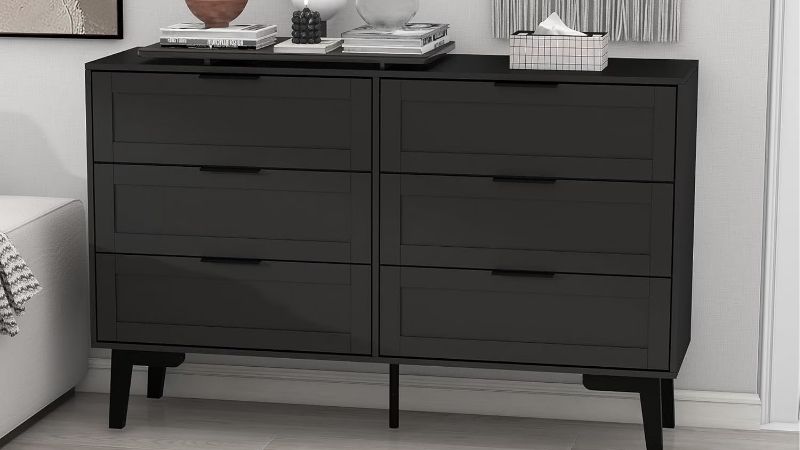
Measure Width, Depth, and Height as a Set
Width tells you whether the case fits between doors, windows, or bedside furniture, while depth shows how far it projects into the walking path. Measure from the finished wall face and account for baseboards that may keep the cabinet from sitting flush. Recheck nearby door and closet swings before ordering.
Height changes more than appearance. A 51.625-inch HEMNES uses less wall width than the low, wide models, but it occupies the vertical zone where artwork, a television, or a mirror might go. A lower dresser gives you a broader top surface, while a tall chest concentrates drawers into a smaller frontage.
For this set, HEMNES provides about 1.41 drawers per 10 inches of wall width, while the three wide dressers sit around 1.12 to 1.15. That is a layout-density comparison, not a capacity claim, because drawer interiors differ. Use it when frontage is tight, then confirm drawer depth and usable interior space separately.
Match Drawer Layout to What You Actually Store
Six drawers do not guarantee equal storage. HEMNES publishes 9.2 cubic feet of capacity and a 15.75-inch inside drawer depth, while Storkcraft lists Crescent drawers at 21.5 inches wide, 14 inches deep, and 4 inches high. Prepac and Walker Edison publish less complete interior measurements for their six-drawer cases.
Deep drawers suit folded denim, sweaters, and linens, while shallower drawers can make socks and accessories easier to separate. Before buying, group what the cabinet must hold and note which categories are bulky. A stack of narrower drawers can organize well but may be less convenient for wide folded items.
Drawer hardware changes daily use. Prepac lists metal glides with built-in safety stops, Storkcraft uses Euro-style glides, and HEMNES uses an interlock that limits drawers opening together. Walker Edison lists wood runners on Sloane, so the feel and maintenance pattern differ even when the drawer count is identical.
Read the Black Finish and the Core Material Separately
A black finish is a color treatment, not a construction category. HEMNES uses stained solid pine for major visible parts, while Sloane combines solid pine with MDF panels. Simply Modern uses laminated composite wood with an MDF backer, and Crescent uses wood composites beneath a PU-coated laminate surface.
Construction matters with frequent moves or repeated disassembly. Solid wood can show dents and finish wear, while composite panels can be vulnerable around fastener holes after several take-apart cycles. Neither description guarantees durability, so compare assembly method, spare-part support, and stated warranty too.
Black surfaces can reveal dust, fingerprints, and edge wear more than lighter finishes. Matte or wood-grain black softens reflections, while smooth laminate is simpler to wipe. If the room gets strong side light, inspect photos for sheen and texture instead of assuming every black dresser reads as the same shade.
Treat Anti-Tip Setup as Part of the Purchase
Dressers are clothing storage units, so stability is not optional. The CPSC rule based on ASTM F2057-23 applies to covered units made after September 1, 2023, and CPSC recommends anchoring dressers to the wall. The standard covers carpet, loaded drawers, multiple open drawers, and child interaction [CPSC, 2023].
Product pages use different safety wording, so read the exact claim. IKEA says HEMNES is designed to meet the US Federal Stability Standard, while Storkcraft says Crescent is tested at accredited labs to standards including ASTM F2057. Walker Edison includes a wall anchor, and Prepac says it meets standards.
Anchoring hardware still has to match the wall. IKEA tells owners to use suitable screws and plugs for the home, so masonry, wood studs, and hollow drywall may need different fasteners. Treat wall attachment as part of installation, not a future upgrade, and keep children from climbing or using open drawers as steps.
Top Picks
No single model here is an outright overall winner on verified data because tall and wide dressers solve different room problems. The table uses manufacturer-published dimensions and current model details, then assigns each pick to the measurable shape or safety feature it supports instead of forcing one ranking.
| Product | Best For | Key Spec | Watch Out For |
|---|---|---|---|
| IKEA HEMNES 6-Drawer | Best For Tall, Narrow Storage | 42.5W x 19.625D x 51.625H in; 9.2 cu ft | Tall case; wall anchoring required |
| Prepac Simply Modern 6-Drawer | Best For Shallow Footprints | 52.5W x 16D x 29.5H in; top rated 40 lb | Composite construction; assembly required |
| Walker Edison Sloane 6-Drawer | Best For 19-Inch-Deep Layouts | 52L x 19D x 32.88H in; 88 lb | Deeper case; assembly required |
| Storkcraft Crescent 6-Drawer | Best For 17-Inch-Deep Nursery Layouts | 53.35W x 16.73D x 33.31H in; 21.5W x 14D x 4H in drawer | Composite build; topper sold separately |
IKEA HEMNES 6-Drawer – Best For Tall, Narrow Storage
HEMNES is the narrowest dresser in this group, but its 51.625-inch height is the tradeoff. IKEA lists a 42.5-inch width and 19.625-inch depth, so it suits a wall with about 43 inches of frontage. It is less suitable under a window or beneath wall-mounted decor that already occupies the upper zone.
IKEA publishes 9.2 cubic feet of storage capacity, a 15.75-inch inside drawer depth, and solid pine across major visible parts. The interlock allows one drawer to open at a time, and the page says the dresser is designed to meet the US Federal Stability Standard. These are manufacturer-stated details, not our research.
HEMNES arrives in two packages and requires wall anchoring, so setup is more involved than with a small nightstand. IKEA tells buyers to select screws and plugs suited to their wall, making fasteners a possible installation item. Choose this black dresser when wall frontage matters more than keeping the top low.
Prepac Simply Modern 6-Drawer – Best For Shallow Footprints
Simply Modern is the shallowest verified case here at 16 inches deep, although its 52.5-inch width needs a longer wall. Prepac lists a 29.5-inch height and 111-pound assembled weight. The low profile works under art or a mirror, while the reduced depth helps where the bed already narrows the route through the room.
The six-drawer case uses laminated composite woods, an MDF backer, real pine drawer sides, and metal glides with safety stops. Prepac also publishes a 40-pound top rating and calls the finish pure black. The company states that the material is CARB 2 compliant and that the dresser meets applicable safety standards.
This model ships ready to assemble in one box and carries a five-year limited parts warranty, longer than several warranties here. Prepac lists delivery on qualifying orders, while returns can involve a return-shipping fee. That matters because sending back a large flat-pack item can add cost and handling work.
Walker Edison Sloane 6-Drawer – Best For 19-Inch-Deep Layouts
Sloane suits buyers who want wood character in black and have enough depth for a 19-inch case. Walker Edison lists the six-drawer model at 52 inches long, 19 inches deep, and 32.88 inches high, with an 88-pound weight. Angled legs and cutout handles give it a mid-century profile rather than a plain box shape.
Walker Edison describes Sloane as solid pine with a stained finish and also notes MDF panels in its FAQ. That matters because the name can sound like every panel is solid wood. The six drawers use wood runners, and the black version shares the published dimensions of other finish variants in this dresser size.
Assembly is required, and Walker Edison says the six-drawer version includes a wall anchor and attachment hardware. The brand advertises free shipping sitewide, removing one purchase cost but not the time needed to build and level it. Pick Sloane when material feel and raised legs matter more than minimum depth.
Storkcraft Crescent 6-Drawer – Best For 17-Inch-Deep Nursery Layouts
Crescent is the widest dresser here at 53.35 inches, but its 16.73-inch depth keeps the case shallow. Storkcraft lists a 33.31-inch height and 123.45-pound weight, with each drawer at 21.5 inches wide, 14 inches deep, and 4 inches high. The black variant is model 03666-30B and is listed by major US retailers.
Storkcraft equips Crescent with an interlocking drawer system and a tip-over restraint kit. The company says accredited third-party labs test it to applicable CPSIA and ASTM requirements, including ASTM F2057, and it carries GREENGUARD Gold certification. The safety documentation is unusually specific for this group.
The case uses wood composites with a PU-coated surface and Euro-style drawer glides, so buyers seeking mostly solid wood should look elsewhere. Assembly is required and Storkcraft recommends two adults. A compatible changing topper is sold separately, adding nursery utility but another component to buy and store later.
Frequently Asked Questions
The remaining questions are less about drawer count and more about installation, proportions, and how a dark finish behaves in a bedroom. A useful black dresser should fit without pinching circulation, keep daily items within reach, and have its restraint system installed according to the maker’s instructions.
Can You Use a Dresser Without Anchoring It to the Wall?
No. A dresser should not be treated as safe because it feels heavy when empty. CPSC recommends anchoring dressers securely to the wall, and federal requirements address covered clothing storage units made after September 1, 2023. Follow the product instructions and use fasteners suited to the wall material.
Interlocks reduce the chance that several drawers are open together, but they do not replace anchoring. HEMNES and Crescent use interlocking systems, while Sloane includes a wall anchor. If a listing is vague about the restraint kit, check the assembly manual instead of assuming a heavy cabinet can stand unsecured.
Placement matters too. Keep dressers away from situations where a child may climb toward a television, toy, or object on top. Route cords so they do not create a pulling point, and keep drawer loads reasonable. Anchoring addresses a critical hazard, but safe daily use still depends on what people do around the cabinet.
Is a Tall Dresser Better Than a Wide Dresser?
No. The better shape depends on which dimension your room can spare. HEMNES uses 42.5 inches of wall width but rises to 51.625 inches, while the wide dressers span about 52 to 53.35 inches and stay between 29.5 and 33.31 inches high. A tall model saves frontage; a wide model creates a larger top and lower reach.
Tall cases work beside a closet or in a narrow wall bay where a low dresser would extend too far toward a doorway. Wide cases can sit below a mirror or wall art and make items easier to reach. Do not choose shape from appearance alone, because open drawers, door swings, and circulation can change fit.
When comparing six-drawer designs, sketch their outer rectangles on the wall with painter’s tape and mark the front edge on the floor. The mock-up shows whether height blocks a visual feature and whether depth feels intrusive. It makes the difference between a 16-inch and nearly 20-inch cabinet easier to judge.
Does a Black Dresser Make a Small Bedroom Feel Smaller?
Not necessarily. A black dresser can look visually heavier against a dark wall, but contrast, sheen, lighting, and exposed floor affect perception. A raised-leg Sloane leaves more floor visible beneath the case, while a platform-base design reads as a more continuous block even when the measured footprint is similar.
In a compact room, pair black furniture with lighter bedding, walls, or curtains to create deliberate contrast. Matte and wood-grain black finishes reflect light differently from smooth laminates, so compare photos in bright and dim settings. The finish should support the room palette, not override storage needs.
Scale is more important than color. A shallow 16-inch case may preserve a walkway better than a lighter dresser that projects farther into the room. If two options fit equally well, choose the black tone and texture that coordinate with the bed frame or nightstands. That keeps style choices from hiding a space problem.
What Should You Measure Before Buying a Dresser?
Measure the clear wall width, the maximum cabinet depth your walkway can tolerate, and the height below windows, switches, shelves, mirrors, and televisions. Then measure the route from the entry door to the final position, including narrow turns. Flat-pack boxes can be awkward even when the dresser fits perfectly.
Also measure drawer-opening space and check whether bed frames, closet doors, or room doors enter that zone. For a low dresser, note what will sit on top and whether it needs cable access. For a tall dresser, confirm comfortable reach to upper drawers instead of assuming the smaller wall width solves every issue.
Finally, identify the wall construction before delivery so the restraint system can be installed promptly. Find studs where appropriate or obtain anchors suitable for masonry or hollow walls. If the maker specifies hardware or limits, follow them. A measured room and anchor point reduce last-minute compromises.
Final Thoughts
Before choosing a black dresser, inspect one detail photos rarely show: the gap created by your baseboard. A thick baseboard can hold the case away from the wall and change how the restraint reaches its anchor point. Measure that gap before delivery, then obtain the correct hardware so the dresser can be secured.
