
Key takeaways
- A comforter is a finished bed covering used on its own; a duvet is usually a filled insert inside a removable cover. For comforter vs duvet, the practical choice is easy bed-making or easy cover changes, not a guaranteed difference…
A comforter is a finished bed covering used on its own; a duvet is usually a filled insert inside a removable cover. For comforter vs duvet, the practical choice is easy bed-making or easy cover changes, not a guaranteed difference in warmth. Choose a comforter for a simple setup and a duvet when washable, replaceable outer fabric matters.
As an Amazon Associate we earn from qualifying purchases.
By KK Home Furnishings Editorial Team
The Main Differences Between a Comforter and a Duvet
The Company Store distinguishes a decorative, ready-to-use comforter from a duvet insert designed to go inside a cover [The Company Store, accessed October 2026]. Both can contain down or alternative fiberfill, so they are not opposing insulation materials. Think of this as a comparison between a finished top layer and a coordinated insert-plus-cover system.
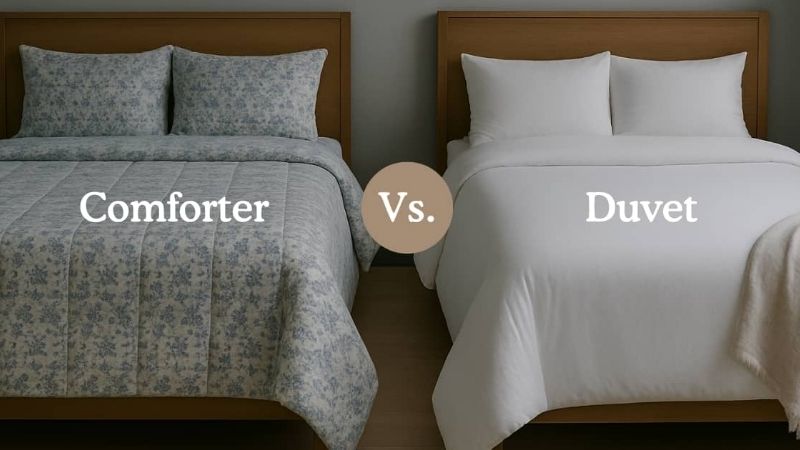
This guide draws on published explanations from The Company Store, Sleep Foundation, and Pottery Barn, checked as of October 2026. The comparisons reflect bedding construction, manufacturer directions, and practical use rather than detailed research. Laundry capability, fill quality, and warmth remain specific to each product, not guaranteed by the category name.
| Decision Factor | Comforter | Duvet System | Choose Based On |
|---|---|---|---|
| How it is used | Finished top layer; separate cover optional | Filled insert inside removable cover | One-piece convenience or modular bedding |
| Visible color and pattern | Usually part of the comforter itself | Usually determined by the outer cover | How often you change the bedroom look |
| Routine cleaning | Often involves laundering the filled piece | Remove and launder cover; insert has its own care | Wash access and fabric care labels |
| Warmth | Depends on fill, amount, shell, and layers | Depends on insert, fill, cover, and layers | Actual published construction, not the name |
| Initial purchase | Often a single finished item or bedding set | May require separate insert and cover purchases | What the listed package includes |
| Everyday handling | Make the bed without changing a cover | Cover can move and takes time to reinstall | Tolerance for bed-making and cover changes |
The Outer Layer Is Built In or Removable
A comforter has a fabric shell surrounding insulating fill, and that finished shell is intended to be seen. A duvet insert also has an enclosing shell, but its outer appearance is typically supplied by a separate cover. Sleep Foundation describes the removable cover as the practical distinction between the categories [Sleep Foundation, 2023]. The word “duvet” can refer to the filled insert or the whole covered assembly.
A duvet cover behaves much like an oversized pillowcase. Many designs have buttons or a zipper to close the opening and ties or loops to help hold the insert in place. Those features are not universal: inspect the cover and insert descriptions together. A comforter can sometimes go into a duvet cover too, but that does not mean every comforter has compatible tabs or the right dimensions.
Either Type Can Be Light or Warm
Neither label guarantees a particular sleeping temperature. Loft, fill material, fill quantity, stitching, and the other bedding layers all affect insulation. Down and down-alternative options appear in both product categories, according to The Company Store [The Company Store, accessed October 2026]. Some duvet inserts are especially lofty, but a heavily filled comforter can be warmer than a lightweight duvet insert.
For a useful comparison, first look for a manufacturer-stated warmth level and the actual fill construction. Then compare the shell and cover fabrics with your preferences for texture and breathability. Avoid judging warmth from a styled photograph or assuming that a duvet is always better for winter. It is the specific filled piece and complete bed setup that determine the practical result.
The Cleaning Routine Is Different
The duvet system separates a comparatively easy-to-handle outer cover from a bulky filled insert. A cover can often be removed and washed without cleaning the insert every time, but its care label still governs what is permitted. A comforter usually needs its entire filled body laundered when the shell needs washing. Sleep Foundation and The Company Store both note that care varies by fill and construction [Sleep Foundation, 2023; The Company Store, accessed October 2026].
The trade-off is effort in different places: changing a duvet cover takes handling, while cleaning a whole comforter can demand more machine capacity and careful drying. Some comforters are machine washable; some inserts have special care needs. Check the complete care directions and confirm that the filled piece can move freely in your washing equipment. Do not infer a universal wash schedule from the name alone.
Six Everyday Situations: Which Bedding Type Fits Better?
Your habits may settle this comparison faster than any blanket specification. Consider whether you want a polished bed with minimal effort, a washable outer layer, or flexible covers for changing seasons. Each situation below offers a practical default and identifies the condition that could make the alternative equally sensible.
You Prefer a Simple Bed That Is Quick to Make
A comforter is the more straightforward choice when you want to pull a single finished layer into place each morning. There is no separate cover to align, fasten, or smooth after laundering. For a guest bed or a room used occasionally, this can be appealing because the same decorative piece stays on display. It also avoids a second component to purchase and store.
The limitation appears when the comforter becomes stained or you want a different color. You may have to wash or replace the filled item rather than change only a shell. If the product is especially bulky, even an uncomplicated bed-making routine may lead to less convenient laundry. Choose this setup when simplicity matters more than being able to exchange the outer fabric.
You Like to Change Your Bedroom Colors or Fabrics
A duvet system gives you a different exterior without necessarily replacing the insulating insert. You might use a crisp cotton cover during warmer months and a more textured cover when you want a cozier feel. The Company Store identifies this interchangeable styling as a central benefit of removable duvet covers [The Company Store, accessed October 2026]. The inner insert can remain the same when its warmth still suits the room.
Before choosing covers from different sellers, compare their finished measurements with the insert, not just the “queen” or “king” label. Pottery Barn advises matching insert and cover sizing to prevent a lumpy or sliding fit [Pottery Barn, accessed October 2026]. Style flexibility is less helpful if an attractive cover makes the existing insert twist or leaves sagging fabric at the edges.
You Have Pets or Children and Need to Clean the Surface Often
A duvet cover may be easier to manage when spills, pet hair, or everyday marks regularly affect the visible surface. You can remove the cover and follow its laundering label while leaving the protected insert in place, if the insert remains clean. That can be more practical than fitting a full comforter into the washer after every minor accident. This is a convenience argument, not a claim that a cover blocks every spill.
Liquid can pass through fabric, and an insert may still require cleaning after a substantial spill. Choose a cover whose cleaning instructions suit your household and consider keeping a spare cover if quick changes are valuable. A machine-washable comforter is a reasonable alternative when it fits your laundry equipment and you would rather handle one bedding item instead of several.
Your Bedroom Temperature Changes With the Seasons
The important choice is the insulation level, not simply whether the top layer is named a duvet. Both comforters and duvet inserts come in different warmth options. If a room becomes substantially cooler in winter, a different fill weight or a removable supplemental blanket may be more useful than changing only the cover. A decorative cover can change the hand feel, but it cannot turn a light insert into a reliably winter-weight one.
A duvet system is convenient when you already own inserts with different warmth levels and use the same compatible cover for both. However, storing multiple inserts takes space and increases cost. A year-round comforter with an additional blanket may be the simpler solution in a mild climate. Compare the actual published warmth options, not an assumption that one bedding category is automatically cooler.
You Share a Bed With Someone Who Likes a Different Amount of Warmth
Two people may prefer different amounts of coverage even under the same room conditions. Rather than expecting one thick duvet or comforter to satisfy both, consider how easily the top layer can be adjusted on each side. A shared comforter works when both sleepers want similar coverage; two separate filled pieces may offer more control when their preferences differ sharply.
A duvet cover does not independently create dual temperature zones. Its practical advantage here is that each sleeper can use a separately covered insert if they prefer separate bedding. You can achieve the same separation with individual comforters. Compare the available dimensions and how much overlap or exposed space remains between the sleeping areas before committing to a shared arrangement.
You Have Limited Laundry Space or a Small Washing Machine
A removable duvet cover can simplify routine surface cleaning if your washer cannot comfortably handle a thick filled comforter. The insert still needs care according to its own label, but it is not necessarily washed on the same occasion as the cover. This distinction can reduce the number of times you need access to a larger laundry machine for everyday upkeep.
Do not assume a removable cover makes the complete bedding system home washable. Some inserts and comforters require special treatment or equipment, and wet fill needs thorough drying according to the manufacturer. Before buying, read the washing and drying directions for both pieces and consider where you will clean the bulkier component. For shoppers with restricted laundry access, that can be the deciding factor.
Frequently Asked Questions
These questions address terminology and shopping details that are easy to overlook after comparing the main bedding options. Check the specific product listing and care label before assuming a cover, insert, or matching accessory is included or compatible.
Can You Put a Regular Comforter in a Duvet Cover?
Yes, some comforters can be used as duvet inserts, provided their finished dimensions are suitable for the cover. Pottery Barn explicitly describes using a down or down-alternative comforter as the filled piece inside a cover [Pottery Barn, accessed October 2026]. The fit and attachment method matter more than what the original product was called.
Check the width and length of both items and look for corner tabs or ties. A comforter without tabs may be harder to secure and can shift within some covers. Also consider whether the added fabric layer changes the feel of your existing comforter. Using a cover is an option, not proof that any two products bearing the same size label will work together.
Do You Need a Top Sheet With a Duvet?
Not necessarily. Some sleepers use a duvet cover as the washable layer between themselves and the insert, while others prefer a separate top sheet. Sleep Foundation notes that duvet covers are intended to be removed for cleaning and that some duvet users forgo a flat sheet [Sleep Foundation, 2023]. The practical decision comes down to personal preference and how you handle laundry.
A top sheet can keep direct body contact off the duvet cover and may be familiar to people who already use layered bedding. Without one, the cover itself becomes the outer fabric you regularly clean. Neither setup changes the insert manufacturer’s care requirements. Use the arrangement that remains comfortable and realistic to maintain in your household.
Can You Sleep With Just a Duvet Cover in Warm Weather?
You can use an empty duvet cover as a lightweight fabric layer if its material feels comfortable against your skin. However, an unfilled cover is not the same insulating product as a duvet insert. It may suit a warm night or someone who wants modest coverage without the bulk of filled bedding, but its warmth depends on the fabric and your room.
Look at the actual material and construction before relying on the cover alone. A crisp cotton percale cover can feel different from brushed flannel or a textured weave, even without an insert. If you need more insulation, add an appropriate blanket or filled layer rather than assuming that an empty cover offers the same protection as a comforter.
Does a Duvet Cover Set Automatically Include the Insert?
No. A duvet cover set may include only the cover and matching pillow shams, with the filled insert sold separately. Pottery Barn explicitly lists covers, shams, and inserts as separately sold components for some collections [Pottery Barn, accessed October 2026]. Other retailers may offer bundles, so the exact package contents must be checked for each listing.
Read the product title and the “what is included” section rather than judging from a bedroom photograph. If the listing says “duvet cover” but does not identify a filled insert, do not assume that one is supplied. This is especially important when comparing the initial cost of a finished comforter with a duvet setup: the final purchase may require more than one item.
Final Thoughts
Choose a comforter when you value an all-in-one finished bed covering and easy daily setup. Choose a duvet when a removable, washable cover and the option to change bedroom fabrics matter more than the extra handling. Both can be light or warm; check the actual fill, finished dimensions, and care labels. For most households, the better choice is the system that fits their laundry routine and preferred way of making the bed.
