
Key takeaways
- A comforter used above a freshly washed top sheet usually needs laundering every two to three months. But how often should you wash a comforter when it touches your skin directly? About once a week may be appropriate; a well-protected…
A comforter used above a freshly washed top sheet usually needs laundering every two to three months. But how often should you wash a comforter when it touches your skin directly? About once a week may be appropriate; a well-protected insert can often go longer. Your care label still comes first.
As an Amazon Associate we earn from qualifying purchases.
By KK Home Furnishings Editorial Team
How Often to Wash a Comforter: A Practical Schedule
For an everyday comforter separated from skin by a clean top sheet, two to three months is a useful starting interval [Sleep Foundation, 2023]. A newer cleaning-lab recommendation shortens that to about weekly when the comforter itself serves as your top sheet [Good Housekeeping, 2026]. These are different exposure levels, not contradictory rules.
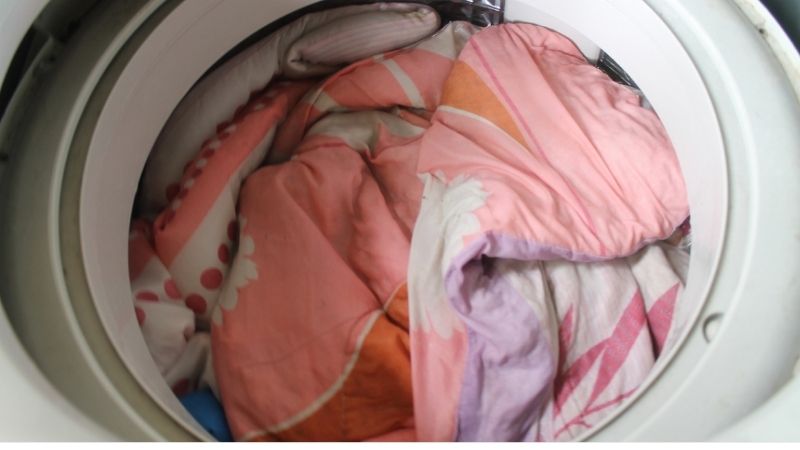
The schedule below draws on published guidance from Sleep Foundation, Good Housekeeping, the American Cleaning Institute, and manufacturer care pages reviewed in October 2026. It is a practical decision aid, not a result of detailed research or a claim that every fabric tolerates the same wash cycle.
| Sleep Setup | Starting Wash Interval | Why | What Changes It |
|---|---|---|---|
| Comforter above a clean top sheet | Every 2–3 months | The sheet limits direct contact with skin | Odor, spills, sweat, or visible soil |
| No top sheet or cover; comforter touches skin | About weekly if washable | It functions as the skin-contact bedding layer | Care-label limits; use a removable cover if needed |
| Comforter enclosed in a washed duvet cover | About twice a year for the insert | The removable cover takes most direct contact | Wash the cover every 1–2 weeks |
| Pets regularly sleep on the comforter | Begin around monthly | Hair, dander, and tracked-in dirt accumulate | Soil or odor can require earlier cleaning |
| Dust-mite allergen-control routine | At least monthly if care label allows | ACI gives a more frequent allergen-focused target | Ask a professional for non-washable materials |
| Rarely used guest-room comforter | Assess after each stay or before storage | Exposure varies by use, not calendar alone | Stains, dusty storage, or a new guest |
First Ask What Separates the Comforter From Your Skin
A top sheet is a washable barrier between the sleeper and the comforter. When that sheet is changed regularly, the thicker outer bedding tends to receive less body oil and sweat. Sleep Foundation lists two to three months for a comforter, while its sheet-care guidance recommends washing sheets about weekly [Sleep Foundation, 2023].
A duvet cover works differently: it encloses the comforter and can be removed without laundering the bulky insert. Sleep Foundation recommends washing duvet covers about every one to two weeks in its cover guide [Sleep Foundation, 2025]. The insert can often be cleaned much less frequently when the cover stays clean and undamaged.
Move the Wash Date Forward for Real Contamination
A stain, lingering odor, damp patch, or visible pet dirt is more useful than a calendar reminder. Treat a fresh spill according to the shell fabric and product label so it does not set. If food, bodily fluids, or other contamination reaches the filling, spot cleaning the surface may not be enough to deal with what is trapped inside.
Frequent night sweating, skin-contact use, and animals on the bed each increase the need for cleaning. If more than one condition applies, use the shorter suitable schedule rather than averaging different intervals. The monthly pet-household starting point in the table is an editorial planning suggestion, not an official universal standard.
Check Whether the Comforter Can Actually Be Washed
Fabric content alone does not decide the cleaning method. The shell, fill, stitching, and finishing treatments all matter. A machine-washable down alternative comforter can have different directions from a down insert, and delicate wool or silk construction may call for professional care. The sewn-in care label controls the method for that item.
The Company Store says its machine-washable down comforters generally need only seasonal or twice-yearly cleaning, while a “dry clean only” label must be followed [The Company Store, accessed October 2026]. If your comforter cannot move freely through the washer, find an adequately sized commercial machine or an appropriate professional service.
Adjust Your Comforter Washing Routine to Your Bed
The most useful schedule is one you can follow without overworking the filling. Choose the situation below that matches how the comforter is used, then check your item-specific laundering instructions before you set a recurring reminder. Do not interpret these timing suggestions as permission to machine-wash a comforter marked for a different cleaning method.
If You Use a Flat Top Sheet Every Night
Start with a comforter wash every two to three months, then look for any reason to move it forward. Keep the top sheet on its own more frequent washing cycle so it continues serving as a clean barrier. A spare sheet is usually easier to launder than a thick comforter, particularly when your home washer has a smaller drum.
This approach makes sense for a bed used for ordinary sleeping with no regular pet contact and no notable sweating. If the comforter is also used as a throw on the sofa, frequently pulled against the face, or handled by children, the barrier is less complete than the nighttime setup suggests. Adjust the interval to the actual use.
If You Sleep Directly Under the Comforter
Treat the comforter more like a top sheet when it lies directly against skin. Good Housekeeping Institute guidance published in September 2026 suggests washing it about weekly in this situation [Good Housekeeping, 2026]. That is a substantially shorter cycle than the two-to-three-month baseline for a comforter protected by other bedding.
A weekly full wash can be impractical for a heavy down insert or a dry-clean-only item. Rather than ignoring its label, add an easily removable washable layer and clean that frequently. A comforter is not automatically unsuitable for frequent washing, but laundering friction, dryer heat, and fill construction can affect its lifespan.
If You Use a Removable Duvet Cover
Wash the duvet cover on a sheet-like schedule, commonly every one to two weeks when it is the layer against skin [Sleep Foundation, 2025]. For the insert, approximately twice a year is a reasonable starting point when its cover is cleaned regularly and no odors or stains have reached the filling [Sleep Foundation, 2023; The Company Store, accessed October 2026].
Do not confuse the cover and the insert when planning laundry. A cover can be cleaned often while the filling stays protected. If a drink soaks through, the zipper opens during sleep, or a wet pet curls up on the bed, inspect the insert too. The calendar should never override a specific spill or a damaged protective cover.
If Dogs or Cats Share the Bed
Start by checking the comforter monthly, and wash it sooner when you find hair, tracked-in soil, or odor. The exact interval depends on whether the animal sleeps directly on the comforter or on a separate washable throw. Good Housekeeping identifies pets as a reason a comforter becomes dirty sooner [Good Housekeeping, 2026].
For easier cleaning, place a washable pet blanket where the animal usually sleeps. This reduces how often the large comforter needs a full cycle, but it is not a sealed barrier. If muddy paws or an accident soil the comforter itself, clean the affected bedding promptly under its own care instructions rather than waiting for the next planned date.
If Night Sweats or Dust Allergens Are a Concern
When bedding repeatedly absorbs sweat, a monthly assessment may be too infrequent; wash visibly soiled items sooner. For dust-mite allergen control, the American Cleaning Institute recommends washing blankets, comforters, and mattress pads at least monthly, using a gentle cycle and a laundromat for oversized loads [American Cleaning Institute, accessed October 2026].
That guidance addresses allergen management rather than the ordinary comforter schedule. It is not a promise that one laundering frequency will resolve asthma or allergies, and hot-water instructions for sheets should not be automatically transferred to delicate comforters. Choose a washable protective layer and consult a clinician about an individualized allergy plan when needed.
If You Own a Down-Filled or Delicate Comforter
An expensive down comforter may benefit from fewer full washes when it stays inside a regularly laundered cover. The Company Store advises seasonal or twice-yearly care for its down-comforter guidance, emphasizing that washing less often can help preserve loft [The Company Store, accessed October 2026]. This is manufacturer guidance, not a rule for all down products.
Whenever the label permits machine washing, use a drum that leaves room for the wet comforter to move. Select the temperature, detergent, and drying method specified for that piece. Check dense seams and baffles for trapped moisture before making the bed or storing it. If it is too bulky for safe washing and complete drying at home, use a larger machine or professional care.
Frequently Asked Questions
Washing frequency is only part of comforter care. The following questions address how to keep bedding fresh between scheduled cleans, what to do with a new item, and how to avoid mistakes with bulky loads. They apply after the product label has established which washing and drying methods are permitted.
Can You Freshen a Comforter Without Washing the Whole Thing?
Yes. When there is no widespread dirt or embedded odor, gentle airing, regular fluffing, and careful treatment of an isolated surface mark can help the comforter feel fresher between full washes. These measures are maintenance, not substitutes for laundering when the filling is contaminated or the regular cleaning interval has been reached.
Use only spot treatments compatible with the shell and fill. Avoid saturating a small area in a way that leaves damp filling hidden under a dry-feeling surface. If a stain spreads through several quilted chambers or cannot be removed with approved care, a full wash or professional cleaning may be more appropriate than repeated rubbing.
Do You Need to Wash a New Comforter Before Using It?
Not necessarily. A new comforter may need airing after unpacking, but there is no one wash-before-use rule that applies to every down, polyester, wool, and silk design. Read the sewn-in care label and the manufacturer’s unpacking advice. For bedding intended to be machine washable, an initial gentle wash may be reasonable if the instructions permit it.
If the product is marked dry-clean-only or spot-clean-only, do not machine-wash it simply because it is new. A removable, freshly washed duvet cover gives you a clean contact surface while keeping the insert on its own care schedule. Persistent unusual odors or obvious contamination on arrival are reasons to contact the seller for appropriate next steps.
Why Does My Comforter Still Smell Damp After Drying?
A lingering damp smell can mean moisture remains inside the fill even when the outer shell feels dry. Large comforters dry unevenly because quilted chambers and thick edges retain moisture. Continue drying only with the heat setting or air-drying method allowed by the care label, stopping to reposition and fluff the item when appropriate.
Check the center, edges, and stitched compartments before putting the comforter back on the bed. If the odor persists after complete drying, the item may need another label-approved cleaning or professional assessment. Do not seal a damp comforter in a storage bag, since moisture trapped in filling can create further odor and mildew problems.
Can You Wash a King-Size Comforter in a Home Washer?
Sometimes, but washer capacity matters more than the word “king” on the package. The item must fit loosely enough to move and rinse; stuffing it in can leave detergent or dirty water in the fill and strain the construction. A large commercial front-loader is a practical alternative when the household machine lacks space [The Company Store, accessed October 2026].
Look at both the washer and dryer before beginning. A comforter that fits into the washer may still be too bulky for thorough drying in a small dryer. Avoid guessing a universal drum-capacity threshold based only on bed size because fill weight and loft vary between products. The washer manual and the comforter label are the decisive limits.
Final Thoughts
How often should you wash a comforter? Put the next wash on your calendar, then treat it as a checkpoint rather than an inflexible deadline. A protected insert may last until a seasonal cleaning; an exposed comforter may need weekly attention. The best schedule keeps the contact layer clean and respects the actual comforter’s care label.
