A corner wardrobe only saves space when both of its sides genuinely fit two walls, so before you look at door count or color you have to measure the wall run, ceiling height and the room needed to build it. This guide compares four current units on exactly that corner geometry and how they store.
As an Amazon Associate we earn from qualifying purchases.
By KK Home Furnishings Editorial Team
How to Choose a Corner Wardrobe
A corner wardrobe is judged by how it occupies two walls at once, not by a single width. The picks here range from a 74.2-inch-tall L-shaped unit to a 93.125-inch PAX frame, and they measure their footprints in different ways, so start with both wall lengths and your ceiling before anything else.
Measure Both Walls, Not Just Overall Width
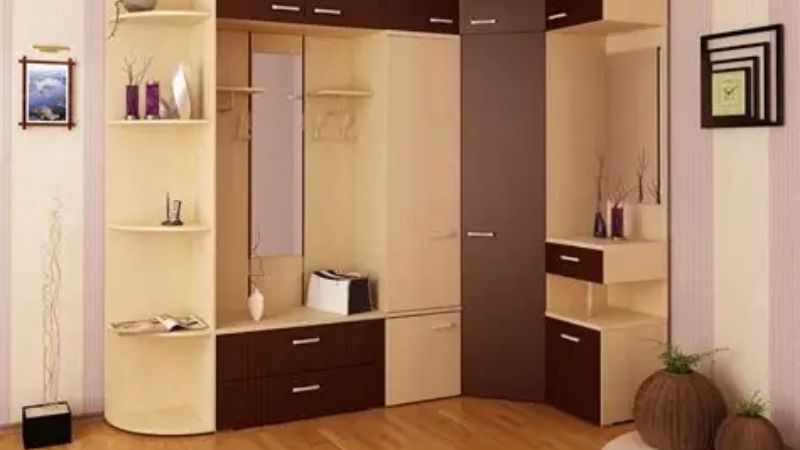
Corner units occupy two wall runs, and the makers describe them differently. The IKEA PAX GRIMO uses 43.375-inch left and right runs, the PAX GULLABERG 63.25 by 43.5, while the FUFU&GAGA lists a rectangular 35.4 by 35.4 and the Famapy a 37.8 by 40.8 footprint, so the measurement convention itself varies.
Because of that, do not convert a width-by-depth figure into an area and compare it to a left-and-right wall run; they describe geometry differently. Measure each of your two walls from the corner outward, mark where each side of the unit will end, and confirm nothing, like a door or radiator, sits in the way.
Avoid calling any model the smallest footprint until you have standardized the measurements on your own floor. The Famapy also lists a conflicting depth in its own listing, so use its Specifications figure for planning and never as the basis for a precise comparison. Map the real corner before trusting a single headline number.
Check Height and Assembly Clearance
Height varies dramatically here and affects both fit and installation. The FUFU&GAGA stands 74.2 inches, the GULLABERG 79.25, the Famapy 90.6 and the GRIMO 93.125, so the tallest reaches nearly 19 inches higher than the shortest, which changes ceiling clearance and how you tilt the frame upright.
Tall flat-pack frames often must be built lying down and then stood up, which needs clearance roughly equal to their diagonal, not just their height. The GRIMO also quotes about a 7.6-inch corner-to-wall-rail allowance for its add-on corner unit, a concrete figure to plan around when you set it against the walls.
In a room with an 8-foot ceiling, a 93-inch unit leaves only a few inches overhead, so measure before buying and plan the lift. A shorter 74-inch model like the FUFU&GAGA suits lower ceilings and tighter rooms, and is easier to raise into place, which matters as much as storage when space overhead is limited.
Compare Hanging Space With Shelving Space
Interiors split differently between hanging and folded storage. The GRIMO’s PAX frame can hold around 40 shirts on its rail, the GULLABERG combines two rails with baskets, a tray and a shelf, the FUFU&GAGA pairs a hanging rod with shelves, and the Famapy offers four doors with a rod and three shelves.
Decide what you store most before choosing. If you hang suits and coats, prioritize rail length and the twin-rail GULLABERG layout; if you fold, the shelf-heavy units earn their keep. Remember the PAX shirt estimate is IKEA’s own figure and should not be treated as a cross-brand capacity standard against the others.
Modular systems add flexibility but also cost: PAX interiors such as baskets and trays are often sold separately, so the headline frame price is not the finished price. Factor those add-ons, plus the corner-install allowance, into the real budget, since they are fit and cost items rather than optional extras on a corner build.
Plan Wall Anchoring Before Assembly
Tall corner wardrobes are tip-over risks and must be anchored where the maker requires it. The PAX GRIMO and GULLABERG both state they must be securely anchored, and the FUFU&GAGA includes anti-tipping devices; the Famapy’s anchoring status was not published in the data available, so do not assume it is tip-safe.
A mandatory federal stability standard based on ASTM F2057-23 (16 CFR 1261) covers many clothing storage units made from September 1, 2023 [CPSC, 2023], so treat anchoring as part of the build. Fix the bracket into studs where possible, which a corner often makes easier since two walls meet there.
Verify each unit’s own instructions rather than inferring safety from a sibling model or the category rule. Never describe a corner wardrobe as tip-proof; stability depends on correct installation, and an unverified anchoring claim should be checked on the product page before the unit is loaded with clothes and placed in a child’s reach.
Top Picks
These four cover the realistic span of corner wardrobe buyers, from a compact lower-height L-shape to a tall modular PAX frame. Each lists at least two hard specs and a stated anchoring approach; pricing runs across mid to premium tiers, so confirm the current price, interior parts and stock before ordering.
| Product | Best For | Key Spec | Watch Out For |
|---|---|---|---|
| IKEA PAX / GRIMO | Best Overall | 43.375″ / 43.375″ wall runs | 93.125″ tall |
| FUFU&GAGA KF250023-045 | Lower-height rooms | 74.2″ high; L-shaped | 35.4″ corner depth |
| IKEA PAX / GULLABERG | Mixed hanging + folded | 63.25″ / 43.5″ wall runs | wider long side |
| Famapy Corner Set | Modular L-shaped storage | 4 doors + rod + 3 shelves | depth conflict in listing |
IKEA PAX / GRIMO — Best Overall
The GRIMO leads for a flexible, high-capacity corner build. Its corner configuration uses 43.375-inch left and right wall runs, stands 93.125 inches tall, quotes about a 7.6-inch corner-to-wall-rail allowance, and holds roughly 40 shirts on the rail, with anchoring required. It sits in the mid-to-premium tier once interiors are added.
Being part of the PAX system, it adapts to your clothes with add-on rails, shelves and baskets, and two meeting walls make studs easy to find for the required anchor. Plan the build carefully: a near-93-inch frame needs ceiling clearance to tilt upright, so clear the room and recruit help for assembly.
The trade-offs are height and cost: it is the tallest here, leaving little overhead under an 8-foot ceiling, and interior accessories add to the price. Treat the shirt estimate as IKEA’s own figure, and do not compare its left-and-right wall runs directly against a rival’s width-by-depth footprint, since the two describe space differently.
FUFU&GAGA KF250023-045 — Best for Lower-Height Rooms
The FUFU&GAGA suits rooms with limited headroom. This L-shaped four-door corner armoire measures 35.4 inches on each side and stands just 74.2 inches tall, pairs a hanging rod with shelves, and includes anti-tipping devices. It sits in the mid tier and ships as a self-contained unit rather than a modular frame.
At under 75 inches it clears low ceilings and is easier to lift upright than the tall PAX frames, which is its main practical edge. The L-shape tucks into a corner while offering both hanging and shelf space in one piece, making it a straightforward, all-in-one choice without add-on shopping.
The caveats are depth and capacity: at 35.4 inches on each side it still projects meaningfully into the room, and a single unit offers less configurability than PAX. Fit the included anti-tip devices on setup, and remember its rectangular footprint is measured differently from the PAX wall runs, so compare on your own floor.
IKEA PAX / GULLABERG — Best for Mixed Hanging and Folded Storage
The GULLABERG is the pick when you want both hanging and folded storage in a corner. Its runs measure 63.25 by 43.5 inches, it stands 79.25 inches tall, and it combines two rails with baskets, a tray and a shelf, with anchoring required. It sits in the premium tier once accessories are included.
The twin-rail-plus-basket layout handles a mixed wardrobe of hanging and folded items better than a single-rail unit, and its 79-inch height is friendlier to standard ceilings than the GRIMO. As a PAX composition it can be tailored to your clothes, which is a genuine advantage for a primary bedroom wardrobe.
The downsides are its wider long side, which needs more of one wall, and the usual PAX reality that interior parts add cost. Anchor it as required, and when comparing it to rectangular rivals, keep the wall-run measurements separate from width-by-depth figures so you plan the corner accurately rather than by a misleading single area.
Famapy Corner Set — Best for Modular L-Shaped Storage
The Famapy set offers a lot of enclosed storage in an L-shape. It lists a 37.8 by 40.8-inch footprint and stands 90.6 inches tall, with four doors, a hanging rod and three shelves in a modular layout. It sits in the mid-to-premium tier as a self-contained corner system.
Four doors and three shelves give generous closed storage that hides clutter, and the modular L-shape maximizes a deep corner. For a room that needs a lot of concealed space rather than open shelving, it is a practical, high-capacity option that fills a corner from floor toward the ceiling.
Two cautions apply. Its own listing shows a conflicting depth, so use the Specifications figure for planning and not for precise comparison, and its anchoring status was not published in the data available, so do not assume it is tip-safe. Confirm the wall-securing hardware and method on the product page before installing it.
Frequently Asked Questions
Corner wardrobes raise specific measuring and safety questions. The answers below use the published figures for these four units and avoid absolute claims, so you can check them against your own two walls, ceiling and corner before deciding which geometry actually works in your room.
How do I measure for a corner wardrobe?
Measure each wall outward from the corner, since a corner unit occupies two runs rather than one width. Note where each side of the wardrobe will end and check for doors, windows, radiators or outlets in the way, because a corner is often busier than an open wall.
Conventions differ between makers: some quote left and right wall runs, others a rectangular width by depth, so standardize everything to your own floor plan before comparing. A unit that looks compact in one measurement style can occupy more of a wall than a rival described another way, which is easy to miss on a product page.
Also measure the ceiling height and the clear space to tilt a tall flat-pack frame upright, which can need room roughly equal to its diagonal. Doing this first avoids the common surprise of a unit that fits the corner on paper but cannot be assembled or raised into position in the actual room.
Does a corner wardrobe need to be anchored?
Yes, wherever the manufacturer requires it, which is most tall units. The PAX GRIMO and GULLABERG both state they must be securely anchored, and a mandatory federal stability standard based on ASTM F2057-23 (16 CFR 1261) covers many such clothing storage units [CPSC, 2023].
Anchoring stops a loaded, top-heavy wardrobe from tipping if someone pulls on a door or a child climbs the shelves. A corner can actually make this easier, because two walls meet there and studs are often close, giving solid fixing points for the bracket on at least one side.
Follow each unit’s own instructions rather than assuming a sibling model’s hardware applies. Where an anchoring method is not published, as with one unit here, verify it on the product page before loading the wardrobe, and never treat a corner unit as tip-proof simply because it leans into two walls.
How much ceiling clearance should I leave?
Leave enough to both fit the unit and build it, which can differ. These models stand 74.2 to 93.125 inches tall, so under a standard 8-foot ceiling the tallest leaves only a few inches overhead once upright, and even less while you tilt a flat-pack frame into position.
The build clearance is often the binding constraint, because a tall frame assembled flat must swing up through an arc roughly equal to its diagonal. If the room is short on height, either choose a shorter unit like the 74.2-inch FUFU&GAGA or plan to assemble partly in place, section by section.
Measure your ceiling at the corner specifically, since some rooms have sloped or lower sections there, and add a margin for trim, cornicing or an uneven floor. Confirming both the finished height and the tilt-up space before buying prevents the frustrating situation of a frame that will not stand up where it needs to go.
Is an L-shaped wardrobe always more space-efficient?
No. An L-shaped corner wardrobe uses an otherwise dead corner well, but it can also project further into the room than a slim flat wardrobe, so efficiency depends on your layout rather than the shape alone. If the walls either side are busy with doors or windows, a straight wardrobe on a clear wall may waste less usable floor.
Corners vary: if the walls on either side are already busy with doors or windows, a corner unit may be awkward, while a straight wardrobe on a clear wall could waste less usable floor. The two sides of an L-shape also need matching clear runs, which not every corner provides without obstruction.
Judge it on your own room by sketching both options against the walls you have. A corner wardrobe shines when the corner is dead space and both runs are clear, but it is not automatically more efficient than a straight unit, so compare the real floor each would take before deciding.
Final Thoughts
The best corner wardrobe suits your specific corner and ceiling, not the one with the most doors. Measure both walls and the clearance to build it, keep differing footprint conventions separate, and anchor whatever you choose. On that basis the PAX GRIMO leads, while the FUFU&GAGA, GULLABERG and Famapy win on low height, mixed or modular storage.