
Key takeaways
- Yes. A fireplace TV stand can produce real supplemental heat while supporting a television and media equipment, but its simulated flames do not burn fuel. The better question behind do tv stand fireplaces work is whether its separate heater, controls,…
Yes. A fireplace TV stand can produce real supplemental heat while supporting a television and media equipment, but its simulated flames do not burn fuel. The better question behind do tv stand fireplaces work is whether its separate heater, controls, and rated furniture can meet the needs of your room without promising whole-home heating.
As an Amazon Associate we earn from qualifying purchases.
By KK Home Furnishings Editorial Team
Do TV Stand Fireplaces Work? The Three Functions Explained
An electric fireplace console is a piece of furniture with an integrated electric firebox. Its LED-based flame display creates the visual effect, an electric heating element provides optional warmth, and the cabinet holds the screen and accessories within its published load limits. Those three functions should be evaluated separately, because success at one does not prove success at the others.
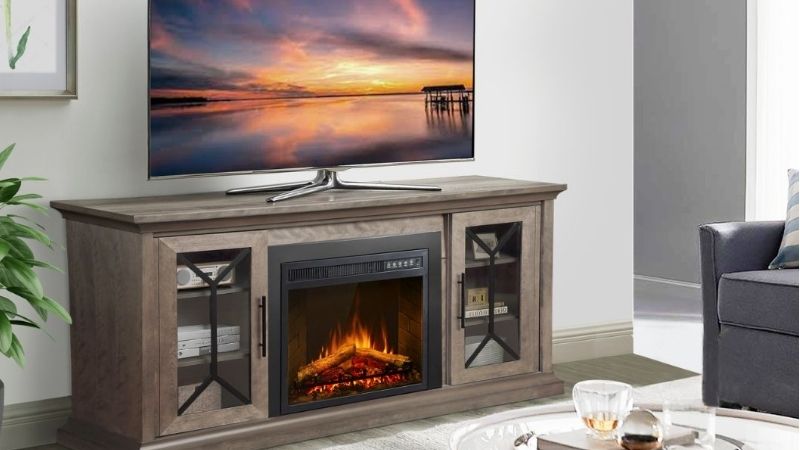
The Flame Effect Is Visual, Not a Burning Fire
Many current consoles use illuminated logs or crystals, moving light patterns, and layered reflections to imitate flames. Walker Edison describes independent 3D flame controls on its Cottonwood fireplace stand, while Dimplex explains that its flame displays can run without the heater. These are electric visual effects, not a source of combustion [Walker Edison, 2026; Dimplex, FAQ].
That distinction has practical consequences. There is no wood to ignite, ash to collect, or gas line to supply for a plug-in electric fireplace console. A convincing flame appearance is also subjective: brighter rooms can wash out the display, and a glowing ember bed does not indicate that the heating element is running. Check the individual model for flame brightness, color, and effect controls.
A Separate Heating System Supplies Actual Warmth
The warm-air function typically comes from an electric heating element and a blower, although the exact technology varies by model. Dimplex identifies an internal fan-forced heater in its support information; certain Duraflame/Twin Star consoles instead advertise infrared quartz heating. The same flame animation can remain visible when the heating element is switched off [Dimplex, support FAQ; Walker Edison, 2026].
A thermostat may cycle the heater once the chosen room temperature is reached, and some consoles offer a timer or more than one heat setting. If the fan stops while the lights continue, that may be expected thermostat behavior rather than a failed fireplace. Compare the actual control instructions for your model before interpreting an on-screen temperature, remote button, or fan sound as a fault.
Room-Coverage Claims Describe Supplemental Heating
As a concrete example, Walker Edison lists its Cottonwood model 18MM6127-PD01S at 4,600 BTU per hour with claimed supplemental coverage up to 400 square feet. Twin Star separately lists a ClassicFlame console intended for televisions up to 60 inches with a similar 400-square-foot heating claim. These are product specifications, not independent tests of every living room [Walker Edison; Twin Star, 2026].
Actual comfort depends on insulation, ceiling height, open doorways, outdoor temperature, and where the warm air exits the cabinet. Dimplex likewise describes electric fireplaces as zone heaters that complement a primary heating system. Treat advertised square footage as a comparison cue under the maker’s assumptions, not proof that the device will heat every corner of an open-plan home [Dimplex, 2026].
| Console Function | What Produces It | Published Example | Realistic Expectation |
|---|---|---|---|
| Decorative flames | Light-based visual display | Cottonwood: independent flame mode | Can create ambience without running the heater |
| Supplemental warmth | Electrical element and airflow, technology varies | Cottonwood: 4,600 BTU/h, claimed up to 400 sq. ft. | Most useful in an occupied room, subject to heat loss |
| Automatic temperature control | Thermostat, when supplied | Cottonwood: adjustable thermostat | May cycle the heater; model controls differ |
| TV and media storage | Furniture frame and shelves | Cottonwood: TV up to 55 in. and 40 lb | Stay within both weight and size ratings |
Adjust for Your Situation
A fireplace console can feel effective in one household and disappointing in another without either owner being mistaken. The meaningful differences are room geometry, how long people stay nearby, whether heat is actually wanted, and what the furniture must hold. Use the scenarios below to set a realistic expectation before choosing between a fireplace stand and a conventional media cabinet.
A Smaller, Enclosed Living Room Needing Spot Warmth
In a modest, enclosed room, the fireplace insert can take the chill off the space where people are sitting. A product such as the Cottonwood advertises 4,600 BTU/h of supplemental heat and room coverage up to 400 square feet, but the number is a manufacturer estimate rather than a guarantee. The strongest case is occasional comfort while the main home heating remains in service.
Look at the direction of airflow and where the sofa sits, not only the room’s floor area. The effect may be more noticeable near the console than in a remote corner. If a particular model uses a thermostat, set it according to the manual and allow for cycling; a heater that stops after the room warms is behaving differently from a decorative display that stays illuminated.
An Open-Plan Room With High Ceilings or Drafts
For a wide living-and-dining area, a compact fireplace TV stand is rarely a substitute for the central heating system. Advertised coverage can sound generous, but warm air disperses through open passages and a tall ceiling increases the volume to heat. A unit marketed for a smaller zone may therefore leave the far end of the room cooler even though the heater itself works as designed.
Decide whether the goal is to warm the immediate seating area or to raise the temperature of the entire open layout. If the second goal dominates, plan around a correctly sized heating system rather than a media console. Avoid comparing different brands’ square-foot claims as controlled laboratory results unless they publish comparable conditions for the exact products.
Summer Evenings When You Want the Fireplace Look
A flame-only setting is one of the clearest reasons an electric fireplace TV stand can be useful throughout the year. Walker Edison and Twin Star identify models whose simulated flames run independently of the heater; Dimplex describes the same operating distinction for many of its electric fireplaces. That makes the visual feature usable even when adding warmth would be uncomfortable.
Check whether the specific console lets you adjust brightness or effect color independently, because remotes and control panels vary. The display still uses electricity, so flame-only does not mean zero energy consumption. The useful distinction is that the main space-heating function is off, leaving a decorative effect that does not require wood, flame maintenance, or a working chimney.
An Evening Viewing Area That Needs Occasional Heat
A television corner occupied for several hours can benefit from targeted supplemental warmth instead of heating otherwise unused rooms. That does not establish an automatic utility-bill saving: electricity rates, thermostat choices, building insulation, and how much central heat is reduced all change the outcome. Treat any advertised savings percentage as a marketing claim unless its assumptions match your household.
Choose a control system that makes the two tasks simple: selecting the flame appearance for viewing and requesting heat only when needed. A remote and thermostat can make the stand easier to live with, but the heater may create detectable fan noise. If quiet dialogue or late-night listening matters, verify the model’s fan behavior rather than assuming it is silent.
A Media Setup With a Large TV and Several Devices
The electric insert may work perfectly while the surrounding furniture remains a poor match for the television. Walker Edison rates its Cottonwood stand for flat-screen TVs up to 55 inches and 40 pounds; Twin Star lists another ClassicFlame console for sets up to 60 inches and 75 pounds. Those are limits for different furniture models, not interchangeable rules for every fireplace cabinet [Walker Edison; Twin Star, 2026].
Measure the TV base and check the manufacturer’s maximum supported weight before treating a fireplace stand as an entertainment center. Ventilation for the firebox and airflow around game consoles or receivers are separate requirements. The unit should have the compatible insert installed as directed, while media components use their intended shelves and cable openings, not an improvised cavity around the heater.
A Home With Limited Outlet Capacity or Busy Circuits
Electrical capacity may determine whether using the heat feature is practical. A 1,500-watt electric heater draws about 12.5 amps at 120 volts, a substantial load on a common 15-amp branch circuit. Not every fireplace stand uses that exact input, so check its rating label; an electrician can help when other appliances already share the same branch or the outlet shows signs of overheating.
Follow the fireplace’s own electrical instructions. The CPSC advises plugging portable electric space heaters directly into a wall receptacle rather than a power strip or extension cord [CPSC, 2026]; many fireplace manuals impose the same restriction. Keep intake and hot-air openings clear and check that the actual model has the specified overheat safeguards. Do not treat a safety feature as permission to obstruct the heater.
Frequently Asked Questions
Once the cabinet is assembled, questions often concern the difference between a normal control cycle and a problem, as well as whether an insert can be changed later. These answers help identify what the owner can reasonably check without disassembling electrical components. The exact installation and operating manual remains the controlling source for any particular model.
Why does the flame work but the TV stand fireplace produce no heat?
The display may be set to flame-only mode, the thermostat may already be satisfied, or the heat setting may be off. Those are normal possibilities on units with independent flame and heater controls. First consult the model’s control instructions and check whether the heating function was deliberately disabled before concluding that the insert is defective.
If the controls request heat but none is produced, discontinue use if there is a damaged cord, unusual odor, repeated protective shutoff, or a hot plug. Do not bypass a thermal cutout or open the electric firebox. Follow manufacturer troubleshooting or warranty procedures; a persistent heating fault calls for authorized service rather than improvised electrical repair.
Why does the fireplace fan keep running after the heater turns off?
Some electrically heated fireplaces continue moving air briefly to cool internal components after the heating element stops. Other models stop the blower as soon as the selected temperature is reached. That difference is normal model variation, so a short fan run-on is not by itself evidence of a malfunction or a published feature of every console.
Consult the instructions for your exact insert to see whether a cooldown cycle is described and how long it may last. If the blower operates continuously beyond the stated behavior, makes a new mechanical sound, or cannot be turned off using approved controls, stop using the heating function and contact the manufacturer. Avoid unplugging a unit as a routine way to defeat required cooldown.
Can I replace a broken firebox with any electric fireplace insert?
No. An insert must be approved for the furniture opening, mounting method, power connection, and ventilation clearances. Two products advertised as the same nominal fireplace size can have different chassis dimensions or heat outlets. A generic insert that physically slides into a TV cabinet is not proof that the combination is supported by either manufacturer.
Locate the console model number and ask the furniture maker for the intended replacement part or an approved equivalent. Follow the service directions and retain any necessary safety labels. If the maker cannot confirm compatibility, replacing the entire stand or using a separate, properly installed fireplace may be safer than modifying the cabinet to accept an unrelated heater.
Does an electric fireplace TV stand need a chimney or gas line?
No. A standard electric fireplace stand creates an artificial flame effect and electric heat, rather than burning gas or wood, so it does not need a chimney, flue, or gas supply. Dimplex states this for its electric fireplace products, and Walker Edison describes its plug-in fireplace furniture without a gas line [Dimplex, 2026; Walker Edison, product information].
No chimney does not mean no airflow requirements. The electric heater still needs unobstructed inlet and outlet openings, correct power access, and any clearance specified in the manual. Do not seal the cabinet against a wall or pack electronics and fabric around the firebox. Gas and wood fireplaces have entirely different installation and venting requirements, so their advice is not interchangeable.
Final Thoughts
So, do tv stand fireplaces work? Yes: the flame display supplies ambience, and the heater can offer useful supplemental warmth when the room, power supply, and model are suitable. Judge the furniture by its TV load rating and the heater by realistic zone-heating needs. For dependable comfort, rely on the exact insert manual and your main heating system rather than advertised coverage alone.
