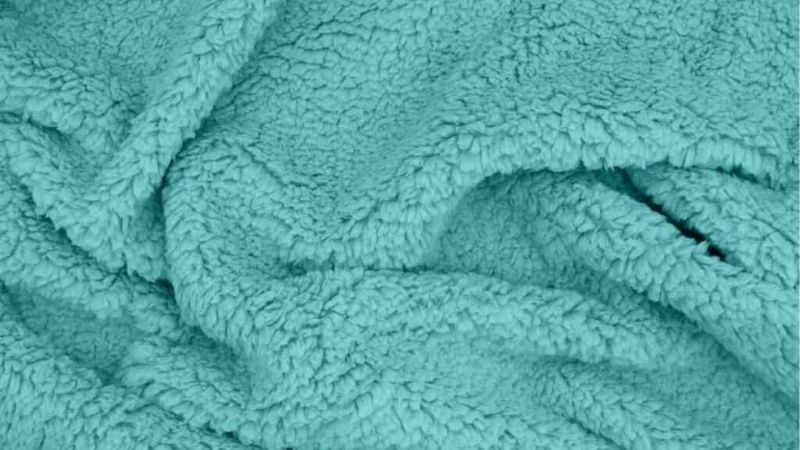
Sherpa stays soft when its fuzzy surface is handled gently instead of repeatedly compressed, rubbed, or overheated. To learn how to keep sherpa soft, loosen flattened areas with your hands, minimize daily friction, store the throw without tight pressure, and check its care label before trying any treatment. Not every rough patch can be reversed.
As an Amazon Associate we earn from qualifying purchases.
By KK Home Furnishings Editorial Team
Why Sherpa Loses Its Soft Feel
A sherpa throw can feel less plush for several reasons, and each calls for a different response. Ordinary pile compression may improve with gentle handling. Lint or surface pills can make the pile feel uneven. Residue, repeated rubbing, and excessive heat can cause more stubborn changes. First identify what actually changed instead of assuming the blanket needs another complete wash.
| What You Notice | Possible Explanation | Low-Risk First Check | When to Stop |
|---|---|---|---|
| Flat patches where you sit | Repeated pressure on the raised pile | Lift with fingertips and shake gently | Fibers begin pulling out |
| Small dense clumps | Surface matting or tangled fibers | Separate a tiny hidden area by hand | Loops catch or seams strain |
| Fuzzy balls on the surface | Pilling from fabric movement | Inspect whether pills are attached | Removal starts cutting pile |
| Sticky or coated feel | Possible laundry-product residue | Check product history and care label | Treatment would conflict with label |
| Stiff, shiny, or flattened spot | Possible heat-related fiber change | Compare with an unaffected area | Texture looks fused or discolored |
| Lint or pet hair trapped in curls | Debris caught by textured fibers | Pick away loose debris carefully | Fibers snag on cleaning tool |
Tell Flattened Pile Apart from Permanent Damage
Run your hand lightly over a dry, clean area that is still fluffy, then compare it with the flatter section. If the textured loops remain distinct but lean in one direction, normal pressure may be responsible. A gentle shake or fingertip lift may improve its appearance. That does not mean the fabric’s original loft can always be restored completely.
A brittle, unusually shiny, hard, or discolored patch calls for more caution. It may indicate that the surface has changed rather than simply lying flat. Avoid ironing, steaming, or adding dryer heat to force the fibers upright. Heat treatment can worsen the problem, particularly when the fuzzy face contains synthetic fibers and the product label forbids such methods.
Look for Friction, Lint, or Coating Before Treating the Fabric
Where does the roughness occur? A strip near the couch arm, the edge of a mattress, or a spot repeatedly rubbed by clothing suggests mechanical wear. Woolmark describes abrasion as one cause of pilling in wool textiles [Woolmark, accessed October 2026]. That is an illustration of fabric behavior, not laboratory proof about your polyester sherpa throw.
By contrast, a blanket that feels coated everywhere shortly after laundering may retain product residue, while a throw covered in pet hair may simply need careful debris removal. Check these possibilities before reaching for a brush or washing the blanket again. Different causes can look similar, and an aggressive treatment is not a useful shortcut when the underlying problem is unknown.
Identify the Exact Fabric and Its Care Limits
Read the label on the finished throw, not just a generic description of sherpa. Some blankets combine a sherpa face with fleece, stretch fabric, trim, or an inner barrier. The other layers may determine whether an item tolerates movement or heat. L.L.Bean’s Wicked Plush Sherpa Throw has a fleece reverse and specifies a no-heat dryer setting [L.L.Bean, accessed October 2026].
Big Blanket Co’s Sherpa Stretch uses a polyester and spandex blend and permits low-heat tumble drying for that model [Big Blanket Co, accessed October 2026]. These instructions are not interchangeable. The distinction matters whenever you try to refresh the feel of a blanket after use: a technique recommended for one construction may be too rough or warm for another.
How to Keep Sherpa Soft During Everyday Use
Maintaining texture is mostly about small habits between laundry days. The goal is to give flattened pile room to lift without tugging on individual fibers, then reduce the contact that mats it down again. Choose the least forceful action that matches the problem. These six situations focus on daily maintenance, not a second set of washing instructions.
Refresh a Flattened Couch Throw with a Gentle Shake
When a throw has been folded under someone on the couch, spread it out on a clean surface and give it a few gentle shakes. Smooth the backing and lift the fuzzy surface with open fingers rather than scrubbing against its nap. This is a useful first step for temporary flattening because it does not introduce chemicals, heat, or sharp tools.
Pay attention to the direction in which the pile naturally falls. You may get a more even appearance by smoothing it lightly with your palm rather than repeatedly reversing the fibers. Puffy’s 2024 sherpa-care guidance discusses hand fluffing as routine maintenance [Puffy, 2024]. If a patch stays firm, do not keep shaking harder; identify its texture problem first.
Loosen Small Matted Patches Without Pulling at Loops
For a small clump, make sure the blanket is completely dry and supported on a table. Work from the edge of the patch with your fingertips, gently separating any raised fibers that move freely. Try an inconspicuous section before touching a visible area. If the fabric resists, stretches, or begins shedding, stop rather than treating the mat as something that must be combed out.
Some sherpa-care guides suggest a soft fabric brush [Puffy, 2024], but that does not establish that every sherpa weave or knit can be brushed safely. If the maker does not prohibit brushing, test a truly soft tool with almost no pressure on a hidden area. Avoid metal pet slickers, stiff bristles, and repeated forceful passes that can catch loops or strip the textured surface.
Reduce Rubbing Against Clothing, Upholstery, and Bedding
Repeated friction is harder to undo than a single flattened fold. If your favorite couch spot causes the same section to become rough, rotate which edge of the throw rests against the seat or chair arm. Keep exposed hook-and-loop closures, rough zippers, and abrasive upholstery away from the fuzzy face. These steps reduce avoidable contact without asking you to stop using the blanket.
On a bed, place the throw where it will not be trapped all night under moving feet or between tightly tucked layers. Sherpa is comfortable as an accessible top layer, but constant weight and rubbing can press the curls together. This is a placement issue, not an invitation to rebuild your entire winter bedding system; change only the contact point causing visible wear.
Remove Loose Lint and Pet Hair Before They Build Up
A fluffy surface can trap lint and pet hair between its curls, changing how it feels without changing the fibers themselves. Begin by lifting loose pieces away with clean fingers. For a larger area, a very light pass with a compatible lint tool may help, but first check whether the tool catches the pile. Sticky rollers and brushes vary widely in how aggressively they grip.
Keep the rough side of hook-and-loop products, scratchy pet accessories, and shedding clothes away from the throw when practical. If a pet has a favorite spot, reposition the blanket periodically so that one patch does not bear every nap and paw movement. Persistent snagging, rather than ordinary loose hair, is a reason to stop using a tool and seek product-specific guidance.
Prevent Heat Damage When Refreshing After Laundry
When the blanket comes out of an approved wash, resist the temptation to turn the dryer hotter just to make it feel fluffy. L.L.Bean directs owners of the Wicked Plush Sherpa Throw to dry with no heat, whereas Big Blanket Co allows low-heat tumble drying for its Sherpa Stretch [L.L.Bean; Big Blanket Co, accessed October 2026]. Neither instruction authorizes a hotter setting for another sherpa blanket.
Let the item’s approved drying method finish completely, then shake it lightly and smooth the surface by hand. Puffy’s textile-care article suggests brushing gently after drying, but the blanket’s actual material and care instructions still set the limit [Puffy, 2024]. A warm dryer, iron, or steamer cannot reliably reverse a surface that has already become stiff or heat-altered.
Store the Blanket Dry and Without Tight Compression
For seasonal storage, put the throw away only when it is clean and fully dry. Fold it loosely in a place that avoids dampness, crushing weight, and abrasive hardware. A breathable storage arrangement is often a practical choice for an ordinary non-electric textile, provided it protects the blanket from household dust. Avoid packing other heavy items directly on its fluffy face.
If you rotate blankets between a linen closet and the living room, give sherpa enough space that its thick surface is not forced into a tiny bundle for months. After taking it out, let it relax on a bed or couch and gently lift any flattened folds. Storage can reduce new matting, but it cannot guarantee that fibers damaged by heat or years of wear will become like new.
Frequently Asked Questions
Surface care can be confusing because two blankets called sherpa may be built differently and age in different ways. These questions address common decisions that are not settled by a simple fluffing routine, especially product additives, attached backing fabrics, pilling tools, and knowing when a damaged throw is no longer worth working on.
Why Is the Fleece Backing Still Soft When the Sherpa Side Feels Rough?
The two sides may have different textures and construction, so they do not necessarily wear at the same rate. For example, L.L.Bean describes brushed fleece on one side of its Wicked Plush Sherpa Throw and sherpa fleece on the other [L.L.Bean, accessed October 2026]. A smoother side may have less exposed pile for loose lint and surface rubbing to affect.
Check whether the rough side is merely pressed flat or has attached pills, tangled curls, or hardened spots. A difference between faces is not proof that the whole throw is defective, and it does not justify brushing both sides with the same tool. Follow the finished product’s care label and apply only the gentlest needed action to the affected surface.
Will Fabric Softener Bring Back a Sherpa Blanket’s Original Feel?
Not reliably. Liquid softeners and dryer sheets are not a universal fix for matted sherpa. Puffy’s sherpa-care guide advises against fabric softener because residue can reduce the fluffy feel [Puffy, 2024]. A product that already feels coated may become less pleasant if additional treatments accumulate on its surface. The safest choice is to follow the product label.
Do not replace softener with an improvised mixture of vinegar, conditioner, baking soda, or other household products without checking compatibility. A solution advertised for one synthetic blanket may affect color, stretch fibers, waterproof linings, or trim differently. If the label’s care directions are unclear, ask the manufacturer rather than experimenting on the entire throw.
Should You Remove Sherpa Pilling with an Electric Fabric Shaver?
Usually not as a first step. A fabric shaver removes fibers, and sherpa’s intentionally raised or looped texture can catch in a cutting head. Before assuming a bump is a removable pill, examine it closely to see whether it is a loose surface ball or part of the designed pile. Removing the wrong material can permanently create a thin or bare patch.
Woolmark documents fabric-shaver use for certain wool garments [Woolmark, accessed October 2026], but that advice does not validate a shaver for polyester sherpa. If your blanket maker supplies a specific depilling method, follow it exactly. Otherwise, leave stubborn spots alone or seek a textile-care professional’s opinion instead of shaving a fuzzy surface blindly.
When Is a Sherpa Throw Too Worn to Refresh?
Consider retiring it from frequent use when the fibers stay fused or stiff, the backing is thinning, seams are splitting, or attempts at gentle handling cause shedding or snagging. A throw can remain usable for some decorative purposes even when the pile no longer looks plush, but softness treatments should stop when they appear to worsen its condition.
For a reversible or specialty blanket, check whether damage affects only the decorative surface or an important inner layer. If it includes an electric heating component, do not judge safety by appearance or use ordinary textile restoration methods; follow the model-specific manual. For an unpowered blanket, replacement is sometimes more sensible than risking damage with increasingly aggressive tricks.
Final Thoughts
The best approach to how to keep sherpa soft is to prevent damage rather than promise a complete restoration. Use gentle hand fluffing for ordinary flattening, reduce abrasion where the throw sees repeated contact, and leave stubborn mats alone if the fibers catch. Keep it dry and loosely stored; always let the item’s care label overrule generic brushing or heat advice.