Key takeaways
- The safest way to put heated bedding away is to unplug it, let it cool, check for damage, and roll it loosely without crushing the wires. This guide explains how to store electric blankets between seasons, including controller care, moisture…
The safest way to put heated bedding away is to unplug it, let it cool, check for damage, and roll it loosely without crushing the wires. This guide explains how to store electric blankets between seasons, including controller care, moisture protection, and the checks to make before you use one again.
As an Amazon Associate we earn from qualifying purchases.
By KK Home Furnishings Editorial Team
Before Storage: Make Sure the Blanket Is Ready
Storage is more than choosing a bag. The blanket has insulated heating elements and electrical connections that should not be bent sharply, trapped under weight, or put away damp. Begin with its sewn-in care label and product manual; those instructions take priority over generalized advice, especially when the controller cannot be removed.
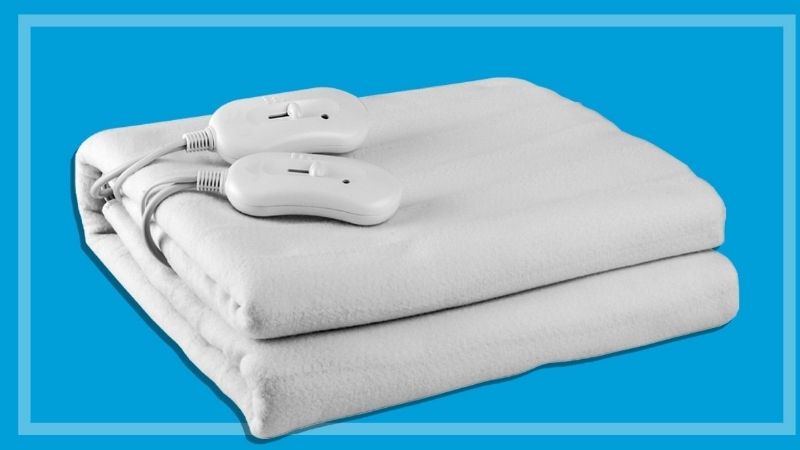
| Storage Check | Best Next Action | Reason | Important Exception |
|---|---|---|---|
| Still warm | Switch off and wait until fully cool | Avoid packing recently heated fabric | No fixed cooling time fits every model |
| Connected to outlet | Unplug at the wall first | Keep storage completely de-energized | Detach controller only if designed for removal |
| Visible scorch or exposed wire | Stop using and seek replacement guidance | Possible electrical or fire hazard | Do not assume folding or cleaning solves damage |
| Damp fabric or connector | Allow complete drying before packing | Moisture can affect electrical connections | Use drying method permitted by exact care label |
| No sharp creases | Roll loosely or use broad folds if permitted | Reduce repeated wire stress | Some manufacturers specifically prefer rolling |
| Removable controller | Coil its cable gently and pack beside blanket | Reduce tension at plugs and connector | Keep matching controller with matching blanket |
| Full storage shelf | Clear a dry space with nothing heavy on top | Avoid compression and moisture exposure | A clean shelf is preferable to a damp basement |
Read the Instructions for Your Exact Heated Blanket
Start with the product tag, model number, and original manual. For the Sunbeam BLE48/BLA63/BLA66 family, the guide permits loose rolling or folding into a blanket bag and warns against sharp creases and heavy items on top. Those directions describe those Australian and New Zealand models, not every heated throw sold in the United States [Sunbeam, Electric Blankets User Guide, p. 8].
Electrical Safety First recommends rolling rather than folding as a general way to reduce stress on internal wiring. This does not make a tightly compressed roll acceptable, and it does not override stricter directions from a product manufacturer. If the model is unknown, avoid forceful creasing and ask the maker for the proper storage method before packing it for months.
Decide Whether the Blanket Is Safe to Keep
Look for discolored or scorched areas, fabric tears exposing wires, frayed plugs, and damage around the controller connector. A blanket with these signs is a stop-use issue, not a normal cleaning job. Electrical Safety First identifies exposed conductors, scorch marks, and damaged cables as reasons to question safe use [Electrical Safety First, Routine Visual Checks].
Check the exact model for notices before storing it for another season. The U.S. CPSC recall database can be searched by product name and model; a safety warning may apply to a defined batch, not every blanket from a brand. A recall or stop-use warning takes priority over appearance. Do not donate or pass along a product known to be hazardous [CPSC, Consumer Product Recall Guidance; CPSC Warning 26-616, 2026].
Choose a Storage Place That Protects the Blanket
A dry linen closet or shelf is generally more suitable than a damp garage, leaky attic, or floor-level basement. You need enough room for the blanket to retain a relaxed shape. Choose a location away from water, harsh cleaning chemicals, pests, and objects that may fall onto the fabric. These are practical storage precautions, not measured humidity or temperature limits.
If you use a bag or container, verify that the textile and connector are completely dry first. A bag can reduce dust exposure but cannot correct hidden dampness. Sunbeam describes using a blanket bag or the original supplied bag for certain models [Sunbeam, Electric Blankets User Guide, p. 8]. If your own manufacturer specifies different packaging, follow that instruction instead.
How to Store Electric Blankets Step by Step
The following six steps are organized for a conventional plug-in electric blanket with a detachable control. Adapt them to your product’s instructions rather than forcing a connector loose. The goal is a relaxed blanket, a protected power lead, and an identifiable set that can be checked safely when cooler weather returns.
Step 1: Switch It Off and Allow Full Cooling
Turn the control off, then disconnect the blanket from its electrical supply before handling it for storage. Give the fabric and its heating elements time to cool completely. Sunbeam instructs users of its BLE48/BLA63/BLA66 range to allow cooling before folding [Sunbeam, Electric Blankets User Guide, p. 8]. The waiting period depends on how recently and how warmly it was used.
Do not put a warm blanket into a sealed bag immediately after use, and never switch it on while folded or rolled in storage. The Electrical Safety Foundation International cautions that a folded, energized electric blanket can overheat [ESFI, Electric Blanket Fire Prevention]. These are separate conditions: a blanket can be gently rolled while unplugged, but it must be spread out as instructed before it is powered again.
Step 2: Unplug Before Removing the Controller
Disconnect the plug from the wall outlet first. If the product has a removable controller, then release the controller-to-blanket connector according to its design. Sunbeam’s U.S. heated-bedding care instructions specifically put wall disconnection before removal of the control cord [Sunbeam, Heated Bedding Care and Cleaning]. Never pull a connector free by yanking its cable.
Some heated throws have controls or cables that are not intended to detach. Do not attempt to separate a sealed module or modify the wiring. Gently gather any permanently attached lead so it will not carry the weight of the rolled fabric. If a connection is difficult to release, stop and check the manual rather than using tools that could crack the housing or damage insulation.
Step 3: Check the Fabric and Let It Dry Completely
Lay the unplugged blanket out long enough to examine its fabric, power lead, and plug junctions. Check for damage at places that experience repeated movement, such as the connector area and the edge where the lead emerges. Avoid bending the blanket sharply to inspect its internal wires. You cannot confirm the condition of hidden wiring just by feeling the fabric.
If you have washed the blanket, follow the specific care label and do not store it until the textile and sockets are thoroughly dry. Sunbeam also prohibits immersing its controller or power cords and cautions against reconnecting wet heated bedding [Sunbeam, Heated Bedding Care and Cleaning]. This is a storage check, not a substitute for the separate full washing procedure for your exact blanket.
Step 4: Roll Gently, or Make Broad Folds if Allowed
Start from a wide edge and form a relaxed roll instead of pulling the fabric into a tight cylinder. Keep the roll broad enough that you do not create hard corners or tension points around the heating elements. Electrical Safety First advises rolling instead of folding to help protect internal wiring during storage [Electrical Safety First, Concerns as Electric Blanket Fires Hit Five Year High].
Some product manuals explicitly permit loose folding as an alternative to rolling. The Sunbeam BLE48/BLA63/BLA66 guide is one example: its instruction is to roll or fold loosely and avoid sharp creases. If folding is permitted for your model, make only broad, gentle folds. A compact suitcase-style bundle, tight straps, or vacuum compression may defeat the goal of avoiding pressure on the wiring.
Step 5: Keep the Control and Cords Unstrained
Coil the detached lead in generous loops without winding it tightly around the controller. Avoid sharp bends at the plug and at the molded connection to the blanket. Place the controller beside the rolled textile rather than using it as a core for winding the entire blanket. This is a practical way to limit strain, not permission to interchange controllers between products.
Keep the controller, blanket, and instructions together as one identifiable set. A small paper label showing the model and its two matching parts can prevent confusion when a household owns more than one heated throw. Sunbeam’s blanket guide directs users to use only supplied or marked-equivalent controls [Sunbeam, Electric Blankets User Guide, p. 2]. An apparently matching connector is not proof of compatibility.
Step 6: Pack Loosely and Leave the Top Clear
Place the relaxed roll or broad folds in the permitted storage bag without forcing the zipper or compressing the textile. Set it on a clean shelf, with the power components protected from accidental snags. In its BLE48/BLA63/BLA66 instructions, Sunbeam explicitly warns against stacking heavy items above an electric blanket during storage [Sunbeam, Electric Blankets User Guide, p. 8].
Keep the storage area dry and check it if your home develops leaks or pest activity. When you bring the blanket out again, open it fully and inspect the plug, cords, fabric, and connector before use. Look up any recall notice and follow the manual’s setup order. Storage protects the product only while it remains in good condition; it cannot make a damaged blanket safe to energize.
Frequently Asked Questions
These questions address common storage decisions that depend on the blanket’s construction and the conditions where it will sit. They distinguish what a manufacturer expressly permits from sensible precautions that are not universal requirements for all electrically heated bedding.
Can You Store an Electric Blanket in a Vacuum Bag?
A vacuum storage bag is a poor default choice for an electric blanket. Removing the air compresses the fabric and can force sharp folds into areas containing heating elements. It may also put pressure on connector housings. The safest ordinary option is a roomy bag that protects against dust without flattening the blanket under a hard load.
This is a precaution inferred from manufacturer warnings about creases and heavy pressure, not a blanket-specific vacuum-bag test. If a manufacturer explicitly approves particular packaging, its manual governs. Never treat the absence of a warning on the bag itself as evidence that compression is safe for the electrical textile placed inside it.
Is It Better to Roll or Fold a Heated Blanket?
Rolling loosely is a sensible default because it avoids repeated sharp fold lines, and Electrical Safety First expressly favors rolling to protect the internal wiring. However, some individual models permit broad, loose folds. That means “never fold for storage” is too absolute: the risk depends on the shape, the pressure applied, and the manufacturer’s directions.
The important distinction is between a soft fold while unplugged and an energized fold during use. ESFI warns against running a folded blanket because of overheating. Neither permitted storage folds nor a rolled blanket should be plugged in until it has been fully opened and arranged as directed for operation [ESFI, Electric Blanket Fire Prevention].
Can an Electric Blanket Stay on the Bed All Summer?
Sometimes, if that is allowed for the particular underblanket. Sunbeam’s BLE48/BLA63/BLA66 manual says certain fitted electric underblankets may remain on the bed year-round with their controls removed. That statement should not be generalized to loose heated throws or blankets that must be removed before bedding is rearranged [Sunbeam, Electric Blankets User Guide, p. 8].
Even when a manufacturer allows this approach, the blanket should remain unplugged and should not be subjected to prohibited sharp creases, pinching, or damaging pressure. A bed with moving sections, frequent folding, or incompatible mattress accessories raises model-specific questions. Check the fitted bedding instructions before using the summer-on-bed method.
Should You Replace an Old Blanket Before Next Winter?
Replace or professionally assess a blanket with scorch marks, exposed or frayed wires, damaged controls, or a stop-use notice. Age alone cannot prove the condition of every blanket. Electrical Safety First advises considering replacement once an electric blanket is more than ten years old; that is a precautionary recommendation, not a measured average lifespan of all products [Electrical Safety First, 2026 guidance].
Before a seasonal restart, check the model and any product safety notices. The CPSC’s July 2026 warning on Melinora heated blankets, identified as Warning 26-616, shows why apparently usable fabric may still be subject to a serious stop-use notice [CPSC, 2026]. If a warning applies, follow its disposal or remedy instructions rather than saving the blanket for another season.
Final Thoughts
Good storage is a small set of careful habits: disconnect the power, let the blanket cool and dry, retire anything damaged, and pack the textile without tight bends or stacked weight. Use your model’s manual to decide between a loose roll and loose folds, then keep its proper controller with it. Before the next cold season, repeat the visual and recall checks before switching it on.