A large chest of drawers should give you more usable clothing storage without turning the bedroom into an obstacle course. The most useful way to shop is to compare actual width, height, drawer layout, and wall-anchoring requirements, because a wide dresser and a tall chest solve very different space problems.
As an Amazon Associate we earn from qualifying purchases.
By KK Home Furnishings Editorial Team
How to Choose a Large Chest of Drawers
For this roundup, “large” means more than a high drawer count. We looked at furniture with substantial overall dimensions, meaningful enclosed storage, or both. The four picks range from a 42.5-inch-wide tall chest to a 70-inch-wide dresser, so the right choice depends on the wall space you have and how you sort clothes.
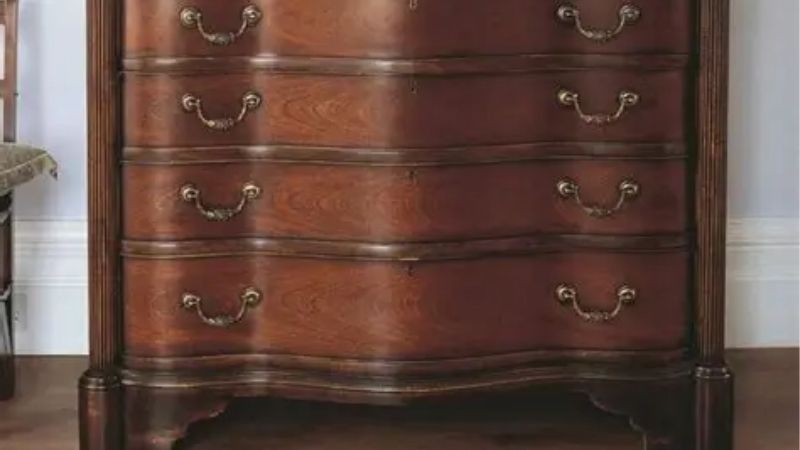
Decide Whether You Need Width or Height
A large chest of drawers with a wide case spreads storage across a long wall and gives you a generous top for a mirror or folded laundry. Room & Board offers its Kingston six-drawer dresser at 70 inches wide, while the Sauder Timber Oak model is 58 7/8 inches wide and the IKEA HAUGA is 54 3/8 inches wide.
A tall chest uses less wall width but pushes storage upward. IKEA HEMNES is only 42 1/2 inches wide, yet it stands 51 5/8 inches high and lists 9.2 cubic feet of storage. That makes it a strong fit when a bed, door swing, radiator, or closet opening leaves you with a narrower section of wall.
The key is to match the furniture to the room shape before thinking about finish. A 70-inch dresser can dominate a small bedroom even if the drawers are useful, while a tall chest can feel top-heavy in a room with low windows. Measure the exact wall run, baseboard projection, and nearby door clearance first.
Compare Drawer Count With Drawer Shape
All four picks here use six drawers, but six drawers do not guarantee the same storage behavior. The Kingston 70-inch model has broad drawer interiors, while HEMNES uses a taller case with a mix of drawer sizes. HAUGA has two columns of drawers, and Sauder uses a wide double-dresser layout with three drawers per side.
Think about what you actually fold. Wide drawers are useful for sweaters, jeans, and larger stacks, but they can become messy without dividers. Narrower drawers can separate socks, underwear, and children’s clothing more naturally. A large chest of drawers is easier to live with when the drawer geometry matches your wardrobe.
Published storage capacity can also help when available. IKEA lists 7.6 cubic feet for HAUGA and 9.2 cubic feet for HEMNES. The Sauder and Kingston pages provide dimensions and drawer details rather than one total cubic-foot figure, so those two should be judged by width, drawer interior size, and room fit instead.
Keep Depth in Check Around Beds and Walkways
Depth is easy to overlook because product photos rarely show the walking space in front of the drawers. HAUGA and Sauder are both just over 18 inches deep, HEMNES is 19 5/8 inches deep, and the Kingston is 20 inches deep. Those differences matter more once a drawer is open beside a bed or narrow passage.
In a tight bedroom, the shallower HAUGA or Sauder can preserve a little more circulation without giving up a broad top. In a larger primary bedroom, Kingston’s 20-inch depth is less likely to be a problem and gives the cabinet a more substantial furniture presence. The best layout is the one that leaves easy movement around the open drawers.
Do not size the piece from wall width alone. Check the route from the entry door to the final position, especially for factory-built solid-wood furniture. Room & Board lists the Kingston 70-inch dresser as a large, heavy case, so delivery access can be a more important constraint than the final footprint once it is in place.
Treat Tip-Over Protection as a Required Feature
Freestanding bedroom storage is a safety category, not just a style category. Under the STURDY requirements, qualifying clothing storage units manufactured after September 1, 2023 are covered by the mandatory standard in 16 CFR part 1261, which incorporates ASTM F2057 requirements for stability and anti-tip provisions [CPSC, 2023].
Every pick has a documented safety path. IKEA says HAUGA and HEMNES meet the US Federal Stability Standard and include wall-anchoring hardware. Sauder says its Timber Oak dresser complies with ASTM F2057-23 and includes a tip-restraint strap. Kingston includes anti-tip hardware and lists CPSC ASTM F2057 certification.
Anchoring still matters even when a dresser has interlocks or other stability features. CPSC guidance treats anti-tip restraint as part of the safety system, not an optional accessory. Put the unit on a level floor, follow the assembly instructions, secure it to the wall, and never assume a heavier case is automatically immune to tip-over risk.
Top Picks
No single model is the outright winner for every room. The widest piece is not the best for a narrow wall, and the tallest piece is not the best under a window. These four picks cover distinct storage layouts, so the table emphasizes the dimension or capacity that makes each one useful rather than forcing one universal ranking.
| Product | Best For | Key Spec | Watch Out For |
|---|---|---|---|
| IKEA HAUGA 6-Drawer Dresser | Best For Balanced Capacity | 54 3/8W x 18 1/8D x 33 1/8H in; 7.6 cu ft | Particleboard construction and required wall anchoring |
| Room & Board Kingston 70-Inch 6-Drawer Dresser | Best For Wide Wall Storage | 70W x 20D x 33H in | Needs a long wall and clear delivery path |
| Sauder 6-Drawer Bedroom Dresser in Timber Oak | Best For Shallower Rooms | 58 7/8W x 18 1/8D x 31 1/2H in | Large ready-to-assemble case ships in two cartons |
| IKEA HEMNES 6-Drawer Dresser | Best For Vertical Storage | 42 1/2W x 19 5/8D x 51 5/8H in; 9.2 cu ft | Tall profile makes anchoring especially important |
IKEA HAUGA 6-Drawer Dresser – Best For Balanced Capacity
HAUGA is the easiest starting point for shoppers who want a large chest of drawers without committing to an especially tall or extra-wide case. It measures 54 3/8 inches wide, 18 1/8 inches deep, and 33 1/8 inches high, while IKEA lists 7.6 cubic feet of storage across six drawers.
The proportions are practical for many bedrooms because the top is broad enough for a mirror or everyday items but the cabinet stays relatively shallow. IKEA also lists the inside drawer width at 24 inches and depth at 15 inches, which gives each drawer a useful footprint without making the piece as deep as some premium dressers.
The compromise is material. HAUGA uses particleboard and fiberboard rather than a solid-wood case, so buyers who prioritize traditional joinery may prefer Kingston or HEMNES. IKEA includes wall-anchoring hardware and says HAUGA is designed to meet the US Federal Stability Standard, which keeps the safety story clear.
Room & Board Kingston 70-Inch 6-Drawer Dresser – Best For Wide Wall Storage
Kingston is the pick for a room with a long wall and a wardrobe that benefits from broad drawers. The six-drawer 70-inch version measures 70 inches wide, 20 inches deep, and 33 inches high. Room & Board lists drawer interiors that run 32 1/4 inches wide, giving folded clothing room to spread rather than stack high.
The construction is the strongest differentiator. Room & Board specifies solid wood for the top, side panels, base, and drawer fronts, with solid ash drawer sides, dovetail joinery, and undermount soft-close glides. That combination is aimed at buyers who want a substantial bedroom case rather than a light flat-pack cabinet.
The watch-out is scale. At 70 inches wide, this is not the dresser to squeeze beside a narrow doorway or between two windows. The page also calls for delivery planning, which is sensible for a large solid-wood case. Anti-tip hardware is included, and the product page lists CPSC ASTM F2057 certification for its clothing-storage safety requirements.
Sauder 6-Drawer Bedroom Dresser in Timber Oak – Best For Shallower Rooms
The Sauder Timber Oak dresser is useful when you want substantial width but need to control depth. It measures 58 7/8 inches wide, 18 1/8 inches deep, and 31 1/2 inches high. That puts it close to HAUGA in depth while giving you a noticeably wider top and a traditional six-drawer double-dresser layout.
Sauder uses metal drawer runners with safety stops and an interlocking mechanism that allows only one drawer to open at a time on each side. The brand also specifies a 1 1/2-inch-thick top surface. Those details make it a good fit for a busy bedroom where drawers are opened frequently and the top doubles as a practical staging area.
Assembly is the trade-off. The dresser ships in two cartons and is designed for home assembly, so it requires more setup work than delivered furniture. On safety, Sauder explicitly states compliance with ASTM F2057-23 as required by the STURDY Act and includes a tip-restraint safety strap, which is the documentation you want for this category.
IKEA HEMNES 6-Drawer Dresser – Best For Vertical Storage
HEMNES is the best fit when floor width is the limiting factor. It measures 42 1/2 inches wide, 19 5/8 inches deep, and 51 5/8 inches high, yet IKEA lists 9.2 cubic feet of storage. That tall format can hold a surprising amount of folded clothing while using much less wall width than the three horizontal dressers.
The material mix also differs from HAUGA. IKEA uses solid pine for the top, side panels, legs, drawer fronts, drawer sides, and drawer backs, with fiberboard and particleboard used in selected secondary components. The six drawers include larger and medium sections, which can make sorting clothing easier than one repeated drawer size.
The height is also the main caution. A tall dresser places more visual mass above the floor and should never be treated as stable just because it feels heavy. IKEA says HEMNES is designed to meet the US Federal Stability Standard, uses a drawer interlock, and includes hardware for wall attachment, so follow that anchoring step every time.
Frequently Asked Questions
Choosing a large chest of drawers usually comes down to room geometry, clothing volume, and safety rather than drawer count alone. These answers focus on the decisions that change whether a dresser works in everyday use, including when to choose a wider case, when to go taller, and what to verify before installation.
How Wide Should a Large Chest of Drawers Be?
There is no single required width, but the examples here show a useful range. HAUGA is 54 3/8 inches wide, Sauder is 58 7/8 inches wide, and Kingston reaches 70 inches. HEMNES is much narrower at 42 1/2 inches because it gains storage through height instead of a long horizontal case.
Choose the width by measuring the uninterrupted wall section rather than the whole room. Leave room for nearby doors, closet panels, radiators, outlets, and bed access. A dresser that technically fits between two points can still make the bedroom frustrating if open drawers block the normal route around the bed.
If you want a mirror or television above the dresser, the wider formats also provide more visual balance, but the top should not become a reason to overload the case. Use the furniture for the storage and display purposes described by the manufacturer, and keep heavy or climbable items away from children.
Is a Tall Chest Better Than a Wide Dresser?
A tall chest is better when wall width is scarce, while a wide dresser is better when you want broader drawers and a long top surface. HEMNES shows the vertical approach at 42 1/2 inches wide and 51 5/8 inches high, while Kingston shows the opposite at 70 inches wide and 33 inches high.
Neither shape is automatically more spacious. HEMNES lists 9.2 cubic feet of storage despite its narrower footprint, and HAUGA lists 7.6 cubic feet in a wider, lower cabinet. The useful question is whether your clothing fits better in taller drawer stacks or broad side-by-side drawers and whether the room supports the furniture height.
Safety also deserves more attention as furniture gets taller. Even a compliant chest should be installed exactly as directed and anchored to the wall. A high center of mass, an uneven floor, or children opening and climbing on drawers can create hazards that are not solved by simply choosing a heavier product.
How Many Drawers Are Enough for a Large Dresser?
Six drawers can be enough when each drawer is wide and deep enough for the clothing you store. Every model in this roundup has six drawers, yet their overall dimensions differ sharply. That makes drawer count a starting point, not a capacity measurement, especially when one dresser is 42 1/2 inches wide and another is 70 inches wide.
For couples or shared bedrooms, wider drawers can work well when each person gets one side of the case. For one person with many clothing categories, a tall chest can be easier because the vertical stack naturally separates items. Drawer organizers can further divide broad drawers without forcing you to buy a cabinet with more fronts.
Look at drawer interior measurements when the brand publishes them. Room & Board gives clear interior widths for Kingston, and IKEA publishes drawer widths and depths for HAUGA. Those numbers tell you more about daily use than a product title that only says six-drawer, eight-drawer, or extra-large.
Do Large Dressers Have to Be Anchored to the Wall?
Yes, follow the manufacturer’s wall-anchoring instructions for these freestanding clothing-storage units. CPSC guidance under the federal clothing-storage standard includes anti-tip provisions, and the products in this roundup all provide a documented restraint or anchoring path rather than treating wall attachment as a decorative option.
HAUGA and HEMNES include wall-attachment hardware according to IKEA. Sauder includes a tip-restraint strap, and Room & Board includes anti-tip safety hardware with Kingston. The exact fastener needed can still depend on your wall construction, so use the mounting method specified for drywall, masonry, or other wall types.
Do not skip the restraint because the dresser is wide, heavy, or fitted with drawer stops. Stability systems reduce risk only when the product is assembled and installed as intended. If you move the furniture to another room later, reinstall the anti-tip hardware at the new location before putting the drawers back into normal use.
Final Thoughts
The best large chest of drawers is the one that matches your wall shape and folding habits: HAUGA balances width and depth, Kingston maximizes broad drawer space, Sauder stays relatively shallow, and HEMNES stores upward. Whichever format fits, treat verified stability features and wall anchoring as part of the purchase, not an optional final step.