Key takeaways
- Plan a sofa move using its documented configuration and handling points. Resolve the route, suitable help and return-to-use checks before lifting.
What's inside

Moving a sofa without dragging its legs begins with identifying how that particular sofa may be handled. Clear the route, establish the manufacturer’s permitted handling points and arrange suitable help before anything leaves the floor. A visible arm, foot or reclining back is not automatically a lifting point.
Identify what must move as one piece
A stationary sofa, connected sectional, powered recliner and sleeper can require different preparation. Find the exact model instructions and determine whether the furniture remains assembled or must be separated according to a documented procedure. Do not infer this from how another sofa was delivered.
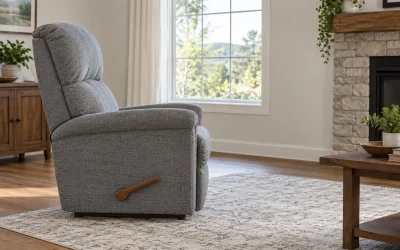
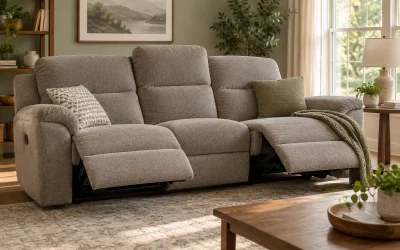
La-Z-Boy’s Power Motion Sofa, Chair and Modular instructions provide a specific example. Before movement, they call for disconnecting electrical power and securing the mechanism. They prohibit moving those products by the mechanism, legrest, handle or reclining back, and explain that connected modular units should not be moved together because their brackets are not structural support for that task.
Those directions belong to the covered products. They demonstrate why “grab either end” is inadequate advice, but they do not supply lifting points for every stationary sofa. Ask the maker or a qualified furniture-moving service when the applicable instructions are unclear.
Do the route check before the handling check
Clear loose objects from the planned route and identify doors, thresholds, turns and changes in floor level. Measure the route against the manufacturer’s documented moving configuration. Do not assume that removing feet or a back is permitted merely because it would make a doorway easier.
Choose the final position before starting. Include access needed to reconnect or reassemble the furniture as instructed, if applicable. A sofa placed tightly against a wall too early can leave no room to complete the approved setup without moving it again.
If stairs, tight turns or an uncertain grip are involved, give the service provider that information in advance. The number of people and equipment required depend on the actual furniture and route; a generic two-person rule cannot settle the job.
| Question | Evidence needed | Reason to pause |
|---|---|---|
| What is the moving configuration? | Model instructions for whole unit or permitted sections | Unknown connector or removal procedure |
| Where may it be supported? | Approved handling points or service plan | Only convenient trim or moving parts are reachable |
| What must be secured? | Instructions for mechanisms, cords and loose parts | Something can open, trail or shift |
| Does the route work? | Doorway, turn, threshold and destination checks | Unresolved obstruction or stair handling |
| Who and what are required? | Capable assistance and suitable professional equipment | Uncertain control of the load |
| How is the sofa returned to use? | Required assembly and operating checks | Damage, missing support or changed operation |
Do not turn floor protection into a dragging instruction
A protective layer on the floor and a method for moving the furniture are separate decisions. Do not assume that a blanket under the legs, a loose board or a generic slider makes dragging acceptable. The proposed equipment must suit the furniture, the floor finish and the route.
Tell a professional mover about delicate flooring or a recent finish treatment and provide any applicable care guidance. Let the handling plan address how the load is supported through the move. Choosing a floor accessory first and improvising everything else around it reverses the useful order.
Likewise, do not twist or lever the sofa on one leg to make room for equipment. If the approved arrangement cannot be established with controlled handling, stop and arrange appropriate assistance. An awkward small move can deserve the same planning as a longer relocation.
A fictional move across a living room
Imagine an owner wants to shift a connected reclining sectional a short distance to reach the floor behind it. The short distance makes pulling from an arm look convenient. The model’s instructions, however, require separate modules and prohibit using the reclining back as a moving point.
The owner clears the destination and asks the service provider to handle the documented preparation and movement. The provider’s plan identifies the sections, the allowed supports and the order for returning the furniture to use. The distance has not changed; the missing information has been supplied.
This example is a planning decision, not a demonstration of a lifting technique. It does not authorize disconnection steps on another sectional or prove that an owner can safely carry a particular module.
Record the starting condition without dismantling
Take accessible photographs of the feet, visible joins and surrounding floor before the move. Note an existing loose foot, damage or unusual movement and have it assessed before handling. Do not load or rock the sofa as a test, and do not crawl beneath unsupported furniture to obtain a better photograph.
Keep any parts removed under the approved procedure identified with their corresponding module. A pile of similar-looking feet or connectors creates an avoidable reassembly question. Follow the maker’s instructions for retaining hardware rather than assuming every piece is interchangeable.
Finish the setup before using the sofa
After placement, complete the manufacturer’s required assembly and operating checks. Confirm that the specified supports are in their intended positions and that cords and mechanisms have the prescribed clearance. If damage or changed operation appears, stop use and contact the appropriate service provider.
A successful move is not just a sofa arriving at another spot. It is a controlled handling plan followed by the documented return to service, with neither its feet nor its moving parts used as improvised handles.