Key takeaways
- Check what a power recliner backup is designed to do during an outage. Separate emergency closing, continuing use and accessory limitations.
What's inside
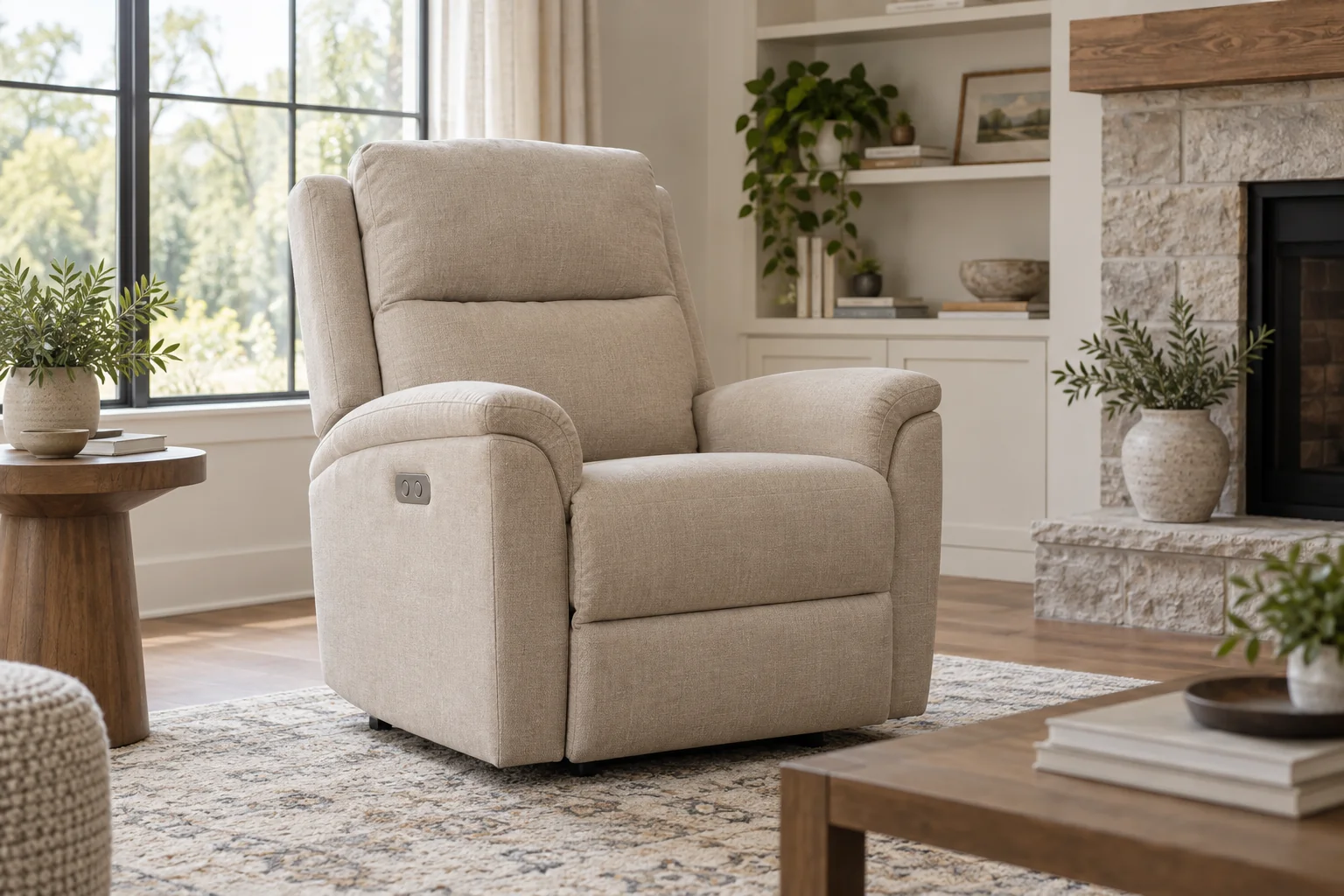
A power recliner’s battery backup may be intended only to return the chair to a closed position during an outage. It may not support ordinary repeated reclining or every accessory. Read the exact model’s backup instructions before treating a battery feature as continuing power.
Identify the backup’s purpose first
Separate three questions: does this configuration include a backup, what movement is it designed to support, and which other functions remain available? A product listing that mentions batteries may refer to a remote control rather than the motor’s power source. Those are different systems.
Find the model’s manual and the backup section that applies to its supplied power system. Check the model and production details requested by the maker. A similar-looking transformer, connector or control panel is not sufficient evidence that another manual applies.
In La-Z-Boy manual DOC016530, printed page 22, the described built-in backup is intended to return a reclined unit to the upright, closed position during a power interruption. It is not intended for reclining, and performance is not guaranteed. This is a specific example of why backup does not automatically mean continued normal use.
Keep the chair’s functions separate
The same manual describes reduced operating speed and unavailable memory programs and USB charging when using that backup. A button or port can therefore remain physically present while its normal function is unavailable. Record the applicable limitations from your own model rather than borrowing this list.
For a chair with headrest, lumbar, heat or other options, check each relevant function. Do not assume that support for one movement establishes support for all motors and accessories. Equally, a backup mentioned for an optional configuration should not be assumed to be included in the chair being delivered.
A lift function needs its own explicit documentation. Returning a recliner to a closed sitting position does not by itself establish that another model can raise an occupant during a power interruption. Ask about the exact required operation rather than relying on the general word backup.
Use a function map when comparing the options
| Question | Evidence to request | Why it changes the decision |
|---|---|---|
| What is included? | Model-specific supplied components | Separates an option from a standard feature |
| What movement is supported? | Backup operating instructions | Separates closing from ordinary reclining |
| Which functions stop working? | Accessory and control limitations | Prevents reliance on an inactive feature |
| What maintenance is required? | Applicable replacement or charging guidance | Defines the owner’s preparation |
| What if operation fails? | Manufacturer’s owner response and support route | Avoids an improvised mechanism action |
Plan before an interruption, not during one
Ask the dealer to explain the approved backup arrangement while normal power is available. Have them identify which parts are owner-accessible and which procedures belong to service personnel. Use only the batteries, power system and maintenance procedure specified for that configuration.
Do not open electrical components, alter connectors or attach a homemade battery pack. A connector that physically fits does not establish an approved electrical combination. If an optional system is offered, obtain confirmation that it applies to the exact chair and intended use.
Keep the applicable instructions where the usual user can find them. A short note can identify the permitted control and the support contact, but it should point back to the complete manual. Do not write a generic press every button troubleshooting sequence.
A worked purchase decision
Imagine a buyer wants to use a recliner repeatedly throughout an evening outage. The candidate chair’s confirmed manual says its included backup serves only to return the chair to its closed position. That backup does not meet the buyer’s stated requirement, even though the listing correctly mentions a battery feature.
The next step is to ask the manufacturer or dealer whether an approved optional system supports the intended continuing use. The response should identify the compatible system, its limitations and the relevant instructions. A vague assurance that it works on batteries is incomplete.
If no suitable option is confirmed, the buyer should treat continuing powered use as unavailable and reconsider the choice. The useful result is a resolved requirement, not a guessed number of cycles based on battery size or another customer’s experience.
Know the permitted response if the power stops
Follow the owner’s outage instructions for the supplied configuration. Keep people, pets and objects clear of moving parts as the manual requires. Do not assume a manual release exists, push the mechanism closed or crawl underneath the chair to search for a lever.
If the prescribed control does not perform as expected, stop repeated trial actions and contact the appropriate support or assistance service. A plan for a person who needs help exiting should be arranged in advance; a furniture backup description is not a guarantee of independent exit.
Restore the documented ready state afterward
After power returns, follow the model’s instructions for any required battery replacement, charging or checks. Record that the backup was used so the next owner action is not forgotten. Do not assume that restored mains power also restores a disposable backup’s capacity.
Keep the final answer precise: this model, with this approved power arrangement, supports these documented actions. That prevents an emergency-return feature from being mistaken for a substitute for ordinary household electricity.