Key takeaways
- Learn why foam density and firmness differ, which sofa specifications to request and how to compare cushion options without misleading rankings.
What's inside
- Density and firmness answer different questions
- Read the units before comparing numbers
- Create a like-for-like specification table
- A worked comparison without a false winner
- Use sitting observations for the comfort question
- Keep durability claims separate from density labels
- Write a decision you can defend
- Density and firmness answer different questions
- Read the units before comparing numbers
- Create a like-for-like specification table
- A worked comparison without a false winner
- Use sitting observations for the comfort question
- Keep durability claims separate from density labels
- Write a decision you can defend
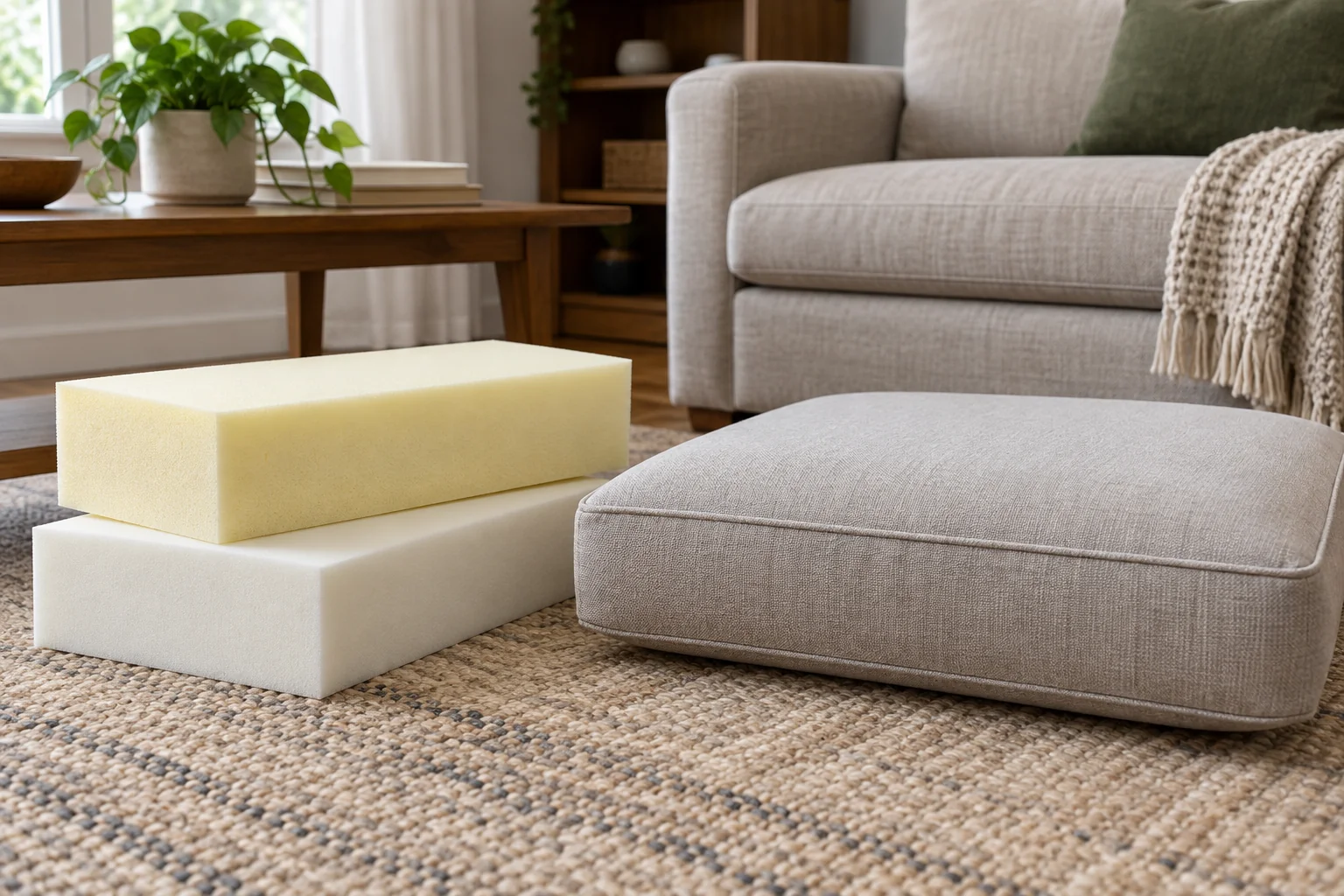
Density and firmness answer different questions
Foam density describes mass per unit volume. Firmness describes resistance to being compressed under a defined test. A sofa cushion can use relatively dense foam and still feel soft, so a higher density number is not a promise of a firmer seat.
When comparing sofas, collect both specifications if the manufacturer provides them, then identify what each number actually describes. A foam-core measurement is not a measurement of the completed cushion with its wrap, cover and supporting seat structure.
Read the units before comparing numbers
The Polyurethane Foam Association’s performance guide separates density from firmness and other foam properties. It discusses density in units such as pounds per cubic foot and firmness measured by indentation force deflection, or IFD. Test conditions matter when interpreting those measurements.
A listing that says 2.0 without units is incomplete. Ask whether it means pounds per cubic foot, another unit or a marketing label. Likewise, a firmness number without its method, indentation level and relevant sample conditions cannot support a precise comparison with another seller’s figure.
Do not confuse foam density with cushion weight. A large cushion can weigh more because it contains more material. Fabric, fiber wrap and other layers add weight too. Weighing the complete cushion at home does not reveal the density of its foam core.
Create a like-for-like specification table
| Field | Ask for | Why it matters |
|---|---|---|
| Cushion position | Seat, back or another component | Avoids comparing different functions |
| Construction | Core, wrap and other layers | Identifies what the specification covers |
| Density | Value, units and named foam layer | Makes the quantity interpretable |
| Firmness | Value and test method, if disclosed | Checks whether numbers are comparable |
| Selected option | Exact cushion package on the order | Matches the showroom or listing |
| Use and care | Maker’s instructions and warranty terms | Keeps performance promises separate |
Use unknown for undisclosed data rather than awarding a low score automatically. Some sellers describe the complete seating system without releasing every material specification. Decide what evidence you require, and ask a focused follow-up instead of inventing a ranking from missing numbers.
A worked comparison without a false winner
Illustrative products, not tested sofas: Candidate A lists a seat-core density of 2.0 pounds per cubic foot and describes the completed seat as soft. Candidate B lists 1.8 pounds per cubic foot and describes its seat as firm. The density values alone do not contradict those descriptions.
If neither seller provides a comparable firmness test, you cannot calculate how much firmer B is. You can record that A’s disclosed core density is higher, while keeping the comfort description in a separate column. That is a more accurate conclusion than declaring A the firmest or best.
Now suppose A also has a thick fiber wrap and B has a different cushion construction. The completed seats differ in more than core density. A showroom comparison should use the exact cushion packages being considered, and your notes should name those packages.
Use sitting observations for the comfort question
Try the posture you expect to use: sitting upright for conversation, reading or stretching out. Record what you notice in plain language. For example, your feet rest as intended, you prefer an extra back pillow, or you find rising from the seat awkward. These are personal observations, not laboratory measurements.
Keep seat dimensions beside the cushion notes. The difference between overall sofa depth and usable seat depth can explain a preference that a foam number does not. Compare the normal cushion setup rather than removing back cushions to make one sofa appear deeper.
If shopping remotely, ask about the return policy and the exact configuration shown. A sample foam block can demonstrate one material, but it cannot reproduce the full seating system. Avoid treating a squeeze of a small sample as proof of how a finished sofa will feel.
Keep durability claims separate from density labels
Density is useful information, but it does not provide an exact lifespan for a complete sofa. Construction, materials, use and care all belong in a durability discussion. A promised number of years should come from an applicable written warranty or a clearly supported statement, not arithmetic based on density.
Read what the warranty covers and how it defines a problem. Coverage for a manufacturing defect is not necessarily a guarantee that every aspect of the seating feel remains unchanged. Save the terms that apply to the chosen cushion option.
Write a decision you can defend
Summarize each candidate in three lines: disclosed construction, personal fit observations and unresolved questions. Keep a dated copy of the seller’s specification response with the quote. If the order changes to another fill package, revisit the comparison.
The useful result is a sofa selected with clear information about both materials and comfort. Density contributes one part of that decision. It should neither substitute for firmness data nor overrule the way the complete seat works for your intended use.