Key takeaways
- Dish soap refills, dishwasher detergent and rinse aid
- Sponges, scrub brushes and rubber gloves
- Trash bags, ideally on a door roll so the next bag is easy to grab
- A small kitchen spray cleaner and microfiber cloths
- A flashlight and a small bucket for leak emergencies
The best under kitchen sink organization ideas work around the plumbing rather than against it: measure the cabinet, map where the drain trap, supply valves and disposal sit, then use a two-tier sliding organizer on one side, a pull-out bin or caddy on the other, and a drip tray on the floor of the cabinet. Everything else is detail. Most failed under-sink setups come from buying a shelf that looks good online but collides with the P-trap or blocks the shutoff valves.
Step 1: Measure the Cabinet and Map the Pipes
Empty the cabinet completely and take four measurements: interior width, depth, height, and the clear width of the door opening (the face frame is often 2 to 3 inches narrower than the inside). Then note where the obstacles are. Standard sink base cabinets in US kitchens are usually 30, 33 or 36 inches wide and about 22 to 23 inches deep inside.

Homde Sliding Under Sink Organizer: 2-Pack Pull-Out Rack for Kitchen
Included for 'Under Kitchen Sink Organization Ideas: Measure Around the Pipes, Then Pick by Zone' as a relevant option in this category; details come from the product listing.
View on Amazon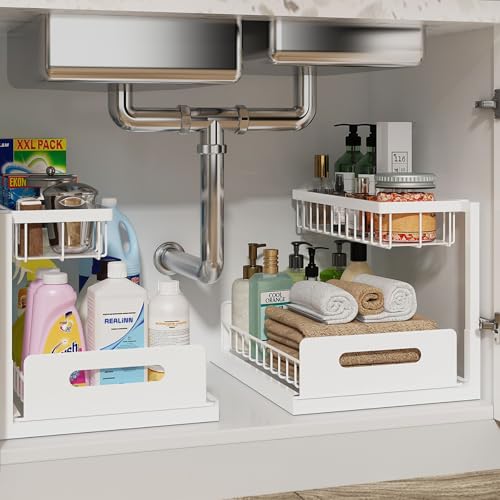
REALINN Under Sink Organizer, L-Shaped 2 Tier Pull Out Cabinet Organizer
Included for 'Under Kitchen Sink Organization Ideas: Measure Around the Pipes, Then Pick by Zone' because the listing specifies L-Shaped 2 Tier Pull Out Cabinet Organizer, details this guide uses to compare options.
View on Amazon
GeeBom Under Sink Organizer 2 Pack, Double Slide Out Metal Shelf, Black
Included for 'Under Kitchen Sink Organization Ideas: Measure Around the Pipes, Then Pick by Zone' because the listing specifies Double Slide Out Metal Shelf and Black, details this guide uses to compare options.
View on Amazon
Simple Trending Under Sink Organizer 3-Tier with Sliding Storage Drawer
Included for 'Under Kitchen Sink Organization Ideas: Measure Around the Pipes, Then Pick by Zone' as a relevant option in this category; details come from the product listing.
View on Amazon| Cabinet or obstacle | Typical dimension | What it means for organizers |
|---|---|---|
| Sink base width (exterior) | 30, 33 or 36 in | Interior is roughly 1.5–2 in narrower |
| Interior depth | 21–23 in | Most pull-outs are 17–21 in deep |
| Interior height | 27–30 in | Space below drain trap is often only 10–14 in |
| Drain trap (P-trap) bend | Center, 10–16 in from cabinet floor | Sets the max height of anything placed under it |
| Garbage disposal | About 6–9 in wide, hangs 12–15 in below sink | Usually eats the center and one side’s upper space |
| Shutoff valves | Back wall, 6–10 in from floor | Keep a clear path to reach them |
Sketch the cabinet from the front with the pipes drawn in. You will usually see two usable towers, left and right, with a low zone under the trap in the middle.
Step 2: Pick Organizers by Zone
Side towers: two-tier sliding organizers
The space either side of the drain is where most storage goes. A two-tier pull-out organizer about 10 to 12 inches wide, 15 to 18 inches deep and 14 to 18 inches tall fits most sides. Models with height-adjustable or U-shaped shelves can flex around a pipe that cuts into one corner. Sliding baskets are worth the extra cost because the back of an under-sink cabinet is otherwise dead space.
Center zone: low bins and the trash
Under the trap, use low items: a shallow bin for sponges and refills, or a slim trash or recycling pull-out if the plumbing leaves enough room. Many pull-out bin frames need 14 to 15 inches of clear width and 18 inches of depth, so check before buying.
Doors: shallow racks and hooks
The inside of each door can take a shallow rack for sponges, a roll of trash bags or a hanging towel bar. Keep anything on the door under about 2 to 3 inches deep so it clears the shelf edges and pipes when the door closes.
Floor: drip tray or liner
A raised-edge silicone or plastic drip tray, sized to the cabinet floor, catches slow leaks and spills before they reach particleboard. It is the cheapest form of insurance under a sink.
Organizer Types Compared
| Organizer | Typical size | Best for | Watch out for | Usual price range |
|---|---|---|---|---|
| Two-tier sliding basket | 10–12 W x 15–18 D x 14–18 in H | Sprays, dish soap, refills | Upper tier hitting the disposal | $20–$50 each |
| Expandable under-sink shelf | Expands about 15–25 in wide | Spanning around the trap | Weak legs sag with heavy bottles | $15–$35 |
| Clear stackable bins | 6–8 in wide, 12–14 in deep | Sponges, gloves, small items | Get lost at the back without handles | $10–$25 for a set |
| Cabinet-mounted pull-out (screwed in) | Custom to cabinet | Heavy use, whole-cabinet access | Needs drilling and accurate measuring | $40–$150 |
| Door-mounted caddy | 2–3 in deep | Sponges, brushes, bags | Hitting pipes when the door shuts | $10–$20 |
| Drip tray or liner | Trimmed to cabinet floor | Leak protection | None, besides cutting to size | $15–$40 |
Step 3: Decide What Belongs Under the Sink
Under-sink space is limited, so keep only what you use at the sink:
- Dish soap refills, dishwasher detergent and rinse aid
- Sponges, scrub brushes and rubber gloves
- Trash bags, ideally on a door roll so the next bag is easy to grab
- A small kitchen spray cleaner and microfiber cloths
- A flashlight and a small bucket for leak emergencies
Move rarely used cleaners, bulk paper towels and extra bags elsewhere. If you have young children, use a cabinet safety latch and keep strong chemicals higher up in another cabinet rather than relying on placement alone.
DIY Kitchen Organization Ideas for the Sink Cabinet
- Tension rod for spray bottles: a spring rod across the cabinet, fixed high on the side walls, lets spray bottles hang by their triggers and frees the floor.
- Adhesive hooks inside the doors: fine for gloves and brushes, but not for heavy loads; humidity under sinks weakens some adhesives.
- Cut-to-fit shelf around the trap: a 1/2-inch plywood shelf on cleats with a notch cut for the drain can double usable space. Seal all edges with paint or polyurethane, because raw plywood swells when wet.
- Labelled bins: labels on the front edge stop items migrating and make restocking quick.
Leaks, Moisture and What Wears First
The cabinet floor in a sink base is often particleboard or low-grade plywood, and it is the first thing to fail when a slow drip goes unnoticed. Keep a gap of an inch or two around supply lines and the trap so you can see them, check the floor monthly for staining, and replace swollen sections early. Wire and plastic organizers survive damp conditions far better than wood or fabric bins. On sliding organizers, the runners are what wear first; models with metal ball-bearing slides tend to outlast plain plastic tracks.
Quick Plans by Kitchen Type
- Small apartment kitchen (30 in sink base, disposal): one two-tier slider on the free side, a low bin in the center, a door rack for bags.
- Family kitchen (36 in base, no disposal): two sliding towers, a slim pull-out trash in the center if depth allows, drip tray underneath.
- Renter: freestanding sliders and an expandable shelf only, no screws into the cabinet.
- Older cabinet with water damage: replace or line the floor first, then add wire organizers that let air circulate.
Measure, map the pipes and keep the valves reachable. With two sliding towers, a low center bin and a drip tray, a standard sink base holds everything you need at the sink without becoming a pile of bottles.