Key takeaways
- Pro: True firm feel at a budget price prevents hammocking
- Pro: Hybrid construction offers better airflow than all-foam rivals in this range
- Con: Edge support is modest; side sleepers near the perimeter may feel compression
What's inside
Lower back pain is the most common reason people search for a mattress replacement, and the market responds with an overwhelming number of options that all promise relief. The problem is that “good for back pain” means something different depending on your sleep position, body weight, and whether your discomfort stems from muscular tightness or a structural issue like a herniated disc. A mattress that cradles a side sleeper’s hips can leave a stomach sleeper’s lumbar spine sagging into a painful curve by morning.
What separates a genuinely helpful mattress from a mediocre one in this category comes down to three things: support-layer construction that keeps the spine aligned regardless of position, a comfort layer dense enough to reduce pressure without creating sinkage, and edge support firm enough that you can get in and out without straining. Below are eight options that address these factors at different price points, selected from published specifications and aggregated owner feedback. This roundup reflects the 2026 market landscape.
As an Amazon Associate we earn from qualifying purchases at no extra cost to you. Product prices and availability are accurate as of the date shown and are subject to change.


Quick Picks
| Product | Best for | Price |
|---|---|---|
| UniPon 12 Inch Firm Queen Hybrid | Stomach sleepers on a tight budget | $199.98 |
| Queen Size 12 Inch Hybrid Memory Foam | Budget memory foam feel | $239.99 |
| UniPon 14 Inch Medium Firm Hybrid | Targeted lumbar and hip support | $379.99 |
| EGOHOME Queen 14 Inch Memory Foam | Side sleepers with chronic back pain | $499.99 |
| Luxysea Queen 12 Inch Medium Firm | Hot sleepers who need motion isolation | $181.99 |
| UniPon Firm Queen 12 Inch Cooling Hybrid | Firm support with cooling features | $199.99 |
| Niagara Sleep Solution Topper | Budget back pain relief for existing mattresses | $44.99 |
| Sweetnight CoolNest Hybrid King | Couples wanting pillow-top comfort at scale | $594.99 |
How We Picked
We filtered this category using four criteria drawn from published specs and consistent owner reporting. First, support-layer quality: hybrid coils and high-density foam bases outperform all-foam builds for spinal alignment, so we prioritized models with zoned or reinforced coil systems. Second, firmness targeting: medium-firm to firm ratings align with the broadest range of back-pain profiles, and we noted where a model sits on that spectrum. Third, trial period length: a 365-night trial removes the risk of committing to a mattress that aggravates pain in the first week. Fourth, pressure-relief claims backed by material specifics: cooling gel, memory foam density, and pillow-top thickness matter more than marketing adjectives.
The 8 Best Mattress For Lower Back Pain in 2026
UniPon 12 Inch Firm Queen Hybrid
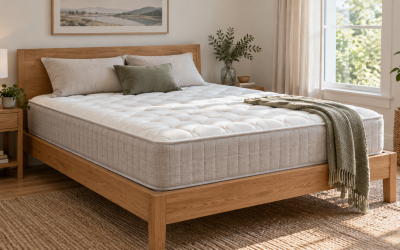
At just under $200, this hybrid is the most affordable coil-based option that still delivers a firmness level most back-pain sufferers need. Stomach and back sleepers around 150-220 pounds will find the firm surface keeps the lumbar region from sinking, which is the primary mechanical failure point for budget mattresses. The in-a-box compression means some owners report a brief off-gassing period, though most note it clears within days.
- Pro: True firm feel at a budget price prevents hammocking
- Pro: Hybrid construction offers better airflow than all-foam rivals in this range
- Con: Edge support is modest; side sleepers near the perimeter may feel compression
Skip if: You are a side sleeper under 150 pounds who needs generous cushioning at the shoulder and hip.
Queen Size 12 Inch Hybrid Memory Foam
This option blends memory foam’s pressure-relief properties with a supportive base at $239.99. Owners consistently mention it as a middle ground between the plush contouring of pure foam and the pushback of innerspring. For lower back pain caused by pressure points in the lumbar curve rather than structural misalignment, the memory foam top layer provides targeted cushioning without the extreme sinkage of softer foams.
- Pro: Memory foam feel without the heat retention of traditional formulations
- Pro: Comfortable transition layer reduces the jarring feel some hybrids have
- Con: Heavier sleepers report the foam layer loses resilience faster than expected
Skip if: You weigh over 230 pounds and need reinforced support layers to prevent premature bottoming out.
UniPon 14 Inch Medium Firm Hybrid
This $379.99 model is the most back-specific option UniPon offers, with explicit lumbar and hip support zones built into the coil arrangement. The 14-inch profile provides substantial layering, and the medium-firm rating suits the broadest cross-section of back-pain sufferers. A 365-night trial and 10-year warranty reduce purchase anxiety, while the fiberglass-free construction addresses a common concern among cautious buyers.
- Pro: Zoned lumbar support targets the specific region where lower back pain originates
- Pro: 365-night trial with 10-year warranty is exceptional for this price tier
- Con: Medium-firm may feel too plush for strict stomach sleepers who need maximum rigidity
Skip if: You require a genuinely firm surface and find medium-firm options leave your hips sinking.
EGOHOME Queen 14 Inch Memory Foam
At $499.99, this is the priciest foam-only pick in the lineup, and it earns that position with a thick comfort layer designed specifically for back pain relief. Side sleepers with lower back discomfort often need deeper contouring than hybrids provide, and this mattress accommodates that. The medium-firm rating is on the softer end, meaning it suits lighter frames and those whose pain responds to pressure relief more than rigid support.
- Pro: Thick memory foam layer cradles the lumbar curve without pressure points
- Pro: Excellent motion isolation benefits couples sharing the bed
- Con: All-foam construction retains more heat than hybrid alternatives at this price
Skip if: You sleep hot or live in a warm climate without air conditioning through the night.
Luxysea Queen 12 Inch Medium Firm
At $181.99, this is the cheapest full mattress on the list, and it compensates with cooling gel infusion and a 365-night trial that costs far more on premium models. The CertiPUR-US certification confirms foam content meets low-emission standards, which matters for buyers concerned about off-gassing. Owners with mild lower back pain and a tendency to overheat praise the gel layer’s temperature regulation, though the 12-inch profile limits how much support depth is available.
- Pro: Cooling gel addresses heat retention without adding significant cost
- Pro: 365-night trial and 10-year support policy rival options twice the price
- Con: Thinner profile offers less structural support for heavier individuals
Skip if: Your back pain is severe or structural and you need a thicker support base to maintain alignment.
UniPon Firm Queen 12 Inch Cooling Hybrid
This $199.99 model targets the same buyer as the first UniPon pick but adds cooling features and explicit lumbar and hip support claims. The firm feel combined with pressure-relief layering makes it suitable for back sleepers who overheat. The 365-night trial mirrors the company’s higher-end options, which is uncommon at this price point.
- Pro: Cooling hybrid design prevents the heat buildup typical of budget firm mattresses
- Pro: Firm surface with targeted pressure relief addresses two pain mechanisms simultaneously
- Con: Firmness level may feel too rigid for side sleepers without a pillow-top layer
Skip if: You are a strict side sleeper whose shoulder pressure points demand softer cushioning.
Niagara Sleep Solution Topper
Not a mattress but a topper at $44.99, this product serves a different use case entirely: you already have a mattress that is too firm for your lower back and you need cushioning without replacing the whole bed. The ultra-soft rating adds the plushness that firm foundations often lack, which can relieve pressure on the lumbar region for side sleepers. Owners report it transforms an uncomfortable sleeping surface for a fraction of a mattress cost.
- Pro: Extremely low cost relative to full mattress replacement
- Pro: Ultra-soft feel addresses firmness-related pain without structural overhaul
- Con: Full size only; cannot fit a queen or king mattress
Skip if: Your current mattress is already sagging or too soft, as adding a topper will not correct support problems.
Sweetnight CoolNest Hybrid King
At $594.99, this king-size hybrid is the premium option here, combining a 14-inch profile with a cooling pillow-top layer. For couples where one or both partners suffer from lower back pain, the king width eliminates the compromise of sleeping near the edge, and the pillow-top adds plush comfort without sacrificing the supportive coil base underneath. The cooling designation addresses heat without the gimmicky gel beads that degrade over time.
- Pro: Pillow-top comfort with hybrid support suits both side and back sleepers in a couple
- Pro: King size eliminates motion transfer issues that worsen pain from partner disturbance
- Con: Price is three times the budget picks; the premium may not be justified for single sleepers
Skip if: You sleep alone or share a queen and do not need the width premium.
Buying Guide
Firmness and Sleep Position
Medium-firm to firm is the consensus range for lower back pain across sleep positions, but the application differs. Back and stomach sleepers need firmness to prevent the hips from dropping and creating a swayback curve. Side sleepers need enough give at the hip and shoulder to keep the spine horizontal. A mattress marketed as “medium-firm” can mean different things across brands, so look for specific comfort-layer thickness and foam density in the product listing rather than relying on the label alone.
Support Layer Construction
Hybrid mattresses with individually wrapped coils generally outperform all-foam bases for long-term spinal support because the coils respond to localized pressure without the slow sag that foam develops over years. If your budget allows, choose a hybrid with at least 7 inches of coil support beneath a comfort layer. Zoned coil designs, where the center section has thicker or denser springs, specifically address the lumbar region and are worth the premium.
Trial Period and Warranty
A minimum of 100 nights is practical because back pain often worsens before it improves as your body adjusts to new support. A 365-night trial removes almost all financial risk and is a signal the manufacturer is confident in long-term comfort. Pair this with a 10-year warranty covering sagging beyond one inch, and you have adequate protection against early structural failure that would re-aggravate your condition.
Our Verdict
Top pick: The UniPon 14 Inch Medium Firm Hybrid at $379.99 offers the best balance of targeted lumbar support, trial length, warranty coverage, and price for the broadest range of lower back pain profiles. Budget pick: The Luxysea Queen 12 Inch at $181.99 delivers cooling, motion isolation, and a 365-night trial at a fraction of the cost of comparable options. Condition where another wins: If you are a side sleeper over 200 pounds with pressure-related lower back pain, the EGOHOME 14 Inch Memory Foam at $499.99 provides deeper contouring that firm hybrids cannot match.
FAQ
Is a firm or soft mattress better for lower back pain?
Medium-firm is generally the best compromise, as firm mattresses can create pressure points that worsen pain for side sleepers while soft mattresses allow the hips to sag and misalign the spine. If you sleep on your back or stomach, lean toward firmer; if you sleep on your side, medium-firm with adequate thickness works better.
How long does it take for a new mattress to help back pain?
Most owners report an adjustment period of two to four weeks, during which pain may temporarily increase as muscles recalibrate to new support levels. This is normal and is the primary reason a long trial period matters more than any other spec for back-pain buyers.
Do mattress toppers actually help with lower back pain?
A topper can help if your mattress is too firm and creating pressure points, but it cannot fix a sagging or unsupportive mattress. For structural pain caused by poor spinal alignment, a topper adds cushioning without addressing the root cause, so replacement is usually the better investment.
Are hybrid mattresses better than memory foam for back pain?
Hybrids tend to offer more consistent support over years because coils resist permanent compression better than foam. Memory foam provides superior pressure relief in the short term, which can benefit side sleepers, but it often softens unevenly after three to five years, making hybrids the more durable long-term choice for ongoing back pain.