Key takeaways
- Buying a matched boxspring and mattress set is about compatibility and total height, and many of today’s box springs are actually flat foundations, not coil units. This guide compares three current manufacturer systems on foundation type, size match, and finished…
Buying a matched boxspring and mattress set is about compatibility and total height, and many of today’s box springs are actually flat foundations, not coil units. This guide compares three current manufacturer systems on foundation type, size match, and finished bed height.
As an Amazon Associate we earn from qualifying purchases.
By KK Home Furnishings Editorial Team
How to Choose a Box Spring and Mattress Pair
A matched pair is judged by compatibility and height, so these criteria stay concrete: understanding a traditional box spring versus a modern flat foundation, matching the mattress and foundation size, choosing a low-profile or standard-height base, and checking the center-support requirements for a Queen bed before buying.
Traditional Box Spring vs Modern Flat Foundation
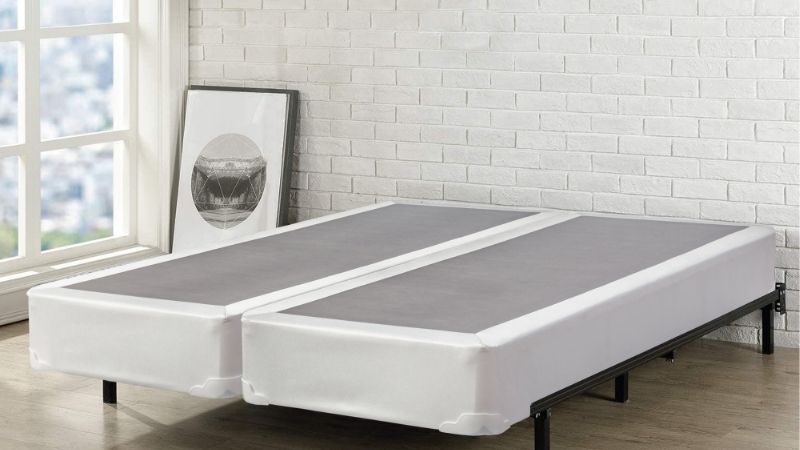
Many products sold as box springs today are actually flat foundations, so understand the difference before pairing one with a mattress. A traditional box spring has internal coils, while a modern flat foundation uses a rigid wood or steel grid, so read the construction, since the two support a mattress differently over the long term.
Choose based on your mattress, since foam and hybrid beds usually want a firm flat foundation rather than a flexing coil box. A flat foundation gives steadier, more even support, so match it to the mattress, because a worn coil box spring can let a modern mattress sag, while a rigid flat foundation holds a steadier plane under it.
The two are not interchangeable, so do not assume a coil box spring and a flat foundation support a bed the same way. A flat foundation suits most current mattresses, so confirm which your mattress requires, because the maker’s support rule, not the word on the label, decides whether a coil box or a flat foundation keeps the warranty valid.
Match Mattress and Foundation Size
A foundation must match the mattress size, and nominal Queen measurements vary slightly between makers, so check the actual figures. The Beautyrest flat foundation lists a Queen low size near 79 by 59.5 inches, so compare the real dimensions, since a foundation close to but not exactly the mattress size is normal and still has to fit your frame.
Measure the frame’s interior against the foundation’s listed size, since the base must drop into the rails to sit level. A foundation sized for a Queen still has to fit the specific frame, so confirm the opening, because a base an inch wider than the frame will not seat properly no matter how well it matches the mattress above it.
Keep the pair within one maker’s ecosystem when possible, since matched systems are sized to work together under one warranty. A Serta mattress with a Serta foundation or a Beautyrest with its flat foundation simplifies compatibility, because mixing a base from one line under a mattress from another can complicate the support terms.
Choose Low-Profile vs Standard-Height Foundation
Foundation height sets how tall the bed sits, and these systems offer low and standard profiles, so pick for the finished height. The Serta foundation lists 6-inch or 9-inch heights and the Beautyrest a 5.5-inch low or 9-inch standard, so choose the profile, since the same mattress sits noticeably lower or higher depending on the base.
Match the profile to the user and the frame, since a low base keeps a thick mattress reachable while a standard base restores a classic height. A 5.5-to-6-inch low foundation suits a tall mattress or a shorter user, so decide the target total, because the finished height is the mattress plus the foundation plus any frame deck beneath it.
Low-profile foundations exist precisely so a thick modern mattress does not create a bed that is hard to climb into. Decide the total height first, then choose the foundation profile to reach it, because swapping a foundation later means handling a bulky piece and lifting the mattress off, so the profile is worth getting right the first time.
Check Center-Support Requirements for Queen Beds
A Queen foundation needs center support to carry the mattress and sleepers, so check that the system provides it. The Serta foundation lists center support to the floor for the Queen size, so confirm your base has it, since a Queen mattress spanning only perimeter rails flexes in the middle without a center leg running down to the floor.
Match the center support to the frame, since some foundations include it and some rely on the bed frame to add a center leg. Confirm one is present, because a Queen-and-up size concentrates weight in the middle, and a foundation or frame without center support can sag over time even with an otherwise well-matched mattress on top.
Center support also protects the warranty, since many makers assume it is present under a Queen bed in their support rules. Verify it before buying, because a missing center leg can void coverage if the mattress sags in the middle, and the support rule for a Queen set generally expects a center leg down to the floor beneath it.
Compatible Mattress and Foundation Options
These are current manufacturer systems that pair a mattress with a matching foundation, compared on foundation type, size, and profile; only three verified ecosystems are listed here, so the fourth section covers what to check before buying a foundation from a different maker rather than inventing a fourth pairing.
| Product | Best For | Key Spec | Watch Out For |
|---|---|---|---|
| Serta Mattress + Serta Foundation | Mainstream matching system | Foundation 6 or 9 in; Queen center support to floor | Confirm mattress-foundation sizes |
| Beautyrest + Beautyrest Flat Foundation | Flat foundation pairing | Queen low ~79×59.5×5.5 in; standard 9 in | Low vs standard profile differ |
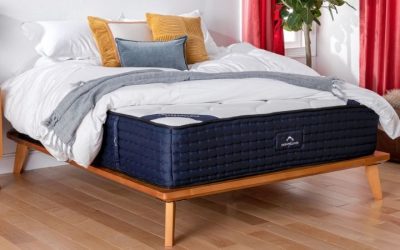
| Nectar Classic + Nectar Foundation | Modern box-spring alternative | Mattress 12 in; foundation 60x80x15 in; 8 in clearance | Two-piece purchase cost |
Best Mainstream Matching System – Serta Mattress + Serta Foundation
The Serta pairing suits buyers who want a mainstream mattress and a matching foundation from one maker. The Serta foundation lists 6-inch or 9-inch heights with center support to the floor for a Queen, so it provides a matched base with the center backing a Queen needs, which makes it the straightforward mainstream matching system here.
The choice of 6-inch or 9-inch heights is the draw, letting you set a low or standard profile, and the Queen center support is built in. It reads as the mainstream pick, so it suits a buyer who wants a matched Serta set, provided you confirm the specific mattress and foundation sizes align and the frame accommodates the base you choose.
The catch is that you still confirm the exact mattress and foundation sizes, since nominal Queen measurements vary slightly. Choose the height for your target finished bed, because the 6-inch and 9-inch versions change the total noticeably, and verify the center support reaches the floor, since that is what keeps a Queen set from sagging.
Best Flat Foundation Pairing – Beautyrest + Beautyrest Flat Foundation
The Beautyrest pairing suits buyers who want a rigid flat foundation rather than a coil box spring under the mattress. The flat foundation lists a Queen low size near 79 by 59.5 by 5.5 inches and a 9-inch standard profile, so it offers a firm, even base in low or standard heights to match a Beautyrest mattress on top.
The flat foundation is the draw, giving steady support without the flex of an old coil box, and the low 5.5-inch option keeps a thick mattress reachable. It reads as the flat-foundation pick, so it suits a foam or hybrid Beautyrest mattress, provided you choose the profile that reaches your target height and matches the frame opening.
The catch is choosing between the 5.5-inch low and 9-inch standard, since they change the finished height by a few inches. Confirm the profile against your mattress and frame, because a low base keeps a thick mattress low while a standard base restores a classic height, and the two are easy to mix up when ordering the set.
Best Modern Box-Spring Alternative – Nectar Classic + Nectar Foundation
The Nectar pairing suits buyers who want a modern foundation that replaces a box spring under a bed-in-a-box mattress. The Nectar Classic lists a 12-inch mattress and the Nectar foundation a 60-by-80-by-15-inch size with 8 inches of clearance when the legs are installed, so it gives a tall, rigid base as a box-spring alternative.
The rigid foundation with installed legs is the draw, providing an even base and under-bed clearance without a coil box spring. It reads as the modern alternative, so it suits a Nectar mattress paired within its own ecosystem, provided you account for the two-piece purchase, since the mattress and foundation are bought and priced separately here.
The catch is cost and height, since the mattress and foundation together are a two-piece purchase and the 15-inch base makes a tall bed. Confirm the finished height suits the user, because the 12-inch mattress on a 15-inch foundation sits high, and budget for both pieces, since the set is two purchases rather than one bundled price.
What to Verify Before Buying a Fourth-Party Foundation
If you look beyond these matched systems to a foundation from a different maker, verify a few things before buying. Confirm the foundation size matches your mattress and frame, since nominal Queen measurements vary, because a base from another maker must still fit the mattress span and drop into your frame’s rails to sit level and support evenly.
Check that the foundation meets your mattress maker’s support rule, since mixing brands can complicate the warranty terms. Read the mattress warranty for its required surface and slat spacing, because a fourth-party foundation only keeps coverage valid if it meets those terms, and a base that does not comply can void the support the warranty assumes.
Confirm the construction and center support, since a rigid flat foundation suits most modern mattresses better than a coil box. Verify it includes center support for a Queen, because a mismatched or unsupported base can sag in the middle, and a foundation from another maker should match the type, size, and support the mattress actually requires.
Frequently Asked Questions
These answers cover what buyers ask most about matched sets, from whether a modern box spring still has coils to how to match sizes, calculate the finished bed height, and check center support for a Queen, since compatibility and total height decide whether a mattress and foundation pair works together.
Is a modern box spring the same as a flat foundation?
Often not, since many products sold as box springs today are actually rigid flat foundations without internal coils. A traditional box spring has coils, while a flat foundation uses a wood or steel grid, so read the construction, because the two support a mattress differently and the word box spring no longer guarantees a coil unit inside.
Choose by your mattress, since foam and hybrid beds usually do better on a firm flat foundation than on a flexing coil box. A flat foundation holds a steadier plane, so match it to the mattress, because a worn coil box can let a modern mattress sag, while a rigid foundation keeps the even support that current mattresses expect.
The two are not interchangeable, so confirm which your mattress requires rather than assuming the label tells you. The maker’s support rule decides it, because a mattress approved for a flat foundation may not be covered on a coil box, and reading the construction and the warranty together is how you pair the right base with the mattress.
How do I match a foundation to my mattress?
Match the size first, since the foundation must suit the mattress and fit your frame, and nominal Queen measurements vary slightly. The Beautyrest flat foundation lists a Queen near 79 by 59.5 inches, so compare the real figures, because a base close to but not exactly the mattress size is normal and still has to drop into the frame.
Keep the pair within one maker’s ecosystem when possible, since matched systems are sized and warrantied to work together. A Serta mattress with a Serta foundation simplifies compatibility, so prefer a matched set, because mixing a base from one line under a mattress from another can complicate the support terms the warranty depends on.
Confirm the support rule and center support, since the foundation must meet the mattress maker’s requirement for a Queen. Read the warranty for the required surface, because matching the size alone is not enough, and the base must also provide the even support and center backing the mattress needs to stay flat and covered over time.
How do I calculate my finished bed height?
Add the mattress height, the foundation height, and any bed frame deck together, since the finished height is that full stack. The mattresses and foundations here vary, so a 12-inch mattress on a 15-inch Nectar foundation sits far taller than a thin mattress on a 5.5-inch low base, which changes how easily you get in and out.
Decide the target height first, then choose the foundation profile to reach it, since low and standard bases differ by inches. A low-profile foundation keeps a thick mattress reachable, so pick the profile for the user, because swapping a foundation later means handling a bulky piece, so getting the height right the first time saves effort.
Remember the frame adds height too, since a foundation often sits on a bed frame rather than the floor. Measure from the floor to the planned mattress top, because the frame deck plus the foundation plus the mattress is the real height, and a tall stack can make a bed hard to climb into even with a low-profile foundation.
Does a Queen mattress and foundation need center support?
Yes; a Queen set needs center support to carry the mattress and sleepers, since the span flexes in the middle without it. The Serta foundation lists center support to the floor for a Queen, so confirm your system provides it, because a Queen mattress on only perimeter rails sags in the middle over time without a center leg beneath it.
Confirm whether the foundation includes center support or relies on the bed frame to add a center leg, since systems differ. Check that one is present, because a Queen-and-up size concentrates weight centrally, and a foundation or frame without center support can sag even with an otherwise well-matched mattress and foundation on top of it.
Center support also protects the warranty, since many makers assume it is present under a Queen in their support rules. Verify it before buying, because a missing center leg can void coverage if the mattress sags centrally, and the support rule for a Queen set generally expects a center leg running down to the floor beneath the base.
Final Thoughts
Choosing a boxspring and mattress pair comes down to the foundation type, a matched size, the profile, and center support for a Queen. The Serta system leads for a mainstream matched set, the Beautyrest for a rigid flat foundation, and the Nectar for a modern box-spring alternative, so confirm compatibility and the finished height first.