Key takeaways
- A big and tall mattress is defined by a published weight capacity and a reinforced support core, not by firmness marketing, so the rating comes first. This guide compares four current mattresses on per-sleeper and combined capacity, support construction, and…
A big and tall mattress is defined by a published weight capacity and a reinforced support core, not by firmness marketing, so the rating comes first. This guide compares four current mattresses on per-sleeper and combined capacity, support construction, and height so the bed holds up.
As an Amazon Associate we earn from qualifying purchases.
By KK Home Furnishings Editorial Team
How to Choose a Big and Tall Mattress
Capacity leads the decision here, so these criteria stay concrete: requiring a published weight capacity, comparing per-sleeper and combined ratings, recognizing that the support core matters more than firmness labels alone, and accounting for the mattress height and the finished bed height for easy use.
Require a Published Weight Capacity
A mattress built for larger sleepers should publish a weight capacity, so treat a stated rating as the first requirement. The Big Fig lists 600 pounds per sleeper and the Helix Plus 500, so look for the figure, since a mattress without a published capacity leaves you guessing about whether its support core is built for higher weight.
Match the rating to the heaviest user, since the capacity is what signals a reinforced build rather than a standard one. A stated 500-to-600-pound per-sleeper figure points to stronger coils and foams, so prefer a published rating, because a mattress marketed as supportive without a capacity number has not documented that it is built for heavier use.
Treat a missing capacity as a gap to confirm, since even a well-reviewed mattress may not state a hard maximum. The WinkBed Plus, for example, targets heavier users but does not publish an exact maximum in the retrieved page, so verify the figure, because a target audience is not the same as a documented, reinforced weight rating.
Compare Per-Sleeper and Combined Capacity
Weight capacity comes as a per-sleeper figure and a combined total, and both matter for a shared bed. The Big Fig lists 600 per sleeper and 1200 combined, while the Helix Plus lists 500 per sleeper and 1000 combined, so read both, since one person’s weight and a couple’s total weight test the mattress in different ways.
Match the ratings to who sleeps there, since a couple’s combined weight must stay within the total rating. A couple at, say, 350 and 300 pounds totals 650, within the Big Fig’s 1200 and the Helix’s 1000 combined ratings, so check the total, because a per-sleeper figure alone does not confirm the mattress suits two heavier adults.
Remember that capacity is a structural check, not a comfort guarantee, since staying within the rating does not mean the feel suits you. A mattress can hold the weight yet feel too firm or soft, so use the rating to shortlist, because it confirms the build is strong enough, while comfort still depends on the feel and your sleep position.
Support Core Matters More Than Firmness Labels Alone
The support core is what carries weight over time, so it matters more than a firmness label for a heavier sleeper. A reinforced coil or dense foam core resists sagging, so look past the firmness word, since a mattress rated for higher weight relies on its core construction, not just a firm surface, to hold up under daily load.
Match the core to your weight and position, since a heavier sleeper sinks further and needs more support beneath the comfort layers. A stronger core keeps the hips from bottoming out, so prioritize it, because a firm surface over a weak core still lets a heavier sleeper sink, and the core is what prevents the sagging that shortens a mattress’s life.
Edge support is part of the core story, since a reinforced perimeter helps with sitting and getting in and out of bed. A stronger edge resists collapse under weight, so check for it, because a heavier user benefits from a firm edge when rising, and a weak perimeter is a common early failure point on a mattress carrying higher loads.
Account for Mattress Height and Bed Height
Height matters for a heavier sleeper, since a taller mattress often carries more support material and sits higher on the base. The Big Fig lists heights around 11.5 to 13 inches across its Firm, Classic, and Luxe models, so compare them, since a taller build can mean a more substantial core, though height alone does not guarantee strength.
Match the height to the user and the base, since a taller mattress raises the finished bed height for easier rising. Add the mattress to the foundation to find the total, because a higher bed can be easier to get out of for some users, while a very tall stack may be harder, so plan the height around who uses the bed.
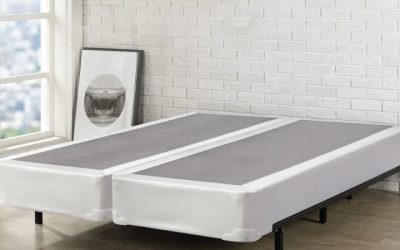
Remember the foundation must also carry the load, since the mattress capacity does not cover the base beneath it. Confirm the frame and foundation are rated for the combined weight, because a mattress rated for 1200 pounds on a weak foundation still fails, and the base capacity is a separate check that a heavier setup must pass.
Top Picks
These four are current mattresses compared on published weight capacity and support construction rather than firmness marketing; three state clear capacities and one leaves its hard maximum unpublished, so it is placed as a candidate, and you should confirm the figure and the foundation rating before relying on any one.
| Product | Best For | Key Spec | Watch Out For |
|---|---|---|---|
| Big Fig | Highest published capacity | 600 lb/sleeper; 1200 lb combined; King ~13 in | Premium tier price |
| Helix Plus | Strong published 1,000-lb alternative | 500 lb/sleeper; 1000 lb combined | Confirm current configuration |
| Saatva HD | Premium heavy-duty option | 500 lb/sleeper; targets 300-500 lb sleepers | Premium tier |
| WinkBed Plus | Plus-size candidate | Targets 250+ lb/person; King 76x80x14.5 in | Hard maximum not published |
Highest Published Capacity – Big Fig
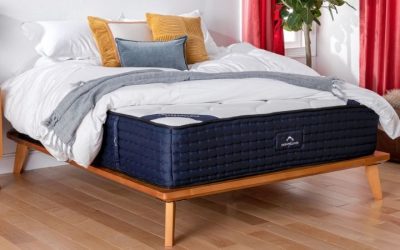
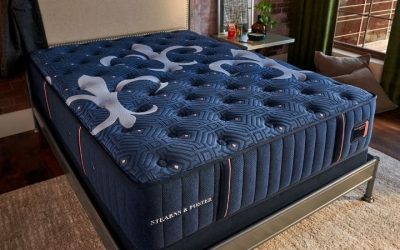
The Big Fig suits sleepers who want the highest published capacity in this group, built specifically for heavier use. It lists 600 pounds per sleeper and 1200 pounds combined, with King heights around 11.5 to 13 inches across its models, so it carries the strongest stated rating here along with a reinforced build for higher weight.
The 600-per-sleeper and 1200-combined ratings are the standout, giving the most structural headroom for a heavier individual or couple. The reinforced core suits daily high-load use, so it reads as the pick when capacity leads, provided the premium price fits the budget, since a purpose-built heavy-duty mattress sits at the top of this tier.
The catch is price, since the Big Fig sits in the premium tier, so weigh the cost against the capacity you need. Confirm your foundation is rated for the combined weight too, because the mattress rating does not cover the base, and a 1200-pound-rated mattress on an under-rated frame still fails at the weakest point in the setup.
Strong Published 1,000-lb Alternative – Helix Plus
The Helix Plus fits buyers who want a strong published capacity at a lower price than the Big Fig. It lists 500 pounds per sleeper and 1000 pounds combined, so it offers a documented heavy-duty rating with real headroom for most heavier individuals and couples, which makes it the strong alternative below the top-capacity option.
The 1000-pound combined rating is the draw, covering many couples with margin while costing less than the Big Fig. It reads as the alternative pick when you want a published capacity without the premium price, so it suits a heavier couple whose combined weight sits comfortably under 1000 pounds with room to spare for daily use.
The catch is that its 500-per-sleeper figure is lower than the Big Fig’s 600, so a single very heavy sleeper has less individual margin. Confirm the current configuration and promo, since these change, and check the foundation rating, because the mattress capacity is only half the setup, and the base must carry the load as well.
Premium Heavy-Duty Option – Saatva HD
The Saatva HD suits buyers who want a premium heavy-duty mattress aimed at a specific weight range. It lists 500 pounds per sleeper and is built for sleepers in the 300-to-500-pound range on the brand’s own feel scale, so it targets heavier users with a premium construction rather than a budget build for occasional heavier use.
The 500-per-sleeper rating and premium build are the draw, pairing a documented capacity with higher-end materials for the target weight range. It reads as the premium pick, so it suits a heavier sleeper who wants a luxury feel with real capacity, provided the premium price fits, since the HD is positioned above the value options here.
The catch is the premium price and the per-sleeper focus, so confirm it suits your weight and, for couples, the combined load. Check the foundation rating as well, because the mattress capacity does not cover the base, and a premium mattress still needs a frame and foundation rated for the combined weight to perform as intended.
Plus-Size Candidate With Strong Construction – WinkBed Plus
The WinkBed Plus is a candidate for heavier sleepers, built for the plus-size market but with an unpublished hard maximum. It targets users around 250 pounds and up per person and lists a King size of 76 by 80 by 14.5 inches, so it is a strong-construction option whose exact capacity ceiling is not stated in the retrieved page.
The plus-size focus and 14.5-inch King build are the draw, pointing to a reinforced construction aimed at heavier sleepers. It reads as a candidate rather than a verified-capacity pick, so it suits a buyer drawn to its build, provided you confirm the hard maximum with the maker, since the decisive weight figure is missing from the listing here.
The catch is exactly that missing maximum, so do not assume a specific capacity without confirming it directly with WinkBeds. Verify the hard weight rating before relying on it, and check the foundation capacity too, because without a published mattress maximum you cannot confirm it suits a given sleeper or couple on structural grounds alone.
Frequently Asked Questions
These answers cover what heavier sleepers ask most, from what weight capacity to look for to whether per-sleeper or combined ratings matter more, whether the bed frame must match the mattress capacity, and what firmness suits a heavier body, with capacity treated as a structural check, not a comfort promise.
What weight capacity should a mattress have?
Look for a published per-sleeper and combined capacity that covers the heaviest use, since a stated rating signals a reinforced build. The picks here list 500 to 600 pounds per sleeper and 1000 to 1200 combined, so match the figures to the users, because a mattress without a published capacity has not documented that it is built for higher weight.
Match the rating to the heaviest individual and, for couples, the combined total, since both test the mattress differently. A single heavier sleeper needs enough per-sleeper margin while a couple must stay within the combined total, so read both, because a per-sleeper figure alone does not confirm the mattress suits two heavier adults sharing it.
Treat a missing capacity as a reason to verify rather than assume, since some mattresses target heavier users without a hard maximum. Confirm the figure with the maker, because a target audience is not a documented rating, and for structural confidence a published capacity is what tells you the core is built for the weight it will carry.
Is per-sleeper or combined capacity more important?
Both matter, since the per-sleeper figure governs a single heavier user and the combined total governs a couple. The Big Fig lists 600 per sleeper and 1200 combined, so a solo heavier sleeper looks at the per-sleeper number while a couple checks the combined, because one person and two people load the mattress in different ways.
Match the relevant figure to your situation, since a single sleeper near the per-sleeper limit and a couple near the combined limit face different margins. For a couple at 350 and 300 pounds totaling 650, the combined rating is the check, so read the total, because staying under it confirms the structure can carry both sleepers together.
Remember capacity is structural, not a comfort measure, so staying within the rating does not guarantee the feel suits you. Use the per-sleeper and combined figures to shortlist, because they confirm the build is strong enough, while comfort depends on the firmness, the support core, and your sleep position rather than the capacity figures alone.
Does the bed frame need to match the mattress capacity?
Yes; the frame and foundation must carry the combined weight too, since the mattress rating does not cover the base beneath it. A mattress rated for 1200 pounds on an under-rated frame still fails, so check the base, because the whole setup is only as strong as its weakest component, and the foundation is a separate capacity check entirely.
Match the foundation and frame ratings to the combined sleeper weight, since a heavy-duty mattress needs a heavy-duty base. Confirm the frame’s capacity and center support, because a Queen or King base carrying heavier sleepers needs a center leg to the floor, and a weak or unsupported frame sags even under a well-rated mattress over time.
Confirm the support surface meets the mattress warranty as well, since the wrong base can void coverage. Read the mattress maker’s foundation rule, because a reinforced mattress still requires an approved, adequately rated base, and matching both the capacity and the warranty’s support requirement is what keeps a heavy-duty setup sound over the years.
What firmness suits a heavier sleeper?
It depends on your position and preference, but a heavier sleeper generally benefits from a supportive core more than any particular firmness label. A stronger core keeps the hips from sinking too far, so prioritize support, since a heavier body compresses the comfort layers more, and the core prevents bottoming out regardless of the surface feel.
Match the feel to your sleep position, since side sleepers want give at the shoulder and hip while back and stomach sleepers want firmer support. A heavier side sleeper still needs a strong core beneath a contouring top, so weigh both, because the right firmness balances surface comfort with the support a heavier body needs underneath.
Use a sleep trial to confirm the feel, since firmness is subjective and shifts with body weight on the same mattress. Test it over several weeks, because a heavier sleeper may find a labeled medium-firm reads softer than expected, and the trial, not the label, is what confirms a mattress feels right for your body and position over time.
Final Thoughts
Choosing a big and tall mattress comes down to a published weight capacity, the per-sleeper and combined ratings, a reinforced core, and a matched base. The Big Fig leads on capacity, the Helix Plus is the 1,000-pound alternative, the Saatva HD is the premium pick, and the WinkBed Plus is a candidate pending its maximum, so confirm the figures first.