Key takeaways
- The herman miller sayl desk chair is easy to spot and hard to compare, because its price and its adjustments vary a lot by configuration. This guide puts the Sayl first, then lines up three same-tier chairs by the numbers…
The herman miller sayl desk chair is easy to spot and hard to compare, because its price and its adjustments vary a lot by configuration. This guide puts the Sayl first, then lines up three same-tier chairs by the numbers that actually decide a buy — seat-height and seat-depth travel, weight capacity and warranty.
As an Amazon Associate we earn from qualifying purchases.
By KK Home Furnishings Editorial Team
How to Choose Between the Sayl and Its Rivals
Choosing at this tier is less about brand and more about which adjustments reach your body and how long the chair is backed. For the Sayl and its rivals, weigh four published figures: how far the seat height moves, whether the seat depth adjusts, the weight capacity, and the warranty that covers the parts most likely to wear.
Seat-height range and travel
Seat height decides whether your feet sit flat and your thighs stay level, and travel tells you how much range you get. The Sayl’s Task configuration moves across 16 to 20.5 inches — about 4.5 inches of travel — while Steelcase’s Series 1 spans 16.5 to 21.5 inches, roughly 5.0 inches, a bit more reach for very tall or short sitters.
Match the range to the people using it. A single tall user may need the upper end a Series 1 reaches, while a shared desk benefits from the widest travel so each person lands flat-footed. Check your seated height against the published range before buying, since a chair maxed at its lowest setting still leaves short sitters reaching.
Height travel also affects daily wear: the cylinder and lift are the parts that fail first on any task chair, so more frequent height changes put more cycles on them. A chair whose maker sells a replacement gas cylinder is cheaper to keep than one you replace whole when the lift finally sinks over the years.
Seat-depth adjustment
Seat depth sets how much thigh support you get, and not every chair adjusts it. The Sayl Task offers an adjustable seat depth from about 16 to 18 inches — around 2.0 inches of travel — while the Branch Pro and some rivals fix the depth, so longer or shorter legs have to live with one position rather than tuning it to fit.
Depth matters most if your legs are longer or shorter than average, since the goal is two to three fingers between the seat edge and the back of your knees. A deeper setting suits long thighs; a shallower one suits shorter legs. Measure from hip to knee and compare it to the adjustable range rather than trusting a single fixed seat.
Adjustable depth adds a mechanism that can loosen, so check that it locks firmly and stays put under daily use. The trade-off is real but usually worth it for shared chairs or unusual proportions; for an average-height single user, a well-sized fixed seat can be fine and has one less part to wear over a decade.
Weight capacity and frame
Weight capacity is a frame-strength figure that covers the sitter, not added gear, and it varies more than the price suggests. The Sayl Task and the Herman Miller Verus both list 350 pounds, while the Branch Pro is rated to 275 — so heavier sitters get more margin from the Herman Miller pair and should treat a rating near their weight as a floor.
Capacity pairs with build quality: a sturdy base and a good cylinder matter as much as the number. If you sit near a chair’s limit, the recline mechanism and cylinder sag first, so choose a rating comfortably above your weight rather than at the edge, especially for all-day use at a desk that sees heavy daily hours.
Frame strength also shapes longevity. A chair rated well above your weight runs its parts below their limit and lasts longer, and brand-backed models make replacement bases and cylinders easier to source than marketplace-only chairs. Over years, serviceable parts are what separate a chair you keep from one you bin at the first failure.
Warranty and long-term support
Warranty length and structure separate a long-term chair from a disposable one, and this is where the Sayl stands out: Herman Miller backs it with a 12-year warranty, against 7 years on the Branch Pro and shorter terms on many task chairs. The useful detail is whether coverage splits the frame from the moving parts.
Long coverage lowers the real cost of ownership, because the parts that fail — cylinders, casters, recline tension — are covered for longer. Confirm what the warranty includes and whether the brand sells spares, since a 12-year term means little if the specific worn part is not available to order when you eventually need it.
Support also means parts you can actually buy. Herman Miller and Steelcase both back their chairs with service networks and replaceable components, which is why they outlast cheaper chairs in daily use. Weigh that backing against the premium price, since the warranty and parts are a large part of what the tier buys you over a decade.
Top Picks
These four put the herman miller sayl desk chair alongside three same-tier rivals, ranked by the adjustments and backing that decide a long-term buy rather than by looks. Office chairs at this level are commonly tested to the BIFMA X5.1 durability standard, a quick way to compare build quality across brands.
| Product | Best For | Key Spec | Watch Out For |
|---|---|---|---|
| Herman Miller Sayl (Task) | Best overall, the Sayl itself | Seat height 16-20.5 in (4.5-in travel); seat depth 16-18 in (2.0-in travel); 350-lb; 12-yr warranty | Premium tier; Task and Gaming SKUs differ — confirm the config |
| Steelcase Series 1 | Best for adjustment range | Seat height 16.5-21.5 in (5.0-in travel); lumbar-height travel 2.25 in; seat depth 15.5-17.75 in | Premium tier; firmer seat than some |
| Herman Miller Verus | Best same-brand alternative | 350-lb capacity; seat height 16.75-20.75 in; seat depth 16-18.75 in (product page) | Maker’s pages disagree on seat figures — confirm config |
| Branch Ergonomic Chair Pro | Best lower-tier alternative | 25 x 24 in footprint; 275-lb; two-way lumbar; 7-year warranty | Two-way lumbar adjusts depth, not height |
Herman Miller Sayl — Best Overall, the Sayl Itself
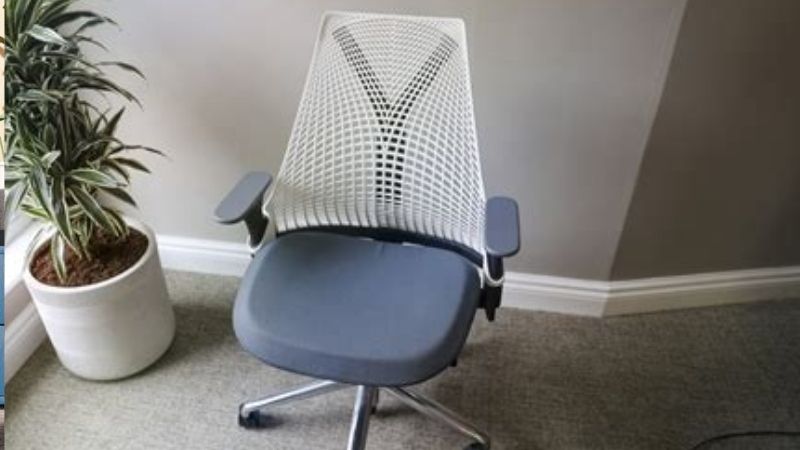
The Herman Miller Sayl is the chair this guide is built around, and in its Task configuration it backs its looks with real numbers: a 16-to-20.5-inch seat height (about 4.5 inches of travel), an adjustable 16-to-18-inch seat depth, a 350-pound rating and a 12-year warranty. It sits firmly in the premium tier for task chairs.
Its draw is the combination of adjustable depth, high capacity and the longest warranty here, wrapped in the distinctive frameless back. The 350-pound rating suits heavier sitters, and the adjustable seat depth helps longer or shorter legs — confirm you are pricing the Task model, since trims change what adjustments are included on it.
The honest drawbacks are price and configuration confusion: the Sayl spans a wide premium range depending on options, and the Task and Gaming versions are different SKUs with different seat-depth specs that should not be mixed. Lock the exact configuration before buying, and budget for the arms and lumbar options you actually want.
Steelcase Series 1 — Best for Adjustment Range
Steelcase’s Series 1 is the pick when adjustment range matters most: it moves across 16.5 to 21.5 inches of seat height — about 5.0 inches of travel, a touch more than the Sayl — plus 2.25 inches of lumbar-height travel and a 15.5-to-17.75-inch adjustable seat depth. It also sits in the premium tier, often below the Sayl.
That wide travel suits very tall or short sitters and shared desks where several people need to land flat-footed, and the adjustable lumbar height helps place the back curve precisely. It ships largely pre-assembled, so setup is mostly the base and casters, and Steelcase’s parts support is as strong as Herman Miller’s over time.
The trade-offs are feel and firmness: some sitters find the Series 1 seat firmer than plush task chairs, and it lacks the Sayl’s signature look if style is part of the decision. Over years, the recline tension and casters are the usual wear points, so confirm those parts are available separately before committing to it.
Herman Miller Verus — Best Same-Brand Alternative
The Herman Miller Verus is the same-brand alternative to consider if you want HM backing at a different look and price: its product page lists a 350-pound rating, a 16.75-to-20.75-inch seat height and a 16-to-18.75-inch seat depth. That matches the Sayl’s capacity while offering a more conventional framed back. It sits in the premium tier.
The appeal is Herman Miller’s warranty and parts network in a chair that may price below the Sayl depending on options, with the same high capacity for heavier sitters. The deeper seat suits longer thighs, and buying within one brand keeps service and replacement parts consistent if you already own HM chairs at other desks.
The catch is documentation: Herman Miller’s spec sheet lists different seat-height and depth figures than the product page, so treat the numbers as approximate and confirm the exact configuration you order. As with the Sayl, lock the seat-depth and lumbar options on the page you actually buy from before checkout.
Branch Ergonomic Chair Pro — Best Lower-Tier Alternative
The Branch Ergonomic Chair Pro is the lower-tier alternative for buyers who want documented specs without the premium outlay: a 25-by-24-inch footprint, a 275-pound rating, a two-way lumbar pad and a seven-year warranty. It lands in the mid-to-upper tier, below the Herman Miller and Steelcase chairs here on price.
Its compact footprint fits tighter desks than a full executive chair, and the seven-year warranty is generous for the tier, which narrows the real cost gap to the premium picks. Measure your desk return first, since the armrests set the minimum clearance, and confirm the 275-pound rating suits you, as it covers the sitter alone.
The limits are capacity and lumbar range: its two-way lumbar adjusts depth rather than height, so if the pad does not line up with your spine you cannot raise it, and its 275-pound rating trails the 350-pound Herman Miller chairs. For very tall, very short or heavier sitters, the premium picks leave more margin over time.
Frequently Asked Questions
A few questions come up repeatedly about the Sayl, usually around whether it is worth the premium, how its versions differ, and how it adjusts. The answers below lean on published configuration specs rather than marketing, since fit is personal and no chair treats a medical condition on its own.
Is the Herman Miller Sayl worth the premium?
It depends on fit and how long you will keep it. The Sayl’s premium buys a 12-year warranty, a 350-pound rating and adjustable seat depth, which lower long-term cost and suit heavier or longer-legged sitters. But a cheaper chair that fits your body can feel better than a premium one that does not, so match specs to you first.
What changes the answer is use and longevity. For all-day, multi-year use, the warranty and parts support spread the cost and reduce the risk of replacing a failed chair; for light or short-term use, a mid-tier chair like the Branch Pro may serve just as well. None of these chairs treats back pain — see a clinician for that.
Where the premium reliably pays off is service: Herman Miller sells replacement parts and honors a long warranty, so the chair stays in use rather than landing in a skip. Before upgrading, confirm the seat height actually reaches your elbow at the desk, since the real problem is sometimes desk height rather than the chair.
What’s the difference between Sayl Task and Sayl Gaming?
They are different SKUs with different specs, so do not mix their numbers. The Task version is the office configuration this guide locks to, with its own seat-depth and adjustment range, while the Gaming version is tuned differently; combining their seat-depth figures leads to buying a chair that adjusts differently than you expect.
Which you want depends on use and the options bundled in. The Task model is built around desk work and the adjustments that suit it, and trims change whether features like adjustable arms or a specific lumbar option are included. Read the exact configuration rather than assuming all Sayl listings share one spec sheet.
Before buying, confirm you are pricing the version whose specs you compared, since the same name can cover meaningfully different chairs. Check the seat-depth range, the arm option and the lumbar choice on the listing, because those details decide whether the chair fits the way the headline figures suggest it will.
Does the Sayl have lumbar support, and how adjustable is it?
The Sayl offers back support through its suspension back, and lumbar support is a configuration choice rather than a single fixed feature, so what you get depends on the options you select. Its adjustable seat depth of about 2.0 inches also plays into support by positioning your hips correctly against the backrest.
How much adjustment you need depends on your torso and how you sit. Taller or shorter sitters benefit most from added back-support options, while average-height users may find the standard back enough. Because support options vary by configuration, confirm which lumbar choice a listing includes before assuming the chair adjusts the way you want it to.
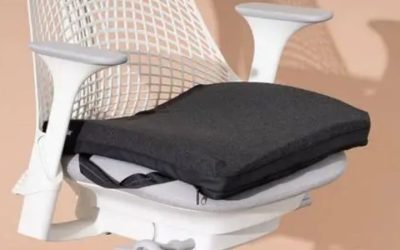
If the configured support does not reach your lower back, a separate lumbar cushion is a cheaper fix than a different chair, though it adds depth you lose at the seat front. Compare the back-support option on the exact Sayl you are buying against where your spine actually curves before paying for a feature you may not use.
How long does the Sayl last, and what does the warranty cover?
Herman Miller backs the Sayl with a 12-year warranty, among the longest in this group against the Branch Pro’s seven years, which signals how long the chair is built to last. The useful detail is what the term covers — typically the frame and the moving parts that wear, like the cylinder and mechanism, over normal use.
What decides real lifespan is the parts that cycle most: the gas cylinder, casters and recline tension. A long warranty helps because those are exactly the components likely to need attention, and Herman Miller’s parts network means a worn piece can often be replaced rather than forcing a whole new chair down the line.
To get the most from it, confirm the warranty terms for your region and keep proof of purchase, since coverage and claim steps vary. Check whether the specific parts you might replace are sold separately, because a long term is only as useful as the availability of the component that eventually wears out on you.
Final Thoughts
The right call on the herman miller sayl desk chair comes down to fit and configuration, not the badge: lock the Task model’s seat-height and seat-depth range to your body, weigh its 12-year warranty against the lower-tier Branch Pro, and confirm the exact options before buying, since the Sayl’s price and adjustments shift with every trim.