A small wardrobe should be judged by the floor it actually covers, not by width alone. A 32-inch unit that is only 17 inches deep can take less floor than a narrower but deeper cabinet, so this guide compares four current wardrobes by footprint in square feet and what each stores for that space.
As an Amazon Associate we earn from qualifying purchases.
By KK Home Furnishings Editorial Team
How to Choose a Small Wardrobe
A small wardrobe is best compared on footprint and the capacity you get for it, not on a single dimension. Height, storage layout and anchoring complete the picture. These four range from about 3.51 to 4.67 square feet of floor and 69.25 to 73.125 inches tall, so weigh floor area against what you need to store.
Compare Floor Footprint, Not Width Alone
Floor footprint, width times depth, is the honest measure of how much room a small wardrobe eats. Here the IKEA GURSKEN covers about 3.51 square feet, the Hodedah HI29 roughly 3.78, the Sauder HomePlus 4.24 and the IKEA RAKKESTAD 4.67, so the largest takes a third more floor than the smallest.
Width alone misleads, because depth varies. The Hodedah is 32 inches wide but only about 17 deep, so it covers less floor than a narrower cabinet that is deeper. Measure both dimensions and multiply before deciding which unit is genuinely smaller, since the widest front is not always the biggest footprint.
Keep close footprints in perspective. The GURSKEN and Hodedah differ by only about 7.6 percent, so neither is dramatically smaller; compare them on storage and configuration instead. Note too that the Hodedah’s own product page lists a conflicting depth, so use the manual and retailer figure of about 17 inches for any footprint math.
Use Height Without Blocking the Room
Height lets a small wardrobe store more without widening its footprint, so going taller is often smarter than going wider in a tight room. These units stand 69.25 to 73.125 inches, tall enough for full-length hanging yet short of blocking light near a window or feeling overbearing in a small bedroom.
Use the vertical space the room allows. A taller cabinet adds a shelf above the rail or a longer hanging section without touching more floor, which is exactly the trade you want when square footage is scarce. Measure your ceiling and any sloped sections before assuming the tallest option fits upright against the wall.
Balance height against the room’s feel and the lift at assembly. A near-73-inch flat-pack unit needs clearance to tilt upright, and in a very small room a towering cabinet can dominate. Choose a height that uses the walls efficiently while leaving the room workable, rather than defaulting to the tallest available.
Check Hanging Space Against Folded Storage
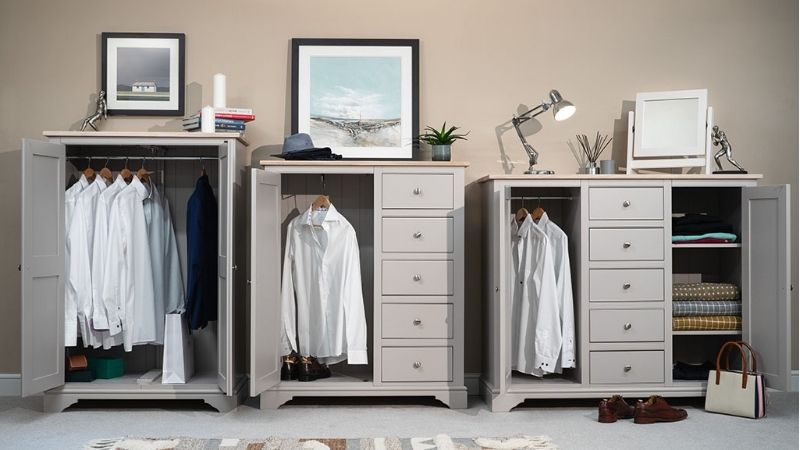
Capacity for the footprint is what separates these picks. The GURSKEN keeps it minimal with one rail and a shelf, the Hodedah adds a 29-inch clothing bar plus two drawers, the HomePlus combines a rod with two shelves and a drawer, and the RAKKESTAD offers a rail IKEA estimates holds about 20 shirts.
Decide your mix before choosing. If you fold a lot, the drawer-equipped Hodedah or HomePlus make a small footprint work harder; if you mostly hang, the simpler rail-and-shelf units suffice. The right layout turns a compact cabinet into real storage, while the wrong one wastes the floor you were trying to save.
Treat manufacturer capacity estimates as brand-specific, not universal. IKEA’s shirt count for the RAKKESTAD is its own figure and should not be applied to the Hodedah or Sauder units, which do not publish the same metric. The Hodedah’s drawers are each rated to about 20 pounds, so load them for folded clothes, not heavy items.
Plan Wall Anchoring Before Assembly
A tall small wardrobe is still a tip-over risk, so anchoring is required. The GURSKEN includes a safety fitting, the RAKKESTAD requires anchoring and is designed to meet the US federal stability standard, the HomePlus has a tip restraint and cites ASTM F2057-23, and the Hodedah’s manual warns about tipping.
A mandatory federal stability standard based on ASTM F2057-23 (16 CFR 1261) covers many such clothing storage units made from September 1, 2023 [CPSC, 2023], so fit the anchor during assembly. Where a unit’s restraint hardware inclusion is not verified, as with the Hodedah here, add a suitable kit rather than skipping the step.
Being small or narrow does not make a cabinet safe; a slim, tall unit can tip just as readily once loaded. Fix the anchor into a stud or a rated drywall anchor, follow each model’s own instructions, and never describe a wardrobe as tip-proof, since stability depends entirely on correct installation.
Top Picks
These four cover the realistic span of small wardrobe buyers, from a minimal sub-4-square-foot cabinet to a slightly larger mixed-storage unit. Each lists at least two hard specs and its anchoring status; pricing runs across budget to mid tiers, so confirm the current price, finish and included hardware before you order.
| Product | Best For | Key Spec | Watch Out For |
|---|---|---|---|
| IKEA GURSKEN | Best Overall | about 3.51 sq ft footprint | limited internal configuration |
| Hodedah HI29 | Small footprint + drawers | about 3.78 sq ft; 2 drawers | product page has a depth conflict |
| Sauder HomePlus | Mixed storage | 4.24 sq ft; rod + shelves + drawer | larger footprint than the first two |
| IKEA RAKKESTAD | Simple hanging capacity | rail holds about 20 shirts | largest footprint in the shortlist |
IKEA GURSKEN — Best Overall
The GURSKEN leads for the smallest honest footprint with safety included. At 23.375 inches wide by 21.625 deep by 73.125 high, it covers about 3.51 square feet, offers one clothes rail and a stationary shelf, and ships with a safety fitting for anchoring. It sits in the budget tier.
Its tiny footprint fits a box room, alcove or shared space where larger wardrobes crowd the floor, and the included fitting means anchoring is covered. The tall body uses vertical space for full hanging without widening, making it an efficient first wardrobe or a supplementary unit in a tight bedroom.
The trade-off is minimal internal configuration: a single rail and shelf fill quickly, and interior organizers are extra. The particleboard core dislikes damp, so keep it off a wet wall, and fit the included wall restraint during assembly rather than relying on its small size to keep it stable once loaded.
Hodedah HI29 — Best for Small Footprint With Drawers
The Hodedah suits buyers wanting folded storage in a compact unit. Measured by the manual and retailer at about 32 inches wide by 17 deep by 72 high, it covers roughly 3.78 square feet, with a 29-inch clothing bar, a rack depth around 15.5 inches, and two drawers each rated to 20 pounds. It sits in the budget-to-mid tier.
Its shallow 17-inch depth keeps the footprint small despite the 32-inch width, and the two drawers add folded storage a rail-only cabinet lacks. For a small room where you want to both hang and fold without a separate dresser, that combination in under four square feet is genuinely useful.
Two cautions apply. The Hodedah product page lists a conflicting depth, so use the manual and retailer figure of about 17 inches for any footprint math, not the page’s larger number. Its restraint hardware inclusion was not verified here, so add an anti-tip kit, since the manual itself warns about tipping.
Sauder HomePlus — Best for Mixed Storage
The HomePlus is the pick when you want hanging, shelves and a drawer together. At 29.06 inches wide by 21.024 deep by 71.26 high, it covers about 4.24 square feet, pairing a garment rod with two shelves and a drawer, including an adjustable shelf, plus a tip restraint, and it cites ASTM F2057-23. It sits in the mid tier.
The flexible interior, with an adjustable shelf and a drawer, makes it the most configurable here, suiting a guest room or a wardrobe that must do several jobs. The published safety standard and included restraint are reassuring, and the layout handles a realistic mix of hanging and folded clothes in a modest space.
The trade-off is a larger footprint than the first two picks, so it is less suited to the very tightest rooms. It ships ready to assemble, so plan an evening to build, and fit the tip restraint during setup, since even a mid-size wardrobe needs anchoring to meet the stability standard.
IKEA RAKKESTAD — Best for Simple Hanging Capacity
The RAKKESTAD is the straightforward hanging choice. At 31.125 inches wide by 21.625 deep by 69.25 high, it covers about 4.67 square feet, with a rail IKEA estimates holds around 20 shirts plus a shelf, and it requires anchoring and is designed to meet the US federal stability standard. It sits in the budget tier.
For a wardrobe that mostly hangs clothes, it offers a full rail and shelf at a low price, and the stated stability design is reassuring. Its lower 69-inch height suits rooms with a sloped ceiling or a window above, where taller cabinets would not fit cleanly against the wall.
The caveat is that it has the largest footprint of these four, so it is the least space-efficient on floor area. Treat the 20-shirt estimate as IKEA’s own figure, not a cross-brand standard, and anchor it as required during assembly, since its simple rail-and-shelf layout offers little folded storage on its own.
Frequently Asked Questions
Small wardrobes raise questions about just how compact they can be and what fits inside. The answers below use the published footprints of these four units and avoid absolute rules, so you can test them against your own room and wardrobe before choosing which compact cabinet actually fits.
How small can a freestanding wardrobe be?
Quite small: these four range from about 3.51 to 4.67 square feet of floor, with the GURSKEN under 3.6. A compact wardrobe can occupy little more than a doorway’s worth of floor while standing over six feet tall for full-length hanging. The real limit is what you need to store, since a smaller cabinet holds correspondingly less inside.
The limit is really what you need to store, since a smaller cabinet holds less. Footprint is set by width times depth, so a shallow, moderately wide unit can cover less floor than a very narrow but deep one, which is why measuring both dimensions beats trusting the width or the small label.
To find the smallest that works for you, list what must fit, then match it to a footprint. A minimal rail-and-shelf unit like the GURSKEN maximizes compactness, while adding drawers or shelves raises the footprint a little; choose the smallest layout that still holds your clothes rather than the smallest cabinet outright.
Is a narrow wardrobe always the smallest?
No. Width is only half the footprint, so a narrow cabinet that is very deep can cover more floor than a wider but shallow one. The Hodedah, for instance, is 32 inches wide yet only about 17 deep, giving it a smaller footprint than some narrower units.
Because footprint is width times depth, the two dimensions trade off. A slim front looks compact, but if the cabinet is deep it still projects into the room and covers substantial floor, so judging by width alone can lead you to a unit that actually takes more space than a wider, shallower alternative.
Multiply width by depth for each option and compare the square footage to see which is genuinely smaller. Where two units are within a few percent, as several here are, treat them as effectively tied on size and decide on storage layout, height or price instead of chasing a meaningless fraction of a square foot.
Do small wardrobes need wall anchoring?
Yes. Being small does not remove the tip-over risk, since these units are still tall and become top-heavy when loaded. A mandatory federal stability standard based on ASTM F2057-23 (16 CFR 1261) covers many such clothing storage units made from September 1, 2023 [CPSC, 2023].
A slim, tall cabinet can actually tip more readily if weight shifts or a child climbs it, so anchoring matters as much here as on a large wardrobe. The GURSKEN includes a fitting, the RAKKESTAD and HomePlus cite stability provisions, while the Hodedah’s hardware inclusion was unverified, so plan to add a kit there.
Fix the anchor into a stud or a rated drywall anchor during assembly, following each model’s instructions rather than assuming its size keeps it safe. If a unit omits the hardware, buy a suitable anti-tip kit, because an unsecured wardrobe is exactly the hazard the stability standard addresses in homes with children.
How much hanging storage fits in a compact wardrobe?
It depends on the rail length and layout, and you should use published estimates only where given. IKEA puts the RAKKESTAD rail at about 20 shirts, but that figure is brand-specific and should not be applied to the Hodedah or Sauder units, which do not publish the same measure.
Real capacity varies with your clothes: bulky coats take far more rail than thin shirts, and folded piles depend on shelf height. A compact wardrobe’s single rail fills faster than a large one, so a stated count is only a rough guide to one rail’s length, not a promise about your own wardrobe.
To estimate for yourself, measure the usable rail and allow roughly an inch per shirt or two per coat, then check drawer and shelf sizes for folded items. That gives a more reliable sense of capacity than a marketing count, and lets you compare units with different interiors on a fair basis.
Final Thoughts
The best small wardrobe is the one whose footprint and storage fit your room and clothes, measured in square feet rather than width. Compare footprint, use height not width to add capacity, match hanging against folded storage, and anchor it. On that basis the GURSKEN leads, with the Hodedah, HomePlus and RAKKESTAD close behind.