Key takeaways
- If you’re asking ‘how hot do electric blankets get?’, there is no universal maximum. One Woomer heated blanket lists 86 to 113 degrees Fahrenheit, while an independent test recorded lower fabric temperatures on different blankets. Those numbers describe different things,…
If you’re asking ‘how hot do electric blankets get?’, there is no universal maximum. One Woomer heated blanket lists 86 to 113 degrees Fahrenheit, while an independent test recorded lower fabric temperatures on different blankets. Those numbers describe different things, so check your exact model and use it only as instructed.
As an Amazon Associate we earn from qualifying purchases.
By KK Home Furnishings Editorial Team
Electric Blanket Temperatures: Published vs Measured
Electric bedding is made to provide controlled warmth, not the intense concentrated heat of a therapeutic heating pad. But a number such as 113 degrees Fahrenheit on a product page is not proof that the entire blanket surface will read 113 degrees in your bedroom. The material, setting, test method, and layers around it all matter.
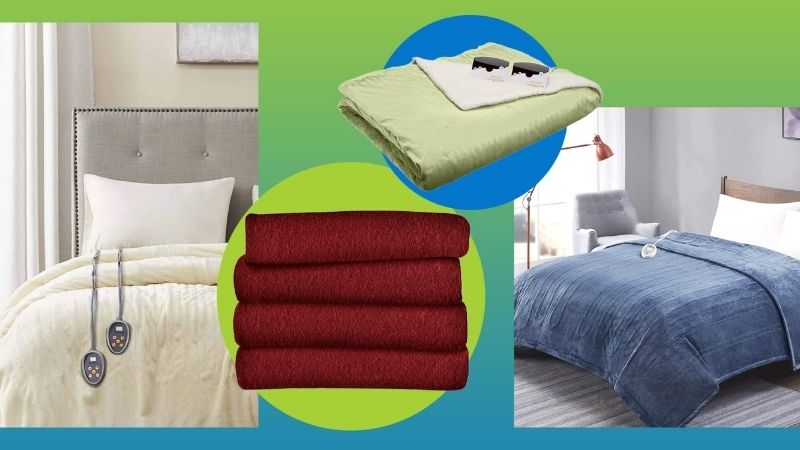
This guide compares U.S. manufacturer specifications, TechGearLab surface-temperature testing published in 2023, and safety guidance from ESFI and UL Solutions, reviewed in October 2026. KK Home Furnishings did not perform physical tests. Published claims and third-party test readings are labeled separately, never treated as interchangeable.
| Evidence or Situation | Temperature or Control | What It Actually Means | Important Limitation |
|---|---|---|---|
| Woomer gray heated blanket, 77 by 84 inches | Manufacturer lists 86 to 113 degrees F; 10 settings | Advertised range for this exact product listing | Not an independent reading across its fabric |
| Woomer marble-pattern heated blanket, 77 by 84 inches | Manufacturer lists 85 to 115 degrees F; 10 settings | A different Woomer listing has a different stated range | Do not apply this maximum to all Woomer blankets |
| Sunbeam Fleece Heated Blanket, TechGearLab review | Measured about 83 degrees F low and 94 degrees F high | Surface readings from one tested model | A 2023 test, not a guarantee for current variants |
| Degrees of Comfort Full Size, TechGearLab review | High measured near 84 degrees F | Another tested blanket reached a lower surface temperature | Different model, test environment, and method |
| Heated bedding safety standard | UL 964 applies to electrically heated bedding | Defines a safety-standard category, not a universal heat setpoint | A standard number does not certify a particular SKU |
What Manufacturers Mean by a Temperature Range
Woomer publishes 86 to 113 degrees Fahrenheit for its gray 77 by 84 inch electric blanket, along with ten heat settings. A separate Woomer marble-pattern listing gives 85 to 115 degrees Fahrenheit. These are maker-reported ranges tied to particular listings, not industry-wide operating limits or independently confirmed fabric readings.
The listing does not establish how every part of a loaded bed behaves, where the temperature was measured, or how long that point stayed warm. If the manual provides only settings such as Low, Medium, and High, do not translate those labels into exact degrees. Look for an explicit temperature specification for the model in hand.
What Independent Fabric Measurements Show
TechGearLab purchased eight electric blankets and measured temperatures with a thermal gun. In its December 2023 review, its Sunbeam Fleece model read about 83 degrees Fahrenheit on low and 94 degrees on high. The review also reported that temperatures could vary by as much as 10 degrees across different locations on that blanket.
In the same review, a Degrees of Comfort full-size model topped out around 84 degrees Fahrenheit, despite offering twenty numbered controller levels. These are readings by that publication, not ours. They show why more settings do not necessarily mean a hotter blanket and why a single advertised maximum cannot predict your actual surface experience.
Why the Same Setting Feels Warmer in Different Beds
A heated blanket warms nearby fabric and air, while your sheets, room temperature, body position, and insulation affect how that warmth feels. A plush fabric may feel cozy even before the heating wires are energized. Another blanket may register a modest exposed-surface temperature yet feel much warmer in the confined space of a bed.
The place and timing of a reading also matter. A measurement on an exposed, freshly heated spot is not the same as an assessment of skin exposure during prolonged contact. There is no safe universal temperature target to chase by piling covers or compressing the wires. Keep the heated item positioned exactly as its manual specifies.
What the Temperature Means in Six Common Situations
Instead of choosing a heat setting by its number alone, decide what you are trying to accomplish and whether the manufacturer authorizes that use. The examples below focus on initial warming, uneven results, extreme heat, shared beds, fabric feel, and unsuitable users. None requires assuming that a particular blanket reaches an advertised temperature.
1. You Want a Warm Bed Before Getting In
Prewarming while you are awake is a more cautious use than leaving electric bedding switched on through sleep. UL Solutions recommends warming the bed and switching the blanket off before bedtime. Choose the preheat feature only if the manual for your specific blanket provides one; a controller marked High does not automatically mean it is designed for prolonged use.
A model with automatic shutoff might still permit a long timer. That timer is not the same as instructions approving unattended use. Keep the blanket smooth, watch for unusual hot spots, and switch it off or unplug it before sleeping in line with conservative ESFI guidance. Do not trap a powered blanket beneath another heavy cover.
2. The Highest Setting Still Feels Barely Warm
First distinguish weak perceived warmth from an electrical defect. TechGearLab recorded substantially different maximum surface temperatures across models, so an undramatic High setting can be normal for one blanket. Verify the chosen mode, the complete controller connection, and any manufacturer-prescribed warmup period before assuming the unit has failed.
Do not defeat the thermostat, fold the blanket, or stack another powered heater to force higher temperatures. If there is an error code, an unresponsive control, intermittent heat, or a noticeable change from the product’s usual behavior, stop using it and follow the manufacturer’s troubleshooting instructions. A persistent electrical fault calls for service or replacement.
3. One Patch Feels Much Hotter Than the Rest
A localized hot spot is more important than a headline temperature range. Wires compressed by a fold, pressure from a person or furniture, or damaged insulation can create unsafe conditions even when the controller shows a low setting. TechGearLab documented measurable variation across a tested blanket, but a sudden intense patch must not be dismissed as ordinary variation.
Turn the item off and disconnect power if a patch becomes unusually hot, the fabric discolors, a connector smells odd, or the controller behaves abnormally. Check the care label and manufacturer support instructions rather than opening the blanket to investigate wiring. ESFI specifically warns against using electric blankets folded, tucked, covered, or damaged.
4. Two People Want Different Levels of Warmth
A queen or king blanket may have two controls, allowing each side to use a different setting, but this depends on the exact model. The difference between setting 3 and setting 7 cannot be expressed as a standard number of degrees unless that product provides verified temperature mapping. The opposite sides may also feel different because of bedding and body warmth.
Choose a dual-zone blanket for independent adjustment, not because a larger controller count guarantees a hotter surface. Make sure the leads remain outside pressure points and avoid cable routes where a moving bed can pinch them. If one partner cannot safely use electrically heated bedding, separate ordinary blankets may be a more practical answer than dual controls.
5. A Thick Fleece Blanket Feels Hotter Than a Thin One
The textile itself changes perceived warmth without changing the device’s electrical rating. Fleece or sherpa can trap air and reduce how quickly heat escapes, while a lighter woven cover may let warmth dissipate more readily. That means two blankets with similar published heating ranges can feel different against the body; plushness is not proof of hotter wiring.
Do not compensate for a thin material by draping extra fabric over a powered blanket unless the manual specifically allows that arrangement. ESFI warns that objects or additional covers can contribute to overheating. Comfort is better judged by intended placement, textile feel while switched off, and the control features than by maximum heat alone.
6. A Child, Pet, or Heat-Insensitive Person Is Nearby
Electric bedding may be unsuitable regardless of the advertised temperature. UL Solutions cautions against use by infants, young children, and people unable to operate a blanket safely or sense excessive heat. Its safety article also calls attention to additional burn vulnerability for people with diabetes. Follow the exclusions and warnings in the exact product manual.
Pets can damage cords or heating elements, and a person who cannot notice overheating may not be able to react to a developing hot spot. A lower control setting does not remove these hazards. When the household cannot maintain the product in its approved position and supervise use, choose non-electric bedding instead of trying to identify a supposedly safe numeric setting.
Frequently Asked Questions
These questions address temperature cycling, product categories, long-term changes, and safety records. They are intentionally separate from the six practical situations: they explain why a temperature figure may be misleading even after you have found a published range for the exact electric blanket you own.
Does a Blanket Stay at Its Maximum Temperature Continuously?
Not necessarily. UL 964 describes electrically heated bedding that may be thermostatically controlled, and real controllers can cycle power to regulate warmth. A product’s listed peak or controller setting therefore does not mean every part of the fabric holds the same temperature continuously. Read the manual for any stated operating conditions or cycling behavior.
Automatic shutoff is a separate function: it ends or limits an operating session rather than establishing a universal safe surface temperature. If you need an exact engineering temperature limit for a particular unit, request the model’s specifications from the manufacturer instead of treating the timer duration as evidence of thermal safety.
Are Electric Blankets as Hot as Therapeutic Heating Pads?
Do not transfer temperature figures between these different products. Sunbeam’s U.S. support material gives specific temperatures for its resistance heating pads, which are intended for a different use than electric bedding. Those heating-pad settings are not specifications for a Sunbeam heated blanket or for blankets from another manufacturer.
UL 964 covers electrically heated bedding, including blankets and mattress pads, but that scope does not establish a single maximum temperature for all items sold under it. Compare only matching categories and manufacturer-identified models. A strong heating-pad rating must never be used to justify forcing a blanket to become hotter.
Can Washing Change How Hot a Blanket Gets?
Cleaning can become a safety concern if performed against the label. Some heated blankets permit machine washing after the controller has been unplugged and removed; others have different restrictions. Excessive agitation, inappropriate drying, reconnecting before complete drying, or damaged connectors can compromise the product rather than safely increase its heat.
Do not use a blanket that has developed new hot spots, exposed wiring, a damaged connector, or inconsistent operation after cleaning. Check the specific care guide and warranty terms before attempting another wash. If there is doubt about internal damage, contact the manufacturer and discontinue use instead of experimenting with higher settings.
How Do You Check Whether a Hot Blanket Has Been Recalled?
Find the model number on the sewn label, then search that exact code in the U.S. Consumer Product Safety Commission recall database. For example, the CPSC announced a June 18, 2025 MaxKare electric blanket recall covering only HB18A-7284-1, HB18A-8490-2, and HB18A-6284-1. That recall does not establish a defect in all blankets from the brand.
A safety-standard reference is not evidence of certification for every item. UL 964 specifies the category of electrically heated bedding; check any UL or ETL listing for the individual product if certification is claimed. If a CPSC notice matches your model, follow the recall remedy and stop using it rather than lowering the controller setting.
Final Thoughts
Electric blankets do not share one maximum temperature. Manufacturer listings for individual blankets can state ranges around 85 to 115 degrees Fahrenheit, while independent measurements of other models may be lower and vary across the fabric. Treat those figures as model-specific evidence, not a safety target. Use the exact manual, keep electrical bedding unbunched, and stop use whenever heat becomes unusual or the product is damaged.