Key takeaways
- Receding white fronts keep a short wall from looking crowded.
- Closed compartments make spare cables and remotes less conspicuous.
- Visible floor beneath the unit keeps routine cleaning straightforward.
A floating cabinet makes a television wall feel lighter without sacrificing useful storage. These floating tv cabinet ideas explore six distinct looks, from seamless white doors to an oak media wall. Choose the layout around what you actually store, then verify that the chosen unit and wall can safely support the planned load.
As an Amazon Associate we earn from qualifying purchases.
By KK Home Furnishings Editorial Team
Small-Space Floating TV Cabinet Ideas With Clean Lines
A good floating cabinet should simplify the view from the sofa and make the space below easy to use. Start with a quiet white front, a warmer wood-grain look, or an asymmetrical modular arrangement. They solve different visual problems, but all require a cabinet expressly approved for wall mounting and space for cables.
| Idea | Space or Size Needed | Cost Tier | Effort and Time |
|---|---|---|---|
| Seamless white fronts | Short uninterrupted wall with a few devices | Low to moderate | Wall fixings; hidden cable access |
| Warm oak grain | Neutral room; room for a continuous low unit | Moderate | Finish samples; aligning fronts |
| Offset modular cabinets | Uneven wall or off-center television | Moderate | Multiple approved mounting positions |
| Fluted cabinet fronts | Simple backdrop with room for textured doors | Moderate to premium | Cleaning grooves; remote access |
| Long floating drawer run | Long unobstructed wall; ample storage needs | Premium | Structural review; loaded drawers |
| Open media niche with doors | Accessible devices and closed accessory storage | Moderate | Device clearances; visible cables |
Seamless White Cabinets for a Narrow Living Room
Best For: Small apartments with one clear television wall and only a few controllers, remotes, and media accessories to conceal.
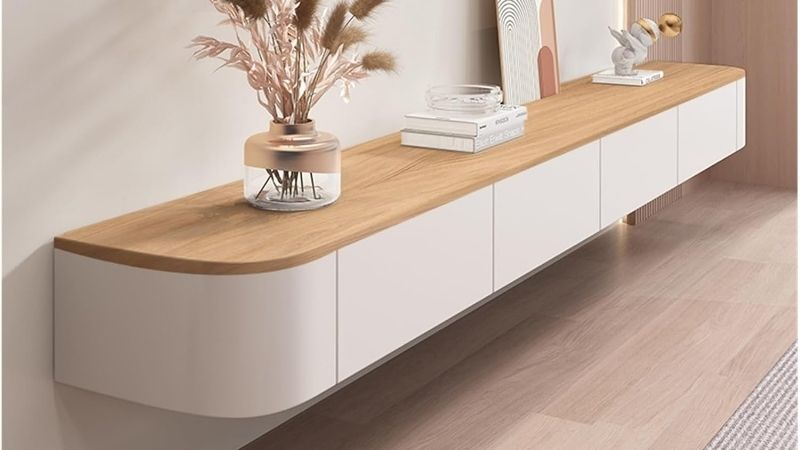
A plain white wall-hung cabinet lets the television remain the strongest shape in a compact room. Pick flat, handle-free fronts, repeat the wall color, and leave the floor visible underneath. Unlike an open shelf, the doors hide everyday clutter, although they also make finding and cooling electronics a more deliberate design decision.
Look for a purpose-made wall-hung TV unit with rear cable openings and enough interior depth for the equipment you own. IKEA lists cord outlets on its U.S. BESTÅ TV unit, but that feature does not establish the safe mounting method for every configuration. Read the exact product instructions and plan separate routing for power and signal cables.
Style the surface with one low object or leave it completely empty; a vase directly in front of the screen defeats the clean effect. Keep the television supported according to its own installation instructions rather than assuming the cabinet can bear it. Fingerprints on white doors and access to concealed devices are the main compromises.
Pros:
- Receding white fronts keep a short wall from looking crowded.
- Closed compartments make spare cables and remotes less conspicuous.
- Visible floor beneath the unit keeps routine cleaning straightforward.
Cons:
- Glossy or pale fronts can show fingerprints and surface marks.
- Closed doors may reduce access to remotes or heat-sensitive electronics.
Who Should Skip It: Choose the open-center design if consoles and receivers need frequent access rather than hidden storage.
Warm Oak Floating Cabinets With Continuous Wood Grain
Best For: Minimalist living rooms that need warmth and a furniture-like focal point without adding reclaimed-wood wall cladding.
A horizontal run of oak-look doors softens a TV wall while keeping the base visually light. The appeal comes from consistent grain direction and a restrained palette, not heavy decoration. Choose a genuine wood veneer or a clearly described wood-effect finish according to your budget and the manufacturer’s care instructions, since they age and clean differently.
Pair the cabinet with an off-white, mushroom, or muted green wall and repeat the wood color in just one nearby object. When combining modules, check that door fronts, edge banding, and grain direction align across their seams; differing finishes can turn a calm design into a patchwork. Sample finishes in the room’s natural and evening light.
Keep the cabinet face visually uninterrupted, but do not cover access panels or eliminate ventilation that connected components require. Use trays and internal organizers so the long cabinet does not become a dumping ground. This approach looks warmer than a plain white unit, yet a dark stain or busy wood grain can compete with patterned upholstery.
Pros:
- Natural-looking grain brings texture without another feature wall.
- Coordinated door faces produce a deliberate, furniture-like visual line.
- Warm finishes pair comfortably with neutral upholstery and painted walls.
Cons:
- Wood-effect laminates and real veneers require different care expectations.
- Mismatched grain across modules can make the installation appear improvised.
Who Should Skip It: Choose the simple white-front arrangement if the wall already includes bold wood paneling or patterned wallpaper.
Offset Modular Floating Cabinets for an Asymmetric Wall
Best For: Open-plan rooms with an off-center TV, a nearby doorway, or storage needs that change across the wall.
An offset group of wall cabinets feels intentional when the screen is not centered on the entire wall. Place a longer storage run below the TV and a smaller module to one side, leaving a measured patch of negative space. The asymmetry helps balance nearby windows or furniture without forcing a symmetric cabinet across an inconvenient opening.
Treat each hanging module as its own engineered installation. IKEA’s U.S. EKET wall-mounted combinations demonstrate staggered arrangements and use their specified suspension rails, while its TV units have different mounting requirements. An EKET wall cabinet is accessory storage, not automatically a platform for a television; use a separately rated TV mount where needed.
Sketch all door swings, pathways, and cable routes before choosing modules, then mark the intended outline with removable painter’s tape. Mix closed doors for cables with one display compartment for a book or object that does not tempt climbing. Floating pieces can look disjointed if the gaps and alignments lack a consistent visual logic.
Pros:
- Offset modules work around asymmetrical walls and door openings.
- Separate cabinets let storage mix change without filling every wall area.
- Open wall space prevents the arrangement from feeling like a solid block.
Cons:
- Uneven spacing can look accidental rather than designed.
- Multiple mounting positions complicate installation and future rearrangement.
Who Should Skip It: Choose a single continuous cabinet when the room needs a simple focal line rather than a modular composition.
Statement Floating Media Cabinets With Practical Storage
A wall-hung media unit can also be a focal point or family storage system. Fluted fronts bring texture, a long run of drawers conceals clutter, and an open-center design keeps connected devices accessible. Select the arrangement for daily use rather than copying a photograph without checking load, wiring, and ventilation.
Fluted-Front Floating Cabinets for Subtle Texture
Best For: Neutral or contemporary living rooms needing depth and surface interest without a darker wall or large display shelves.
Fluted or ribbed door fronts add shadows that change gently with daylight, making a long suspended cabinet more expressive than flat panels. Keep the rest of the TV wall restrained: a matte painted background, minimal hardware, and a simple screen mount. Texture becomes the design feature without requiring a new furniture arrangement or a full-height wood treatment.
Compare the actual door construction before buying. Some grooves are molded into a front, while other fronts use applied strips that collect dust and create small crevices. Check whether the doors clear adjacent walls and whether remote-controlled equipment works with the fronts shut. Decorative grooves are not evidence that electronics can safely ventilate behind them.
Choose a finish that echoes one existing element, such as warm walnut chair legs or a light oak coffee table. Use a clean cloth appropriate to the door material to maintain the grooves. The style is especially effective on an otherwise unadorned wall, but constant cleaning or a tight budget may favor smooth cabinet fronts.
Pros:
- Shadow lines add visual texture without extra wall decoration.
- A restrained fluted finish complements simple contemporary seating.
- The cabinet itself can serve as the wall’s main design feature.
Cons:
- Grooved surfaces collect dust more readily than flat doors.
- Decorative fronts may limit convenient use of media remotes.
Who Should Skip It: Choose smooth doors for households that prioritize the easiest possible wipe-clean routine.
A Long Floating Cabinet With Deep Closed Drawers
Best For: Family living rooms with many games, small accessories, spare cables, and other objects that need assigned storage.
A long run of suspended drawers creates a low horizontal line while hiding the assortment of items that gathers near family televisions. Rather than buying many small display shelves, allocate compartments for gaming accessories, chargers, and paperwork. The visual benefit is a single continuous front; the functional benefit comes from giving frequently used items predictable homes.
This design usually needs more wall planning than a short cabinet. Filled drawers add weight, and an extended installation may need individually rated modules or a properly engineered built-in system. IKEA’s U.S. BESTÅ listings explicitly state that wall-hung capacity depends on wall material; never apply a floor-standing top-panel rating to a suspended unit.
Plan for open drawer clearance in front of the sofa and keep cords away from sliding hardware. Avoid filling higher compartments with heavy objects or placing attractive toys where a child may climb for them. A continuous front can feel sleek, but bespoke joinery, reinforcement, and finished cable access may cost more than a compact modular design.
Pros:
- Deep drawers separate accessories that otherwise clutter the floor.
- A continuous facade maintains a clean visual line across a long wall.
- Dedicated compartments make daily cleanup easier for busy households.
Cons:
- Longer loaded runs increase the demands on approved wall fixings.
- Custom drawer fronts and structural preparation may raise project costs.
Who Should Skip It: Choose a shorter modular unit when the wall has openings or installation constraints that prevent a continuous run.
Mixed Open-and-Closed Floating Cabinets With a Media Niche
Best For: Homes with an actively used game console, router, receiver, or streaming equipment needing reachable controls and cables.
A central open niche flanked by closed doors offers a practical middle ground between a perfectly blank cabinet front and exposed shelves. Put devices needing a clear sightline or regular handling in the open section, while storing cables and less-used accessories behind doors. This design accepts visible equipment rather than hiding every object at the expense of access.
Choose the open bay around the actual devices, their connectors, and the clearance recommended by each manufacturer. Leave access for unplugging and servicing equipment, and do not assume a decorative cutout guarantees airflow. The cabinet itself still needs a wall mounting system designed for its loaded weight; place the screen on an independently approved bracket if required.
Limit the display shelf to a few low objects so it does not compete with the TV. Consider baskets inside enclosed sections for controllers, but keep fabric and loose papers away from any device’s ventilation paths. The open bay makes maintenance convenient, though cables and illuminated hardware remain more visible than they would behind solid doors.
Pros:
- Accessible center storage suits equipment used or adjusted every day.
- Closed side doors conceal accessories that do not need display.
- Visible cable access can simplify troubleshooting and device replacement.
Cons:
- Open niches expose more wiring and device indicator lights.
- Mixed surfaces demand care to keep the arrangement uncluttered.
Who Should Skip It: Choose smooth, fully closed doors if equipment access is infrequent and visual concealment matters most.
Frequently Asked Questions
Photos of floating media units rarely show their fixings, network equipment, or the condition of the wall. Before ordering a cabinet, sort out whether the product is approved for hanging, where the TV weight goes, what the landlord permits, and how small children will use the space. Those choices can change which design is practical.
Can I turn an ordinary floor TV stand into a floating cabinet?
Not simply by fastening an ordinary console to a wall. Buy a unit expressly approved by its maker for hanging, or have a qualified cabinetmaker design and install a supported assembly. Construction, bracket locations, and wall loads matter more than whether the freestanding unit looks similar to a wall-mounted one.
As a product-specific example, IKEA says certain U.S. BESTÅ TV units can be wall mounted with the included fixtures, while the BESTÅ suspension rail must not be used for those TV units. Other products have different requirements. Never transfer that instruction to a different model or brand; consult the exact assembly documents.
Can the TV stand on top of a floating cabinet?
Only when the particular cabinet is approved for that use at its installed configuration and the real television weight is within the manufacturer’s limits. A top-panel weight rating published for a floor-standing console is not automatically the safe capacity of the same cabinet when suspended from a wall.
Where the design allows, a separately mounted TV can make the cabinet primarily an accessory-storage piece. However, the television’s wall bracket still requires its own approved installation and suitable structural support. Do not treat independent mounting as permission to overload the cabinet with consoles or heavy decorations.
Are floating TV cabinets suitable for renters?
They can be, but only with permission to make the required wall penetrations and an installation suited to the property. A substantial wall-hung cabinet is not a no-drill decorating trick. Ask about permitted anchors, wiring changes, wall restoration, and who must perform structural or electrical work before buying anything.
For a similar visual impression without hanging a cabinet, a low freestanding console with slim legs and a restrained front may be more practical. Secure freestanding television furniture and the television as directed; CPSC warns that unsecured TVs and furniture can tip, especially where young children are present.
How do I make a floating media cabinet practical around children?
Start with a correctly rated, securely installed cabinet and a separately secured television. Avoid fragile objects, dangling cords, or favorite toys on shelves that might encourage climbing. Check for pinch points around drawers, door edges, and corners at the height children actually reach.
Place remotes and games where adults can reach them without creating an invitation to climb. Follow the cabinet, television, and mounting-hardware instructions instead of using a universal clearance or weight rule. CPSC’s U.S. Anchor It guidance provides general tip-over precautions, not an installation rating for your particular wall.
Final Thoughts
The most useful floating tv cabinet ideas balance a light visual profile with the realities of storage and structural support. Choose seamless white for a compact wall, warm oak for a softer room, or offset modules for an intentionally asymmetrical composition. Fluted fronts add texture, a long closed run hides family clutter, and mixed open storage helps active devices. Buy a wall-mount-rated unit, follow the exact hardware instructions, and plan cable routes before finishing the wall.
More from Amazon
Programs that pair well with the guide above. Offers and eligibility are set by Amazon and may change.
Collect the home and kitchen items you want in one registry that guests can shop from.
Create a wedding registrySet up recurring deliveries of everyday items on eligible products. Terms and savings are set by Amazon.
Explore Subscribe & SaveFree shipping on eligible items, Prime Video and more. Eligible new members can start with a free trial.
Start a Prime free trialAudiobooks and podcasts to listen to on the go. Eligible new members can start with a free trial.
Try Audible freeAs an Amazon Associate we earn from qualifying purchases.