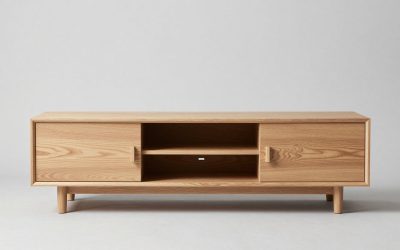
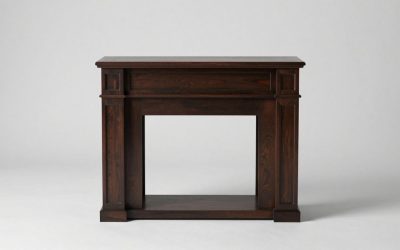
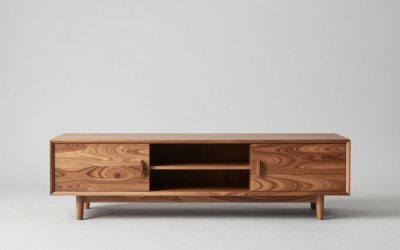
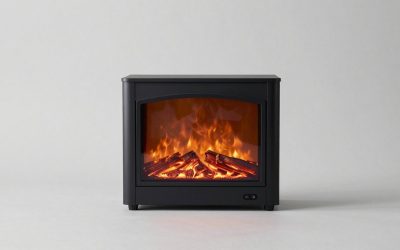
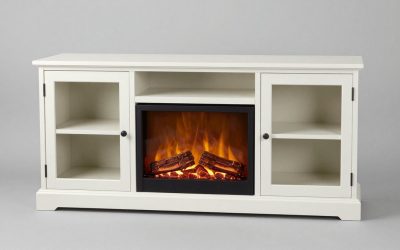
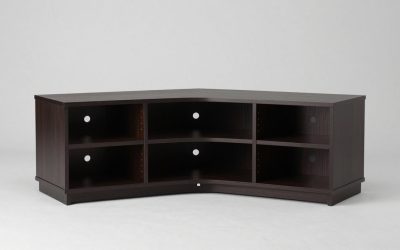
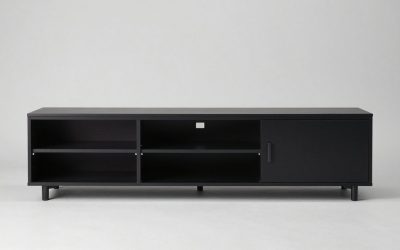
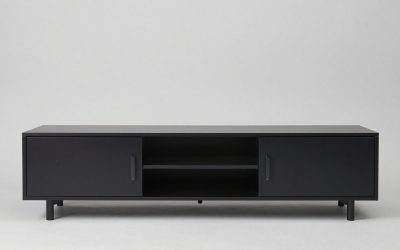
A low cabinet that once belonged to a dining-room hutch might look like a television console, but looks are not proof that it can support a screen. The practical answer to can a hutch be used as a tv stand is only when its manufacturer approves TV use and its top, stability, and dimensions meet the exact TV’s requirements.
As an Amazon Associate we earn from qualifying purchases.
By KK Home Furnishings Editorial Team
When Is a Hutch Suitable for a Television?
A hutch may mean an upper display cabinet, an attached two-piece dining cabinet, or a low base cabinet removed from its upper section. Those are different structures. The U.S. Consumer Product Safety Commission advises placing televisions only on furniture designed to hold them [CPSC, Anchor It!, 2026]. Start by identifying which part you actually have.
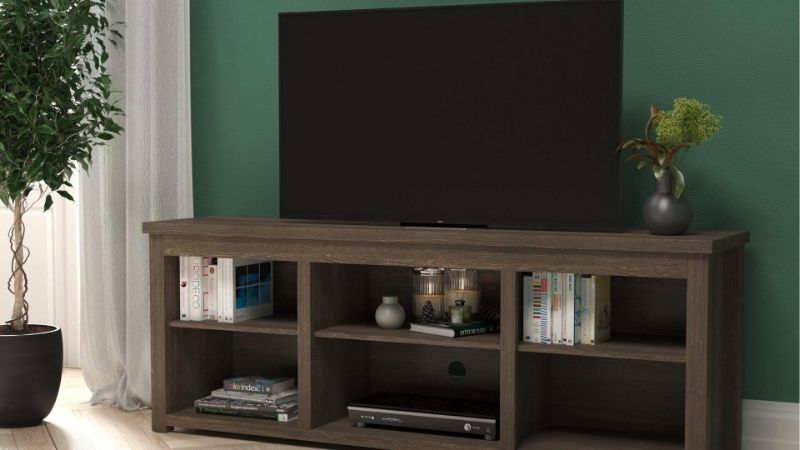
Identify the Hutch’s Original Function and Load Path
A freestanding display hutch is generally meant to hold dishes, books, or decorative objects on shelves. A matching buffet or sideboard base may carry a heavier top, but the original assembly could rely on the upper section for stability or use fastening points that were never intended for a TV. Do not assume that removing the top produces a rated media cabinet.
Find the furniture’s model or assembly instructions and check whether the maker authorizes use of the lower base independently. Look for a published top-panel load and anchoring instructions, not a shelf load or shipping weight. A top that feels solid during a hand test still has no documented capacity for a television, and the hardware beneath it matters as much as the surface.
Check TV Footprint and Verified Top-Panel Capacity
Television screen size alone does not describe what a cabinet must support. Check the actual width, depth, and location of the TV’s feet or central pedestal, plus its weight with the stand installed. Sony publishes separate screen and stand measurements for individual models, illustrating why the advertised screen diagonal is not an appropriate furniture-fit measurement [Sony USA, 2026].
For contrast, IKEA explicitly lists a maximum TV weight of 66 lb for its 70 7/8-inch BESTÅ TV bench and recommends a bench somewhat wider than the screen [IKEA US, BESTÅ TV bench, 2026]. Those figures belong only to that BESTÅ configuration. They do not establish a weight limit for an old china hutch, a buffet, or a piece of furniture that happens to be similarly wide.
Inspect Stability, Viewing Height, and Enclosure Space
High cabinets create a different hazard than low television consoles. A tall upper hutch adds mass above the base and may have projecting shelves or doors that obstruct the screen. The CPSC’s February 2026 guidance advises anchoring televisions and large furniture, keeping heavy items on lower shelves, and avoiding arrangements that invite children to climb [CPSC, Release 26-259, 2026].
Check whether the base sits flat, whether joints or back panels are loose, and whether the intended screen height works from the seated viewing position. Closed hutches also need enough open air around electronics. Sony cautions against placing TVs in confined furniture openings without adequate ventilation; the exact television manual governs the permitted clearances [Sony USA, Article 00029130].
| Hutch Configuration | Decision | Evidence to Check | Safer Direction |
|---|---|---|---|
| Low hutch base with documented TV-use approval | Potentially suitable | Top load, full feet footprint, anchoring instructions | Use only within the maker’s specifications |
| Low sideboard with no TV-use rating | Not verified for a TV | Manufacturer’s intended use and support structure | Choose a rated TV console instead |
| Tall glass-front display hutch | Unsuitable as a TV stand | Height, tipping risk, glass panels | Keep it as storage, away from the TV |
| Two-piece hutch with removable upper unit | Needs maker confirmation | Whether base is approved for independent use | Do not improvise structural changes |
| Hutch beside an independently wall-mounted TV | Often a useful layout option | Separate wall mounts, furniture anchoring, door clearance | Use hutch for storage, not as TV support |
| Enclosed hutch space for streaming or game equipment | Conditional equipment storage | Airflow, access, wiring, door openings | Keep ventilation paths open |
Adjust for Your Situation
The most useful question is not whether an old hutch looks like a TV stand, but what job you want it to perform: support the television, store media equipment, or frame the screen as furniture. These six common situations lead to different decisions. Where the intended use or load rating cannot be established, treat that uncertainty as a reason not to place a TV on the piece.
A Low Hutch Base With Manufacturer-Approved TV Use
This is the most promising configuration only if the base has instructions specifically permitting a TV and a published load limit for the surface carrying it. Compare the maker’s intended orientation with how the unit currently stands. A hutch base that was designed to support a separate upper cabinet is not automatically approved to hold a television when the upper unit is removed.
Confirm that the entire original TV stand or pedestal sits on the approved flat surface, with no feet resting on molding or a loose top. Inspect support underneath the placement area, including interior partitions and the route by which the load reaches the floor. If doors or drawers strike the television feet during use, that furniture and screen combination is not a practical fit.
A true media bench shows what verifiable approval looks like: the U.S. BESTÅ listing specifies the unit’s width, depth, and maximum television load as separate values [IKEA US, BESTÅ 59622931, 2026]. This is a comparison point for evaluating documentation, not permission to apply BESTÅ capacities to another brand’s hutch.
A Tall Antique or Glass-Front China Hutch
A tall china hutch should remain a display or storage piece rather than become the TV’s support. Glass shelves and doors are particularly poor places to transfer concentrated loads from TV feet, and a high resting position makes the screen harder to view comfortably. Replacing a shelf with a thicker board is not a reliable fix for the frame, base, fasteners, or tip-over risk.
Some antiques have no readable label, manual, or maker to consult. That uncertainty becomes important when a screen can fall onto people or nearby objects. Keep the hutch in its original intended role, inspect existing anti-tip restraint, and place the television on properly rated low furniture or an independently installed wall mount elsewhere in the room.
A Two-Piece Hutch You Want to Separate
A two-piece dining hutch may make the lower buffet look attractive as a media console. Before separating the pieces, check how the upper cabinet is connected and whether the lower cabinet has an approved stand-alone configuration. Brackets, dowels, or vertical panels may have been installed as part of the original design; removing them can change the stability of the whole assembly.
Do not saw away the upper cabinet, remove structural dividers, or drill through unknown panels merely to clear a screen. If the manufacturer’s documentation confirms that the lower base is a stand-alone cabinet, it can remain useful as storage even when television support is not authorized. A rated TV console can occupy another wall without losing the hutch’s decorative character.
A Smaller TV for a Guest Room or Reading Nook
A compact screen can make a hutch base appear more proportional, but a lighter or smaller television does not change the furniture’s intended purpose. Check the actual installed stand footprint, not only the diagonal. If the base lacks TV-use authorization, choosing a lighter set cannot establish a safe load rating that the maker never published.
The guest-room context also raises practical issues: narrow circulation paths, beds close to cabinets, and visitors who may not recognize unstable furniture. The CPSC recommends securing furniture and televisions and keeping cords out of reach, especially in spaces used by children [CPSC, February 2026]. A purpose-built low TV bench is often a better solution than adapting a high storage hutch.
A Wall-Mounted TV With the Hutch Used for Storage
If the main goal is to preserve an antique or coordinated furniture set, separating the television’s support from the hutch’s storage function is usually the cleaner plan. Mount the television with a bracket appropriate for its exact model and the wall structure, following the bracket and TV instructions. The hutch can sit beside the screen or along another wall without bearing the TV.
This solution does not eliminate the hutch’s own tip-over hazard. A tall cabinet should be anchored with suitable hardware according to its manufacturer, independently of the television mount. Plan door swing, walkway space, and the TV’s sight line before moving furniture. Sony recommends qualified professionals for TV wall mounting when the installation calls for it [Sony USA, Article 00081115, 2024].
An upper hutch can frame a viewing area visually without being a structural TV frame. Keep shelving far enough from the screen for access and the clearance specified by the TV manual. Unlike forcing a TV into an old china cabinet opening, a separate wall-mounted screen preserves ventilation, makes wiring easier to service, and keeps the furniture’s original construction intact.
A Hutch That Will Store Consoles, Speakers, or Streaming Devices
Using lower shelves for media accessories can be more realistic than putting the television on top, but an enclosed cabinet is not automatically suitable for electronics. Verify shelf capacity for each device and make sure cable connections are reachable. Glass doors, a solid back panel, or tightly fitted drawers may trap heat or interfere with remote-control reception for some devices.
Check each device manual for airflow and placement requirements before operating it behind closed doors. Avoid covering a television’s or console’s vents and do not route power cords through sharp, unfinished holes. Sony warns that a television in a confined cabinet must have suitable ventilation [Sony USA, Article 00029130]; other devices have their own instructions and should not inherit Sony’s clearances.
If you need cable access, prefer an existing manufacturer-provided opening or approved accessory rather than cutting into a potentially structural back panel. Keep heavy accessories low, leave shelves accessible for cleaning, and avoid placing a power strip where it will be crushed by moving drawers. These are equipment-storage decisions, distinct from whether the hutch can structurally support the TV itself.
Frequently Asked Questions
Repurposed cabinets often attract simple fixes that seem to solve the problem at a glance. The answers below address changes to an existing hutch without confusing an attractive finish or a new shelf with documented TV-support capability.
Can I Replace a Glass Shelf With Wood to Hold a TV?
Not on the assumption that wood will make the hutch safe for a television. Shelf material is only one part of the load path. A glass-front cabinet may still have unsupported side panels, weak shelf pins, a narrow base, or joints designed for dishes rather than a screen. A new board does not provide a manufacturer’s top-panel rating.
If a cabinet maker or qualified furniture professional reviews an unusual built-in design, ask them to document the whole structure and the exact proposed load, not merely recommend a thicker board. Otherwise, keep the new shelf for appropriate light storage and use a rated TV support or independently mounted television.
Does Painting or Refinishing a Hutch Make It a TV Stand?
No. Paint, stain, and new hardware change the appearance, not the intended load capacity or stability. A distressed farmhouse finish may make an old buffet resemble retail media furniture, but it does not add verified structural support. Replacing drawer pulls likewise cannot correct an unapproved top or tall center of gravity.
Refinishing may still be worthwhile when the hutch will hold books, decorative items, or approved accessories. Inspect veneer, joints, and fasteners before cosmetic work, especially if there is water damage or loose edging. Finish the cabinet for the job it can safely perform instead of treating a makeover as an engineering upgrade.
Can a Soundbar Sit Inside a Hutch Opening?
Sometimes, if the soundbar’s own instructions allow the location and it has unobstructed acoustic and ventilation openings. A narrow enclosed shelf can block front- or side-firing speakers, interfere with upward-firing audio, or obstruct remote sensors. The better location may be in front of the opening or on a separate shelf designed for the device.
Before placing equipment, measure the full bar including connectors and the space needed to access its controls. Avoid assuming that a cabinet designed for plates provides the same layout as a modern media unit. If the manufacturer requires open space above or beside the soundbar, leave it open rather than hiding the device behind decorative doors.
What If My Hutch Has No Label or Weight Limit?
If no maker’s instructions or supported TV-use rating can be found, do not treat the missing information as unlimited capacity. A heavy appearance, thick tabletop, or successful use by someone else does not prove the cabinet is intended to support a television. The safe choice is a rated TV bench or a compatible wall mount installed independently.
Photograph identifying marks, search the furniture maker’s manual archive, and check whether replacement instructions exist for the exact model. If the piece is handmade or heavily modified, a furniture professional may assess its condition, but that is not the same as a factory rating. Avoid inventing a maximum load from its dimensions or wood species.
Final Thoughts
The answer to can a hutch be used as a tv stand depends on manufacturer-approved TV use, a documented top load, a fully supported TV base, and secure installation. Most tall display hutches are better kept as storage. For an unrated piece, the practical alternative is to preserve the hutch and give the television an independent, purpose-built support.