
Key takeaways
- Comparing the best leg exercises with dumbbells is easier when you distinguish a squat from a hip hinge. A dumbbell front squat and Romanian deadlift...
What's inside
- Identify which movement you are trying to learn
- Recognize the front-squat setup
- Recognize the Romanian-deadlift setup
- Product listings to compare
- Use observations to choose the next practice
- Assess the load separately for each
- Make the surroundings support the distinction
- Choose understanding before variety
- Additional product links
- Related reading
Comparing the best leg exercises with dumbbells is easier when you distinguish a squat from a hip hinge. A dumbbell front squat and Romanian deadlift use different starting holds and movement patterns. Learn what each task asks before deciding how it belongs in an appropriate routine; owning the same pair of weights does not make the two exercises interchangeable.
This guide provides practical selection and use considerations. It does not report hands-on product testing.
Identify which movement you are trying to learn
The front squat combines bending through the hips and knees while holding the load at shoulder height. The Romanian deadlift emphasizes sending the hips backward with the knees slightly bent. NASM describes these as different exercises, with their own setup and control requirements. Avoid blending the cues into an improvised halfway movement.
Ask an instructor to help select the exercise for your circumstances and explain its purpose. Neither is universally best for every reader. If a health concern or pain affects the choice, obtain relevant advice. This comparison provides movement distinctions rather than a rehabilitation plan or a fixed progression.
Recognize the front-squat setup
Begin about shoulder-width apart with toes slightly outward. Hold the dumbbells at shoulder level, palms facing inward and elbows high. Brace as the hips and knees bend, keeping the weights controlled and knees tracking with the toes. Return to standing through the feet without letting the load pull the upper body out of position.
Learn an appropriate depth and how to place and return the weights before repeated practice. A heavier pair is not useful if the required starting hold is unclear. Keep questions about the hold separate from questions about lower-body movement so the next instruction can address the actual difficulty.
Recognize the Romanian-deadlift setup
Stand about hip-width apart with a dumbbell in each hand and arms extended beside the body. Brace, set the shoulders back and down and maintain a neutral spine with a slight knee bend. Push the hips backward into the hinge, using a controlled range that preserves that alignment. Bring the hips forward to return upright without leaning back.
NASM cautions against turning this task into a squat through excessive knee bending, rounding the back or using jerky momentum. Learn the hinge and suitable range with instruction. The weights do not have to reach the floor to make the exercise count; preserve the movement rather than chasing a target depth.
Product listings to compare
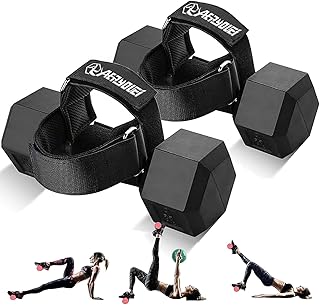
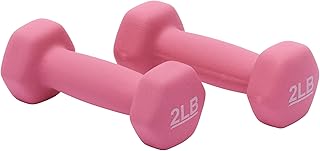
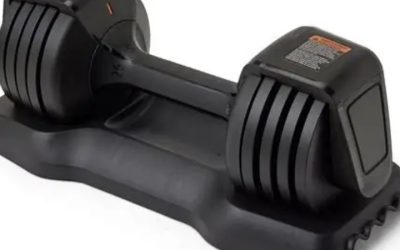
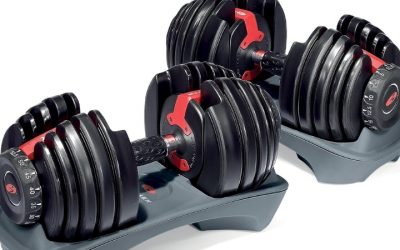
As an Amazon Associate we earn from qualifying purchases at no extra cost to you. Product prices and availability are accurate as of the date shown and are subject to change. Compare the selected variant and its current description with the requirements above.
As an Amazon Associate we earn from qualifying purchases at no extra cost to you. Product prices and availability are accurate as of the date shown and are subject to change.




Use observations to choose the next practice
If the squat hold is unresolved, an instructor may first address the rack position or an appropriate unloaded pattern. If the hinge becomes a squat, the next task may be clarifying hip movement. Do not respond to every issue by adding another exercise. Different difficulties call for different questions.
Keep the comparison descriptive. You can note that the knees bent more than intended or the weights became difficult to hold without diagnosing a muscle imbalance. Review observations during rest, with the equipment put down. Avoid looking sideways at a demonstration while maintaining a loaded position.
Assess the load separately for each
A weight used appropriately for one movement may not suit the other. Choose settings through guidance and the ability to perform the complete task under control. If the required load is unavailable, do not automatically substitute a heavier pair or change the technique to fit what is in the cupboard.
For adjustable dumbbells, include proper selection and securing between tasks. For fixed pairs, give each an appropriate resting location. An uninterrupted circuit is not required for this learning comparison. The plan should allow the handling and rest needed to prepare each movement deliberately.
Make the surroundings support the distinction
Clear the full activity area and the pickup and return locations. Keep furniture outside the movement rather than using it as an improvised limit for squat depth or hinge travel. Appropriate instruction should establish the pattern; a table edge should not decide where you stop.
Store the dumbbells on suitable supports and keep notes where they can be reviewed during rest. Ankle cuffs, resistance bands or an exercise chart may serve other purposes, but they do not supply the hand-held load described in these examples. Compare equipment for the actual task rather than the broad leg-training category.
Choose understanding before variety
Stop for pain or an uncontrolled movement and seek appropriate help. A useful leg-exercise selection reflects a learned pattern, suitable load and clear purpose. Add variety through a considered plan once those elements are established, instead of assuming that a longer list of movements automatically produces a better session.
Additional product links
- Start 30-Day Prime Free Trial →
- See Today’s Amazon Deals
- ▸ Try Amazon Prime — free 30-day trial
- ▸ Start an Audible Premium Plus free trial
- ▸ Read free with Kindle Unlimited
Related reading
- Best legs exercises with dumbbells
- Chris Parker
- Best Ab Workouts with Dumbbells: 6 Support Picks Compared
- Best Budget Adjustable Dumbbell: 6 Picks and Trade-Offs
- Best Abs Exercise with Dumbbells: 6 Picks by Coating Type
- Best Abs Workout with Dumbbells: 6 Picks for Fast Circuits
- Best at Home Dumbbells: 6 Picks for Sharing a Household
- Best gym bench for home
- Best weight benches home gym
- Best at home full body workout equipment
- Best resistance bands workout
- Best resistance bands leggings
- Best Lat Exercises Dumbbells: 6 Picks for Heavy Row Work
- Best Forearm Exercises Dumbbells: 6 Grip-Friendly Picks
- Best Arm Exercises With Dumbbells: 6 Home Setups Compared
- Best Exercises Using Dumbbells: 6 Sets That Cover It All
- Best Dumbbells Exercises: 6 Home Sets That Cover Everything
Write Your Review
No reviews yet. Be the first to share your experience!