
Key takeaways
- The best dumbbells exercises to learn are movements whose starting position, main action and return you can explain. A front squat, hammer curl and...
What's inside
- Front squat: support the weights before descending
- Hammer curl: keep the grip facing inward
- Lateral raise: control the outward path
- Choose a learning order rather than a race
- Make equipment changes part of the plan
- Leave room to begin and finish
- Product listings to compare
- Additional product links
- Related reading
The best dumbbells exercises to learn are movements whose starting position, main action and return you can explain. A front squat, hammer curl and lateral raise illustrate three different uses of the same equipment category. They do not necessarily use the same load, and they are examples to learn within an appropriate plan rather than a complete program prescribed for every reader.
This guide provides practical selection and use considerations. It does not report hands-on product testing.
Front squat: support the weights before descending
Stand with feet about shoulder-width apart and toes slightly outward. Hold a dumbbell at each shoulder with palms facing inward and elbows raised. Brace your trunk, bend through the hips and knees and keep the weights stable as you lower. Maintain an upright, controlled position and keep the knees tracking with the toes. Drive through the feet to return to standing.
NASM’s front-squat guide describes this shoulder-held arrangement. Learn the squat pattern and an appropriate range with qualified instruction before adding a challenging load. If the weights pull you out of position, stop and reassess rather than lowering farther to imitate a photograph. An easier unloaded practice may be the appropriate next step while the movement is being learned.
Hammer curl: keep the grip facing inward
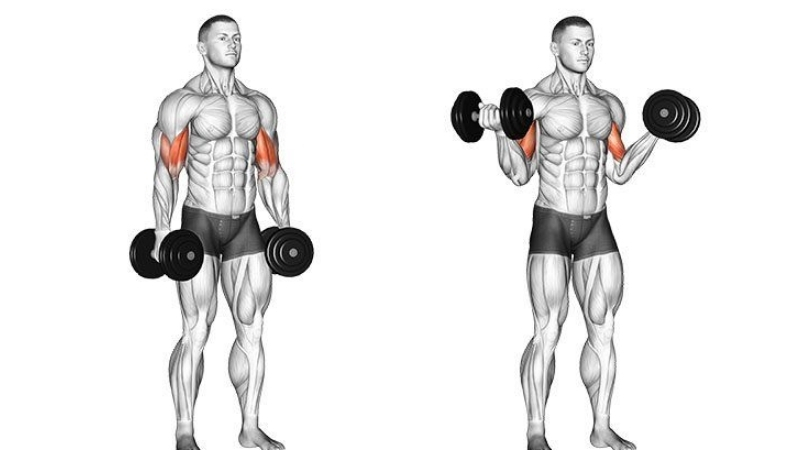
Hold the dumbbells at your sides with palms facing toward the body. Bend an elbow to bring the weight toward the shoulder, keeping the torso still and wrist straight. Lower deliberately before repeating or changing sides. Avoid throwing the elbow forward or lifting the shoulder to finish the movement.
This curl differs from the squat in its position and loading demands. Do not choose the weight simply because it is already in your hand from the previous exercise. Set equipment down appropriately when changing tasks, and use a load that permits control in both directions.
Lateral raise: control the outward path
With a stable stance and braced torso, hold light dumbbells beside you. Raise the arms out to the sides in control, keeping the wrists aligned and avoiding a body swing. Near shoulder height, use the slight outward arm rotation described in ACE’s lateral-raise guidance, then lower slowly. Obtain instruction if the path or shoulder position is unclear.
Do not make this movement a contest with the weight used for another exercise. A small-looking load may be the useful choice for learning the path. Stop if pain or loss of control appears. A general exercise description does not assess a shoulder condition or prescribe a rehabilitation movement.
Choose a learning order rather than a race
Begin with the exercise whose setup you have already learned, or work through a new one with an instructor. Rehearse the starting arrangement before attempting repeated loaded movement. Keep each exercise as a separate block with rest and a deliberate equipment change. There is no requirement to perform all three without interruption.
Record the selected load, the work completed and one useful observation. For the squat, it might concern holding the weights steady. For the curl, it might concern whether the torso remains quiet. For the raise, it might be a question about the arm path. Keep observations descriptive rather than diagnosing their cause yourself.
Make equipment changes part of the plan
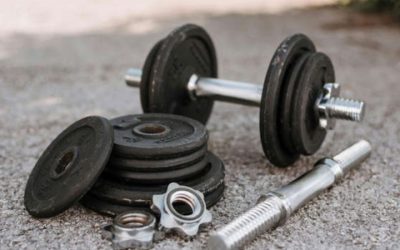
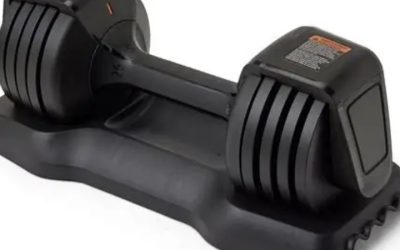
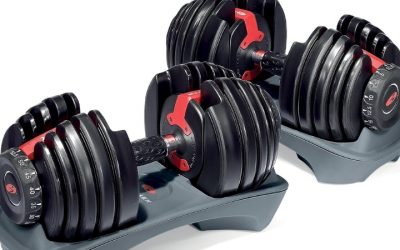
For fixed dumbbells, identify where each pair rests between movements. For adjustable equipment, follow the required resting, selection and locking procedure. Do not attempt to change settings while holding an unfamiliar exercise position. A video timer should not push you to bypass a handling step.
Compare the available settings with the movements you intend to practise. A large maximum weight does not establish that the useful lower increments are included. Check the actual package quantity and variant before buying, and distinguish conventional loaded dumbbells from aquatic foam products or instructional books in mixed listings.
Leave room to begin and finish
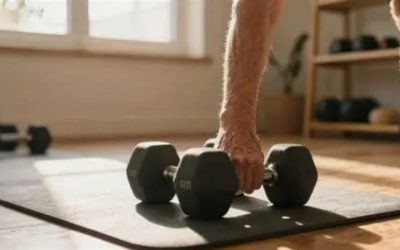
Clear the movement area and the place where weights will be set down. Keep household routes and furniture openings outside that space. Store equipment on suitable supports rather than ordinary decorative shelves whose loading is unknown. Review a demonstration before lifting so you do not need to turn toward a screen mid-movement.
Use the exercise examples to identify questions for an appropriate routine. Add load or variations only through a considered progression suited to you. The equipment should support movements you understand, with controlled returns and clear transitions, rather than encourage a long list of unfamiliar exercises because one pair of dumbbells happens to be available.
Product listings to compare
As an Amazon Associate we earn from qualifying purchases at no extra cost to you. Product prices and availability are accurate as of the date shown and are subject to change. Compare the selected variant and its current description with the requirements above.
As an Amazon Associate we earn from qualifying purchases at no extra cost to you. Product prices and availability are accurate as of the date shown and are subject to change.


Additional product links
- Start 30-Day Prime Free Trial →
- See Today’s Amazon Deals
- ▸ Try Amazon Prime — free 30-day trial
- ▸ Start an Audible Premium Plus free trial
- ▸ Read free with Kindle Unlimited
Related reading
- Best dumbbells exercises
- Chris Parker
- Best Ab Workouts with Dumbbells: 6 Support Picks Compared
- Best Budget Adjustable Dumbbell: 6 Picks and Trade-Offs
- Best Abs Exercise with Dumbbells: 6 Picks by Coating Type
- Best Abs Workout with Dumbbells: 6 Picks for Fast Circuits
- Best at Home Dumbbells: 6 Picks for Sharing a Household
- Hot yoga mat best
- Best workout dumbbells
- Best back exercises using dumbbells
- Best exercise upright bike
- Best exercise stationary bike
- Best Exercises Using Dumbbells: 6 Sets That Cover It All
- Best Arm Exercises With Dumbbells: 6 Home Setups Compared
- Best Bicep Exercises Dumbbells: 6 Sets for Curl Progress
- Best Home Gym Dumbbells: 6 Sets Ranked by Space and Steps
- Best Lat Exercises Dumbbells: 6 Picks for Heavy Row Work
- Best Forearm Exercises Dumbbells: 6 Grip-Friendly Picks
- Best Shoulder Exercises With Dumbbells: 6 Setups Compared

Write Your Review
No reviews yet. Be the first to share your experience!