Key takeaways
- Measure the full footprint: Check width, depth, and clearance for the chair, drawers, doors, baseboards, and nearby walking paths—not just the desktop dimensions.
- Match the surface to your setup: A laptop needs less room than a monitor, keyboard, speakers, and notebooks. If you use a monitor, look for a raised shelf or sufficient rear depth.
- Choose storage strategically: Drawers and shelves reduce visual clutter, but storage should not interfere with legroom or make the desk feel bulky in a small room.
- Consider flexibility: Folding models are useful in guest rooms, dorms, and multipurpose spaces because they can be stored or repositioned when work is finished.
- Prioritize stability and maintenance: Look for a solid frame, a level work surface, and finishes that tolerate regular cleaning. Compact should not mean flimsy.
What's inside
Finding a computer desk for a small room is rarely as simple as choosing the narrowest model available. A desk still needs enough depth for a laptop or monitor, useful storage, dependable stability, and a footprint that leaves space to move. The wrong choice can make a room feel cramped while offering barely enough surface for everyday work.
This guide compares compact desks suited to bedrooms, dorms, apartments, and flexible home offices. We focus on dimensions, storage, portability, assembly, and how each design works in a genuinely tight layout, so you can choose a desk that supports your routine rather than merely fitting an empty corner.
As an Amazon Associate we earn from qualifying purchases.




How to Choose a Computer Desk For Small Spaces (2026)
- Measure the full footprint: Check width, depth, and clearance for the chair, drawers, doors, baseboards, and nearby walking paths—not just the desktop dimensions.
- Match the surface to your setup: A laptop needs less room than a monitor, keyboard, speakers, and notebooks. If you use a monitor, look for a raised shelf or sufficient rear depth.
- Choose storage strategically: Drawers and shelves reduce visual clutter, but storage should not interfere with legroom or make the desk feel bulky in a small room.
- Consider flexibility: Folding models are useful in guest rooms, dorms, and multipurpose spaces because they can be stored or repositioned when work is finished.
- Prioritize stability and maintenance: Look for a solid frame, a level work surface, and finishes that tolerate regular cleaning. Compact should not mean flimsy.
The Best Computer Desk For Small Spaces (2026)s Reviewed
Lufeiya Small White Desk with Drawers
This 40-inch white desk offers a practical balance of workspace and storage for bedrooms or compact home offices. Its fabric drawer helps corral chargers, stationery, and smaller accessories without taking away from the clean, light appearance that can help a small room feel more open.
COTUBLR 27.5-Inch Small Computer Desk
When floor space is especially limited, the COTUBLR is one of the easiest models to place beside a bed, in a nook, or in a narrow apartment office. Its adjustable monitor stand adds vertical organization while preserving the main work surface, making it especially suitable for a laptop or streamlined monitor setup.
WOHOMO 31.5-Inch Folding Desk
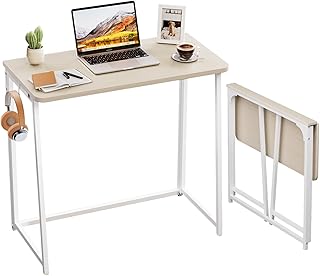
The WOHOMO stands out for rooms that serve more than one purpose. Its folding design makes it easier to put away after work or move between spaces, while the oak finish gives it a warmer, less utilitarian look than many compact tables. It is a strong option for dorms, guest rooms, and occasional home-office use.
GreenForest Folding Desk with Two-Tier Shelf
This GreenForest model is designed for convenience, with a foldable frame and no-assembly setup that suits renters and anyone who does not want a lengthy installation. The two-tier layout creates room for a laptop, books, or supplies while keeping the desktop relatively compact. Use the shelf thoughtfully so the area remains easy to reach rather than overcrowded.
39-Inch Small Fluted Computer Desk with Two Drawers
For shoppers who want a compact desk with more concealed storage, this fluted-front design brings a furniture-like finish to a home office or bedroom. The two drawers are useful for keeping visual clutter under control, and the 39-inch width offers a little more flexibility for a monitor and everyday accessories than ultra-tiny desks.
Frequently Asked Questions
What is the best desk size for a very small room?
Start by measuring the available wall or corner, then allow space for a chair and comfortable leg movement. A desk around 27 to 32 inches wide works well for a basic laptop station, while a 39- or 40-inch model is more practical for a monitor, writing materials, and storage.
Are folding computer desks sturdy enough for daily use?
A well-designed folding desk can handle everyday laptop work, but stability depends on its frame, locking points, and floor surface. Place it on a level area, avoid leaning heavily on the edges, and check that the legs are fully opened before use.
Should a small desk have drawers or shelves?
Drawers are best for hiding small items and maintaining a calm visual appearance. Shelves use vertical space efficiently and are often more accessible, but they can look busy if overloaded. Choose based on whether you value concealed storage or quick access.
Can a compact desk hold a desktop computer?
Some can, but check more than the desktop width. Confirm that the monitor, keyboard, and mouse fit comfortably, and make sure the tower has a safe location with adequate ventilation. Many compact desks are better suited to laptops or small-form-factor computers.
Final Thoughts
The Lufeiya 40-inch desk is a versatile choice for shoppers who want drawers and a bright, uncluttered look. Choose the COTUBLR when every inch matters, or the WOHOMO when folding storage and flexible room use are priorities. For a more substantial furniture feel with concealed organization, the fluted 39-inch desk is a compelling alternative.