
Key takeaways
- A useful best home workout equipment budget starts with a spending limit and a defined routine. Write down what you intend to do before allocating...
What's inside
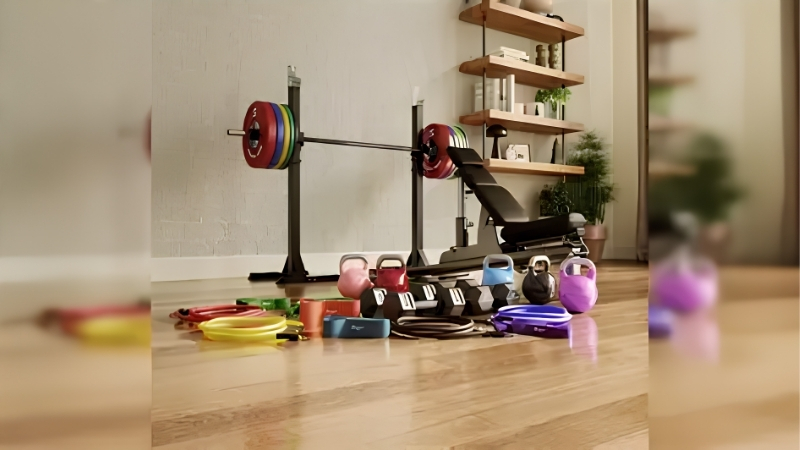
A useful best home workout equipment budget starts with a spending limit and a defined routine. Write down what you intend to do before allocating money to products. The aim is to fund a workable first setup, including its unavoidable costs, rather than spend the entire allowance on a large bundle whose accessories may never be used.
This guide provides practical selection and use considerations. It does not report hands-on product testing.
Separate the budget into actual commitments
List the equipment price, delivery, any required assembly and accessories that the instructions make necessary. Keep optional extras in another column. A floor covering, anchor or support may be essential for one arrangement and irrelevant to another, so do not apply the same accessory allowance to every product. Check the requirements of the specific equipment being considered.
Leave room for costs you have not yet established instead of treating an unanswered question as zero. Subscription fees, replacement parts and return freight can change the comparison. You do not need to predict every future expense, but you should identify which costs are known, recurring, optional or still uncertain before you commit the budget.
Fund the first useful activity
Choose an activity you already want to practise and identify the equipment it needs. For a routine built around free weights, that may mean a suitable pair of dumbbells before additional furniture. For band exercises, it means the correct band format and any approved anchor required by those movements. A bench alone does not create a complete resistance setup.
Consider what you already own and can appropriately use. Avoid buying duplicate accessories simply because a kit makes them appear inexpensive. Bodyweight movements may also be part of your chosen routine without a separate device for each exercise. Keep the purchase tied to the plan rather than expanding the plan to justify everything in a box.
Compare complete alternatives
Put two or three workable setups beside each other in your notes. One might use separate items, another a compact resistance system, and another a phased purchase. Record what each arrangement actually supports and what remains unavailable. This makes the trade-off clearer than comparing a small accessory with an entire station on headline price alone.
Check the selected variant and package contents carefully. A product image may display optional attachments, several sizes or weights that are sold separately. Confirm the unit quantity and any compatibility requirements. Treat listing claims about weight loss or therapeutic benefits as claims requiring separate evidence, not as extra value to add to the budget calculation.
Include space in the cost decision
Measure the area in which the equipment will operate, not just where it will be stored. If a purchase requires another storage unit or repeated furniture movement, include that practical consequence in the comparison. Equipment that cannot be set out conveniently may be a poor use of a small budget even when its retail price is low.
Think through delivery and assembly before choosing a larger item. Establish who will receive it, where packaging can be opened and whether the finished product can enter the intended room. For used equipment, confirm the exact model, completeness and availability of instructions. A missing safety component is not merely a bargaining opportunity.
Buy in stages with a clear next condition
After the initial purchase, use the setup long enough to identify a concrete limitation. The next item should answer that limitation: an appropriate resistance increment, a required support or a storage solution that makes existing equipment accessible. Do not add equipment simply because there is an empty corner or a temporary promotion.
Keep a short spending record with receipts, model names and support details. Review whether an optional subscription or accessory is being used before renewing or expanding it. This approach does not guarantee savings, but it makes each decision visible and easier to change before another purchase.
A workable budget ends with a complete first step and a list of deferred choices. If the planned setup exceeds the limit, reduce its scope while preserving the requirements for its intended use. Do not remove required hardware, substitute unsuitable supports or guess at installation in order to make the numbers fit.
Product listings to compare
As an Amazon Associate we earn from qualifying purchases at no extra cost to you. Product prices and availability are accurate as of the date shown and are subject to change. Compare the selected variant and its current description with the requirements above.
As an Amazon Associate we earn from qualifying purchases at no extra cost to you. Product prices and availability are accurate as of the date shown and are subject to change.


Additional product links
- Start 30-Day Prime Free Trial →
- See Today’s Amazon Deals
- ▸ Try Amazon Prime — free 30-day trial
- ▸ Start an Audible Premium Plus free trial
- ▸ Read free with Kindle Unlimited
Related reading
- Best home workout equipment budget
- Chris Parker
- Best Shoes for Jump Rope: 5 Picks for Concrete and Timber
- Best Shoe for Jump Rope: Forefoot Cushioning and Drop Guide
- Best Full Body Workout Equipment: 6 Machines vs Free Weights
- Best Gym Equipment for Full Body Workout: 5 Key Choices
- Best Workout Gym Equipment: 6 Heavy-Duty Picks for Home Use
- Best home pull-up bar
- Best at home pull up bar
- Best in house pull up bar
- Best rated ab roller
- Best rated ankle weights
- Best Budget Home Gym Equipment: Maximize Your Workout Without Breaking the Bank
- Best Home Gym Workout Equipment: 6 Picks by Movement Type
- Best Equipment to Workout at Home: 6 Compact Picks Tested
- Best Workout Equipment: 6 Picks by Uses Per Square Foot
- Best Workout Equipment Home Buyers Actually Use Long Term
- Best Workout Exercise Equipment: 6 Picks for Small Homes


Write Your Review
No reviews yet. Be the first to share your experience!