
Key takeaways
- Choosing the best workout equipment starts with a practical inventory: what you plan to use, what you already own and what the home can accommodate. A...
What's inside
Choosing the best workout equipment starts with a practical inventory: what you plan to use, what you already own and what the home can accommodate. A product becomes useful through a clear role. Buying a complete-looking collection is less helpful when several items do the same job or require a setup you cannot manage.
This guide provides practical selection and use considerations. It does not report hands-on product testing.
Think of the purchase as equipment plus delivery, handling and storage. These ownership details can change which option is sensible without making the most expensive or the smallest product an automatic winner.
Inventory the routine and the cupboard
List activities that belong to your intended routine, then place existing equipment beside each one. An unused item may need a better location or clearer instructions rather than a replacement. A missing item should correspond to something you have a reason to do.
Do not count ordinary furniture as exercise equipment merely because it has a convenient height. If an activity requires a bench, platform or anchor, check that the proposed product is intended for that use. Appearance alone does not establish suitability.
Product listings to compare
As an Amazon Associate we earn from qualifying purchases at no extra cost to you. Product prices and availability are accurate as of the date shown and are subject to change. Compare the selected variant and its current description with the requirements above.
As an Amazon Associate we earn from qualifying purchases at no extra cost to you. Product prices and availability are accurate as of the date shown and are subject to change.


Compare the actual handling process
Consider what happens before the first movement. Does an item need carrying, unfolding, attaching or adjusting? Read the instructions for those actions and decide whether the user can follow them. A compact stored shape can conceal a complicated preparation routine.
Then consider putting it away. Equipment that must cool, dry or be reconfigured needs time and a place for that process. A purchase should not depend on rushing these steps simply to return a shared room to normal.
Match the product to its main task
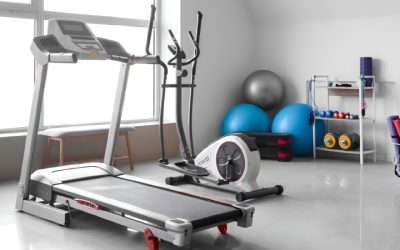
A stationary bike, a pair of weights and a floor mat perform different jobs. Compare products within the category that supports your intended activity. A general list of workout equipment is a source of possibilities, not a prescription to own every category.
For adjustable products, examine the settings you expect to use and how changes are made. For a machine, check access and control reach. For portable equipment, compare the complete packed form. Give the primary task more weight than a long list of optional uses.
Reserve two locations when necessary
The use area and storage area may be different. Measure both, including the route between them. Think about doors, steps and nearby furnishings rather than assuming an item that fits in a cupboard is straightforward to retrieve.
Keep storage purpose-specific. Heavy equipment needs an appropriate support, and loose components need a place where they will not be confused with other household items. A neat arrangement should make the next setup clear as well as look orderly.
Read the delivered offer
Confirm the exact configuration and included components. Product photographs may show a stand, mat or accessory sold separately. Record these distinctions before comparing prices so a larger-looking package does not mislead the budget.
Ask what delivery includes and how assembly is handled. A service that brings equipment to the intended room differs from a box left at the entrance. Check package dimensions and arrange suitable help before choosing an installation date.
Make maintenance easy to follow
Keep the manual, purchase details and model identifier together. Note any inspection or maintenance requirements from the manufacturer. Do not infer that a familiar-looking mechanism needs no attention or that one material guarantees a particular lifespan.
Leave access to the relevant parts when positioning the equipment. Storage that makes routine inspection difficult can create avoidable inconvenience. Choose cleaning supplies from the product instructions rather than using the same household treatment on every surface.
Use a staged buying decision
Choose one purchase with a clear purpose and a workable home arrangement. Hold optional accessories until you know which problem they will solve. A stand may become useful, for example, when it provides appropriate storage that the room currently lacks.
Before a later purchase, ask what the first one taught you about access, adjustment and preparation. Keep additions tied to those observations. The best collection is the one the household understands and can maintain, with no need to turn every spare corner into equipment storage.
Additional product links
- Start 30-Day Prime Free Trial →
- See Today’s Amazon Deals
- ▸ Try Amazon Prime — free 30-day trial
- ▸ Start an Audible Premium Plus free trial
- ▸ Read free with Kindle Unlimited
Related reading
- Best workout equipment
- Chris Parker
- Best Shoes for Jump Rope: 5 Picks for Concrete and Timber
- Best Shoe for Jump Rope: Forefoot Cushioning and Drop Guide
- Best Full Body Workout Equipment: 6 Machines vs Free Weights
- Best Gym Equipment for Full Body Workout: 5 Key Choices
- Best Workout Gym Equipment: 6 Heavy-Duty Picks for Home Use
- Best home pull-up bar
- Best at home pull up bar
- Best in house pull up bar
- Best rated ab roller
- Ankle weights best
- Best Buy Workout Equipment: 6 Picks by Cost Per Year of Use
- Best Workout Equipment to Lose Weight: 6 Low-Impact Picks
- Best Weight Loss Workout Equipment: 6 Quiet Picks Tested
- Best Home Workout Equipment Budget Guide: 6 Smart Picks
- Best Workout Equipment Home Buyers Actually Use Long Term
- Best Equipment to Workout at Home: 6 Compact Picks Tested
- Best Workout Exercise Equipment: 6 Picks for Small Homes




Write Your Review
No reviews yet. Be the first to share your experience!