
Key takeaways
- Comparing home gym set ups means comparing how a household will store, prepare and use equipment. The best arrangement may be a permanent room, a...
What's inside
- Product listings to compare
- Compare permanent and temporary arrangements
- Check the furniture that must stay
- Use exact equipment requirements
- Choose a storage method for each group
- Compare the effort of resetting
- Keep the budget tied to the layout
- Make the final layout decision
- Additional product links
- Related reading
Comparing home gym set ups means comparing how a household will store, prepare and use equipment. The best arrangement may be a permanent room, a shared space or a small collection brought out when needed. Decide which ownership routine fits before choosing furnishings.
This guide provides practical selection and use considerations. It does not report hands-on product testing.
A useful comparison starts with the same activity list for every layout. Otherwise, one plan may look more spacious simply because it leaves out equipment that another includes. Keep the intended use consistent while assessing the room.
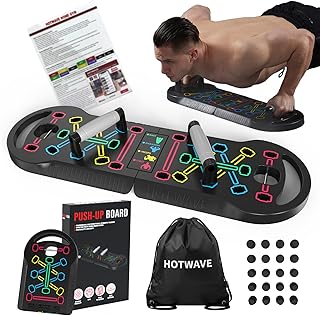
Product listings to compare
As an Amazon Associate we earn from qualifying purchases at no extra cost to you. Product prices and availability are accurate as of the date shown and are subject to change. Compare the selected variant and its current description with the requirements above.
As an Amazon Associate we earn from qualifying purchases at no extra cost to you. Product prices and availability are accurate as of the date shown and are subject to change.




Compare permanent and temporary arrangements
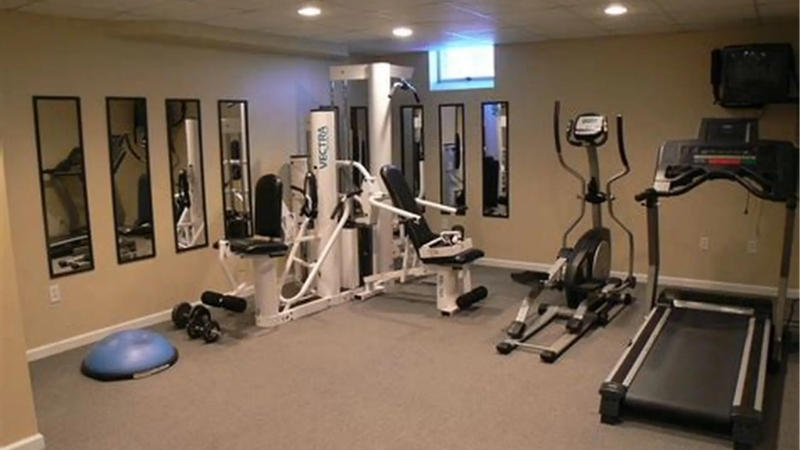
A permanent setup can leave equipment ready, but it occupies space throughout the day. A temporary setup returns the room to another purpose, while introducing preparation and storage work. Neither is automatically the better choice.
Write down the actions each arrangement requires. Moving a chair, unfolding equipment or changing attachments may be manageable, but those steps should be understood. Avoid choosing a layout from stored dimensions alone.
Check the furniture that must stay
Identify desks, beds, cabinets or seating that retain their ordinary role. Draw them in use, including open doors and drawers. The equipment needs to coexist with those movements rather than depend on everything remaining closed.
If a furnishing must move during exercise, give it a planned temporary location. Shifting it into a hallway is not a complete solution. The room transition should remain understandable for other household members.
Use exact equipment requirements
Compare operating space, access and placement instructions for the actual products. A machine’s base size does not account for every moving part or user position. Small equipment can also need a substantial activity area.
Check floor, power and assembly requirements separately. Do not infer installation suitability from a room photograph. Obtain appropriate help when the existing room does not clearly match what the equipment requires.
Choose a storage method for each group
List weights, mats, attachments and other items separately. Check support capacity and dimensions where storage furniture is involved. A cabinet large enough to contain something is not automatically intended to support it.
Keep related components together and frequently used items accessible. Consider the partially assembled state during a session, not just the final tidy arrangement. Loose parts need a suitable place while changes are made.
Compare the effort of resetting
After the activity, equipment may need cleaning, drying or reconfiguration before storage. Read those instructions before deciding a cupboard-based layout is convenient. The room needs to accommodate care as well as use.
A setup that is easy to begin but difficult to put away may become cluttered. Choose a routine that can be repeated without forcing equipment into an unsuitable position to reclaim the room quickly.
Keep the budget tied to the layout
Compare the equipment, genuinely needed storage and delivery or assembly assistance together. A smaller initial purchase may be sensible when the layout is still being established. Optional decorative additions can wait until their role is clear.
A large bundle should not determine the arrangement by default. Identify which items serve distinct activities and which duplicate an existing function. Unused equipment consumes storage as well as money.
Make the final layout decision
Compare each option at the same point in the day. One plan may look better only because it assumes the desk is unused or the bed is folded away. Consistent assumptions make the choice more realistic.
- Required activities are accommodated.
- Equipment access follows its instructions.
- Furniture retains its normal function.
- Storage suits the actual objects.
- Care and reset tasks are manageable.
Keep a short note of the compromises in each option. A permanent footprint may be acceptable in one home, while repeated setup is preferable in another. Choose based on that real tradeoff rather than an idealized image of a gym room.
The best set up is an arrangement the household can use and maintain consistently. Let equipment and furnishings serve that arrangement instead of buying a collection first and searching for somewhere to put it.
Additional product links
- Start 30-Day Prime Free Trial →
- See Today’s Amazon Deals
- ▸ Try Amazon Prime — free 30-day trial
- ▸ Start an Audible Premium Plus free trial
- ▸ Read free with Kindle Unlimited
Related reading
- Best home gym set ups
- Chris Parker
- Best Gym Mat for Home: Rubber vs Foam Picks for Any Floor
- Best Rowers for Home Gym: Air, Magnetic and Water Compared
- Best Weight Home Gym: 6 All-in-One Machines for Small Rooms
- Best Home Gym Equipment for Beginners: The Starter Setup
- Best Treadmills for Home Gym: 5 Picks by Deck and Motor
- Best home pull-up bar
- Best at home pull up bar
- Best in house pull up bar
- Best rated ab roller
- Best yoga travel mat
- Home Gym Best Picks: 6 Category Winners for Any Room Size
- Best Equipment for at Home Gym: Budget Order and Priorities
- Best Budget Home Gym Equipment: Maximize Your Workout Without Breaking the Bank
- Best Dumbbell Set for Home Gym: 5 Picks Ranked by Space
Write Your Review
No reviews yet. Be the first to share your experience!