Key takeaways
- Measure the inside before you conclude anything. A bed frame too big for mattress dimensions is usually a frame measured at the headboard and rails, because the cavity the mattress drops into is a completely different number from the outside…
Measure the inside before you conclude anything. A bed frame too big for mattress dimensions is usually a frame measured at the headboard and rails, because the cavity the mattress drops into is a completely different number from the outside dimensions of the furniture around it.
As an Amazon Associate we earn from qualifying purchases.
By KK Home Furnishings Editorial Team
Bed Frame and Mattress Fit by the Numbers
The only figures that decide fit are the interior cavity and the actual mattress, and the gap is whatever separates them divided between two sides. Outside dimensions describe the furniture instead, so a frame can be several inches wider than the mattress by design and still be entirely correct.
| Input | Result | Note | Exception |
|---|---|---|---|
| Queen mattress nominal size | 60 x 80 in | The standard US Queen the frame is designed around | An individual mattress can vary slightly from nominal |
| Article Faydra Queen interior | 60.5 x 80 in | Half an inch of extra width in total, or 0.25 in per side | One worked example, not a universal tolerance |
| King against Queen width | 76 in against 60 in | A 16-inch mismatch, roughly 8 in per side when centred | That is the wrong nominal size, not clearance |
| Full against Queen cavity | 54 x 75 in against 60.5 x 80 in | 6.5 in wider and 5 in longer than the mattress | Also a nominal size mismatch rather than a gap |
Measure the Interior Cavity, Not the Outside Frame
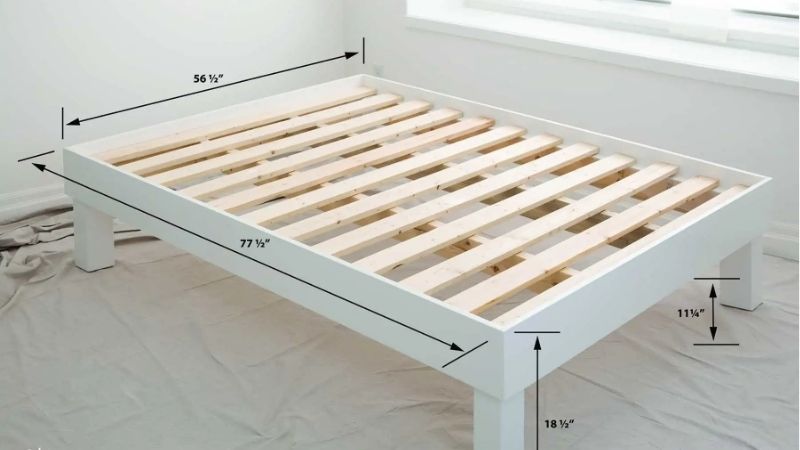
The Article Faydra Queen measures 65.25 inches wide by 83 deep overall, but the interior frame where the mattress sits is 60.5 by 80 inches. Those two numbers describe the same bed from the same listing, and only the second one has anything at all to do with whether a mattress fits it.
Measure from the inside face of one side rail across to the inside face of the other, taken at mattress level rather than down at the floor. Do the same from the inside face of the headboard to the inside of the footboard, and write both figures down before comparing anything against the mattress itself.
Confirm the Nominal Size of Both Pieces
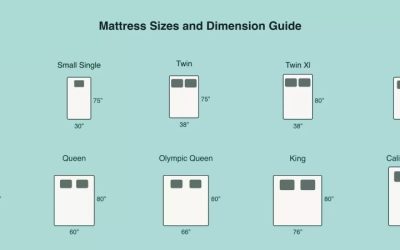
The standard US sizes are 54 by 75 inches for a Full, 60 by 80 inches for a Queen and 76 by 80 inches for a King. A mismatch between nominal sizes produces inches of gap rather than fractions, which is the quickest way to tell an intended design clearance apart from a wrong purchase or a substituted size.
Check the labels on both the mattress and the frame carton rather than relying on what the order said, since a substituted size is common in returns and marketplace listings. Where the two labels disagree with each other, the exchange conversation is considerably simpler before assembly than after it.
Calculate the Gap Per Side
Use one method throughout the whole check: gap per side equals the interior frame dimension minus the actual mattress dimension, divided by two. On the Faydra Queen that is 60.5 minus 60, divided by two, which comes to roughly a quarter of an inch on each side once the mattress has been centred.
Run the same calculation on length as well as on width, because a frame can be entirely correct on one axis and wrong on the other. Apply it to your own measured numbers rather than to nominal ones, since the mattress you own can differ slightly from the standard size printed on its own label.
Distinguish Design Clearance From a Wrong-Size Frame
The Article Lenia Queen also has a 60.5 by 80-inch interior cavity, but measures 63 by 83 inches overall rather than the Faydra’s 65.25 by 83 inches. The same cavity, two different outside dimensions, because decorative side rails and a headboard add structure well beyond the mattress footprint itself.
That is why outside measurements cannot diagnose anything. Two beds designed around exactly the same mattress can differ by more than two inches externally, and the one that looks oversized in the room is usually the one with the more substantial rails rather than the one with a fault.
Adjust for Your Situation
Once the cavity and the mattress have both been measured, there are four possible outcomes, and only two of them need anything bought or exchanged. Work out which one you are actually in before looking at gap fillers, because three of the four are not solved by padding the space at all.
If the Gap Is Only Around the Exterior Rails
Nothing needs fixing here. A frame whose headboard, footboard and side rails all extend past the mattress footprint is working exactly as it was designed to, and the Faydra’s 5.25 inches of extra exterior width over a 60-inch mattress is the clearest illustration of that among these examples.
Confirm it by checking that the mattress sits flush against the inside faces of the rails with no meaningful movement in either direction. If it does, the extra width you can see is furniture rather than a gap, and buying filler for it would mean padding the outside of the bed to no purpose.
If a Same-Named Size Leaves an Unexpected Interior Gap
Go back to the assembly itself before buying anything at all to fill the space. Check the rail orientation, which mounting holes were used, whether the slat supports are seated correctly, and the exact size printed on the product label itself rather than on the order confirmation or the delivery note.
Frames with multiple mounting positions can be built to a different size than intended, and a single rail fitted the wrong way round changes the cavity. This is a diagnostic step rather than an accusation, and it costs an hour of your time against the price and effort of exchanging a whole bed.
If the Mattress and Frame Are Different Nominal Sizes
A Queen mattress in a King cavity leaves roughly 8 inches on each side when centred, based on the 16-inch difference between their nominal widths. That is not a clearance problem to be disguised, and no filler sold for bed gaps is designed to span a distance of anything like that order.
Exchange whichever component is wrong rather than trying to adapt around the difference. A mattress left unsupported across that much of the frame is also sitting on slats that were spaced for a wider base, which makes it a structural question as well as a cosmetic one about how the finished bed looks.
If the Mattress Slides Inside a Correct-Size Frame
Measure everything first, then treat this as movement rather than as a sizing question. Confirm the cavity, the actual mattress dimensions and the support surface underneath, because a mattress with a quarter of an inch of clearance per side behaves very differently from one sitting in two inches of space.
Non-slip pads or a gripper layer placed between the mattress and the slats can reduce travel where the fit is genuinely correct. They do not address a size mismatch at all, and using them to hold a smaller mattress in place leaves the unsupported edge exactly where it was before.
Frequently Asked Questions
Each answer below uses interior measurements taken from named frames rather than any general allowance, because no universal gap figure exists across manufacturers at all. The same nominal size gets built to different outside dimensions by effectively every brand that makes one of them.
How Much Bigger Should a Bed Frame Be Than the Mattress?
There is no general outside-dimension allowance to work from. The Faydra Queen is 5.25 inches wider than a 60-inch mattress on the outside while its interior is only half an inch wider, so the same bed answers that one question in two completely different ways depending on which figure is quoted.
The figure worth asking a seller for is the interior cavity, and most product pages do publish it separately from the overall dimensions. Where only one set of numbers appears on a listing, ask which set it is before ordering rather than assuming the larger pair describes the mattress space.
Will a Queen Mattress Fit a King Frame?
It will physically sit there, certainly, but the nominal width difference is 16 inches, which leaves roughly 8 inches on each side once the mattress is centred. Length matches at 80 inches between the two sizes, so the problem appears entirely across the width rather than at the head or the foot of the bed.
In practice that means unsupported space along both edges, bedding that will not sit correctly, and a sleeper near the edge with nothing underneath them. It is a size mismatch rather than a question of fit, and exchanging one of the two pieces is the only answer that actually resolves it.
Why Is My Queen Frame Wider Than 60 Inches?
Because the 60-inch figure describes the mattress rather than the furniture around it. The Faydra Queen measures 65.25 inches across the outside while holding a standard 60-inch Queen mattress, and the difference between the two figures is the side rails and the structure carrying them rather than wasted space.
That is also why a bed can be far too big for a room while being exactly right for the mattress on it. Measure the overall footprint when planning the room layout and the walkways, and measure the interior cavity when checking the mattress, because those answer two entirely different questions.
Is a Half-Inch Interior Difference Automatically a Problem?
Not necessarily, no. Both the Faydra and the Lenia list a 60.5-inch interior width for beds that were designed around a 60-inch nominal Queen mattress, which works out at about a quarter of an inch per side and is clearly intended rather than accidental in either of those designs.
Judge it by how the bed behaves rather than by the number itself. If the mattress stays put, the sheets tuck in and nothing catches, a quarter inch per side is simply the clearance that makes the mattress possible to fit at all. Movement that grows over time is worth rechecking against the slats and the centre support.
Final Thoughts
In most of these cases nothing needs to be bought at all. Measure the interior cavity, measure the mattress itself, divide the difference by two, and only call a bed frame too big for mattress size when that result runs to inches rather than the fraction a frame is designed to leave.