Key takeaways
- Seat angle: Look for an angled seat that positions your hips slightly higher than your knees without forcing your pelvis too far forward. Adjustable models are especially useful when more than one person uses the desk.
- Padding: Thick, resilient foam matters because kneeling chairs concentrate contact on fewer areas than conventional office chairs. Check both the seat and shin or knee cushions.
- Movement: Rocking bases encourage small posture changes, while casters make it easier to move around a compact desk. Locking or brake casters are preferable on hard floors and near rolling work surfaces.
- Support style: Backless designs promote active sitting and leave more visual space in a small room. A backrest may be a better choice if you need occasional full-body support during longer sessions.
- Fit and limits: Confirm the chair’s height range, usable seat dimensions, and stated weight capacity. Your knees should rest comfortably on the cushion rather than pressing against its edge.
What's inside
Choosing a kneeling office chair is less about finding the most unusual-looking seat and more about matching your workspace, body proportions, and daily routine. A poorly sized model can shift pressure to the shins, crowd a compact desk, or leave you without enough support when you need to sit for several hours.
This guide compares five practical options for home offices, apartment workstations, and flexible desks. I’m focusing on adjustability, cushioning, movement, weight capacity, back support, and how easily each chair can fit into a small-space setup.
As an Amazon Associate we earn from qualifying purchases.


How to Choose an Ergonomic Kneeling Office Chair (2026)
- Seat angle: Look for an angled seat that positions your hips slightly higher than your knees without forcing your pelvis too far forward. Adjustable models are especially useful when more than one person uses the desk.
- Padding: Thick, resilient foam matters because kneeling chairs concentrate contact on fewer areas than conventional office chairs. Check both the seat and shin or knee cushions.
- Movement: Rocking bases encourage small posture changes, while casters make it easier to move around a compact desk. Locking or brake casters are preferable on hard floors and near rolling work surfaces.
- Support style: Backless designs promote active sitting and leave more visual space in a small room. A backrest may be a better choice if you need occasional full-body support during longer sessions.
- Fit and limits: Confirm the chair’s height range, usable seat dimensions, and stated weight capacity. Your knees should rest comfortably on the cushion rather than pressing against its edge.
The Best Ergonomic Kneeling Office Chairs (2026) Reviewed
Ergonomic Kneeling Chair with Adjustable Seats
This adjustable kneeling chair is a sensible starting point for shoppers who want to fine-tune their posture rather than commit to a fixed frame. Its rocking-stool format can help break up static sitting, and the stated 250-pound capacity plus five-year warranty add reassurance for regular home-office use.
marrap Ergonomic Office Chair
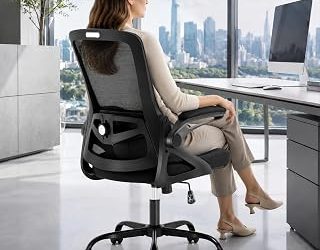
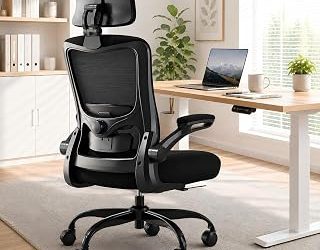
The marrap is a conventional mesh office chair rather than a true kneeling model, but it earns a place here as a practical alternative for buyers who need more familiar full-back support. Adjustable lumbar support, 3D armrests, a headrest, and a 90–120-degree rocking function make it a useful comparison for shared or multipurpose workspaces.
Varier Ergonomic Kneeling Chair
Varier’s backless rocking knee stool is designed around active sitting, with a cushioned seat and a frame that allows gentle movement. It is particularly appealing in a small room because the open, backless profile takes up less visual space; however, users who want to lean back may prefer a chair with a backrest.
TRALT Ergonomic Office Chair
With a 330-pound stated capacity, headrest, lumbar support, and flip-up armrests, the TRALT is another traditional office-chair option for people who are unsure about kneeling designs. The fold-up arms are helpful when sliding the chair beneath a compact desk, while the more substantial frame may suit users who want a reading and computer chair in one.
Ergonomic Kneeling Chair with Adjustable Stool and Brake Casters
This model combines an angled seat with moulded foam cushions and brake casters, making it a useful choice for a workstation that needs occasional repositioning. The wheel brakes are a small but important detail for maintaining a stable posture during typing, especially on smooth flooring.
Frequently Asked Questions
Are kneeling chairs better than regular office chairs?
Neither style is universally better. Kneeling chairs can encourage a more open hip angle and active posture, while conventional chairs offer easier back support and more adjustment points. Many users get the best results by alternating between both styles.
Can I use a kneeling chair all day?
It is usually wiser to introduce one gradually. Start with short sessions, change position regularly, and stop if you notice persistent knee, shin, hip, or lower-back discomfort. A sit-stand setup or second chair makes rotation easier.
How should a kneeling chair fit?
Your hips should sit slightly higher than your knees, with your weight distributed between the seat and knee cushions. The cushions should support your shins comfortably without pressing sharply into the kneecaps or restricting circulation.
Are kneeling chairs suitable for small home offices?
Yes, especially backless rocking models that visually and physically occupy less space. Before buying, measure the desk height, clearance beneath the tabletop, and the area needed to enter and leave the chair without bumping nearby furniture.
Final Thoughts
For adjustable active sitting, the Ergonomic Kneeling Chair with Adjustable Seats is a strong all-around starting point. The Varier suits shoppers who value a refined backless rocking design, while the TRALT or marrap is the better route when full-back support and conventional office-chair comfort matter most.