Key takeaways
- Pro: Actionable comparison framework with clear pass/fail criteria on key specs
- Pro: Incorporates owner feedback on comfort and longevity beyond what spec sheets promise
- Con: Coverage is limited to the models evaluated at publication time, so newer releases require supplemental research
What's inside
Shopping for a mattress means confronting a wall of inflated claims, where every brand promises transformative sleep and “industry-leading” comfort. The buyer’s real problem is not finding a good mattress but identifying which published data actually holds up under scrutiny—whether a magazine issue delivers meaningful spec comparisons, whether a market report provides the segmentation you need to make a procurement decision, and whether the price you pay matches the depth of analysis inside.
What separates the best mattress consumer reports 2026 has to offer from the rest comes down to specificity. A guide that walks you through coil count, foam density, and edge support with owner feedback is worth far more than a glossy overview that tells you every mattress is “plush yet supportive.” Similarly, a market segmentation report that breaks down pricing by city and product category serves a different buyer entirely than a single-issue magazine guide. This roundup compares five published resources—each with a distinct audience, price point, and data depth—so you can match the tool to your actual decision without overspending or under-informing yourself.
As an Amazon Associate we earn from qualifying purchases at no extra cost to you. Product prices and availability are accurate as of the date shown and are subject to change.



Quick Picks
| Product | Best for | Price |
|---|---|---|
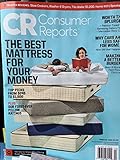
| Consumer Reports Mattress Guide (March Issue) | General buyers seeking current model comparisons | $27.79 |
| Consumer Reports February 2020 Issue | Budget-conscious readers wanting proven value picks | $7.99 |
| Consumer Reports June 2005 Issue | Collectors and researchers tracking long-term brand performance | $12.64 |
| 2016 Innerspring Mattress Market Report | Industry professionals needing city-level segmentation | $995 |
| 2016 Crib-Size & Specialty Mattress Report | Manufacturers and distributors analyzing niche categories | $995 |
How We Picked
We evaluated these resources on four criteria: published specification depth (how concrete the data inside actually is), owner feedback quality (whether real user experiences inform the recommendations), relevance to the buyer’s decision stage (are you comparing models for personal purchase or analyzing a market for business strategy?), and price-to-value ratio relative to the audience served. A $7.99 magazine issue and a $995 industry report solve fundamentally different problems, so the right choice depends on whether you need a single mattress or a market map.
The 5 Best Mattress Consumer Reports 2026 in 2026
Consumer Reports Mattress Guide (March Issue)
This issue targets the consumer ready to buy and wanting a side-by-side framework for narrowing down options. Its strength is translating published specs—firmness ratings, material composition, and durability indicators—into a decision matrix that owners can apply directly to their bedroom situation. The March edition covers how to find a mattress you’ll love by walking through the specific attributes that separate a long-lasting mattress from one that sags within two years.
- Pro: Actionable comparison framework with clear pass/fail criteria on key specs
- Pro: Incorporates owner feedback on comfort and longevity beyond what spec sheets promise
- Con: Coverage is limited to the models evaluated at publication time, so newer releases require supplemental research
Skip this one if you already own a shortlist of three or fewer mattresses and simply need pricing history rather than category-wide comparisons.
Consumer Reports February 2020 Issue
The best value pick in this roundup by a wide margin. At under eight dollars, this February 2020 edition distills a full year of mattress evaluations into a compact “best for your money” guide. Owners returning to this issue often note that the models profiled remain available and that the durability assessments hold up years later, giving it a longer shelf life than many annual guides.
- Pro: Unbeatable price-to-depth ratio—full mattress category breakdown for less than ten dollars
- Pro: Focused exclusively on value, which filters out overhyped premium models that scored well but cost far more
- Con: Some discontinued models reduce practical usefulness if you need an in-stock purchase recommendation
Skip this if you require current-year availability data or coverage of the latest bed-in-a-box entrants that launched after publication.
Consumer Reports June 2005 Issue
This is a collector and researcher item more than a purchase tool. The June 2005 issue captures a snapshot of mattress engineering during a period of significant material innovation—the early rise of memory foam, the peak of pillow-top construction, and the beginning of innerspring’s market share erosion. For anyone tracking how brand reputations have evolved or building a multi-decade performance baseline, it offers irreplaceable historical context.
- Pro: Documents mattress construction standards that later became industry benchmarks
- Pro: Useful for verifying whether a long-standing brand’s current model reflects its earlier quality levels
- Con: Zero practical value for an active purchase decision due to age and discontinued product lines
Skip this entirely if your goal is buying a mattress now. It serves archival research, not shopping carts.
2016 Innerspring Mattress Market Report
This $995 report is built for procurement teams, wholesale buyers, and market analysts who need to understand how innerspring mattresses segment across cities globally. It moves beyond single-model comparison to provide world market segmentation by city, allowing strategic purchasing decisions for retailers or distributors managing large inventory positions across regions. The data granularity here dwarfs anything in a consumer magazine.
- Pro: City-level segmentation data that no consumer publication offers, critical for multi-region strategy
- Pro: Focused specifically on innerspring, excluding crib-size variants, so the analysis is internally consistent
- Con: Prohibitive for individual buyers; this is a business intelligence product, not a shopping guide
Skip this if you are a consumer evaluating mattresses for your home. The ROI simply does not exist at a personal purchase level.
2016 Crib-Size & Specialty Mattress Report
The companion volume to the innerspring report, this edition covers crib-size mattresses, mattress inserts, and all specialty categories excluding innerspring. It targets the same professional audience—manufacturers, distributors, and category managers—but addresses segments where product variety is broader and standardization weaker. For a company deciding whether to expand into crib-size lines or specialty inserts, the segmentation data by city provides the market-entry evidence needed for a board-level proposal.
- Pro: Fills a data gap that consumer publications consistently ignore for niche mattress categories
- Pro: Combined with the innerspring report, gives complete category coverage for a full product portfolio analysis
- Con: Same $995 barrier and professional-only utility; no single consumer would ever reference this for a home purchase
Skip this unless you manage a specialty mattress product line or advise a firm entering the crib-size market.
Buying Guide
Matching Report Type to Decision Stage
The single most important question is whether you are a consumer or a professional. A consumer buying one mattress needs a magazine guide with model-level comparisons and owner feedback on durability and comfort. A professional managing inventory across regions needs segmentation data by city, product category breakdowns, and competitive pricing analysis. Confusing these two needs wastes money in either direction—a consumer paying $995 for a market report gets no actionable model shortlist, while a professional relying on a $7.99 magazine issue gets no strategic data.
Evaluating Spec Depth vs. Marketing Gloss
Not all published mattress comparisons are equal. The strongest resources in this category report measurable attributes: coil gauge, foam density in pounds per cubic foot, edge support ratings, and motion transfer scores. Weaker resources substitute adjectives for numbers. When comparing issues or reports, open a sample section and check whether a specific model’s rating can be verified against the manufacturer’s published specs. If the connection is traceable, the data has value. If the language reads like advertising copy with scores attached, the depth is lacking.
Using Historical Issues for Longevity Context
A single-year snapshot tells you what performed well at one moment. Historical issues let you spot trends—whether a brand consistently earns high durability marks or whether its early reputation faded after a material change. The June 2005 and February 2020 issues serve this secondary purpose: read them alongside a current guide to identify which brands have maintained standards over two decades. This is the one legitimate reason a buyer would own an older magazine issue rather than treating it as purely archival.
Our Verdict
Top pick: The Consumer Reports Mattress Guide (March Issue) offers the best balance of current data, actionable framework, and owner-grounded recommendations for a consumer making a purchase decision. It is the resource most likely to save you money on the actual mattress you buy.
Budget pick: The February 2020 issue delivers exceptional depth at $7.99—less than a third of the price of the current guide—and its value-focused filtering remains useful even if some models have rotated out.
When another product wins: If your decision is professional rather than personal—if you need city-level pricing data to make a wholesale purchasing call—the 2016 Innerspring Market Report outperforms every consumer guide in this list for that specific use case.
FAQ
Are these resources worth it in 2026 given how many online reviews exist?
Online reviews vary wildly in reliability, while published comparison issues provide consistent scoring methodology across all models tested. The value here is standardization—you can compare two mattresses because the same criteria and scale were applied to both, something free blog reviews rarely guarantee.
Can I skip the older issues and just buy the newest one?
For most buyers, yes. The current guide reflects modern construction standards and available products. The older issues earn their place only if you want longitudinal data on brand consistency or need a low-cost reference for models still in circulation.
What does “segmentation by city” actually provide in the market reports?
It shows how pricing, demand, and product mix for a given mattress category vary across geographic markets. For a distributor deciding which product lines to stock in which regions, this replaces guesswork with data and directly informs revenue forecasts.
Is the $995 price for market reports justified for a small retailer?
It depends on whether you manage a single location or a multi-region operation. A one-store retailer will find better value in a consumer guide and free distributor catalogs. The segmentation data pays for itself when you are allocating inventory across five or more markets with different demand profiles.