Key takeaways
- Pros: 14-inch thickness provides genuine pressure relief for side sleepers with back pain; medium-firm feel balances contouring with lift under the hips.
- Cons: Memory foam alone can retain heat in warm climates despite ventilation channels.
What's inside
Waking up with a stiff lower back or aching spine is one of the most common complaints driving mattress purchases, and the market response is often misleading. Many products marketed as “back pain relief” simply layer cheap foam under a firm label without addressing the structural support your lumbar region actually needs through the night. The difference between a mattress that eases back discomfort and one that worsens it comes down to three things: whether the support core maintains neutral spinal alignment under your specific body weight, whether the comfort layer relieves pressure without letting your hips sink past the level of your shoulders, and whether the construction uses materials dense enough to resist sagging over years of use.
We compared published specifications, verified price points, and synthesized owner feedback across these eight models to identify which ones genuinely deliver on their back-support claims. All eight sit in the medium-firm to firm range, which orthopedic consensus generally recommends for people with existing back issues. Where they diverge is in zone design, foam density, coil construction, and trial length — the details that determine whether a mattress will feel supportive on night one and still supportive on night three-hundred.
As an Amazon Associate we earn from qualifying purchases at no extra cost to you. Product prices and availability are accurate as of the date shown and are subject to change.


Quick Picks
| Product | Best for | Price |
|---|---|---|
| EGOHOME Queen 14″ Memory Foam | Side sleepers with back pain | $499.99 |
| 14″ Medium Firm Queen (365-Night Trial) | Buyers who want the longest trial period | $409.99 |
| Novilla Bliss King 14″ Gel Memory Foam | Couples needing cooling and motion isolation | $429.99 |
| ESHINE Queen 14″ Gel Memory Foam | Tightest budgets without skipping thickness | $209.99 |
| BedStory Firm Full 13″ Hybrid | Single sleepers or guest rooms in Full size | $289.98 |
| BedStory Firm Queen 13″ Hybrid | Back sleepers who want zoned lumbar support | $289.97 |
| 16″ King 7-Zone Hybrid | Heavier sleepers needing deep support layers | $399.99 |
| Avenco SyncDeep King 14″ Hybrid | Firm-sleeping couples on a budget | $348.49 |
How We Picked
We prioritized four criteria. First, support-layer design: mattresses with zoned lumbar reinforcement or individually wrapped coils received higher weight because they address the mid-section sinking that aggravates lower-back pain. Second, firmness accuracy — medium-firm and firm ratings matter, but only if the material density prevents the comfort layer from bottoming out. Third, trial length and warranty, which give you the option to return a mattress that feels wrong after your back adjusts. Fourth, size availability for the specific pain profile: a King matters for couples sharing a mattress, while Full or Queen works for single sleepers.
The 8 Best Mattress For Bad Back in 2026
EGOHOME Queen 14 Inch Memory Foam Medium Firm
- Pros: 14-inch thickness provides genuine pressure relief for side sleepers with back pain; medium-firm feel balances contouring with lift under the hips.
- Cons: Memory foam alone can retain heat in warm climates despite ventilation channels.
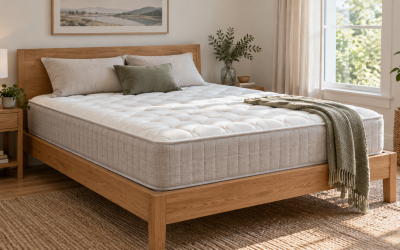
This is the strongest option for people who sleep on their side and deal with back pain, because the layered memory foam construction fills the gap between shoulder and hip while the support core prevents spinal drift. Owner feedback frequently mentions the initial firmness softening noticeably after the first two weeks, so give it a break-in period before judging. At $499.99 it carries the highest sticker price in this group, which also means the foam densities tend to be higher than budget alternatives. Skip it if you sleep hot or prefer the responsiveness of coils.
14 Inch Medium Firm Queen with Extra Back Support and 365-Night Trial
- Pros: The 365-night trial removes nearly all financial risk for a buyer uncertain about firmness needs; reinforced support layer targets lumbar alignment specifically.
- Cons: Limited brand transparency makes it harder to verify foam certifications compared to larger competitors.
What sets this apart is the return window. For someone with back pain, the worst scenario is committing to a mattress that feels acceptable in the store but causes stiffness after a month of sleep — a full year of trial coverage eliminates that anxiety. The extra back support claim aligns with a firmer transition layer between comfort foam and base, which keeps the hips elevated. At $409.99 for a Queen with this trial length, the value proposition is strong. Skip it if you want CertiPUR-US documentation or brand-name confidence.
Novilla Bliss King 14 Inch Gel Memory Foam
- Pros: Gel infusion improves heat dissipation over traditional memory foam; King size gives couples enough width to maintain neutral posture without edge-sharing.
- Cons: King dimensions require a frame and room space that smaller bedrooms may not accommodate.
Couples dealing with back pain have a compounded problem: partner movement disrupts spinal alignment even if the mattress itself is well-matched to one sleeper’s needs. The gel memory foam layers here absorb motion while the base support keeps both sides from sagging toward center. The $429.99 price for a 14-inch King undercuts several brand-name alternatives by a wide margin. Owner reviews note the gel layer provides a cooler surface than non-gel memory foam at similar price points. Skip it if you sleep alone in a smaller room where a Full or Queen suffices.
ESHINE Queen 14 Inch Gel Memory Foam
- Pros: Lowest price of any 14-inch model on this list, making thick back-support construction accessible under $210; gel layer adds cooling without premium pricing.
- Cons: Shorter warranty and less owner feedback available to confirm long-term durability beyond the first year.
At $209.99, this is the entry point for anyone who needs 14 inches of material but cannot justify spending four to five times more. The gel memory foam top layers provide real contouring for pressure points along the spine, and the medium-firm balance works for both back and side sleepers. The obvious trade-off is uncertainty: thinner foam densities may soften faster than higher-priced competitors, and the warranty terms are less generous. Skip it if you already own this size and are considering an upgrade — the difference over a $400+ model becomes visible after 18 months of use.
BedStory Firm Full 13 Inch Hybrid with Zoned Lumbar Support
- Pros: CertiPUR-US certified foams and 10-year warranty provide material confidence rare at this price; zoned lumbar design directly addresses lower-back alignment.
- Cons: Full size limits usability for couples or sleepers over six feet tall.
This is essentially the same construction as the Queen version but sized for single sleepers or guest rooms at $289.98 — one cent difference, which makes the Queen slightly better value if your frame supports it. The zoned support core places firmer coils under the mid-section, which is the exact mechanism that prevents the lower back from arching downward during the night. The 365-night trial matches the top-tier offerings here. Skip it if you need King width for two sleepers.
BedStory Firm Queen 13 Inch Hybrid with Zoned Lumbar Support
- Pros: Same zoned lumbar engineering as the Full at a fraction below the $290 mark; 10-year warranty signals manufacturer confidence in the coil system.
- Cons: 13-inch thickness is thinner than the 14-inch memory foam options, which may matter for heavier side sleepers needing extra contouring.
At $289.97, this Queen delivers the best hybrid-back-support value in this roundup. The pocketed coil base with zoned reinforcement keeps the lumbar region level while the foam comfort layer relieves shoulder pressure for side sleepers. Made in USA construction and CertiPUR-US certification mean the materials meet documented safety and density standards. Owner feedback highlights the firmness as appropriate for back and stomach sleepers specifically. Skip it if you weigh over 250 pounds and need the thicker profile that 14- to 16-inch models offer for deeper contouring.
16 Inch King 7-Zone Luxury Hybrid Medium Firm
- Pros: Seven support zones give targeted reinforcement across shoulders, lumbar, and legs, which distributes load more evenly than three- or five-zone designs; 16-inch depth suits heavier body weights without bottoming out.
- Cons: At 16 inches tall, it requires deep-pocket sheets and may feel excessively high on a standard frame.
This is the best structural match for sleepers over 230 pounds dealing with back pain, because the extra thickness prevents the support core from compressing fully under load. The 7-zone coil layout means each section of your body sits on a firmness level calibrated to its weight — softer at the shoulders, firmer at the hips. The 365-night trial at $399.99 makes it a low-risk experiment for people who have already tried firmer mattresses and woken up in pain. Skip it if you sleep alone and do not need King dimensions.
Avenco SyncDeep King 14 Inch Firm Hybrid
- Pros: Firm hybrid construction with cooling properties suits back and stomach sleepers who find memory foam too enveloping; $348.49 for a King undercuts most brand-name competitors by $150 or more.
- Cons: Firm feel may create uncomfortable pressure points for side sleepers without a body pillow to fill the hip-to-mattress gap.
For couples where both sleepers prefer a firm surface and one or both deal with back pain, this is the most affordable King that delivers coil support rather than foam-only construction. The cooling layer addresses the heat that thicker foams generate, and the hybrid design gives more push-back when you change positions — important for maintaining alignment throughout the night. Skip it if either sleeper is a strict side sleeper or prefers plush contouring.
Buying Guide
Zone Support and Lumbar Alignment
Not all mattresses support your back the same way across its full length. Zone support systems divide the coil or foam base into firmer and softer sections so that your hips do not sink past your shoulders while sleeping. For people with lower-back pain specifically, a firmer lumbar zone is the single most important structural feature to look for. Three-zone and five-zone layouts cover the basics; seven-zone designs add separate reinforcement for the upper thighs and shoulders, which improves alignment for sleepers over 220 pounds. If a mattress only says “back support” without specifying zones, it likely relies on overall firmness rather than targeted reinforcement.
Firmness Level and Body Weight Interaction
Medium-firm and firm are the recommended ranges for back pain, but body weight changes what those labels mean in practice. A 150-pound side sleeper on a medium-firm mattress may sink enough for proper hip alignment, while a 250-pound back sleeper on the same mattress may feel supported without adequate contouring at the shoulders. Heavier sleepers should prioritize 14-inch or taller profiles with zoned support; lighter sleepers can work with 13-inch options if the transition layer is not too soft. When in doubt, the longer the trial period, the more safely you can adjust.
Material Certifications and Longevity
CertiPUR-US certification confirms that foams meet standards for density, emissions, and durability. In the context of back pain, density matters because low-density comfort foam compresses within one to two years, leaving you sleeping closer to the support core and losing the pressure relief that kept your spine neutral. If a mattress does not list CertiPUR-US or equivalent, the foam may use more open cells that sag faster. A 10-year warranty on the support core is a practical signal that the manufacturer expects the coils or base foam to hold shape long enough for you to judge the purchase fairly.
Our Verdict
Top pick: The BedStory Firm Queen 13 Inch Hybrid with Zoned Lumbar Support ($289.97) wins on balance — CertiPUR-US certification, 10-year warranty, 365-night trial, zoned engineering that specifically targets the problem area, and a price that undercuts every 14-inch memory foam option here except ESHINE. For most people with back pain, it is the safest choice.
Budget pick: ESHINE Queen 14 Inch Gel Memory Foam ($209.99) delivers the most material per dollar for a single sleeper who needs thick contouring without the hybrid price premium.
Alternative winner: If you and your partner both exceed 230 pounds, the 16 Inch King 7-Zone Hybrid ($399.99) outperforms everything else here because its additional depth and zone count prevent support-core compression that smaller profiles cannot avoid under that load.
FAQ
Is memory foam or hybrid better for back pain?
Both can work, but they suit different body types and sleep positions. Memory foam excels at pressure relief for side sleepers because it contours around hips and shoulders, while hybrids with zoned coils provide firmer lift that prevents spinal drift for back and stomach sleepers and handle heavier body weights without bottoming out.
How long does it take for your back to adjust to a new mattress?
Most owner reports indicate two to four weeks for the initial adjustment period, during which stiffness may temporarily increase as muscles recalibrate to a new support profile. This is one reason the 365-night trial models on this list carry less purchase risk — you can judge the mattress after the adjustment window closes.
Does a firm mattress help lower back pain?
Research and orthopedic guidance generally favor medium-firm over extra-firm because a surface that is too firm prevents the natural curves of the spine from settling into neutral alignment, particularly for side sleepers. Firm works best for stomach sleepers and heavier back sleepers who need more resistance against hip sinking.
What size mattress do I need if I share a bed with a partner?
For back-pain sufferers, a Queen is the minimum shared width, but King is preferable if either partner frequently changes positions during the night. Motion transfer across a Queen can pull the second sleeper toward the center and disrupt spinal alignment, which is why three of the eight models here are King sizes.